
When does the IB collect IAs? (The moment that trips everyone up)
The night before your IA is due, time does a strange thing. It speeds up. You promise yourself you will only "polish the wording," and suddenly you're rearranging headings, re-exporting graphs, and checking citations like your future depends on it.
Then the question arrives, usually in a whisper, sometimes in panic: when does the IB collect IAs?
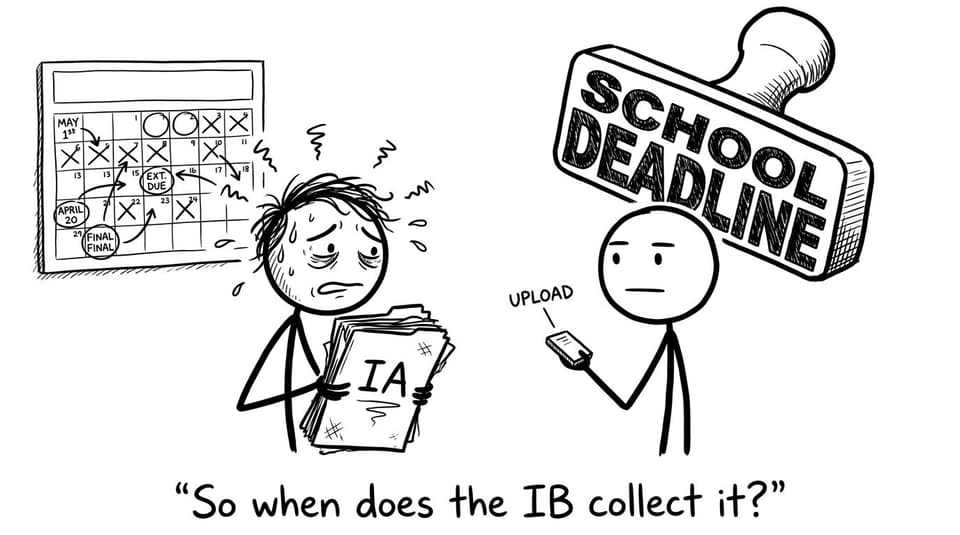
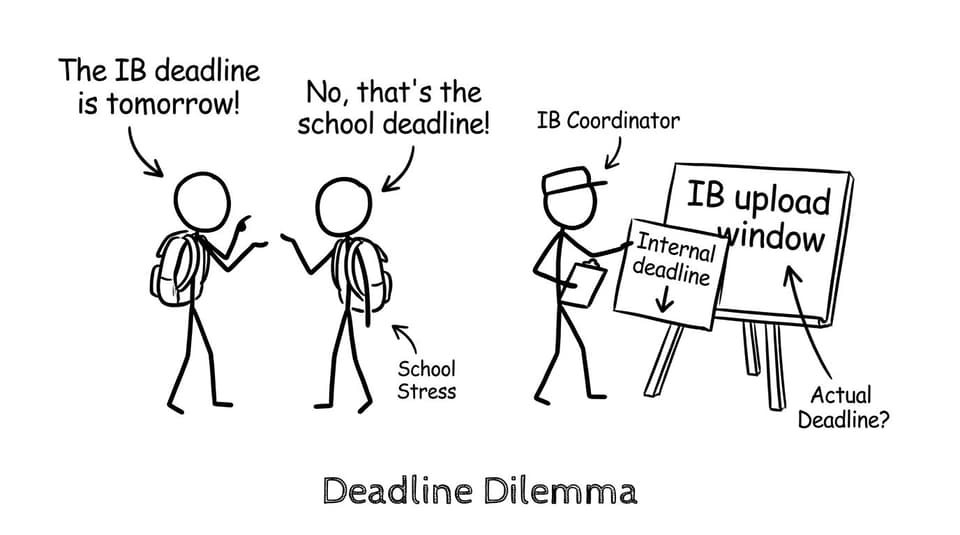
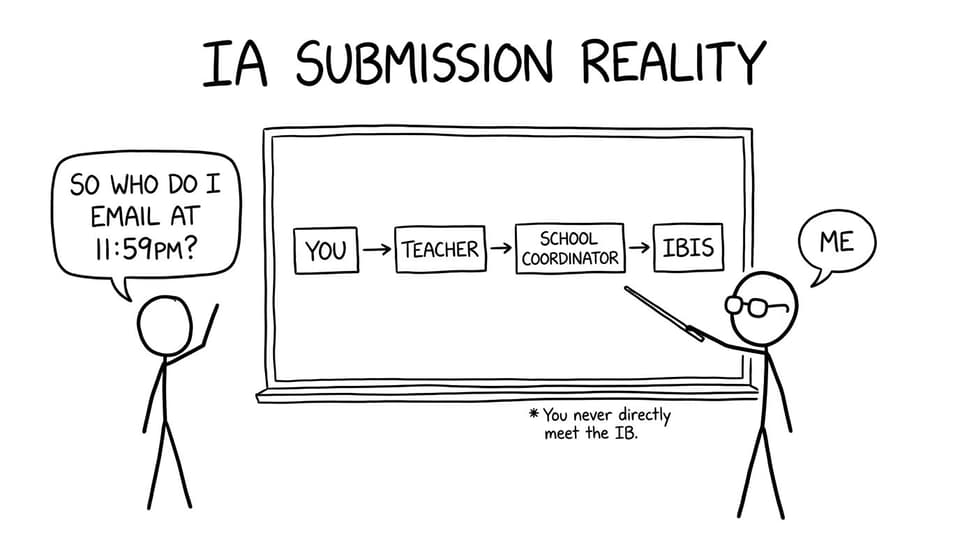
Here's the calming truth: you don't submit your IA directly to the IB. Your school collects your IA first. Your teacher marks it. Your IB coordinator uploads required samples and/or marks to the IB through official systems on the school's side. The IB "collects" your IA through your school, not from you.
That simple fact changes how you should plan: the deadline that matters most to you is almost always the school IA deadline, not an "IB deadline" you found in a forum thread.
Quick checklist: what to do if you're trying to understand your IA deadline
Use this checklist before you touch another sentence in your IA:
- Confirm the school IA deadline (the one your teacher will enforce).
- Ask what format your IA must be submitted in (PDF, word count rules, naming conventions).
- Ask whether your class has staged deadlines (proposal, first draft, final draft).
- Ask what feedback is still allowed at your stage.
- Assume your teacher needs buffer time for marking and internal moderation.
- Plan a final 48-hour QA window for your IA: citations, labels, page numbers, appendix logic.
If you need a broader system for staying organized while exams loom, borrow a structured approach from How to Study for IB Exams: Step-by-Step Guide and treat your IA like one of your weekly non-negotiables.
The real answer: the IB collects your IA through your school
To understand when the IB collects an IA, it helps to picture a relay race.
You run the first leg: choosing a focused topic, gathering evidence/data, writing the analysis, and producing a final document. Then you pass it to your teacher. Your teacher marks your IA using the IB criteria. Your school standardizes marking (often called internal standardization/moderation inside the school). Finally, your IB coordinator handles the official submission steps.
So "IB collects the IA" really means:
- The school submits marks to the IB.
- The school uploads required sample work for moderation (depending on subject/component rules).
- The IB moderates to check marking standards.
That's why your school sets earlier internal deadlines. They need time to mark, review, and upload correctly.
If you want to map the work over months instead of nights, use What is the timeline for completing an IA? as a baseline and then overlay your school's specific dates.
Why your school deadline is earlier than the IB deadline
This is the part that feels unfair until you've seen the machinery behind it.
Your teacher can't mark 25 IAs instantly. Departments often standardize marks across classes. Coordinators need time to check that files are correctly named, authentic, and complete. And if something is missing (a criterion requirement, a citation problem, a corrupted PDF), the fix needs days, not hours.
So your school builds a buffer. That buffer becomes your deadline.
When students ask "when does the IB collect IAs," they're often trying to negotiate with time. But you can't negotiate with process. You can only work with it.
To make that process less chaotic, many students use RevisionDojo's Coursework Library as their "single source of truth" for drafts, exemplars, and structure checks, and then keep daily momentum with Flashcards and a Questionbank so the IA doesn't swallow exam prep.
A practical IA timeline you can actually use (without guessing)
Your exact calendar depends on your school and exam session, but the logic is consistent. Here's a student-friendly timeline you can adapt:
Early stage: topic + feasibility
At this stage, your IA succeeds or fails quietly.
- You test whether your question is narrow enough.
- You check whether you can collect meaningful data or evidence.
- You confirm you can analyze, not just describe.
This is where tools like RevisionDojo's AI Chat help: you can paste your proposed research question and ask for "three ways this could become too broad" or "what analysis would score, not just fill space."
If you're behind already, use Behind on Your IB IAs? How to Catch Up Fast to triage what matters.
Middle stage: drafts + feedback windows
Most schools structure at least one draft checkpoint. Treat that as a gift.
A strong IA draft is not "complete." It's auditable: someone else can follow your logic without living inside your head.
This is also when students get the most value from RevisionDojo's Grading tools (rubric-aligned checks) because you can catch missing evaluation, shallow analysis, or unclear methodology before it hardens into the final.
If you want a pacing strategy that reduces last-minute rewriting, read Time Management Strategies for Completing Your IA on Schedule.
Final stage: the submission that your teacher can actually mark
The best final week move is boring: stop adding new ideas.
Instead:
- Make tables/figures readable.
- Ensure every claim is supported by evidence.
- Tighten evaluation and limitations.
- Fix citations and formatting.
If you need a calm, practical finishing routine, use How to Finish an IA Strong (Not Just Fast) as your closing playbook.
What "moderation" means (and why it affects when the IB collects your IA)
Moderation is the IB's quality-control system. Your teacher marks your IA. But the IB needs to ensure that a "17/24" at your school means roughly the same thing as a "17/24" elsewhere.
So the IB requests samples from schools and compares them to the teacher's marking. If the IB finds the marking is consistently too generous or too harsh, it can adjust marks.
This is why your school cares so much about:
- consistent rubrics,
- standardization meetings,
- clear evidence of academic honesty,
- and clean final files.
It's also why students benefit from studying the rubric language early. Even a quick skim of something like Language A Internal Assessment (IA) Rubric can retrain your instincts toward what the examiner actually rewards.
The most common misunderstanding: "I can submit my IA to the IB later"
This misunderstanding is almost always where panic begins.
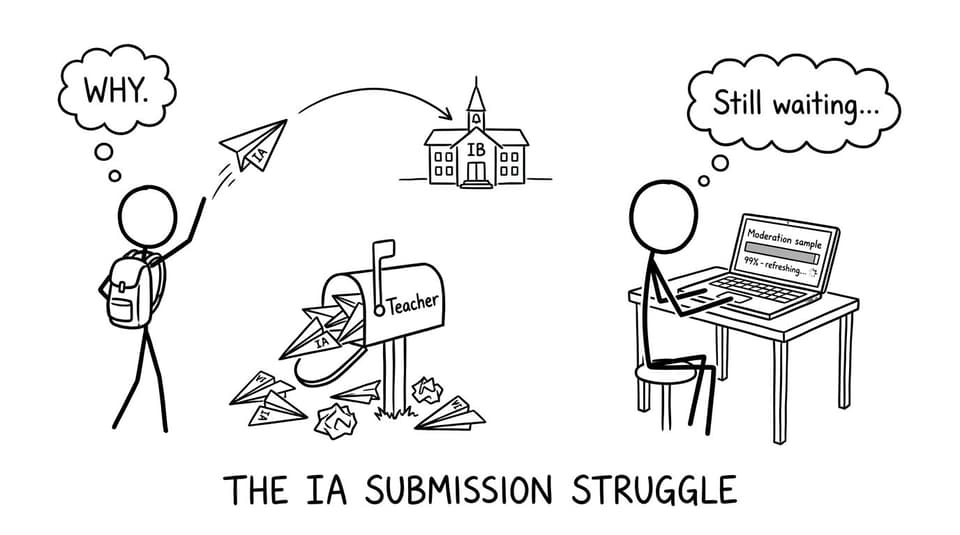
Because you don't submit your IA directly to the IB, there usually isn't a personal "IB portal" waiting for you at midnight. If your school deadline passes, you may lose the chance for teacher feedback, lose internal moderation time, or in worst cases risk non-submission.
If you're already in that situation, don't spiral, follow a recovery plan. Read What to Do When You Miss an IA Deadline and act fast with honest communication.
How to plan your IA alongside exam revision (without burning out)
The quiet trap of the IA is that it feels like "real work," while revision feels like "studying." So the IA wins your attention. Until exams arrive.
A sustainable plan treats IA progress like maintenance, not an emergency.
- Two to four short IA blocks per week (45-75 minutes)
- Daily recall for exam subjects using RevisionDojo Flashcards
- Targeted practice using the Questionbank (so you keep converting knowledge into marks)
- One timed session weekly using Mock Exams or Predicted Papers
If you need a final stretch plan while still carrying coursework, IB: The Last 2 Weeks Before Exams (What Matters) fits well with an IA-heavy calendar.
RevisionDojo is especially useful here because it keeps everything in one workflow: Study Notes for clarity, Questionbank for accuracy, AI Chat for quick explanations, and Tutors when you need a human to help you choose the next best step.
A small story: the best IA students aren't calmer; they're earlier
Every year, there's a student who seems mysteriously relaxed about the IA. They're not smarter. They just made one unglamorous decision: they created a timeline that assumes reality.
Reality includes:
- teachers who have limited time,
- schools that need internal standardization,
- and deadlines that are earlier than you'd like.
So when you ask, "when does the IB collect IAs," you're really asking: when does this leave my hands?
The best answer is: earlier than you think, but later than you fear, if you treat the school deadline as the true finish line.
Closing: treat the school deadline as when the IB collects your IA
So, when does the IB collect IAs? In practice, the IB collects your IA through your school, after your teacher marks it and your coordinator completes the official submission steps. That means your real finish line is the school IA deadline, because that's when your work leaves your control and enters the process.
If you want to feel calm about your IA without sacrificing exam prep, build a system: plan your timeline, finish early enough to revise, and keep your revision loop running with RevisionDojo's Questionbank, Study Notes, Flashcards, AI Chat, Grading tools, Predicted Papers, Mock Exams, Coursework Library, and Tutors when you need a human perspective.
Your IA doesn't need a miracle. It needs a deadline you respect, and a process you can repeat.