
IB October burnout often arrives when the novelty of the Diploma Programme has disappeared but confidence has not yet caught up. The workload is becoming real, early grades may feel unsettling, and habits that worked before IB are starting to fail.
That does not mean you are bad at IB. It usually means your old system is being asked to handle a new kind of pressure.
For many DP1 students, September runs on adrenaline. October runs on evidence. You can now see how demanding your subjects are, but you have not had enough time to become good at managing them. This creates the DP1 dip: a temporary gap between what the programme expects and the systems you currently have.
The answer is not to work every waking hour. It is to reduce uncertainty, protect your energy, and build a smaller system you can repeat.
The short version: what to do this week
If October feels heavier than expected, start here:
- List every open task without trying to complete it immediately.
- Identify the three tasks with the nearest real consequences.
- Tell a teacher if you are already falling behind.
- Replace one vague study session with two focused blocks.
- Keep a consistent stopping time on at least four evenings.
- Protect sleep instead of using it as emergency study time.
- Review one difficult topic through questions rather than rereading.
- Leave one evening or half-day meaningfully lighter.
This is not a complete transformation. It is a stabilisation plan. When the floor stops moving, you can think clearly again.
Why October feels so difficult in IB DP1
By October, your subjects begin competing with one another. A mathematics test lands beside a literature essay. Laboratory work overlaps with language preparation. TOK, CAS, and early coursework conversations add commitments that may not feel urgent individually but become heavy together.
The Diploma Programme includes six subjects alongside the DP core, usually with three or four subjects at Higher Level. You are therefore adapting to several assessment styles, teacher expectations, and planning horizons at once. The difficulty is not just the amount of content.
October also removes an important illusion: being busy and making progress are not identical. Three hours spent reorganising notes can feel responsible without resolving the chapter you do not understand. That discovery is uncomfortable, but it is also where effective IB habits begin.
If you need a benchmark rather than a heroic target, read how much DP1 students should study outside class. The right amount depends on your subjects, school calendar, commute, health, and deadlines. More hours are not automatically better hours.
The difference between a hard month and a harmful pattern
Students often use burnout to describe any period of tiredness. Clinically, the term has a narrower context, so it is useful not to diagnose yourself from one difficult week. Still, persistent exhaustion, growing detachment from school, and a reduced sense of effectiveness deserve attention.
A hard October may involve temporary tiredness or frustration after disappointing results. A more concerning pattern may include being unable to recover after rest, regularly losing sleep to schoolwork, feeling numb or hopeless, withdrawing from people, or struggling to function beyond your studies.
Do not treat those signs as a productivity problem. Speak to a parent, trusted teacher, counsellor, DP coordinator, doctor, or another appropriate professional. If you feel unsafe or think you may harm yourself, seek immediate help from local emergency or crisis services and tell a trusted adult now.
For practical warning signs and recovery advice, see what happens when IB system overload becomes burnout.
Solve uncertainty before chasing productivity
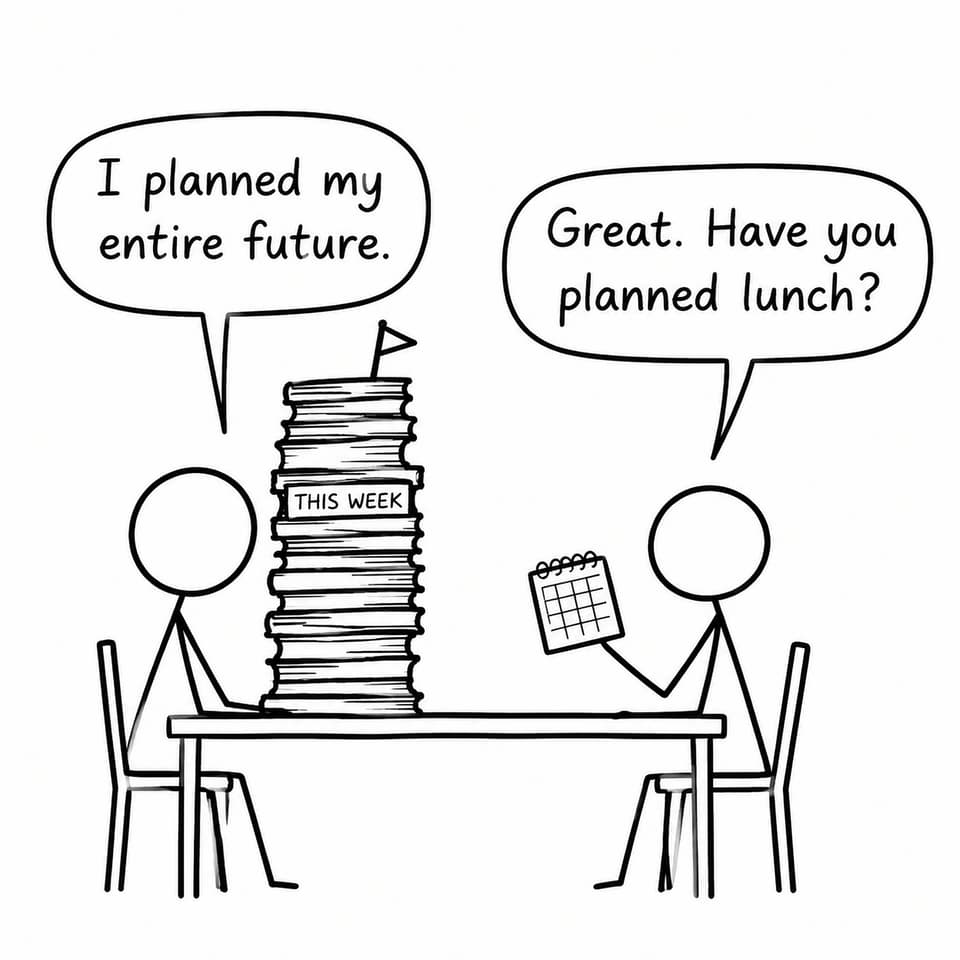
Work feels larger when it has no edges. “Revise chemistry” could mean 20 minutes or six hours. “Start the essay” offers no visible finish line. Your brain keeps carrying these tasks because it cannot tell when they are complete.
Turn each vague obligation into a physical next action:
| Vague task | Clear next action |
|---|---|
| Study biology | Answer 10 questions on cell respiration and mark them |
| Work on English | Draft one analytical paragraph using one quotation |
| Catch up in mathematics | Identify three missed concepts and ask about the first |
| Do CAS | Record one reflection and upload the evidence |
| Organise everything | Enter confirmed deadlines into one weekly view |
Sort the results into must happen this week, important but movable, and not now. The third group matters. A plan with no deliberate exclusions is only a wish list.
A useful planner should expose trade-offs rather than decorate them. This guide to planning an IB workload explains why different months cannot be planned as though their demands were identical.
Build a minimum viable week
When students feel behind, they often design an ideal week for an imaginary version of themselves. One disruption breaks the plan, and guilt fills the space. Build a minimum viable week instead. It should still function when you are tired.
Choose three academic outcomes
Choose three outcomes that would make Friday meaningfully better. They might be submitting an essay, understanding one mathematics topic, and preparing properly for a biology test. These are outcomes, not promises to sit at a desk for a certain number of hours.
Use focused study blocks
Try 25-45 minutes of focused work followed by a short break. Give each block one visible result. If you cannot name that result, the task is still too vague.
Place one demanding block at the earliest realistic point when your attention remains usable. Save routine review or file organisation for periods when your energy is lower.
Set a stopping rule
Decide when schoolwork ends. A stopping time prevents every task from expanding into the night and forces you to prioritise.
Teenagers generally need about 8-10 hours of sleep in each 24-hour period. Consistently trading sleep for revision can weaken the attention and memory you need the following day. Sleep is not a reward for completing everything. It is part of learning.
For additional structure, choose one or two of these IB time-management techniques. Trying to adopt every technique at once simply creates another project.
Change how you study before studying longer
October often exposes passive study. Rereading and highlighting can create familiarity, but familiarity is not the same as retrieving an answer independently.
Use a more active loop:
- Learn a small section from class materials or Study Notes.
- Close the explanation and retrieve the main ideas from memory.
- Answer relevant questions without assistance.
- Check your work and label the error.
- Return to the weak point after a delay.
RevisionDojo keeps this process connected. Use Study Notes for initial clarity, Flashcards for retrieval, and the Questionbank for topic-specific application. If an explanation still does not make sense, AI Chat can help you inspect the missing step, while Grading tools provide structured feedback on practice.
Predicted Papers and Mock Exams are more useful for broader checks once you have covered enough material. The Coursework Library can show you the shape and standard of IB work without becoming something to copy. Tutors can provide targeted support when a difficulty is persistent rather than temporary.
If long sessions leave little in memory, try this active recall method for IB students. Retrieving a smaller amount is usually more useful than passively rereading a larger one.
What to say when you are falling behind
Silence makes manageable problems expensive. A teacher may be able to clarify what quality is required, correct a misunderstanding, or help you prioritise. They cannot do that without knowing what is happening.
You do not need a dramatic explanation. Try:
I am struggling to manage the current overlap of tasks. I have completed X, and I am stuck on Y. Which part should I prioritise before Friday?
This shows honesty while asking a specific question. Talk to your DP coordinator if the issue crosses several subjects. Speak to family members about practical pressures such as transport, chores, noise, or expectations. Ask classmates for clarification rather than comparison. Someone studying until 2 a.m. tells you nothing reliable about the quality or sustainability of their work.
How to know whether the reset is working
Do not judge the week only by motivation. Motivation often returns after progress becomes visible, not before.
Look instead for operational signs:
- You know the next action for each priority.
- Fewer tasks are being carried only in your head.
- You stop working at roughly the planned time.
- You can explain errors in your practice answers.
- You have asked for help with a genuine blockage.
- One lighter period remains protected.
You may still feel tired. Recovery is not always immediate. The first win is moving from chaos to a plan you can see.
If the slump is mainly emotional rather than logistical, try this late-October IB motivation reset. It focuses on restoring direction without waiting to feel inspired.
October is feedback, not a verdict
The DP1 dip feels personal because academic performance is highly visible. A low mark can appear to say something permanent about your ability. Usually, it says something narrower: your preparation, understanding, timing, or response structure needs adjustment.
That is useful information. DP1 is where you develop the systems that DP2 will eventually rely on. You do not need to have them perfected eight weeks after starting.
RevisionDojo supports that gradual process, from early topic review to coursework and examination preparation. The DP1 guide to starting with RevisionDojo can help you select tools for your current stage instead of trying everything at once.
Your task this week is smaller than rescuing the entire Diploma Programme. Make the workload visible. Choose three outcomes. Study through retrieval. Protect a stopping time. Tell someone where you are stuck.
Then plan the next week, not the next two years. You can download the free DP1 planner when you create a free RevisionDojo account. October does not require more pressure. It requires a clear place to decide what matters now.