


If you have ever finished a practice oral and thought, That sounded smart... but would it score? you are already asking the question the IA rubric is built to answer. The Language A Individual Oral is only ten minutes long, yet it can feel like an entire course squeezed into a single breath: global issue, close analysis, clear structure, precise language. The good news is that the IA criteria are predictable. The better news is that, once you learn how the IA rubric “thinks,” you can practise in a way that actually moves marks.
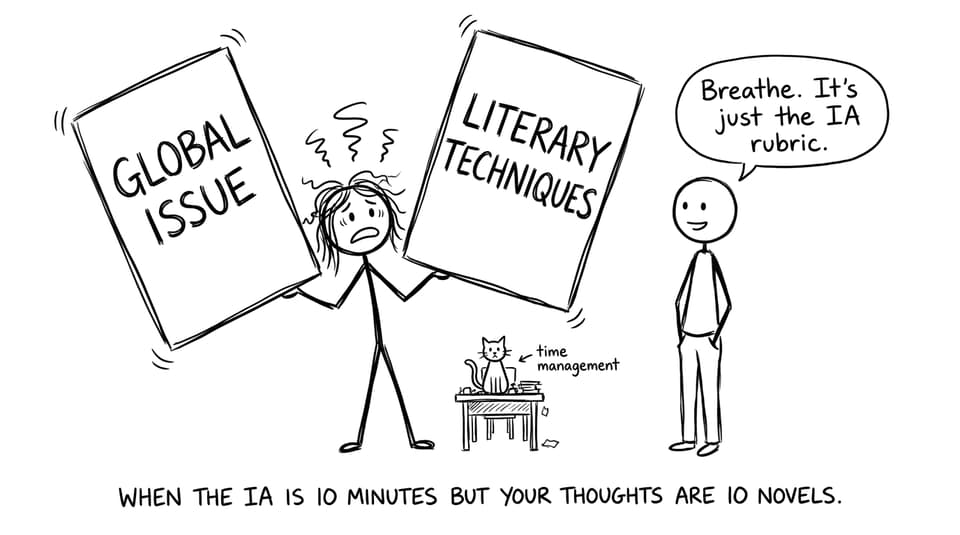
IA rubric in one glance (your fast checklist)
Before you rehearse again, run this IA checklist:
-
Global issue: defined in one sentence, genuinely present in both texts.
-
Evidence: short, precise references to the extract and the wider work/body of work.
-
Technique-to-meaning links: every feature you mention has an effect and a purpose.
-
Line of argument: a through-line that keeps the IA focused.
-
Balance and timing: roughly equal attention to both texts.
-
Language control: academic, clear, and calm.
For a broader IO breakdown and how the task works, keep IB Oral (IO) Guide: Language & Lit and Literature open while you plan.
Criterion A: Knowledge, understanding, interpretation (10)
Criterion A is where many IAs quietly rise or collapse. Examiners are listening for accurate knowledge of the extract, but also signs you understand the whole work (or the non-literary body of work). This is the difference between “I recognise this moment” and “I can explain why this moment matters.”
High-scoring IA interpretation has three habits:
-
It anchors claims in the text (specific words, images, structural turns).
-
It connects back to the global issue without forcing it.
-
It shows you understand context within the work, not just the extract’s surface.
If you want a criteria-aligned overview from RevisionDojo, pair this post with Language A Individual Oral: How to Score Higher with AI.
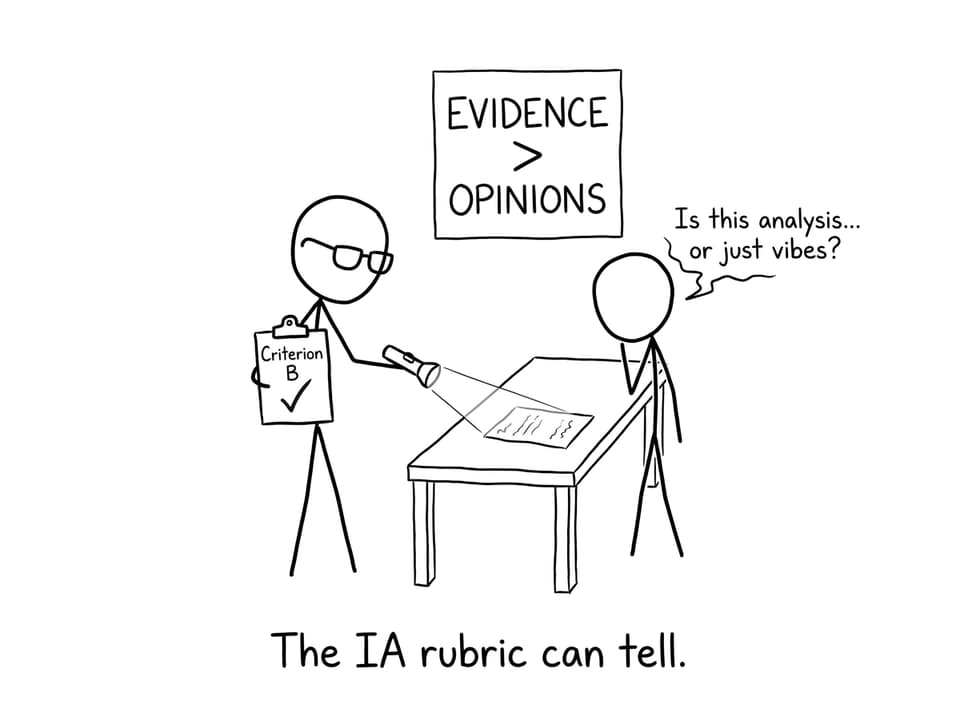
Criterion B: Analysis and evaluation (10)
Criterion B is the heart of the IA rubric: how writers and creators build meaning. Many students list techniques like they are inventory. Examiners want causality.
A reliable IA sentence pattern is:
The author’s choice of X creates Y effect, which shapes how the global issue is understood as Z.
You can hear the gears turning: choice, effect, meaning, issue. When you do this consistently, Criterion B becomes less mysterious.
For structured practice, RevisionDojo’s IB Language A: Individual Oral Grader helps you check whether your IA analysis actually matches the rubric language.
Criterion C: Focus, organisation, balance (10)
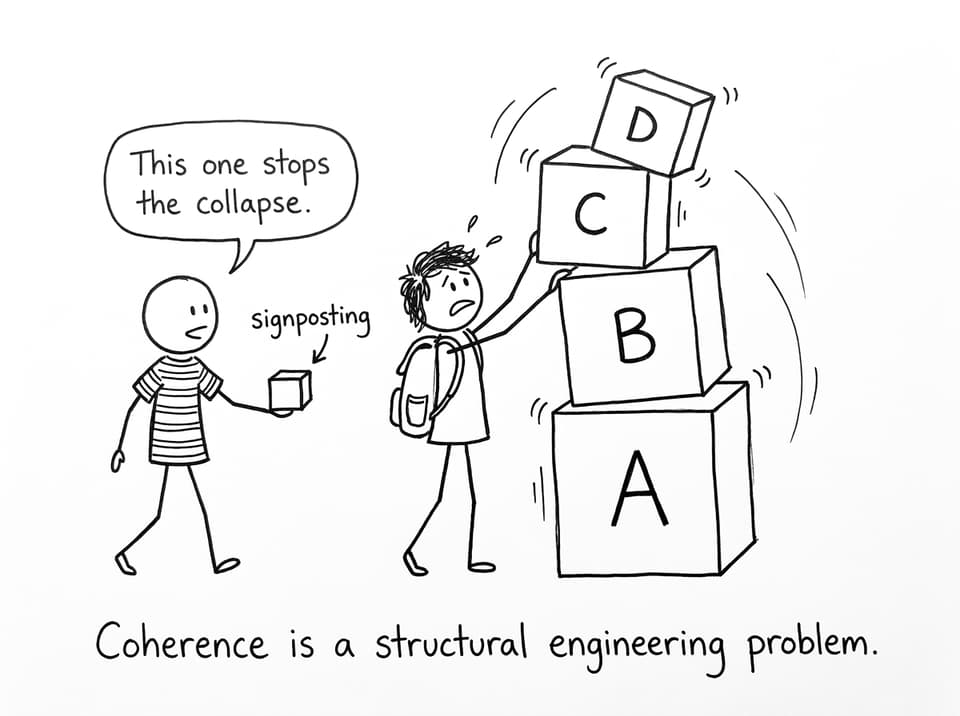
Criterion C rewards something that feels boring until you are under pressure: a structure that holds.
A simple IA structure that usually works:
-
Opening (30-45s): global issue + texts + your main thesis.
-
Text 1 (4 mins): 2 claims, each with evidence and authorial choices.
-
Text 2 (4 mins): same pattern, clearly tied back to the issue.
-
Synthesis (1 min): the comparison moment: so what?
-
Close (30s): what the global issue reveals when you place these texts together.
If you struggle to choose a lens, How to Choose the Right Field of Inquiry for Your IB IO can help you keep your IA argument coherent rather than sprawling.
Criterion D: Language (10)
Criterion D is not about sounding fancy. It is about sounding in control.
Strong IA language usually means:
-
precise literary vocabulary (tone, modality, juxtaposition, narrative perspective)
-
accurate sentences with minimal filler words
-
an academic register that still feels natural when spoken
If your delivery sounds clear in your head but messy in recordings, practise with a tool that makes feedback unavoidable. The guide Record and Grade IB Oral Presentations: All-in-One Platform explains a workflow that mirrors rubric expectations.
How RevisionDojo helps you improve your IA (not just redo it)
Most students do the same IA practice loop: rehearse, cringe, repeat. RevisionDojo makes the loop sharper.
-
Use the Coursework Library to see what strong IO work looks like: IB Language A: Individual Oral Examples.
-
Use the Grading tools to align feedback with Criteria A-D: IB Language A: Individual Oral Grader.
-
Build your content base with Study Notes and convert them into active recall with Flashcards.
-
Train under pressure using Mock Exams and Predicted Papers for broader exam readiness.
-
Drill course skills using the Questionbank in the English A hub: IB English A Lang & Lit Resources.
-
When you get stuck, use AI Chat to test thesis statements, global issue phrasing, and analysis clarity.
-
If you want human nuance, book support through Tutors for targeted Criterion B and Criterion C improvements.
Closing: make the IA rubric your practice partner
The IA is not won by last-minute inspiration. It is won by rehearsing the exact skills the IA rubric rewards: knowledge you can prove, analysis you can explain, structure you can follow, language you can trust. If you want a single place to practise those skills with feedback loops built in, RevisionDojo gives you the full stack: Questionbank, Study Notes, Flashcards, AI Chat, Grading tools, Predicted Papers, Mock Exams, Coursework Library, and Tutors.
Open the IA rubric, record one run, grade it, adjust one criterion at a time, and repeat. That is how ten minutes becomes predictable.