



Your IA rarely fails because you “didn’t work hard enough.” It usually fails because time disappears in small, ordinary ways: a topic that’s too big, feedback you can’t act on, formatting you leave for “later,” and exams quietly moving closer.
If you’re an IB student preparing for exams, the question “What is the timeline for completing an IA?” is really a different question: How do I finish something big without sacrificing everything else? This guide gives you a realistic IB IA timeline you can follow, with buffers built in.
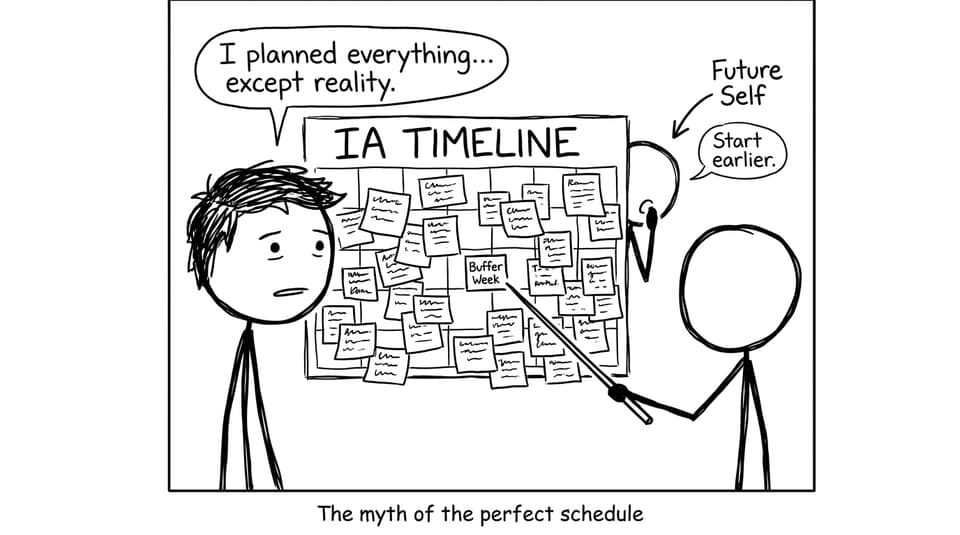
The realistic IB IA timeline at a glance
Most students need 8-18 weeks depending on subject, access to data, and how quickly they lock a workable question.
Quick checklist (copy into your planner)
-
Weeks 1-2: choose topic + narrow aim/RQ
-
Weeks 3-6: research and/or data collection
-
Weeks 7-10: analysis + visuals (graphs/tables) + outline
-
Weeks 11-14: draft writing + citations
-
Weeks 15-18: feedback, revision, formatting, final checks
For a deeper look at how the stages fit together, keep this guide open: What is the timeline for completing an IA?
Phase 1: Weeks 1-2 (planning that saves you later)
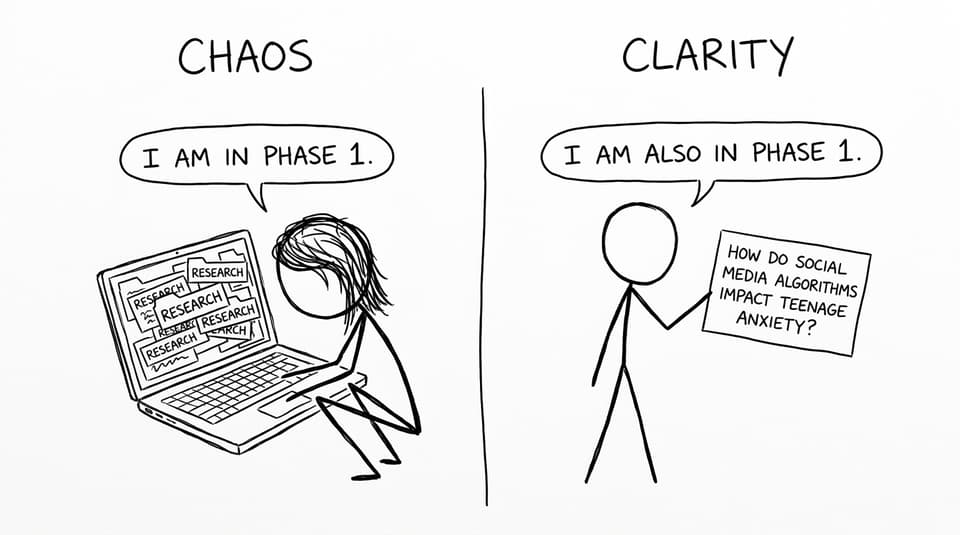
In IB, the first two weeks decide whether the next two months feel steady or chaotic. Your job is to make the project small enough to finish.
Do three things early:
-
Read what the IA is really asking for in your subject.
-
Choose a question you can answer with evidence (not vibes).
-
Confirm your school’s internal deadlines.
If you’re still clarifying what an IA is across subjects, start here: What Is an IA? Understanding the Internal Assessment in IB
Phase 2: Weeks 3-6 (research and data that stays usable)
This is the “make it real” window. In sciences, it might be trials and measurements. In humanities, it might be selecting sources and extracting evidence. In math, it’s building the model and checking whether the maths will actually carry the exploration.
Two IB rules of survival here:
-
Collect less, but collect clean (repeatable, labeled, traceable).
-
Write short notes as you go, so you don’t forget why you made choices.
If you’re tempted to invent data, read this first: What If My IA Data Is Just AI-Generated Nonsense?
Phase 3: Weeks 7-10 (analysis first, writing second)
A strong IB IA is judged by thinking, not typing. That means analysis should lead.
Practical approach:
-
Build your tables/graphs early.
-
Write one paragraph per key pattern: what you found, what it means, what might limit it.
-
Use feedback tools before you polish language.
RevisionDojo’s Grading tools are perfect at this stage because they push you back toward criteria and away from “pretty but empty.” If you need subject-specific marking support, you can also check a rubric grader like the IB History IA Grader.
Phase 4: Weeks 11-14 (drafting without drowning)
Drafting is where many IB students accidentally overwork: they rewrite everything instead of strengthening what earns marks.
Draft in passes:
-
Pass 1: structure and signposting
-
Pass 2: evidence and analysis depth
-
Pass 3: evaluation/reflection and limitations
For evaluation guidance that actually translates into marks, use: How to Write a Compelling IA Evaluation Section
Phase 5: Weeks 15-18 (feedback, finalization, and buffers)
This is not “the panic phase.” It’s the IB packaging phase.
Plan two buffers:
-
One buffer week for teacher feedback and rewrites
-
One buffer window (48 hours) for formatting, citations, labeling, and final proofing
If you’re unsure how deadlines work at school vs IB systems, read: When Are IAs Due? The IB IA Deadline Reality and When Does the IB Collect IAs? The Real IA Timeline
How to balance an IB IA timeline with exam prep
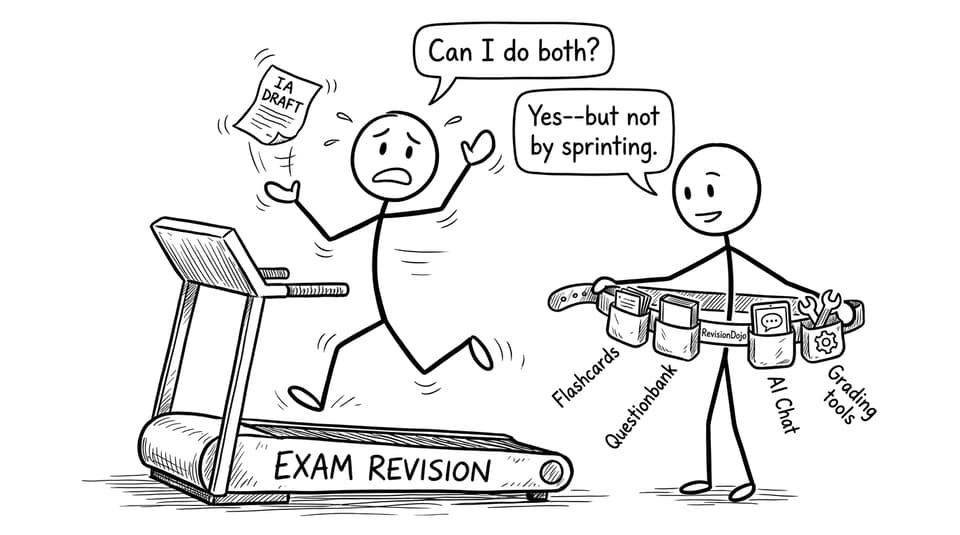
Your IA should not erase your exam readiness. The best students run two tracks:
-
IA track (3 sessions/week): create, analyze, revise
-
Exam track (daily small): recall + timed practice
RevisionDojo makes that doable in one place: use Study Notes and AI Chat when you’re stuck, Flashcards for daily recall, and the Questionbank to keep converting knowledge into marks. When it’s time to rehearse under pressure, use IB Predicted Papers by IB Examiners (Free). And when you want to see what strong coursework looks like, browse IB Coursework Examples: IA, EE and TOK Exemplars.
Closing: turn your IB IA timeline into calm momentum
The best IB IA timeline is the one that leaves you room to think. Build it around stages, not motivation: narrow early, collect clean evidence, analyze before you decorate, and protect buffers like they’re part of the rubric.
When you’re ready to move faster with less stress, use RevisionDojo as your home base: exemplars in the Coursework Library, criterion-focused Grading tools, quick help from AI Chat, and exam momentum through Flashcards, Questionbank, and Predicted Papers. Your IA shouldn’t feel like a cliff. With the right timeline, it becomes a steady climb.