
RevisionDojo logoRevisionDojo logo
FeaturesPricingSchools
Interactive Lessons

Learn by doing, not just reading

Work through guided explanations and short activities that keep you actively checking what you understand.

Start a Lesson

Why life likely began in water
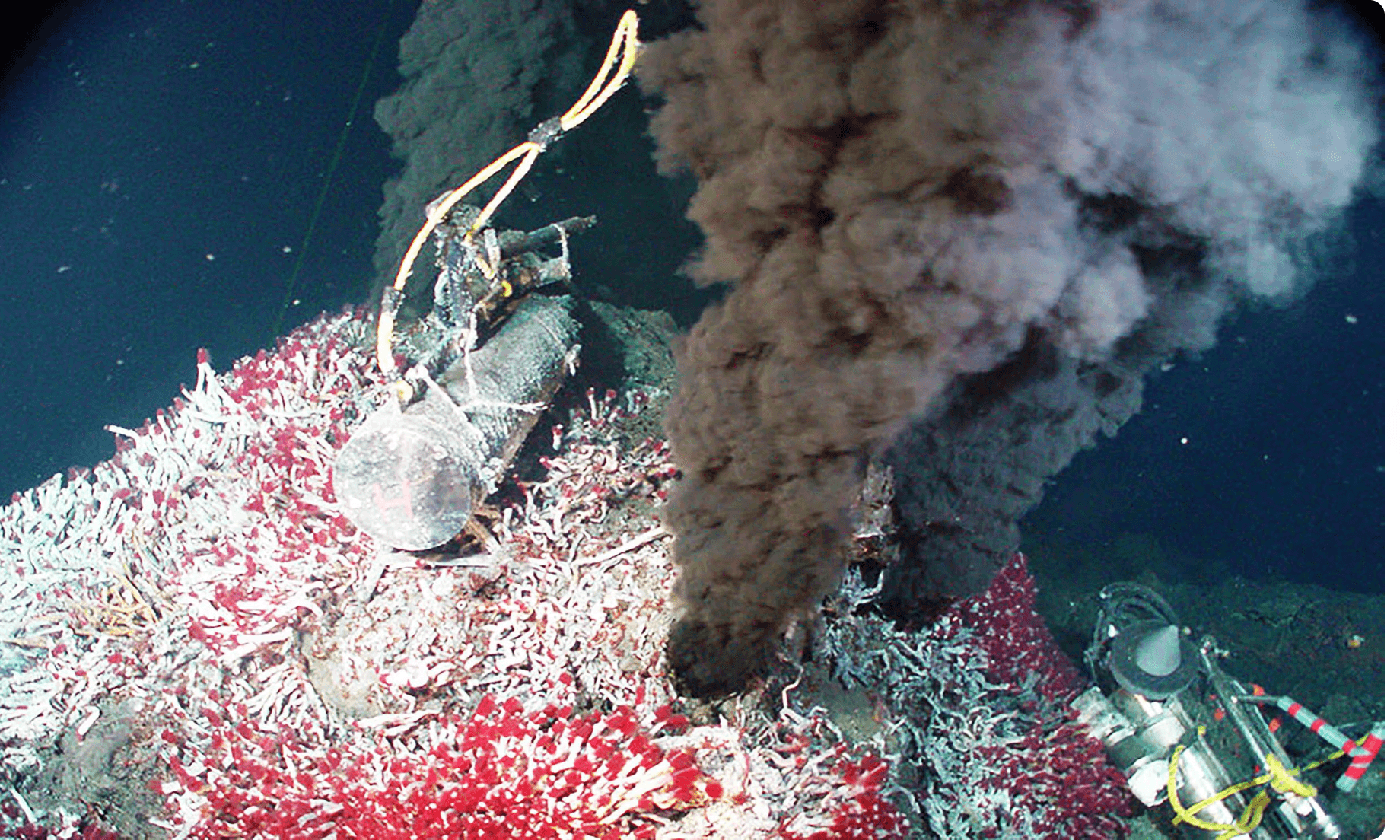
A hydrothermal vent on the deep ocean floor

Life is believed to have begun in aquatic environments (oceans, lakes, primordial ponds). These settings offered the physical and chemical conditions needed for early reactions to persist long enough to build complexity.

Why water was such a good starting place:

  • It provides a stable environment (temperature changes are slower than in air).
  • It protects and buffers chemicals so reactions can happen repeatedly.
  • It lets important molecules dissolve, move, collide, and react, helping early chemistry become biology.
Analogy
Think of water like a “crowded dance floor” for molecules: they can drift around, bump into each other, and sometimes link up into something more complex.
Note
On early Earth, having liquid water also helped shield fragile molecules from harsher surface conditions.


Water's key life-supporting features (big picture)

Three “headline” reasons water is the medium for life:

  1. Polarity: water has uneven charge distribution, helping it interact with many substances.
  2. Hydrogen bonding: water molecules stick (weakly) to each other, creating unusual properties.
  3. Solvent ability: water dissolves many ionic and polar substances, forming a solution where reactions occur efficiently.

Interactive Lessons That Stick

Work through each topic step by step with interactive lessons that help difficult concepts finally click.

Interactive Lessons That Stick

Work through each topic step by step with interactive lessons that help difficult concepts finally click.

01

Build ideas in the right order

Move through a guided sequence that introduces each concept before asking you to apply it.
Why water is polar

Oxygen attracts the shared electrons more strongly than hydrogen.

O

δ−

←
H

δ+

This uneven sharing creates partial charges, making the molecule polar.

02

Check understanding as you learn

Answer short questions and complete active tasks before a misconception turns into a larger gap.
Tap the matching pairs
Polarity
Dissolves ionic and polar substances
Cohesion
Unequal charge distribution
Solvent
Attraction between partial charges
Hydrogen bond
Water molecules stick together
03

Finish with a clear result

See your accuracy and time, then continue to the next lesson or restart while the topic is still fresh.

Lesson Complete!

Your Stats

0%

Accuracy

0:00

Time spent

0+

lessons completed

0+

practice questions to apply them

0+

students

Start studying in a couple of minutes

A free account saves your progress, remembers what you have covered, and picks up where you left off on any device.

Start a Lesson

Explore related features

One connected toolkit for learning, practice, and coursework.

Study Notes

Clear explanations organised by the syllabus

Flashcards

Active recall with spaced repetition

Videos

Focused explanations and worked examples

Jojo holding a cookie

This site uses cookie tracking technologies. Learn more in our Cookie Policy.

Join 650k+ students breezing through the IBReady to breeze through the IB?

Footer

General

  • For parents
  • For schools
  • Pricing
  • Gift RevisionDojo
  • Tutoring
  • IB syllabus
  • MYP syllabus
  • Blog
  • Research

Features

  • Question Bank
  • Test Builder & Exam Mode
  • Predicted Papers
  • Past Papers
  • Study Notes
  • Interactive Lessons
  • Flashcards
  • Videos
  • Cheatsheets
  • Teach Jojo
  • Coursework Grader
  • Coursework Exemplars

Research

  • State of learning survey
  • IB Moderation Analysis
  • Jojo AI vs ChatGPT
  • Jojo AI vs Gemini
  • Jojo AI vs Perplexity
  • Jojo AI vs Claude
  • Jojo AI vs Poe

Platform

  • RevisionDojo vs Others
  • Content philosophy
  • Trustpilot
  • Join usWe're hiring
  • Terms and conditions
  • Privacy policy
  • Cookie policy
  • Trust Center

MYP Subjects

  • MYP Biology
  • MYP Chemistry
  • MYP English Lang & Lit
  • MYP Extended Mathematics
  • MYP History
  • MYP Individuals & Societies
  • MYP Physics
  • MYP Standard Mathematics
  • MYP Biology
  • MYP Chemistry
  • MYP English Lang & Lit
RevisionDojo logo

© 2022 - 2026 RevisionDojo (MyDojo Inc)

RevisionDojo was developed independently of the IBO and as such is not endorsed by it in any way.

  • Coursework Guides
  • AI & Plagiarism Checker
  • IO Grader
  • IB grade calculator
  • Grade boundaries
  • MYP Extended Mathematics
    • MYP History
    • MYP Individuals & Societies
    • MYP Physics
    • MYP Standard Mathematics

    IB Subjects

    • Arabic ab initio
    • Arabic B
    • Biology
    • Business Management
    • Chemistry
    • Chinese A Lang & Lit
    • Chinese B
    • Computer Science (CS)
    • Computer Science (First Exam 2027)
    • Design Technology (DT)
    • Design Technology (First Exam 2027)
    • Digital Society (DS)
    • Economics
    • English A Lang & Lit
    • English A Lit
    • English B
    • Environmental systems and societies (ESS)
    • French A
    • French ab initio
    • French B
    • Geography
    • German A
    • German ab initio
    • German B
    • Global Politics
    • History
    • Mathematics Analysis and Approaches (AA)
    • Mathematics Applications & Interpretation (AI)
    • Philosophy
    • Physics
    • Psychology
    • Psychology (First Exam 2027)
    • Arabic ab initio
    • Arabic B
    • Biology
    • Business Management
    • Chemistry
    • Chinese A Lang & Lit
    • Chinese B
    • Computer Science (CS)
    • Computer Science (First Exam 2027)
    • Design Technology (DT)
    • Design Technology (First Exam 2027)
    • Digital Society (DS)
    GDPR compliant
    Download on the App Store
  • Spanish A
  • Spanish ab initio
  • Spanish B
  • Sports, exercise and health science (SEHS)
  • Theory of Knowledge (TOK)
  • Economics
  • English A Lang & Lit
  • English A Lit
  • English B
  • Environmental systems and societies (ESS)
  • French A
  • French ab initio
  • French B
    • Geography
    • German A
    • German ab initio
    • German B
    • Global Politics
    • History
    • Mathematics Analysis and Approaches (AA)
    • Mathematics Applications & Interpretation (AI)
    • Philosophy
    • Physics
    • Psychology
    • Psychology (First Exam 2027)
    • Spanish A
    • Spanish ab initio
    • Spanish B
    • Sports, exercise and health science (SEHS)
    • Theory of Knowledge (TOK)