
Tested January 10, 2026
Product details reviewed August 21, 2026
Jojo AI vs Claude
Jojo AI and Claude are both generative AI tools that can help students learn. The conversations below preserve our January 10, 2026 side-by-side test: identical prompts, the model available on that date, and the responses each product returned. Jojo's main distinction is its direct connection to IB resources, exam workflows, and native interactive study tools.
Interactive Learning Tools
Quizzes
User message:
Quiz me on the pros and cons of supply side policies
 Claude
I'll quiz you on supply-side policies! Let me start with some questions:
Question 1: Supply-side policies often involve reducing taxes on businesses and high earners. What's one major argument supporters make for why this would boost economic growth?
Question 2: Critics of supply-side policies raise concerns about income inequality. Can you explain their reasoning?
Question 3: Deregulation is a common supply-side tool. What's a potential benefit of reducing regulations on businesses, and what's a potential drawback?
Question 4: Investment in education and infrastructure are sometimes called "supply-side" policies too. How do these differ from the tax-cutting approach, and what advantage might they have?
Question 5: Supply-side economists often talk about the "Laffer Curve." What does this concept claim, and what's one criticism of relying on it for policy decisions?
Take your time with any or all of these! I can give you feedback on your answers and we can discuss the nuances of each point.
 Jojo
I'll create a quiz on the pros and cons of supply-side policies for you.


Great! I've created a quiz covering key aspects of supply-side policies. Here are the main pros and cons to keep in mind:
Pros:
- Increase long-term productive capacity
- Reduce inflationary pressures
- Improve international competitiveness
- Boost economic growth potential
Cons:
- Time lags - effects take years
- Can increase inequality
- May reduce worker protections
- Opportunity cost of government spending
How did you find the quiz? Would you like me to create flashcards on this topic or explore specific types of supply-side policies?
All chats are real chats created by the models stated above on January 10, 2026. Claude uses the Sonnet 4.5 model.
Jojo AI delivers fully interactive quizzes with navigable questions, immediate feedback, and real-time scoring - all within the chat. In this January 10, 2026 test, Claude returned a text-formatted quiz rather than a native scored quiz. Jojo turned passive reading into active practice.
Flashcards
User message:
Make flashcards for the cell division process
ClaudeHere are flashcards for the cell division process in text format:
CARD 1 Front: What is the cell cycle? Back: The cell cycle is the series of events that a cell goes through as it grows and divides. It consists of interphase (G1, S, G2) and the mitotic phase (mitosis and cytokinesis).
CARD 2 Front: What happens during G1 phase? Back: G1 (Gap 1) is the first growth phase where the cell increases in size, produces RNA and synthesizes proteins, and prepares for DNA replication.
CARD 3 Front: What occurs during S phase? Back: S phase (Synthesis phase) is when DNA replication occurs. Each chromosome is duplicated to form two identical sister chromatids joined at the centromere.
CARD 4 Front: What is the purpose of G2 phase? Back: G2 (Gap 2) is the second growth phase where the cell continues to grow, produces proteins and organelles, and prepares for mitosis. The cell checks that DNA has been replicated correctly.
CARD 5 Front: What are the stages of mitosis in order? Back: Prophase, Metaphase, Anaphase, Telophase (remember: PMAT)
CARD 6 Front: What happens during prophase? Back: Chromatin condenses into visible chromosomes, the nuclear envelope breaks down, centrioles move to opposite poles, and spindle fibers begin to form.
CARD 7 Front: What happens during metaphase? Back: Chromosomes align along the cell's equator (metaphase plate), and spindle fibers attach to the centromere of each chromosome at the kinetochore.
CARD 8 Front: What happens during anaphase? Back: Sister chromatids separate and are pulled to opposite poles of the cell by the spindle fibers. This is the shortest phase of mitosis.
CARD 9 Front: What happens during telophase? Back: Nuclear envelopes reform around each set of chromosomes, chromosomes begin to uncoil back into chromatin, and the spindle fibers disappear.
CARD 10 Front: What is cytokinesis? Back: Cytokinesis is the physical division of the cytoplasm that occurs after mitosis. In animal cells, a cleavage furrow forms; in plant cells, a cell plate forms.
CARD 11 Front: What is the difference between mitosis and meiosis? Back: Mitosis produces 2 identical diploid daughter cells for growth and repair. Meiosis produces 4 non-identical haploid gametes (sex cells) for sexual reproduction.
CARD 12 Front: What happens during Meiosis I? Back: Homologous chromosomes pair up (synapsis), crossing over occurs, and then homologous pairs separate, reducing the chromosome number by half (diploid to haploid).
CARD 13 Front: What happens during Meiosis II? Back: Sister chromatids separate (similar to mitosis), resulting in four haploid cells, each with a unique combination of genetic material.
CARD 14 Front: What is crossing over and when does it occur? Back: Crossing over is the exchange of genetic material between homologous chromosomes. It occurs during prophase I of meiosis and increases genetic variation.
CARD 15 Front: What are checkpoints in the cell cycle? Back: Checkpoints are control mechanisms that ensure the cell is ready to proceed to the next phase. Major checkpoints include G1/S, G2/M, and the spindle checkpoint during metaphase.
Feel free to study these by covering the back and testing yourself on each question!
JojoI'll create a comprehensive set of flashcards for the cell division process, covering both mitosis and meiosis.
Great! I've created a comprehensive set of flashcards covering the cell division process. The deck includes:
Key topics covered:
- Mitosis phases (prophase, metaphase, anaphase, telophase)
- Meiosis I and II divisions
- Key differences between mitosis and meiosis
- Cell cycle phases and checkpoints
- Genetic variation mechanisms
- Cytokinesis in plant vs animal cells
Would you like me to create a quiz to test your understanding of these concepts?
All chats are real chats created by the models stated above on January 10, 2026. Claude uses the Sonnet 4.5 model.
Jojo AI creates interactive flashcard decks with flip animations and seamless navigation - study directly in the chat. In this January 10, 2026 test, Claude returned text-formatted cards rather than a native saved deck. With Jojo, the study tool is the conversation.
Graphs
User message:
Help me graph the function sin(x)
Claude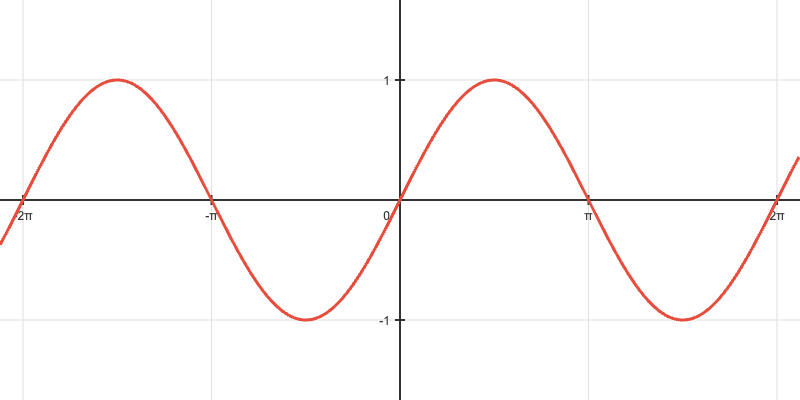
I've created a graph of sin(x) for you! The graph shows:
- The classic sine wave oscillating between -1 and 1
- The x-axis marked with key values (including -π, π, etc.)
- Grid lines to help you identify values
- Key features listed below the graph
The red curve shows how sin(x) smoothly oscillates with a period of 2π. You can see the wave crosses zero at multiples of π, reaches its maximum of 1 at π/2, and its minimum of -1 at 3π/2.
Would you like me to modify anything about the graph, such as adding more periods, changing the scale, or showing transformations like sin(2x) or sin(x) + 1?
JojoI'll help you graph the sine function. Let me create a clear visualization for you.
Here's the graph of {functionFormula}. Key features to notice:
Period: {periodFormula} (repeats every {periodFormula} units) Amplitude: 1 (oscillates between -1 and 1) Domain: All real numbers Range: {rangeFormula} Zeros: At {zerosFormula} where n is an integer Maximum: 1 at {maximumFormula} Minimum: -1 at {minimumFormula}
Would you like to explore how changing the amplitude or period affects the graph, or compare it with cosine?
All chats are real chats created by the models stated above on January 10, 2026. Claude uses the Sonnet 4.5 model.
Jojo AI generates interactive graphs you can zoom, pan, and explore in real-time. Adjust parameters and see immediate visual feedback - no external tools needed. In this January 10, 2026 test, Claude returned a static image or text explanation rather than a manipulable graph.
Content Delivery
User message:
Explain on supply and demand: curves, shifts vs movements, and equilibrium
ClaudeI'll explain supply and demand with these three key concepts:
The Curves
Demand Curve: Shows the relationship between price and quantity demanded. It slopes downward from left to right because as price decreases, consumers are willing and able to buy more (the law of demand). For example, if smartphones drop from $1000 to $500, more people will buy them.
Supply Curve: Shows the relationship between price and quantity supplied. It slopes upward because as price increases, producers are willing to supply more (the law of supply). If smartphone prices rise to $1200, manufacturers will produce more units to capture those higher profits.
Both curves assume all other factors remain constant (ceteris paribus).
Shifts vs. Movements
Movement along a curve happens when price changes but nothing else does. If the price of coffee increases from $3 to $5, you move up along the existing demand curve to a point with lower quantity demanded. This is called a change in quantity demanded (or supplied).
Shifts of the entire curve happen when factors other than price change:
For demand, shifts occur due to changes in income, preferences, prices of related goods, expectations, or number of buyers. If a study shows coffee prevents disease, the entire demand curve shifts right (increase in demand) - at every price point, people want more coffee.
For supply, shifts occur due to changes in input costs, technology, expectations, number of sellers, or other goods' prices. If a drought destroys coffee crops, the supply curve shifts left (decrease in supply) - at every price, less coffee is available.
Equilibrium
Equilibrium occurs where supply and demand curves intersect. At this point, the quantity suppliers want to sell exactly equals the quantity consumers want to buy - there's no shortage or surplus.
Example: If equilibrium is at $4 per cup and 1000 cups per day, the market clears perfectly at this price.
When price is above equilibrium: There's a surplus. Suppliers want to sell more than consumers want to buy, so prices fall back toward equilibrium.
When price is below equilibrium: There's a shortage. Consumers want more than suppliers offer, so prices rise toward equilibrium.
When curves shift, equilibrium changes. If demand increases (shifts right), both equilibrium price and quantity rise. If supply decreases (shifts left), equilibrium price rises but quantity falls.
Would you like me to walk through a specific example or create a visual diagram showing these concepts?
JojoI'll help you understand supply and demand concepts. Let me search for detailed notes on this topic.
Perfect! Now I can explain supply and demand comprehensively. Here's what you need to know:
Supply and Demand Curves
Demand curve: Downward sloping (negative relationship between price and quantity demanded)
- Law of demand: Higher price → lower quantity demanded
- Example: At $2, consumers buy 50 units; at $5, only 20 units
Supply curve: Upward sloping (positive relationship between price and quantity supplied)
- Law of supply: Higher price → higher quantity supplied
- Example: At $2, firms supply 20 units; at $5, supply 50 units
Movements vs Shifts
Movement along the curve: Caused by price changes of the good itself
- Price change → quantity demanded/supplied changes along existing curve
- Example: Price rises from $2 to $3 → movement up demand curve
Shift of the curve: Caused by non-price determinants
- Entire curve moves left/right at every price level
- Demand shifters: Income, tastes, population, prices of substitutes/complements
- Supply shifters: Production costs, technology, taxes/subsidies, number of firms
Market Equilibrium
- Occurs where quantity demanded = quantity supplied
- Equilibrium price () and quantity ()
- Excess demand (shortage): Price too low → upward pressure on price
- Excess supply (surplus): Price too high → downward pressure on price
Would you like me to create a quiz to test your understanding of these concepts?
All chats are real chats created by the models stated above on January 10, 2026. Claude uses the Sonnet 4.5 model.
How explanations are delivered matters just as much as what's explained. Jojo AI provides concise, exam-focused answers with strategic callouts that highlight examples, critical mistakes, and key insights.
Computer Science
User message:
Write a Python script that generates daily inspirational quotes
ClaudeI've created a Python script that generates daily inspirational quotes! Here's what it includes:
import randomfrom datetime import datetime
class QuoteGenerator:    def __init__(self):        self.quotes = [            ("The only way to do great work is to love what you do.", "Steve Jobs"),            ("Believe you can and you're halfway there.", "Theodore Roosevelt"),            ("Success is not final, failure is not fatal: it is the courage to continue that counts.", "Winston Churchill"),            ("The future belongs to those who believe in the beauty of their dreams.", "Eleanor Roosevelt"),            ("It does not matter how slowly you go as long as you do not stop.", "Confucius"),            ("Everything you've ever wanted is on the other side of fear.", "George Addair"),            ("Believe in yourself. You are braver than you think, more talented than you know, and capable of more than you imagine.", "Roy T. Bennett"),            ("I learned that courage was not the absence of fear, but the triumph over it.", "Nelson Mandela"),            ("The only impossible journey is the one you never begin.", "Tony Robbins"),            ("Your limitation—it's only your imagination.", "Unknown"),            ("Great things never come from comfort zones.", "Unknown"),            ("Dream it. Wish it. Do it.", "Unknown"),            ("Success doesn't just find you. You have to go out and get it.", "Unknown"),            ("The harder you work for something, the greater you'll feel when you achieve it.", "Unknown"),            ("Dream bigger. Do bigger.", "Unknown"),            ("Don't stop when you're tired. Stop when you're done.", "Unknown"),            ("Wake up with determination. Go to bed with satisfaction.", "Unknown"),            ("Do something today that your future self will thank you for.", "Unknown"),            ("Little things make big days.", "Unknown"),            ("It's going to be hard, but hard does not mean impossible.", "Unknown"),            ("Don't wait for opportunity. Create it.", "Unknown"),            ("Sometimes we're tested not to show our weaknesses, but to discover our strengths.", "Unknown"),            ("The key to success is to focus on goals, not obstacles.", "Unknown"),            ("Dream it. Believe it. Build it.", "Unknown"),            ("Act as if what you do makes a difference. It does.", "William James"),            ("Success is not how high you have climbed, but how you make a positive difference to the world.", "Roy T. Bennett"),            ("What lies behind us and what lies before us are tiny matters compared to what lies within us.", "Ralph Waldo Emerson"),            ("You are never too old to set another goal or to dream a new dream.", "C.S. Lewis"),            ("The only person you are destined to become is the person you decide to be.", "Ralph Waldo Emerson"),            ("Start where you are. Use what you have. Do what you can.", "Arthur Ashe")        ]
    def get_quote_of_the_day(self):        """Generate a consistent quote for today based on the date"""        # Use date as seed for consistency throughout the day        today = datetime.now().date()        seed = int(today.strftime("%Y%m%d"))        random.seed(seed)
        quote, author = random.choice(self.quotes)        return quote, author
    def get_random_quote(self):        """Get a completely random quote"""        quote, author = random.choice(self.quotes)        return quote, author
    def display_quote(self, quote, author):        """Display quote in a formatted way"""        border = "=" * 60        print(border)        print(f"\n  📜 Quote of the Day - {datetime.now().strftime('%B %d, %Y')}\n")        print(f'  "{quote}"')        print(f"\n  — {author}\n")        print(border)
    def save_quote_to_file(self, quote, author, filename="daily_quote.txt"):        """Save today's quote to a file"""        with open(filename, "w") as f:            f.write(f"Quote of the Day - {datetime.now().strftime('%B %d, %Y')}\n")            f.write(f"\n\"{quote}\"\n")            f.write(f"\n— {author}\n")        print(f"\nQuote saved to {filename}")
def main():    generator = QuoteGenerator()
    print("\n🌟 Daily Inspirational Quote Generator 🌟\n")    print("1. Show today's quote")    print("2. Get random quote")    print("3. Save today's quote to file")    print("4. Exit")
    while True:        choice = input("\nEnter your choice (1-4): ").strip()
        if choice == "1":            quote, author = generator.get_quote_of_the_day()            generator.display_quote(quote, author)
        elif choice == "2":            quote, author = generator.get_random_quote()            generator.display_quote(quote, author)
        elif choice == "3":            quote, author = generator.get_quote_of_the_day()            generator.save_quote_to_file(quote, author)
        elif choice == "4":            print("\nStay inspired! 💪\n")            break
        else:            print("Invalid choice. Please enter 1-4.")
if __name__ == "__main__":    main()
Features:
- Quote of the Day: Generates the same quote consistently throughout the day using the date as a seed
- Random Quote: Get a different random quote on demand
- Save to File: Export today's quote to a text file
- 30 Inspirational Quotes: A collection of motivational quotes from various authors
How to use:
- Run the script and choose from the menu
- Option 1 shows today's quote (same all day)
- Option 2 shows a random quote each time
- Option 3 saves today's quote to
daily_quote.txt
You can also use it as a module in other scripts:
from daily_quotes import QuoteGenerator
generator = QuoteGenerator()quote, author = generator.get_quote_of_the_day()print(f'"{quote}" - {author}')
You could even set this up as a daily task using cron (Linux/Mac) or Task Scheduler (Windows) to email yourself a quote each morning! Would you like me to show you how to do that?
JojoSure! Here's a Python script that generates daily inspirational quotes. You can run it directly in the chat.
import randomimport datetime
quotes = [    "The only way to do great work is to love what you do. - Steve Jobs",    "Success is not final, failure is not fatal: it is the courage to continue that counts. - Winston Churchill",    "The future belongs to those who believe in the beauty of their dreams. - Eleanor Roosevelt",    "It does not matter how slowly you go as long as you do not stop. - Confucius"]
today = datetime.date.today()day_of_year = today.timetuple().tm_ydaydaily_quote = quotes[day_of_year % len(quotes)]random_quote = random.choice(quotes)
print("DAILY QUOTE GENERATOR")print("=" * 30)print(f"Date: {today}")print()print("Today's Quote:")print(daily_quote)print()print("Random Quote:")print(random_quote)```*Features:
- Uses current date for consistency
- Provides a random bonus quote
- Includes motivational quotes
All chats are real chats created by the models stated above on January 10, 2026. Claude uses the Sonnet 4.5 model.
Jojo AI lets you run code directly in the chat with live output. Jojo turns coding into an interactive experience where you write, run, and refine all in one place.
Jojos are specialized AI tutors that can help you with specific subjects or tasks. We currently have 2000+ Jojos available.
Beyond Generic AI: Infinite Specialized Jojos

Jojo AI
Your default AI tutor

Professor Jojo
Teaches any concept, any subject

Research Jojo
Research assistant for any subject
Research Jojo
User message:
How effective is a tax on plastic bags in reducing plastic consumption?
ClaudePlastic bag taxes have proven remarkably effective at reducing plastic bag consumption across the globe. The evidence shows substantial and sustained reductions in usage:
Effectiveness in Numbers
The results from different jurisdictions are striking. England saw average per-person bag usage drop from 140 bags annually in 2014 to just 10 in 2018 after implementing a five pence charge in 2015, representing over a 90% reduction. Ireland's introduction of a 0.15 EUR levy in 2002 led to an immediate 90% reduction in plastic bag use.
More recent data shows similar patterns. Chicago's seven-cent tax reduced disposable bag use from 82% of consumers to 54% within the first month, while doubling reusable bag use from 13% to 29%. Israel saw an 80% reduction in overall plastic bag usage one year after introducing legislation in 2017.
Why Taxes Work Better Than Incentives
The behavioral economics behind these taxes is fascinating. A study comparing a five-cent tax versus a five-cent bonus for reusable bags found the tax decreased disposable bag use by over 40 percentage points while the bonus had almost no effect. This occurs because people tend to care more about losses than equivalent gains—a phenomenon known as loss aversion.
Important Considerations
However, there are some nuances worth noting. Research suggests that taxing only plastic bags may simply shift consumption to paper bags, which have their own environmental problems. A uniform tax on all bag types yields higher welfare than taxing plastic bags alone, since paper bag production requires significant energy and contributes to deforestation.
There's also the equity concern—bag taxes can disproportionately affect low-income consumers. Some jurisdictions address this by using tax revenue to provide reusable bags to SNAP and WIC recipients or funding environmental programs.
Overall, plastic bag taxes are highly effective behavioral interventions when properly designed, consistently achieving 40-90% reductions in single-use bag consumption. The key is setting the tax high enough to change behavior (typically 5-7 cents) and ideally applying it to all disposable bags to prevent substitution effects.
Research JojoHello! I'm Research Jojo, and I'd be happy to help you research the effectiveness of plastic bag taxes in reducing plastic consumption.
Excellent! I found some very relevant and credible sources. Here's a framework for your research based on peer-reviewed studies and government reports.
Key Findings
- England: 98% reduction in single-use bags since 2015
- Ireland: 94% reduction after 2002 tax
- California: 85% reduction within 6 months
All chats are real chats created by the models stated above on January 10, 2026. Claude uses the Sonnet 4.5 model.
Research Jojo provides IB-aligned frameworks, credible sources, and structured methodology that matches what examiners want to see.
Professor Jojo
User message:
I want you to teach me the role of enzymes in biological reactions
ClaudeI'll teach you about the role of enzymes in biological reactions. Let's break this down into the key concepts:
What Are Enzymes?
Enzymes are biological catalysts, almost always proteins, that speed up chemical reactions in living organisms. Without enzymes, most biochemical reactions would occur too slowly to sustain life. For example, the enzyme catalase can break down 40 million molecules of hydrogen peroxide per second—a reaction that would take years without it.
How Enzymes Work
Enzymes work by lowering the activation energy of a reaction. Think of activation energy as a hill that reactants must climb over to become products. Enzymes don't push the reactants over the hill; instead, they create a tunnel through it, making the reaction much easier and faster.
Here's the process: The enzyme has a specific region called the active site where the substrate (the molecule being acted upon) binds. This forms an enzyme-substrate complex. The enzyme then facilitates the conversion of substrate to product, and finally releases the product, returning to its original form ready to catalyze another reaction.
The Lock-and-Key Model (and Beyond)
The traditional explanation is the lock-and-key model: each enzyme's active site has a specific shape that only fits certain substrates, like a key fitting a lock. However, the more accurate induced fit model shows that the enzyme's active site is somewhat flexible and changes shape slightly when the substrate binds, creating an even better fit.
Key Properties of Enzymes
Specificity: Enzymes are highly selective. Lactase only breaks down lactose, not other sugars. This specificity comes from the unique three-dimensional shape of the active site.
Efficiency: Enzymes can catalyze millions of reactions per second without being consumed in the process. One enzyme molecule can be used over and over.
Regulation: Enzyme activity can be controlled through factors like temperature, pH, inhibitors, and activators. This allows cells to regulate their metabolism precisely.
Factors Affecting Enzyme Activity
Temperature: Higher temperatures increase molecular movement and reaction rates, but only up to a point. Most human enzymes work best around 37°C (body temperature). Beyond the optimal temperature, enzymes denature—their shape unfolds and they lose function permanently.
pH: Each enzyme has an optimal pH. Pepsin in your stomach works best at pH 2 (very acidic), while enzymes in your small intestine prefer pH 8-9 (basic). Outside their optimal pH range, enzymes can denature.
Substrate concentration: As you add more substrate, the reaction rate increases until all enzyme active sites are occupied (saturation point). After that, adding more substrate won't speed things up.
Inhibitors: Competitive inhibitors compete with the substrate for the active site. Non-competitive inhibitors bind elsewhere on the enzyme, changing its shape so the substrate can't bind properly.
Why Enzymes Matter
Every process in your body depends on enzymes: breaking down food (digestive enzymes like amylase, pepsin, lipase), DNA replication (DNA polymerase), cellular respiration (hundreds of enzymes in the mitochondria), building molecules, sending nerve signals, muscle contraction, and immune responses. Without enzymes, these reactions would be far too slow to sustain life.
Understanding enzymes also has practical applications in medicine (enzyme replacement therapy, drug design targeting specific enzymes), industry (enzymes in laundry detergent, brewing, cheese-making), and biotechnology (enzymes used in DNA analysis and genetic engineering).
Would you like me to dive deeper into any particular aspect, such as enzyme inhibition, cofactors and coenzymes, or specific examples of important enzymes?
Professor JojoI'll help you understand the role of enzymes in biological reactions! Let me search for some detailed notes on this topic first.
Excellent! Now I have some great material to teach you about enzymes. Let me break down the role of enzymes in biological reactions in a clear, structured way.
What Are Enzymes?
Enzymes are biological catalysts - specialized proteins that speed up chemical reactions in living organisms without being consumed in the process. Think of them as "reaction facilitators" that make life possible!
Key Roles of Enzymes in Biological Reactions
1. Lowering Activation Energy
- Every chemical reaction requires a certain amount of energy to get started - this is called activation energy
- Enzymes work by lowering this activation energy, making reactions occur much faster
- Without enzymes, most biological reactions would be too slow to sustain life
2. Speeding Up Metabolic Reactions
Enzymes can increase reaction rates by millions or even billions of times:
- Carbonic anhydrase: Speeds up conversion of CO₂ + H₂O → carbonic acid by 10 million times!
- Catalase: Breaks down toxic hydrogen peroxide into water and oxygen almost instantly
3. Providing Specificity
Each enzyme is highly specific - it only works on particular substances (substrates):
- Amylase breaks down starch but not proteins
- Pepsin breaks down proteins but not carbohydrates
- Lipase breaks down fats but not sugars
How Enzymes Work: The Induced-Fit Model
Let me explain the step-by-step process:
- Substrate approaches: The molecule to be changed (substrate) moves toward the enzyme's active site
- Binding: The active site changes shape slightly to fit the substrate perfectly (like a handshake)
- Catalysis: The enzyme lowers the activation energy, facilitating the chemical change
- Release: Products are released, and the enzyme returns to its original shape, ready to work again
Types of Enzyme-Catalyzed Reactions
Anabolic Reactions (Building Up)
- Synthesis reactions: Building larger molecules from smaller ones
- Example: Protein synthesis (building proteins from amino acids)
- Energy required: These reactions typically require energy input
Catabolic Reactions (Breaking Down)
- Digestion reactions: Breaking larger molecules into smaller ones
- Example: Starch → glucose, proteins → amino acids
- Energy released: These reactions typically release energy
Where Enzymes Work
Intracellular Enzymes
- Work inside cells
- Examples: Enzymes in glycolysis, enzymes in mitochondria for respiration
- Function: Catalyze metabolic pathways within cells
Extracellular Enzymes
- Work outside cells
- Examples: Digestive enzymes (amylase in saliva, pepsin in stomach)
- Function: Break down food molecules for absorption
Factors Affecting Enzyme Activity
Temperature
- Optimal temperature: Each enzyme works best at a specific temperature
- Too cold: Reactions slow down (molecules move less)
- Too hot: Enzyme denatures (loses its shape and function)
Summary of Key Points
Enzymes are essential biological catalysts that:
- Speed up reactions by lowering activation energy
- Are highly specific to their substrates
- Are not consumed in the reactions they catalyze
- Work through the induced-fit model
- Can be intracellular or extracellular
- Are affected by temperature, pH, and substrate concentration
Would you like to:
- Explore specific examples of enzymes in different biological processes?
- Learn about enzyme inhibition and regulation?
- Understand how enzymes are used in industrial applications?
- Practice with more questions about enzyme kinetics?
What aspect of enzymes would you like to dive deeper into?
All chats are real chats created by the models stated above on January 10, 2026. Claude uses the Sonnet 4.5 model.
Professor Jojo delivers structured explanations with callouts for examples, common mistakes, and key insights - plus interactive quizzes and flashcards right in the chat.
Conclusion
Claude now offers capable learning, research, and content-creation features. The dated conversations above show what it returned for our prompts on January 10, 2026, not every feature available today.
Jojo AI's advantage is narrower and more specific: IB-aligned resources, exam-focused tutoring, answer feedback, and native interactive tools embedded in the same study workflow.
