
You can feel it in the air two weeks before IB exams.
The group chat gets quieter. The calendar gets louder. And your brain starts doing that strange thing where it insists you must either do everything or do nothing.
But the last 14 days of IB prep aren't a time for heroic reinvention. They're a time for ruthless prioritization. The students who improve most late in the season don't suddenly become new people. They simply stop spending time on activities that look like studying, and start doing the handful of actions that reliably produce marks.
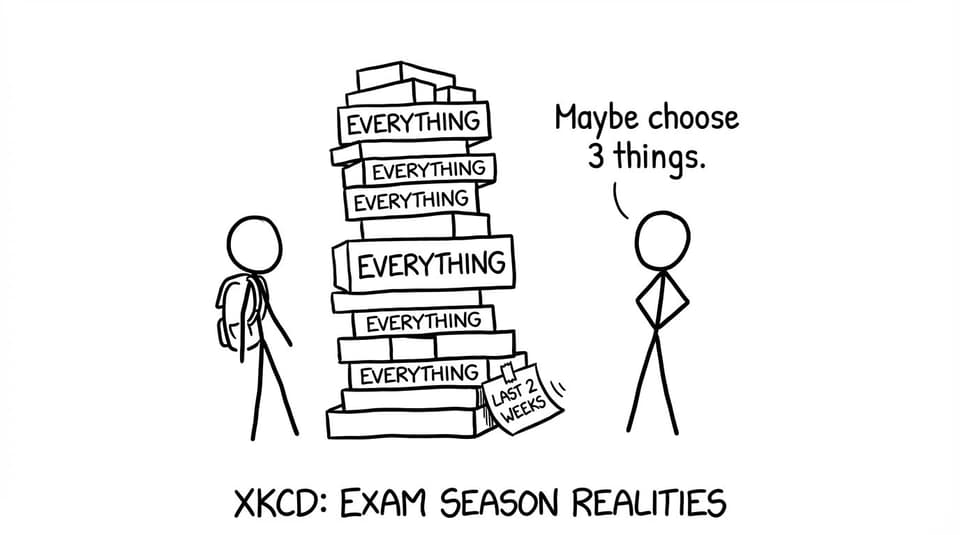
This guide is a calm, practical map of what actually matters in the last two weeks before IB exams. It's not perfect. It's not magical. It's the minimum effective dose that turns anxiety into evidence.
The last-2-weeks IB checklist (print this)
If you only follow one plan, follow this one. In the last two weeks of IB, you want a loop that repeats daily:
- 1 timed block most days (even 30-45 minutes counts)
- A mistake log (5 bullets max per session)
- Targeted practice on the exact weakness you just exposed
- Spaced repetition for definitions, processes, formulas, quotes
- Sleep protected like it's a subject
- One tab rule (reduce chaos and tab-switching)
If you want to run this loop in one place, RevisionDojo is built for it: Study Notes to get clear fast, Flashcards to retain, Questionbank to apply, AI Chat to unblock confusion, Mock Exams and Predicted Papers for realism, plus Grading tools, a Coursework Library, and Tutors when you need human strategy.
What matters most in the last 2 weeks of IB: feedback, not coverage
Two weeks before IB, "coverage" is the most expensive illusion.
Coverage says: If I reread everything, I'll be ready.
Feedback says: If I keep discovering my weaknesses and fixing them, I'll score higher.
The IB doesn't reward how much you've looked at. It rewards what you can retrieve and apply under time pressure, using the structure and command terms the examiner expects.
That's why the highest-ROI move now is to shift toward questions and marking.
A good starting point is to anchor your revision around a real question workflow like the Questionbank, then use short explanations only when a mistake reveals a gap.
The IB "mistake loop" that compounds daily
Here's the loop that quietly raises grades in the final stretch:
- Do a set of IB-style questions (timed when possible)
- Mark it with brutal honesty
- Write 3-5 "error rules" (one line each)
- Drill the same weakness again within 48 hours
On RevisionDojo, this is the default rhythm: attempt questions, get mark-scheme-calibrated feedback, tag weak areas, and retake. It's also why the platform's ecosystem matters: the Questionbank, AI Chat, and analytics keep the loop tight instead of scattered.
If you want a broader framework for this system, see RevisionDojo App: The Smarter Way to Prep for IB Exams.
Timed practice is the main event in IB (especially now)
Most IB students don't fail because they never studied. They struggle because they never trained the constraints: timing, stamina, handwriting speed, calculator workflow, planning under pressure, and command-term precision.
In the last two weeks, timed practice is not optional. It is how you convert knowledge into points.
Your realistic IB timing plan (without burning out)
You don't need a full-length paper every day. You need frequent exposure to real conditions.
Try this pattern:
- Days 14-8: 30-60 minute timed blocks (topic-focused)
- Days 7-3: 60-120 minute timed blocks (mixed topics, closer to paper style)
- Days 2-1: short timed "warmups" only, then sleep
On RevisionDojo you can build this using Mock Exams and Predicted Papers for realism, then immediately patch gaps with targeted drills.
If you want the step-by-step setup, use How to Run Timed IB Mock Exams in RevisionDojo (Exam Mode + Test Builder).
And if your subject hub includes it, practicing with a predicted set can reduce surprise and sharpen technique (for example: Math AI Predicted Papers).
In the last 2 weeks, IB notes should be a map (not a mattress)
Notes are comforting. They feel like control.
But in the final two weeks of IB, notes are only useful if they produce action.
Here's the rule: use notes to fix one mistake, then return to questions.
RevisionDojo's Study Notes are designed for this exact moment: quick clarity, syllabus alignment, and explanations that point toward what an examiner will actually ask.
If you're rebuilding your routine, pair the "map" with the "engine": do one short section of notes, then immediately do a filtered set in the Questionbank.
Related reads that help tighten this habit:
Flashcards win in the last 2 weeks of IB (because they're portable)
The final stretch of IB revision is full of small moments: buses, hallways, waiting outside an exam room, the 12 minutes before dinner.
Flashcards turn those moments into points.
Not because they're fancy, but because they force retrieval. Retrieval is what the IB rewards.
On RevisionDojo, Flashcards are built for spaced repetition, and Jojo AI can generate decks so you spend less time making resources and more time using them.
If you want a focused guide, read IB Flashcard System: Active Recall for Better Memory.
The 7-minute IB habit that keeps every subject "warm"
Each day, do one tiny loop:
- 7 minutes of flashcards
- star the 3 weakest cards
- revisit those tomorrow
This is how you stop subjects from going cold while you focus on one bigger timed block.
Sleep is an IB strategy, not a reward
If the last two weeks of IB feel like a storm, sleep is the roof.
You can't "motivate" your way around biology. Memory consolidation is not impressed by stress.
In practice, sleep does three useful things for IB students:
- reduces silly errors
- increases speed of recall
- improves emotional regulation (which helps you finish papers)
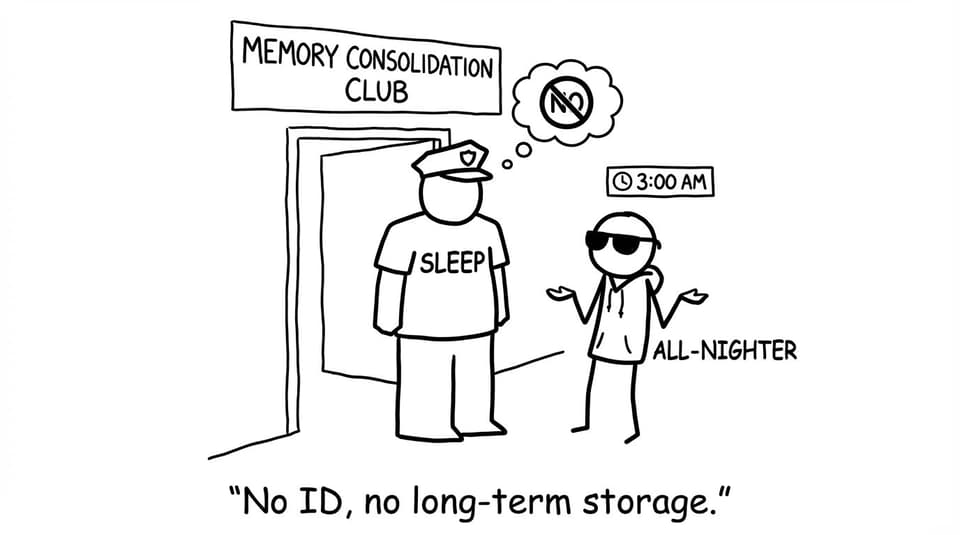
If you want one rule: no new all-nighters in the final 14 days. If you've used them before, you already know they create short-term output and long-term chaos.
What to stop doing in the last 2 weeks of IB
The fastest way to improve in IB is often subtraction.
Stop doing these, or at least cut them hard:
- rewriting notes from scratch
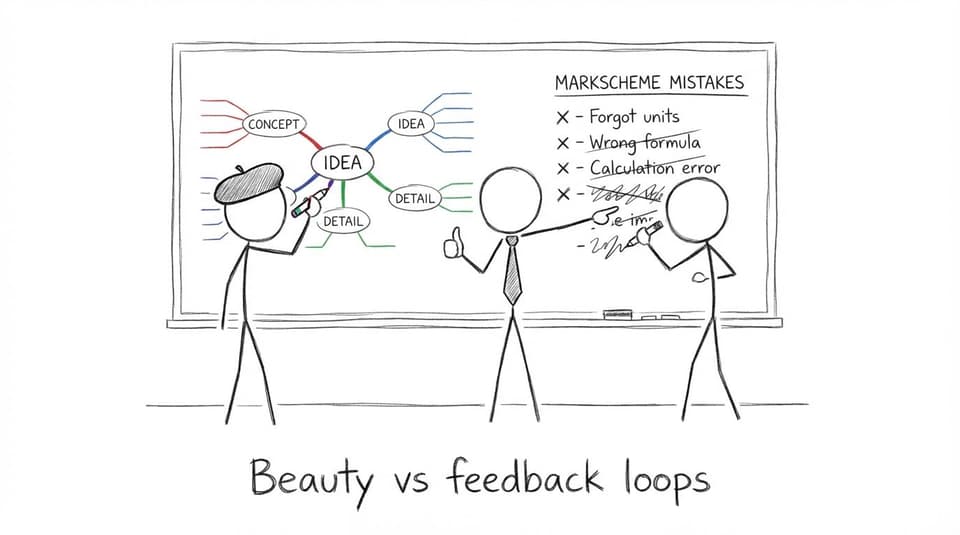
- making aesthetic resources you won't test yourself on
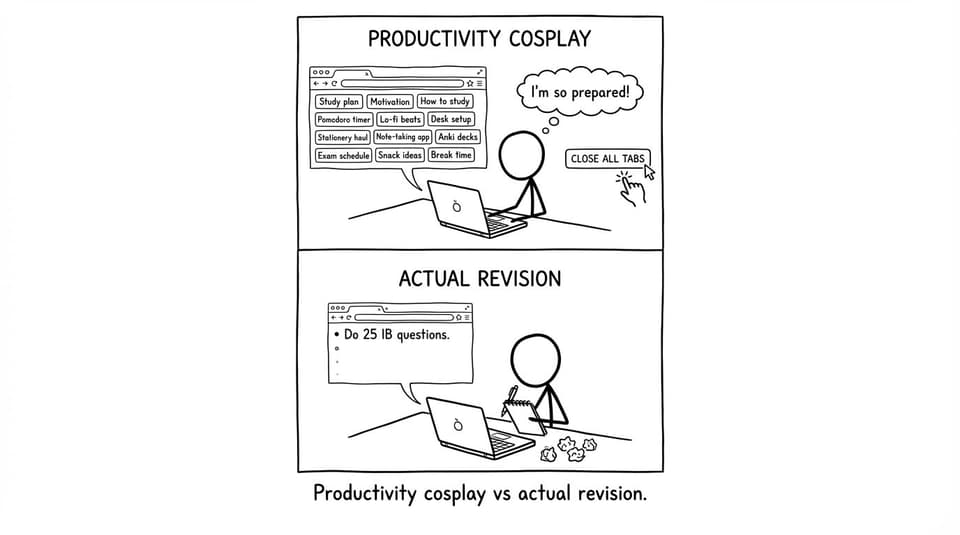
- "planning" longer than you practice
- saving timed work for "later"
- doing random questions with no review loop
Replace them with the small, repeatable actions that generate feedback.
A simple 14-day IB schedule (realistic, flexible)
Here's a structure you can adapt without overthinking. The point is repetition.
Days 14-8: rebuild accuracy
Each day:
- 10 min: flashcards
- 35-60 min: topic-focused questions (ideally timed)
- 15 min: marking + mistake log + one retry set
Use tools that reduce friction: Questionbank for targeted drills, AI Chat to explain why marks were lost, Study Notes only to patch holes.
Days 7-3: build stamina and exam behavior
Each day:
- 10 min: flashcards
- 60-120 min: timed paper section or full paper (alternate subjects)
- 20-30 min: review patterns (timing errors, command terms, recurring gaps)
This is where Mock Exams and Predicted Papers become valuable, because they make the exam feel familiar.
Days 2-1: stabilize
Each day:
- 10-20 min: flashcards (easy wins)
- 20-40 min: one light timed warmup (not a marathon)
- early night
If you want a calm version of this final-day approach, read IB: How to Study in the Last 24 Hours (No Panic).
Closing: make the last 2 weeks of IB smaller, then repeat
The last two weeks before IB exams don't reward big speeches to yourself. They reward small promises you keep.
Do one timed block. Mark it. Write the mistake rule. Fix the mistake. Sleep.
Then do it again tomorrow.
If you want that whole system in one place, RevisionDojo is built to carry you through the final stretch: Questionbank practice for precision, examiner-aligned Study Notes for fast clarity, daily Flashcards for recall, AI Chat to keep momentum, Mock Exams and Predicted Papers to build realism, plus Grading tools, a Coursework Library, and Tutors when you need feedback from a human.
In the final two weeks of IB, what actually matters is simple: fewer guesses, more evidence. Start your loop today.