



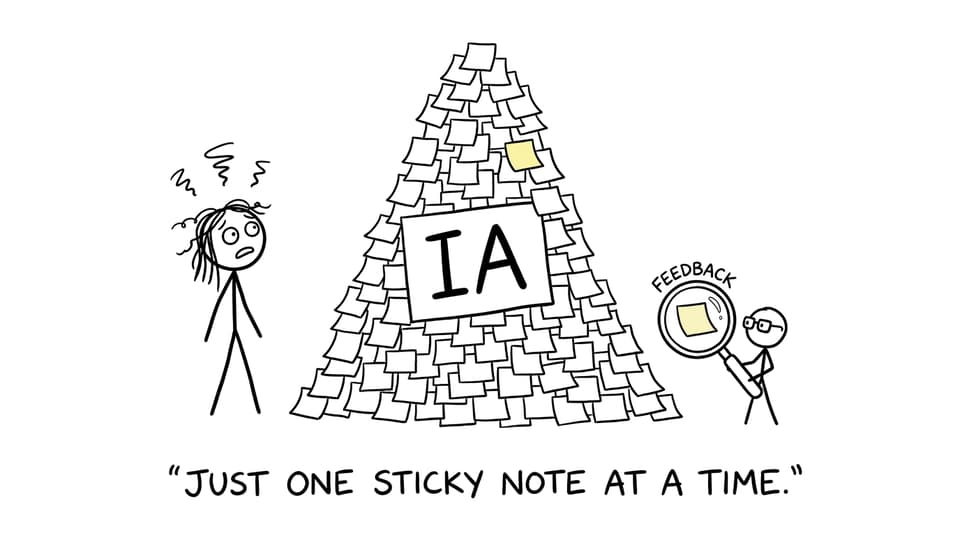
If you’re behind on an IA, the panic feels strangely logical: this one task seems to expand and swallow every other deadline. You open the document, stare at the cursor, and your brain starts negotiating. “I’ll do it after I finish revision.” “I’ll do it on the weekend.” Then the weekend arrives and disappears.
Here’s the calmer truth: catching up on an IA is rarely about working harder. It’s about working smaller, with tighter feedback loops, and choosing the next right step.
IA catch-up checklist (do this today)
-
List every IA you still owe (and its next deliverable, not just the final deadline)
-
Rank each IA by urgency and mark impact
-
Break the top IA into 30-45 minute tasks
-
Book one feedback moment (teacher + RevisionDojo tools)
-
Protect sleep so your writing stays clean
If you want a framework that prevents you falling behind again, read How to Plan an IB IA Without Falling Behind.
Step 1: Triage your IA backlog (urgent beats perfect)
Write down what’s actually pending for each IA: research question, method, data, analysis, conclusion, evaluation, references, formatting. Most students are not “behind on the whole IA”; they’re behind on two bottleneck sections.
Then use a simple urgency/importance filter (Eisenhower-style): the IA with the closest checkpoint or the most teacher feedback value goes first.
Need help sharpening your direction fast? Use the checklist in How to Write a Strong IA Research Question before you write another paragraph.
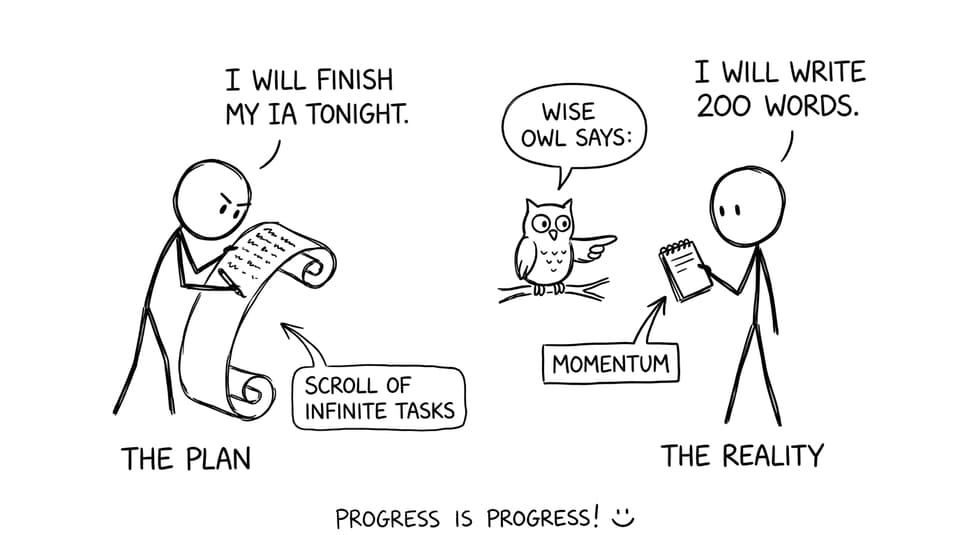
Step 2: Turn your IA into tiny deliverables (momentum wins)
Your goal is not “finish the IA.” Your goal is “produce the next usable chunk.” Try this breakdown:
-
IA setup: finalize research question + success criteria
-
IA evidence: collect only the data you truly need (not everything you could collect)
-
IA analysis: one clear technique at a time, with commentary that links back to the question
-
IA evaluation: limitations + improvements that are realistic
If your evaluation section is the piece you keep postponing, use How to Write a Compelling IA Evaluation Section.
Step 3: Time-block your IA using Pomodoro (and stick to the timer)
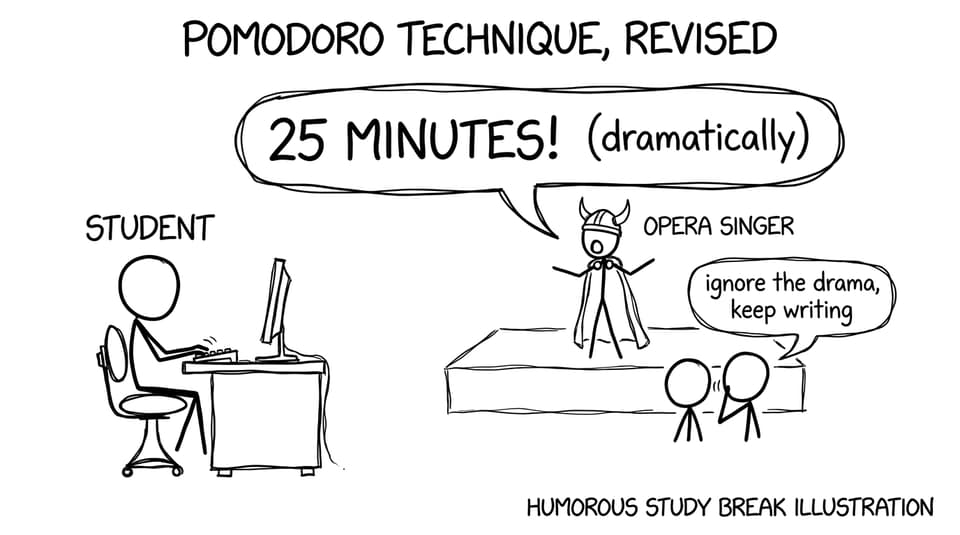
A behind-schedule IA needs boundaries. Use 25 minutes focused, 5 minutes break, repeat. After four cycles, take a longer break. It sounds basic, but it works because it makes starting cheap.
For a simple setup, borrow the routine from How to Revise for IB Math Using the Pomodoro Technique and apply it directly to your IA tasks.
Step 4: Cut distractions like you’re protecting marks
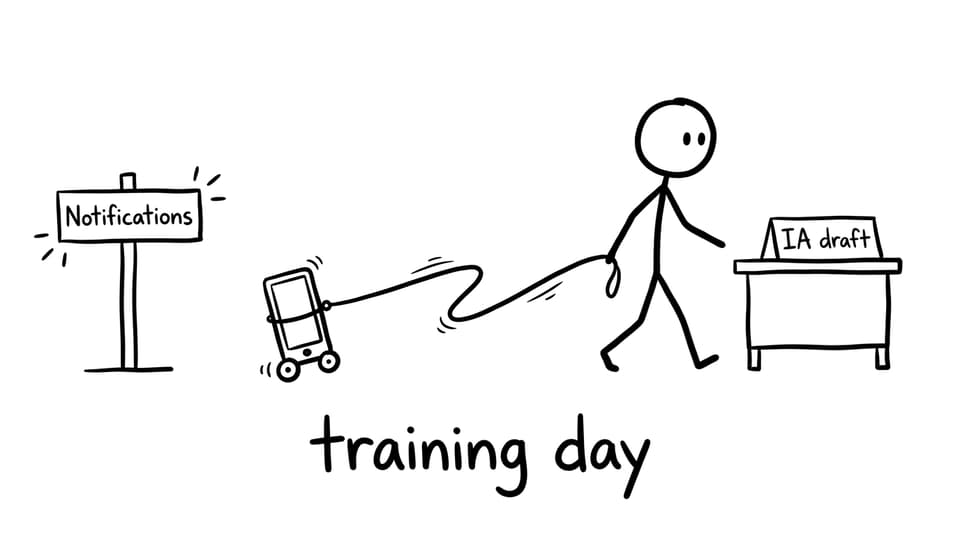
Put your phone in another room or use an app blocker. One distracted hour can produce nothing; one protected hour can move an IA from “vague” to “draftable.”
If your overall schedule is chaotic, use How to Stay Organized with a Full IB Timetable to rebuild a week that can hold both revision and your IA.
Step 5: Get feedback early (shorten the loop)
When you’re behind on an IA, late feedback is expensive. Early feedback saves rewrites.
Use RevisionDojo to tighten the loop:
-
Check expectations and structure in IA Guides
-
Compare against high-scoring exemplars in the Coursework Exemplars Library
-
Use AI feedback strategies for IA drafts to ask sharper questions
-
If you need rubric clarity, read IB Internal Assessment Feedback: Detailed Comments and Suggestions
Finish your IA with a plan you can repeat
Catching up on an IA is a confidence project as much as a writing project. You list the tasks, choose the next deliverable, time-block the work, and pull feedback forward. Do that for three days and the panic shrinks. Do it for seven and your IA becomes something you can actually steer.
When you’re ready to move faster with less guessing, use RevisionDojo’s Questionbank, Study Notes, Flashcards, AI Chat, Grading tools, Predicted Papers, Mock Exams, Coursework Library, and Tutors to keep your IA progress aligned with exam prep, and finish both stronger.