
The first time most IB students hear “CAS,” they picture a spreadsheet with feelings.
You’re already juggling deadlines, revision, and the slow drumbeat of exams. So CAS can feel like a side quest you didn’t accept. But the truth is quieter and more useful: CAS is one of the few places in the IB where you can practice becoming the kind of person who performs well under pressure because they’ve built a life that isn’t only pressure.
This guide shows you how to excel in IB CAS (Creativity, Activity, Service) without letting it steal your exam season. You’ll plan fewer things, do them better, document them cleanly, and reflect in a way that actually helps you.
A quick IB CAS checklist (save this)
-
Pick 2-3 “anchor” experiences you can sustain for months.
-
Keep a visible balance across Creativity, Activity, and Service.
-
Build one longer CAS project (at least a month) with other people.
-
Document weekly (not in a last-minute avalanche).
-
Reflect briefly after each experience while it’s still fresh.
-
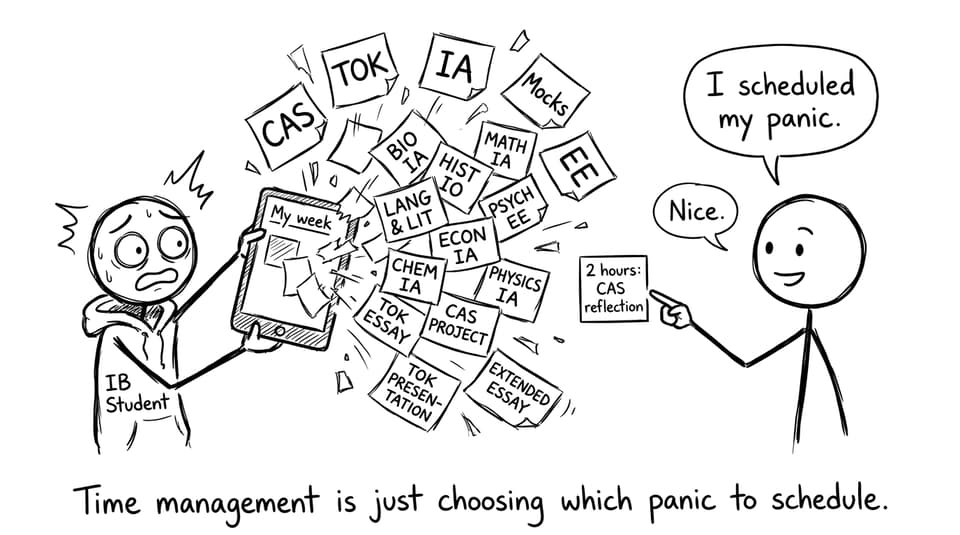
Protect your IB revision blocks with a timetable that doesn’t lie.
If you want a grounding refresher first, start with What is CAS?.
What “excel in IB CAS” actually means
In the IB Diploma Programme, CAS isn’t about being impressive. It’s about being consistent, ethical, and reflective. You can have a small project that genuinely matters and still “excel” because your planning is clear, your effort is sustained, and your learning is visible.
That’s why it helps to understand the structure early. Minimum requirements often trip students up not because they’re hard, but because they’re easy to ignore until May. Use this as your baseline: Understanding the Minimum Requirements for CAS in the IBDP.
Plan your IB CAS like a calm person, not a hero
The biggest CAS mistake is treating it like inspiration: something you’ll do when you “feel motivated.” Motivation is unreliable; systems are not.
Choose anchor experiences you can repeat
Pick experiences that already fit your life:
-
Creativity: a weekly design session, photography walks, school newspaper.
-
Activity: training you already do, a team sport, regular gym sessions.
-
Service: tutoring, community group support, environmental initiatives.
When CAS piggybacks on routines, it stops competing with IB study time. If you need ideas that are coordinator-friendly, borrow from CAS Project/Experience Ideas: Unleash Your Creativity, Activity, and Service.
Build a “two windows + one reflection” schedule
Try this structure during the school year:
-
One weekday CAS window (60-90 min)
-
One weekend CAS window (60-120 min)
-
One micro-reflection block (15 min, same day)
This is especially helpful when exams approach. If you struggle to keep everything balanced, read How to Balance CAS with Academics and Social Life and treat it like a prevention guide.
Choose meaningful CAS experiences (and make them count)
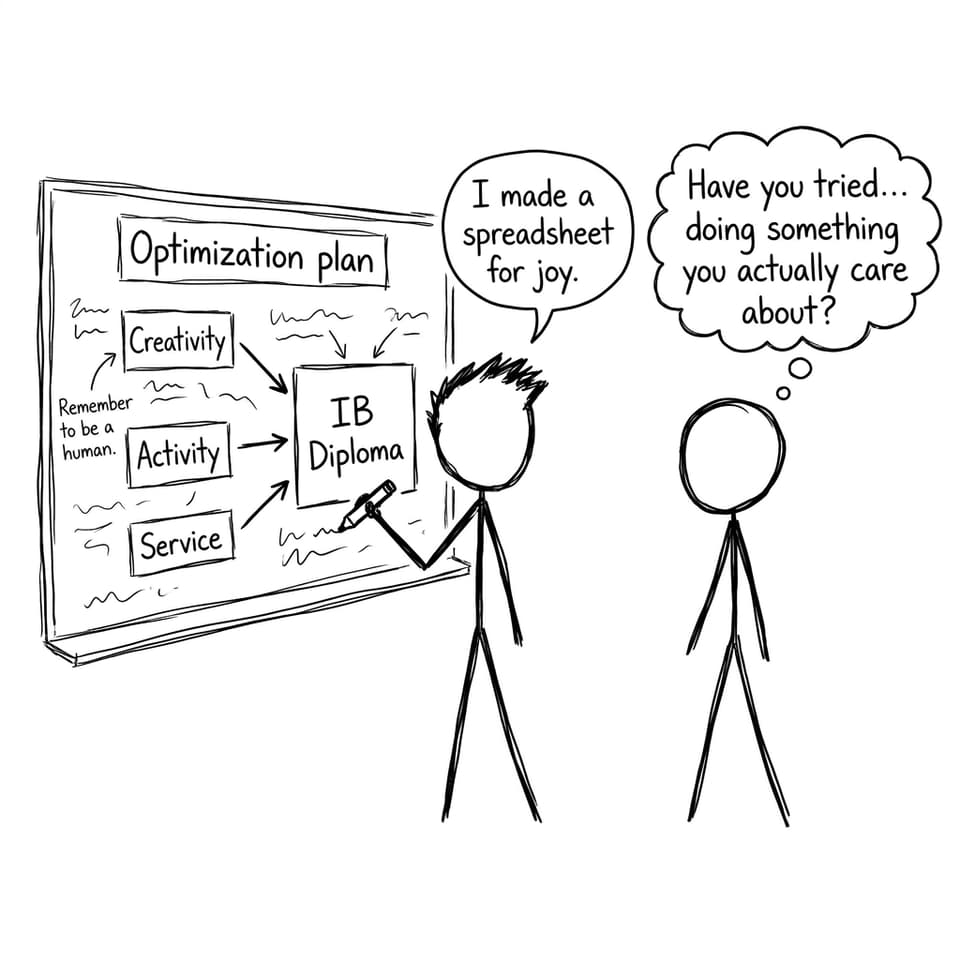
CAS becomes frustrating when you pick activities you don’t care about. You’ll procrastinate, your reflections will sound generic, and you’ll resent the IB for making you do it.
Instead, choose one experience per strand that feels like “future you” would be proud of.
Creativity that doesn’t feel like homework
Creativity is not “making art for school.” It’s using imagination and building something.
Examples that work well:
-
Produce a short documentary on a local issue.
-
Start a simple newsletter for your community group.
-
Run a student workshop on design, music, or storytelling.
If your Creativity overlaps with academic subjects, be careful: CAS cannot be academically assessed work. For the common confusion point, see Can IB Group 6 Subjects Count Towards My CAS Requirements?.
Activity that’s sustainable during exam prep
Choose activity you can keep even when revision ramps up: walking, running, gym, team practice. The win is consistency, not intensity.
If you ever wondered what “counts,” this specific example helps: Can Jogging Be Considered a CAS Experience?.
Service that’s real, not performative
Good service is concrete. Someone is meaningfully helped. A community need is addressed.
Strong service ideas:
-
Weekly tutoring for younger students.
-
Organizing a donation drive with a clear distribution plan.
-
Supporting a local NGO with recurring tasks.
Document and reflect like a strategist (not a diarist)
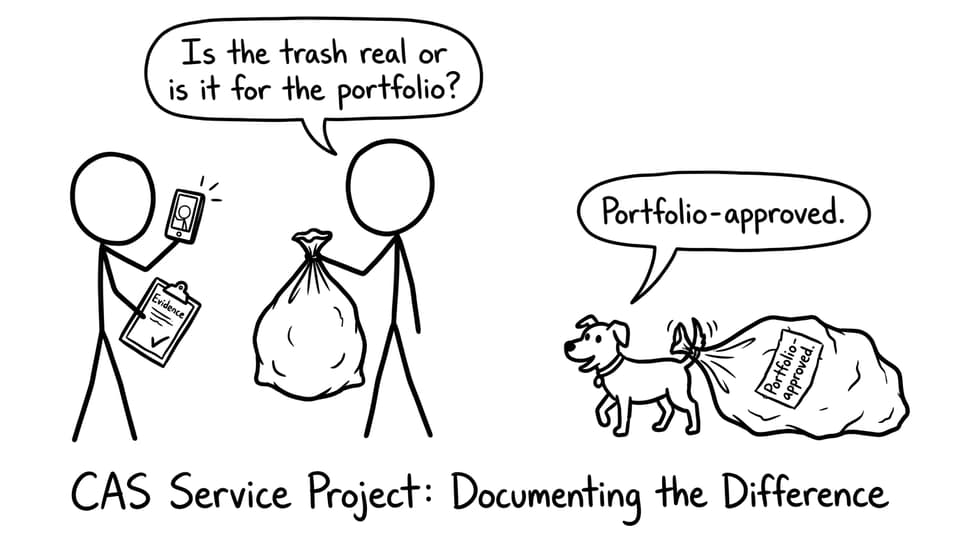
Most IB students don’t fail CAS because they didn’t do enough. They fail because they can’t prove what they did and what they learned.
Use the “6-sentence reflection” format
Right after the experience, write:
-
What did I do (specific)?
-
What was harder than expected?
-
What choice did I make?
-
What did that reveal about me?
-
What will I change next time?
-
What learning outcome does this connect to?
Short reflections, done frequently, beat long reflections written in panic.
For schools and students who want a cleaner system, this is worth reading: Using RevisionDojo to Strengthen IB CAS Reflection and Documentation.
The CAS project: make it collaborative and month-long
A CAS project is where students overcomplicate things. You don’t need to create a charity empire. You need a longer-term, collaborative effort with planning, action, and reflection.
Choose something with:
-
A clear need
-
Defined roles (who does what)
-
A timeline of at least four weeks
-
A way to show impact (photos, attendance, outcomes)
If you’re unsure whether your idea is a “project” or just an “experience,” clarify it here: What Counts as a CAS Project vs. a CAS Experience?.
Keep IB exam prep safe while doing CAS
The paradox of the IB is that you can be “busy” and still feel behind. CAS should reduce that feeling by creating rhythm, not add to it.
Two practical rules:
-
Schedule CAS like a subject (fixed windows).
-
Schedule revision like oxygen (non-negotiable).
If your calendar is chaotic, anchor it with one of these:
And when you’re ready to turn revision into marks, RevisionDojo is built for it: use Study Notes for clarity, Flashcards for daily recall, and the Questionbank to practice what the IB actually tests. Add AI Chat when you’re stuck, and use Mock Exams and Predicted Papers to build timing and calm. If coursework pressure spikes, RevisionDojo’s Grading tools and Coursework Library help you see what quality looks like, and Tutors can simplify problems fast.
Conclusion: treat IB CAS as training, not a distraction
If you approach IB CAS like a box to tick, it will feel like a tax. If you approach it like training, it becomes a quiet advantage: you learn how to plan, collaborate, persist, and reflect while still protecting your exam results.
Start small this week: choose one Creativity, one Activity, and one Service experience you can repeat. Put two CAS windows on your calendar. Do one 15-minute reflection right after.
Then keep your IB revision disciplined with RevisionDojo: drill marks with the Questionbank, lock in memory with Flashcards, and build timing through Mock Exams and Predicted Papers. CAS builds the person. RevisionDojo builds the score. Together, they make the IB feel manageable.