
The moment most IB students start taking exam prep seriously, CAS can feel like a strange side quest.
You sit down to revise. You open your notes. Then you remember you still need evidence, reflections, and that one project that somehow lasts a month. In your head, CAS becomes the thing that steals time from the thing that actually has a grade.
But CAS is not designed to punish you. Done well, CAS can become the one part of the IB that gives you energy back, and, quietly, improves how you study.
What is CAS in IB, really?
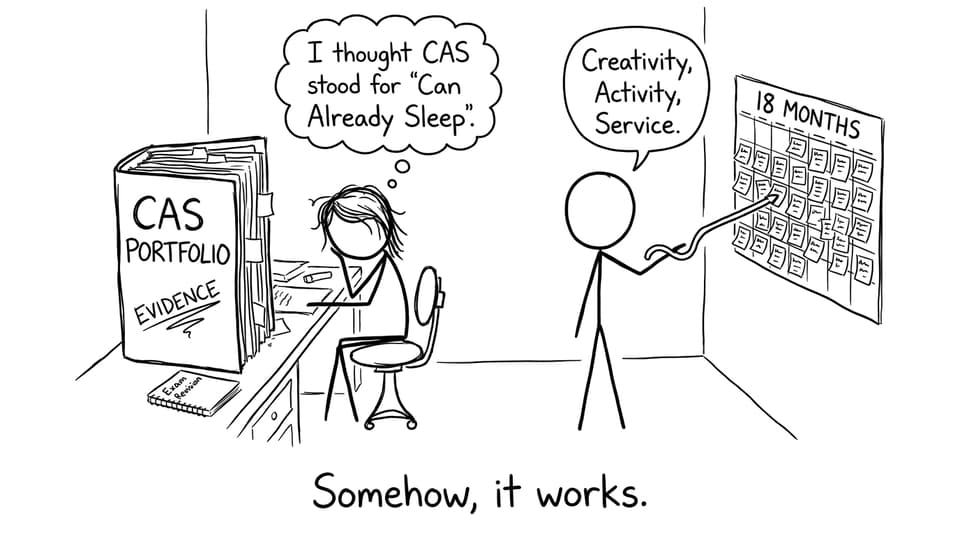
CAS stands for Creativity, Activity, Service. It is a core requirement of the IB Diploma Programme, alongside TOK and the Extended Essay. CAS is experiential learning: you plan, do, reflect, and show what changed.
Two important truths that calm people down:
-
CAS does not add points to your final score, but it is compulsory for the diploma.
-
CAS works best when it is consistent, small, and honest, not when it is impressive.
If you want the longer, official-feeling explanation with examples, see What is CAS? Unveiling the IBDP Creativity, Activity, Service Program and What is the core requirement in IB? TOK, EE and CAS explained.
A quick IB CAS checklist (save this)
When your brain is full of IB content, you need a fast filter. Use this before committing to any CAS idea:
-
It clearly fits Creativity, Activity, or Service
-
You can sustain it during exam weeks (boring is good)
-
You can collect evidence weekly (photos, logs, drafts, sign-offs)
-
You can connect it to learning outcomes (growth, challenge, collaboration)
-
You can reflect in 10-15 minutes without writing a novel
For the minimum baseline requirements, keep Understanding the Minimum Requirements for CAS in the IBDP open in a tab until your plan feels solid.
Creativity, Activity, Service: what counts (and what usually doesn’t)
CAS gets easier when you stop treating it like three separate lives. In IB, the smartest CAS is the kind that overlaps with who you already are.
Creativity in IB CAS
Creativity is making, designing, performing, or problem-solving in a way that requires choices.
Examples that tend to work well:
-
Learning an instrument and tracking practice goals
-
Running a school media page with planned content and feedback
-
Designing posters for a community campaign
-
Building something tangible (a small exhibit, workshop, or event)
A fun reminder: “creative” does not mean “academic.” If you are doing it for a grade, it’s not CAS. If you’re unsure about subjects crossing into CAS, read Can IB Group 6 Subjects Count Towards My CAS Requirements?.
Activity in IB CAS
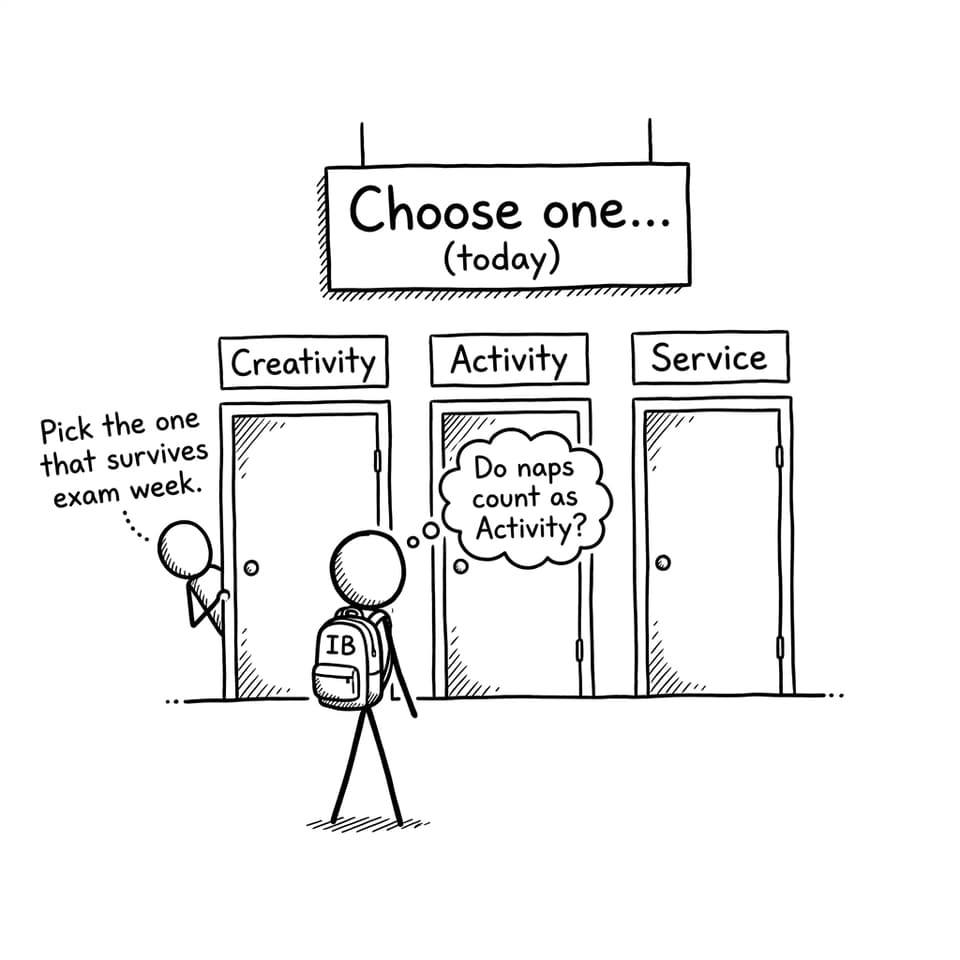
Activity is physical exertion that supports a healthy lifestyle. It can be a team sport, solo training, or something outdoors. The key is intention: goals, progression, and reflection.
A simple example many IB students underestimate is jogging. The difference between “a run” and “CAS Activity” is usually documentation and growth. Use Can Jogging Be Considered a CAS Experience? as your template.
Service in IB CAS
Service is doing something that benefits others. The best service is specific and sustainable.
Examples:
-
Tutoring younger students with a clear plan and feedback
-
Volunteering regularly with one organization
-
Organizing a donation drive with measurable outcomes
Service becomes powerful when you can answer: “Who benefits, and how do I know?” That answer gives you evidence, and evidence makes the IB paperwork light.
CAS experiences vs CAS project (the difference that matters)
Many students log a lot of experiences and still get nervous about the “project.” The easiest way to stay calm is to understand the distinction.
-
A CAS experience can be short or ongoing: one meaningful activity in Creativity, Activity, or Service.
-
A CAS project is longer-term, collaborative, and lasts at least a month. It integrates planning, action, and reflection, and often combines strands.
RevisionDojo breaks this down clearly in What Counts as a CAS Project vs. a CAS Experience?. If you need ideas that won’t explode your timetable, borrow from CAS Project Experience Ideas.
How to fit CAS into IB exam prep (without resentment)
The secret is to stop relying on motivation. Build a container.
A simple approach:
-
Two fixed CAS windows per week (one weekday, one weekend)
-
One 15-minute reflection window right after the experience
-
No “catch-up marathons” during mocks or final revision
If your schedule is already intense, use Balancing CAS With Real Life (Without Burning Out) as your blueprint.
This is also where RevisionDojo’s IB study tools help you protect time. When your studying is more efficient, CAS feels less threatening:
-
Study Notes to get clarity fast
-
Flashcards for daily recall
-
Questionbank for exam-style practice: Questionbank
-
AI Chat to unblock confusion quickly
-
Mock Exams and Predicted Papers to build timing and stamina
-
Grading tools plus the Coursework Library to tighten feedback loops
-
Tutors when you need targeted help, not another late night
If you want a clean overview of the full workflow, start at RevisionDojo for IB.
Reflection and documentation: the part that actually decides everything
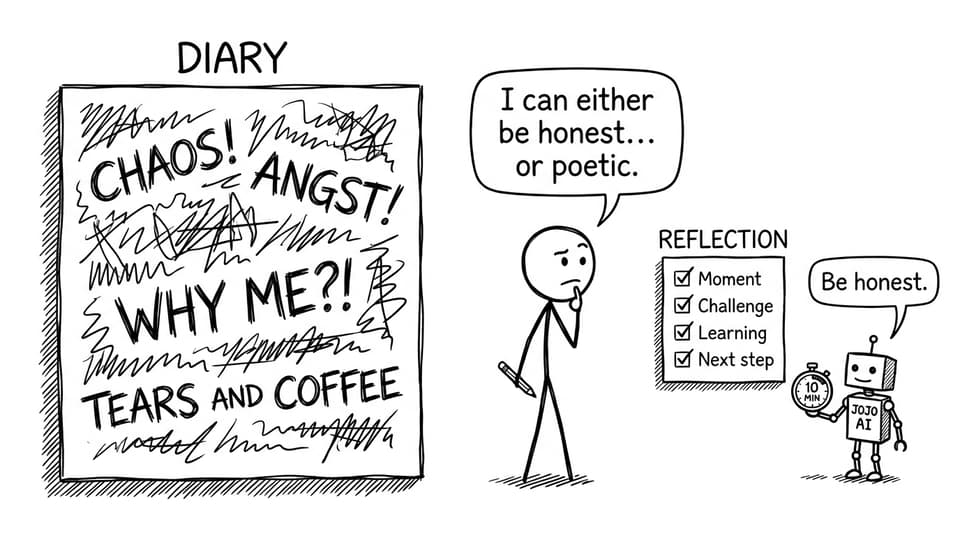
In IB, reflection is not a diary. It is proof of learning.
Your reflections should show:
-
a real moment (not the entire timeline)
-
a challenge or decision
-
what you learned about yourself or others
-
what you will change next time
If you want a structured guide, use IB CAS: 10 Tips for a Standout Reflection and Using RevisionDojo to Strengthen IB CAS Reflection and Documentation.
If you are missing an adult sign-off, don’t panic. Follow What to Do If You Don't Have a CAS Supervisor: A Step-by-Step Guide.
Closing: make CAS serve your IB, not fight it
CAS is one of the few parts of the IB that asks a simple question: “What kind of person are you becoming while you study?”
If you build CAS around sustainable habits, document as you go, and reflect with honesty, it stops feeling like an extra subject. It becomes a quiet structure that keeps you human during exam season.
When you want that structure to feel effortless, use RevisionDojo as your all-in-one IB base: revise with Study Notes, drill technique in the Questionbank, stay consistent with Flashcards, get unstuck with AI Chat, and pressure-test with Mock Exams and Predicted Papers. Then return to CAS with a clearer mind and a calmer week.
For more CAS-specific guidance, browse All IB CAS Posts.