


If you take IB Group 6 Arts, you’ve probably had this thought at 11:47 p.m., halfway through a rehearsal, a composition draft, or a sketch that refuses to look like the idea in your head:
“Wait… can I count this for CAS?”
It’s a tempting shortcut. You’re already creating. You’re already exhausted. And CAS doesn’t award points, but it does decide whether you get the diploma.
Here’s the calm, non-negotiable rule you need to build your plan around:
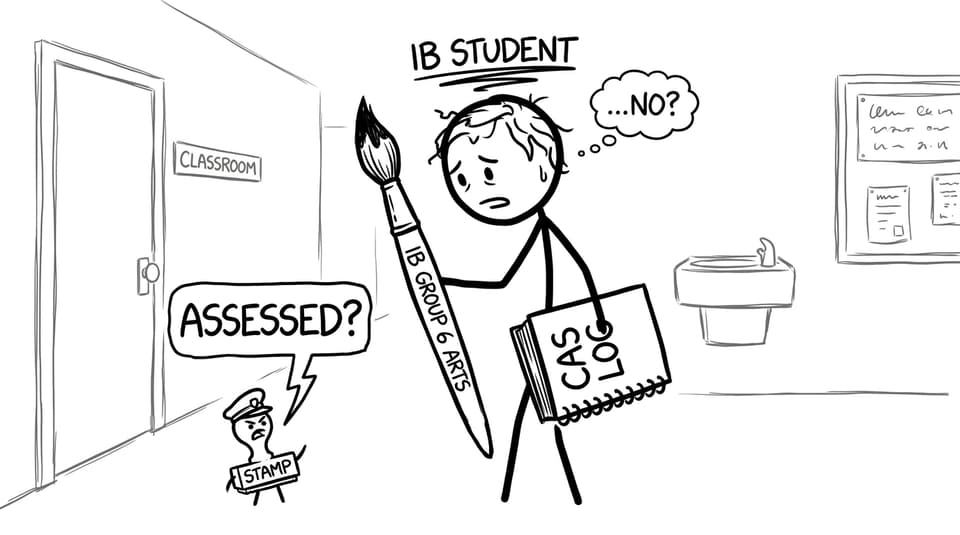
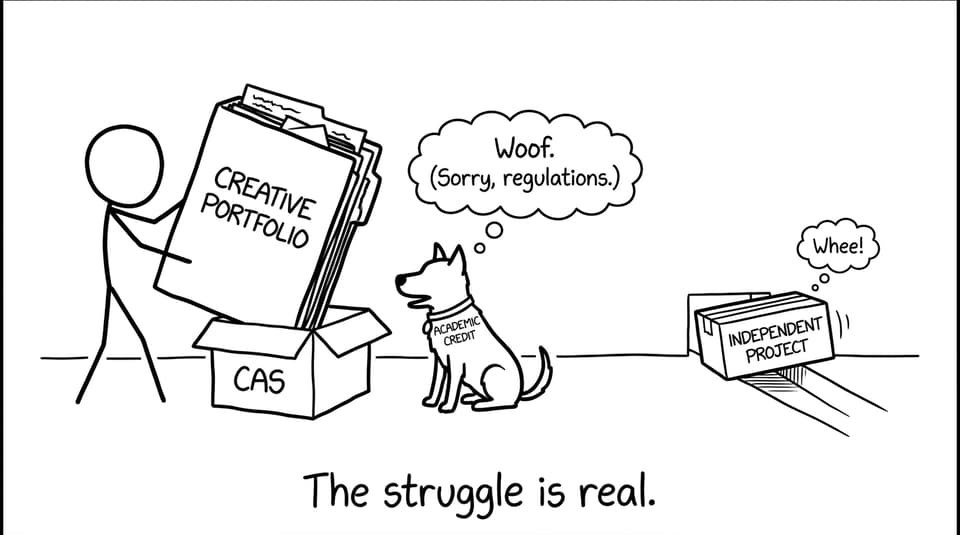
IB Group 6 Arts can support CAS, but anything that is assessed for academic credit cannot be counted as CAS.
Once you understand that boundary, you can use your arts skills to create some of the strongest CAS experiences in your whole cohort, without risking rejected entries in the final months.
The one CAS rule that matters most for IB Group 6 Arts
CAS exists to show growth beyond your academic programme. So the system draws a bright line:
-
If you receive academic credit, it’s not CAS.
-
If it contributes to a subject grade, it’s not CAS.
-
If it’s part of your assessed portfolio, performance, process journal, or required coursework, it’s not CAS.
That’s why IB Group 6 Arts sometimes overlaps with CAS in skills, but not in eligibility.
If you want to double-check how schools monitor and confirm CAS completion, this breakdown helps: How CAS Gets Verified in the IB System.
Quick checklist: does your IB Group 6 Arts work count as CAS?
Use this fast filter before you log anything:
It can count as CAS if it is:
-
Independent of your class requirements
-
Not graded or submitted for assessment
-
Purposeful (clear aim, audience, or outcome)
-
Supported by reflections that show learning outcomes
It cannot count as CAS if it is:
-
Required homework or classwork
-
Part of an assessed component
-
Submitted to your teacher for marks
-
A duplicate of coursework documentation
If you’re trying to build a sustainable schedule (especially near exams), you’ll like: Balancing CAS With Real Life (Without Burning Out).
“Same skill, different context”: the easiest way to understand IB Group 6 Arts and CAS
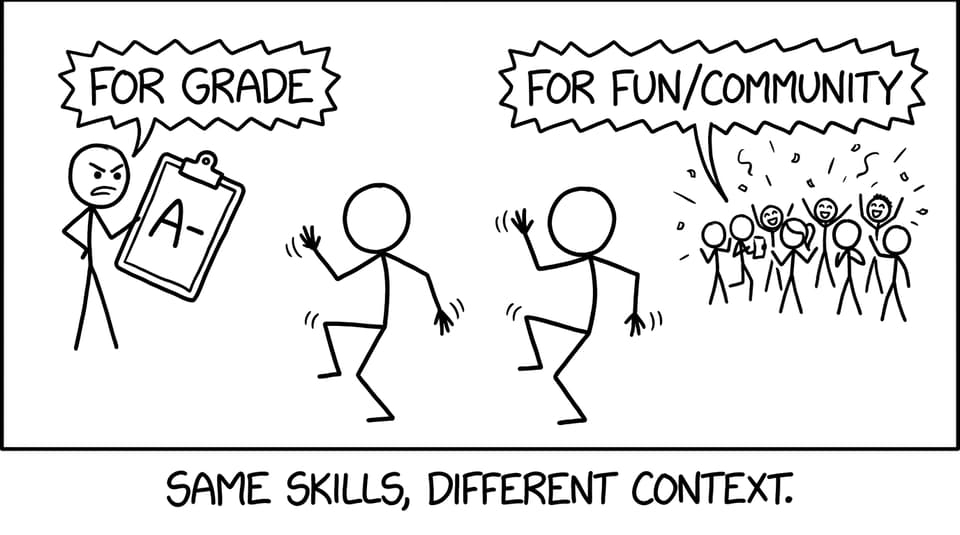
A student can do the same creative action in two different contexts and get two different outcomes.
Think of it like this: CAS is not asking, “Is this creative?” It’s asking, “Is this yours to choose, shape, and learn from, outside assessment?”
A simple example: dance (but it applies to all IB Group 6 Arts)
-
Choreographing for a graded performance assessment: not CAS.
-
Choreographing a routine for a community event, charity showcase, or school club (not graded): can be CAS.
Same body. Same movement vocabulary. Completely different purpose.
How each IB Group 6 Arts subject can support CAS (without breaking the rule)
You don’t need to abandon your art to complete CAS. You just need to design experiences that borrow your skills without borrowing your marks.
Visual Arts and CAS
Assessed portfolio work, exhibition pieces, or required process documentation cannot be CAS.
But IB Group 6 Arts skills can become CAS when you:
-
Curate an independent mini-exhibition for a cause
-
Run a poster campaign for a school initiative
-
Host an art workshop for younger students
If you’re building confidence in your creative process, browse the broader RevisionDojo hub: IB Group 6 Arts posts.
Theatre and CAS
Assessed rehearsals and performance prep are not CAS.
But you can count theatre-based CAS if you:
-
Direct a short, non-assessed production for a school event
-
Lead drama games for a youth group
-
Volunteer backstage for a community production (service plus creativity)
For theatre students trying to stay organized near assessment season: Best Study Strategies for IB Theatre Students.
Music and CAS
Practice for your assessed components is not CAS.
But IB Group 6 Arts music skills can count when you:
-
Perform at community events
-
Teach beginner lessons
-
Compose for a school club, charity campaign, or awareness project
If exams are close and you want targeted practice support, use: How to Revise Effectively for IB Music Listening Exams.
Film and CAS
Assessed film coursework can’t be CAS.
But CAS can include film-making if you:
-
Produce a short awareness video for a real organization
-
Teach basic filming/editing skills to younger students
-
Create promotional media for a school initiative
If you want to avoid common production and documentation mistakes, read: Common Mistakes in IB Film Portfolios and How to Fix Them.
CAS Project ideas that work brilliantly with IB Group 6 Arts
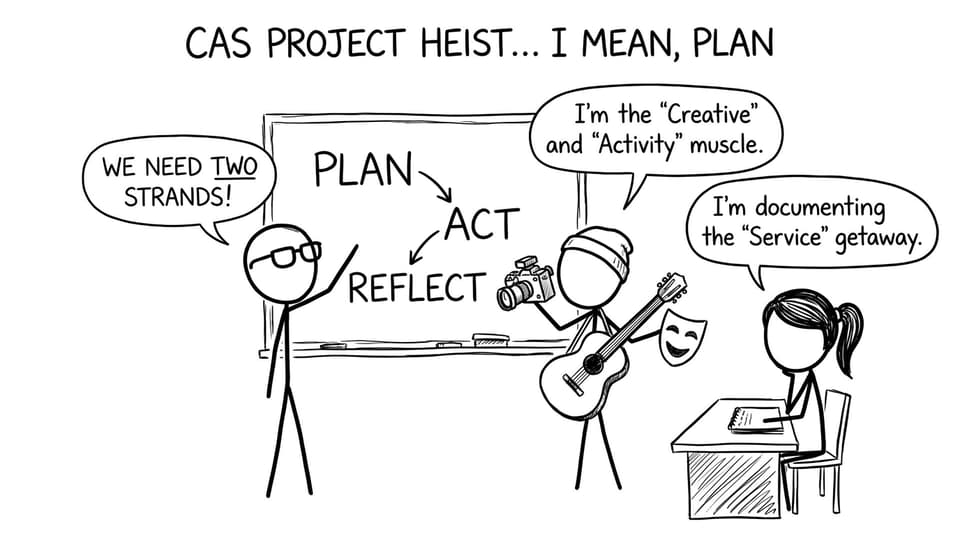
If you’re doing IB Group 6 Arts, you’re unusually well-positioned to run a strong CAS Project because you already have a craft. The project just needs to be separate from assessment.
A solid arts-based CAS Project might be:
-
A community performance night with ticket proceeds for a cause
-
A short film campaign for mental health awareness at school
-
A student-led arts club that runs weekly workshops
-
A collaborative mural or design project with a community partner
If you’re unsure whether you’re building a “project” or just an “experience,” use: CAS Project vs CAS Experience.
How to log IB Group 6 Arts CAS so it doesn’t get rejected
Most CAS entries fail for one boring reason: the reflection doesn’t prove independence.
When your CAS experience uses IB Group 6 Arts skills, make the separation explicit:
-
State clearly that it was not assessed and not required by class
-
Explain your goal and how you measured progress
-
Describe a specific challenge (technical, creative, or interpersonal)
-
Link to CAS learning outcomes with evidence, not labels
-
Show what you’d change next time
If you want a reflection structure that’s fast but still meaningful: 10 Powerful Tips to Write a CAS Reflection.
Bringing it home: use IB Group 6 Arts skills, not IB Group 6 marks
The best way to think about it is simple: IB Group 6 Arts can absolutely fuel CAS, but CAS can’t be a recycling bin for assessed work.
When you protect that boundary, something surprising happens. Your CAS starts to feel less like paperwork and more like a small, honest space where your art can breathe, with real people, real stakes, and real learning.
If you want one system that supports both your creative workload and your exam prep, RevisionDojo is built for it: the Study Notes keep content clear, Flashcards make recall automatic, the Questionbank turns understanding into marks, AI Chat unblocks you fast, and Mock Exams plus Predicted Papers build timed confidence. When coursework pressure rises, RevisionDojo’s Grading tools, Coursework Library, and Tutors help you improve without guessing.
For more CAS guidance, explore: All IB CAS posts.