



Jogging looks simple from the outside: shoes on, headphones in, one foot in front of the other.
But in the IB, “simple” activities rarely stay simple for long. Somewhere between your second lap and your seventh calendar notification, the question appears: can jogging be considered a CAS experience?
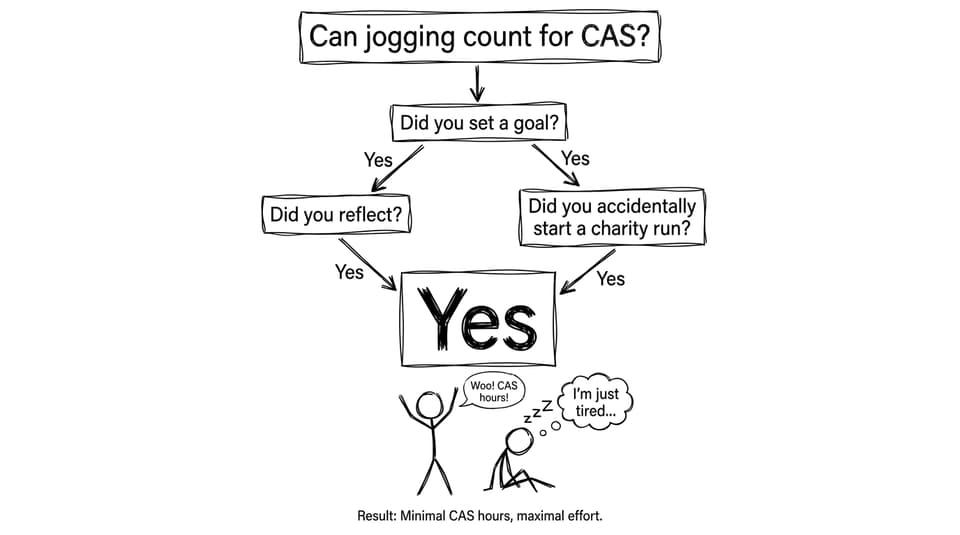
Yes. Jogging can absolutely count in IB CAS, if you shape it with intention, reflection, and evidence. The trick isn’t to make your run sound heroic. The trick is to show growth.

Quick checklist: when jogging counts for IB CAS
If you want a fast filter before you log anything, use this checklist. Jogging usually works as a CAS Activity when you can say “yes” to most of these:
-
You have a goal (distance, pace, consistency, recovery, technique).
-
You do it regularly over time (not once, not randomly).
-
You can connect it to at least one CAS learning outcome.
-
You produce evidence (log, screenshots, photos, route maps, supervisor check-ins).
-
You write reflection that explains change (not just what happened).
If you’re still fuzzy on the difference between experiences and projects, use this guide: What Counts as a CAS Project vs. a CAS Experience?
Why jogging fits the “Activity” strand in IB CAS
In IB CAS, “Activity” is physical exertion that supports a healthy lifestyle. Jogging is almost the definition of that strand.
What matters is the framing:
-
A one-off run because your friend dared you is exercise.
-
A planned routine that you sustain, adapt, and reflect on becomes an IB CAS experience.
This distinction matters because the IB isn’t rewarding you for having a pulse. It’s looking for evidence that you challenged yourself, learned something, and stayed committed.
If you want the official baseline expectations students often miss, read: Understanding the Minimum Requirements for CAS in the IBDP
How to make jogging a stronger IB CAS experience
Jogging “counts” more smoothly when you design it like a small personal experiment: start point, plan, feedback, adjustment.
Set goals that create learning outcomes (not just kilometers)
A goal like “run more” is too vague. In IB terms, vague goals create vague reflections.
Try goals that force decision-making:
-
Consistency goal: 3 runs/week for 8 weeks, adjusting around exam weeks.
-
Progression goal: build from 2 km to 5 km without injury.
-
Skill goal: improve pacing using negative splits or interval sessions.
-
Wellbeing goal: use running as stress management, tracking sleep and mood.
And if you’re juggling revision at the same time, this helps you keep CAS realistic: Balancing CAS With Real Life (Without Burning Out)
Combine jogging with Creativity or Service (optional, but powerful)
Jogging alone typically sits in the Activity strand. You can still make it richer by linking it to the other strands.
-
Creativity + jogging: design a beginner running plan for classmates, make simple infographics, or build a “run playlist” series with reflections on motivation.
-
Service + jogging: organize a community fun run, raise awareness for a health cause, or buddy-run with younger students to help them build confidence.
Just remember a key IB rule: CAS is not academic credit. If something is graded in class, it isn’t CAS. This article clears up a common confusion: Can IB Group 6 Subjects Count Towards My CAS Requirements?
For broader inspiration beyond running, browse: CAS Project/Experience Ideas
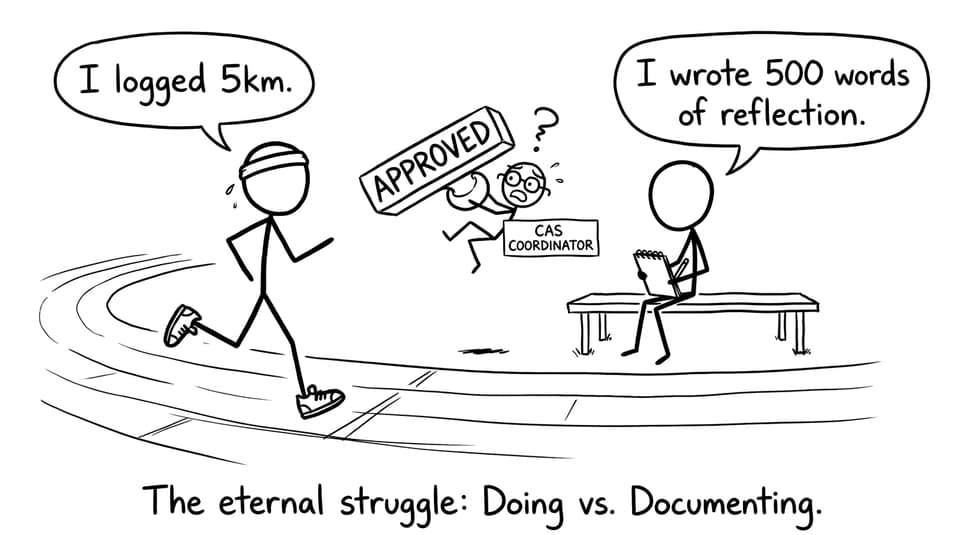
How to document jogging for IB CAS (so it actually gets approved)
Most IB students don’t fail CAS because their activities are “bad.” They fail because the portfolio is thin, inconsistent, or reflective in name only.
Evidence that works (and is easy)
Keep it simple:
-
weekly running log (date, duration, distance)
-
screenshots of routes or splits
-
short notes on what changed (pace, breathing, mindset)
-
one photo occasionally (shoes, route sign, group run)
Reflection that sounds like a human (not a brochure)
Your reflection should include at least one specific moment: the day you wanted to quit, the run that went unexpectedly well, the decision to rest because of pain.
If you want a strong framework, use: 10 Powerful Tips to Write a CAS Reflection That Stands Out
And if you’re unsure who signs off or what “verification” really means in the IB, read: How Does CAS Get Verified in the IB System?
A simple example: “Jogging” turned into an IB-ready CAS plan
Here’s a clean version you can adapt:
Experience title: “8-Week Jogging Consistency Challenge”
Strand: Activity
Goal: Run 3 times per week for 8 weeks; increase weekly distance by 10% max; avoid injury through planned rest.
Learning outcomes you could hit: commitment and perseverance, challenges undertaken, identifying strengths and areas for growth.
Evidence: run log, screenshots, one weekly reflection, optional check-in with a PE teacher/coach.
Reflection prompt: “What did I learn about effort when motivation was low?”
If you want your whole IB workload to feel more structured while you do CAS, RevisionDojo helps you keep your academics moving: How to Study for IB Exams: Step-by-Step Guide
Closing: make your running count twice
In the IB, the best systems are the ones that do double duty. Jogging can be your stress relief and your CAS Activity, as long as you give it a goal, keep it consistent, and reflect like you mean it.
If you want that same “double duty” approach for exams, make RevisionDojo your study base: use Study Notes to get clear fast, Flashcards to keep memory sharp, the Questionbank to turn knowledge into marks, AI Chat when you’re stuck, and Mock Exams plus Predicted Papers to build timing. Add Grading tools, the Coursework Library, and Tutors when coursework pressure spikes.
Your next step is simple: plan your next two weeks of jogging, write one honest reflection, and keep your IB momentum steady both on the track and at your desk.