
The night your IA becomes "late"
At some point in the IB, almost everyone has the same quiet fear: the moment you click "submit" and realize your IA is no longer "nearly done." It is late.
What makes a late IA feel uniquely stressful is that it sits in the awkward space between coursework and exams. It's not like missing a homework task. It can be worth a significant portion of your final grade, it goes through your school, and it often has fixed internal timelines. When you miss a deadline, the worry isn't just, "Will I lose marks?" It's, "Will this even count?"
This guide explains what typically happens if your IA is late, what decisions are made at school level, what you can do in the first 24 hours, and how to protect both your coursework grade and your exam prep.
Quick checklist: what to do in the first 60 minutes
If your IA is late (or about to be late), don't start by rewriting the whole thing. Start by stabilizing the situation.
- Confirm which deadline you missed (teacher deadline vs school internal deadline)
- Upload or export whatever you have right now (even if imperfect)
- Email your teacher and your IB coordinator (brief, direct, solution-focused)
- Propose a realistic submission time (not "tomorrow" unless you mean it)
- List the 3 sections that most affect marks (usually analysis/evaluation/conclusion)
- Protect your exam study block for today (even 30 minutes) so panic doesn't spread
If you want a deeper step-by-step recovery plan, read What to Do When You Miss an IA Deadline.
What happens if your IA is late (the realistic version)
"Late" can mean different things depending on which deadline you missed.
Teacher deadline vs school deadline
Most IB schools set at least two IA deadlines:
- A teacher/class deadline (so teachers can give feedback, check authenticity, and mark)
- A school internal deadline (so the coordinator can upload/submit coursework and manage moderation requirements)
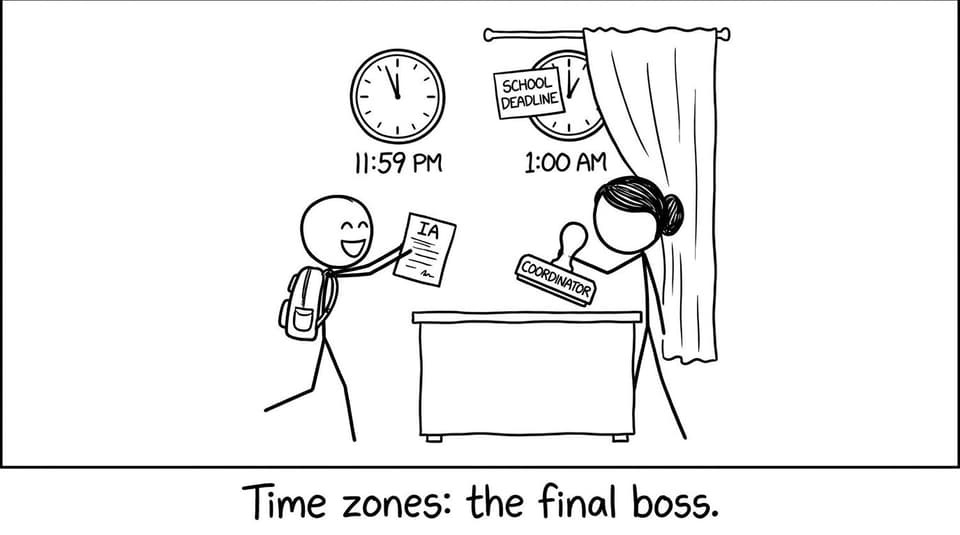
Missing the teacher deadline is serious, but often recoverable. Missing the school internal deadline is where consequences can become much more severe, because the school needs time to finalize submissions and meet IB administrative requirements.
A good companion read here is What Happens If You Submit an IB IA Late? The Risks and Remedies.
Typical consequences of a late IA
What happens next usually falls into one (or more) of these outcomes:
- Reduced or no feedback: teachers may stop giving comments once a cutoff passes, especially close to final submission.
- Lower quality work: rushing tends to cut analysis and evaluation, the sections that usually earn marks.
- Internal penalties (school policy): some schools apply academic penalties for lateness even if the IB does not require them.
- Risk of non-submission: in worst cases, if the school cannot submit your IA in time, it may not be included.
The harsh truth is that "late" often hurts not because of one dramatic penalty, but because it compresses the exact phase where marks are won: refining clarity, tightening analysis, and correcting weaknesses against the rubric.
The quiet mark loss: why lateness damages your IA more than you expect
Most students assume being late means losing presentation marks, or looking "messy." The bigger issue is structural: late work usually becomes descriptive.
When time is short, you naturally do the easiest tasks:
- add more background
- fix formatting
- add screenshots, graphs, or references
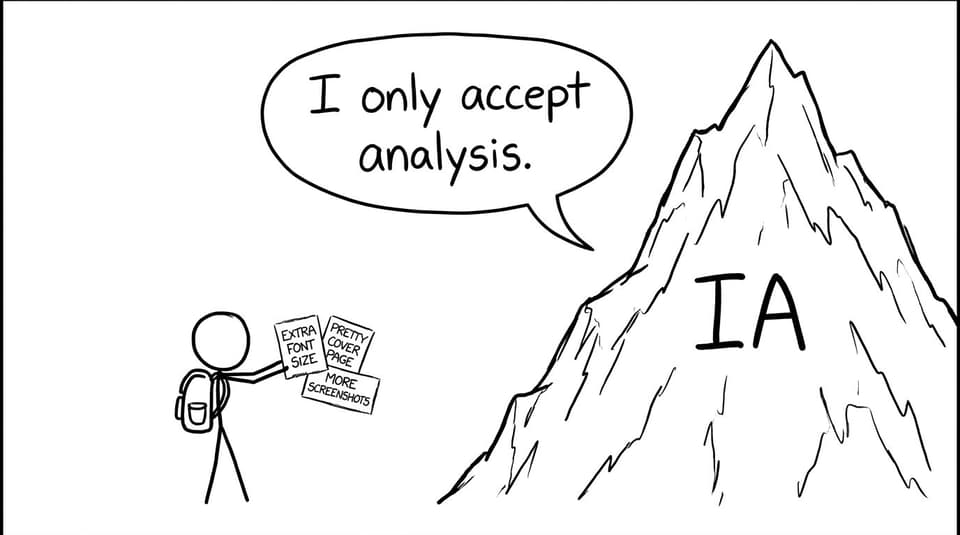
But examiners don't award top marks because you collected more. They award top marks because your IA shows you can think with what you collected.
That's why so many students lose marks long before the evaluation section even begins. If your focus is unclear, or your early analysis is thin, the ceiling drops.
If this sounds familiar, read Why Many IB IAs Lose Marks Before the Evaluation Section.
What to email when your IA is late (and why it works)
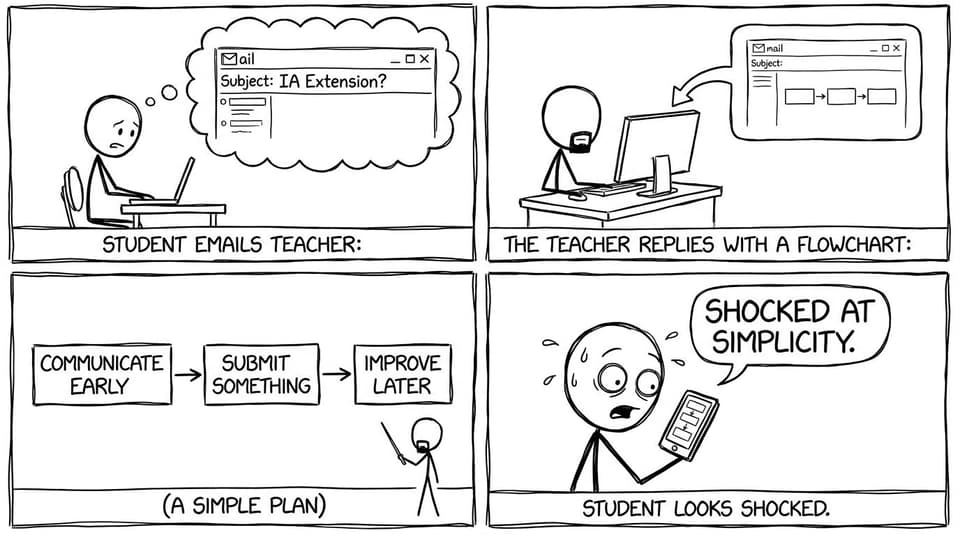
The best email is not emotional. It's operational.
A strong late-IA email does four things:
- Owns the miss (one sentence)
- States what exists (draft status, what sections are complete)
- Proposes a solution (specific new submission time)
- Asks one clear question (extension possibility, feedback possibility, or submission method)
Example (adapt the tone to your school):
Subject: IA submission update
Hi [Teacher Name],
I missed the IA deadline today. I have a complete draft with [X] still to revise (mainly analysis/evaluation). I can submit my current version now and a revised version by [specific time/date].
Can you confirm whether the school can still accept it for submission, and whether any feedback is still possible at this stage?
Thank you,
[Name]
This works because it gives your teacher something rare during deadline season: clarity.
For more guidance on what to do when panic hits, see What to Do if Your IA Is Due Soon and You're Panicking.
How to triage a late IA in 3 hours (high-impact fixes)
If you have limited time, you need a "mark return on time" mindset. In a late IA, not every improvement is equal.
Fix 1: Make the focus impossible to miss
Your examiner should be able to answer, within 20 seconds:
- What is the research question/aim?
- What evidence did you use?
- What conclusion did you reach?
If your IA drifts, tighten topic sentences and section openings so each part clearly serves the aim.
Fix 2: Convert description into analysis
Take any paragraph that only describes results and add one or two sentences that do the heavier work:
- "This suggests…"
- "This matters because…"
- "A limitation here is…"
- "This could be explained by…"
If you need help turning raw results into examiner-friendly analysis, use How to Use Data Effectively in Your IA Analysis.
Fix 3: Stabilize evaluation and conclusion
In a rushed IA, evaluation becomes generic. Instead, make it specific:
- one real limitation caused by your method or source choice
- one realistic improvement
- one implication for your research question
That kind of specificity reads like competence, even when the writing isn't perfect.
How to stop a late IA from wrecking your exam revision
A late IA doesn't just steal time. It steals confidence. Suddenly everything feels late.
The fix is not "work harder." It's to separate calendars.
- Your IA calendar is about drafting stages.
- Your exam calendar is about repetition, timing, and error patterns.
On RevisionDojo, this is where students get relief: you can keep exam momentum while the IA is being repaired.
- Use Study Notes to relearn only the subtopics you're actually missing.
- Use Flashcards for daily recall so memory doesn't decay while you're writing.
- Use the Questionbank to keep touching exam-style questions in small timed sets.
- Use AI Chat when you're stuck and need the next step, not a spiral.
- Use Grading tools for rubric-aligned feedback on drafts.
- Use Mock Exams and Predicted Papers to keep timing realistic.
- Use the Coursework Library to calibrate what "good" looks like.
- Use Tutors when you need a human to turn feedback into a plan.
If you're behind across multiple subjects as well as your IA, read Behind on Your IB IAs? How to Catch Up Fast.
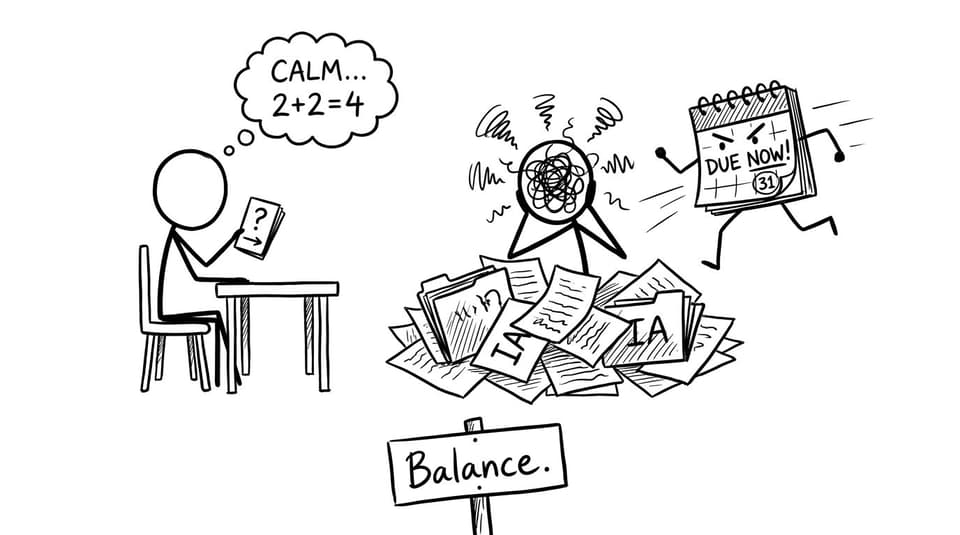
Prevention that actually works: stage-based planning (not vague deadlines)
Most late IA stories start the same way: "I thought I had time."
That's because students plan by activity ("do the introduction"), not by outcome ("finish a focused research question and a method that produces usable data").
A better approach is stage-based planning:
- focus locked
- evidence gathered
- analysis drafted
- evaluation drafted
- clarity pass
- final checks
To build this properly, use How to Plan an IB IA Without Falling Behind and Why Starting Your IB IA Early Actually Saves Time.
The calm truth: a late IA is a problem, not a verdict
A late IA feels like a cliff edge because the deadline is visible and the grade is personal. But most outcomes are decided by what you do next, not what you failed to do yesterday.
Submit the most complete version you can now. Communicate clearly. Triage for analysis and evaluation. Then return to exam prep with a small daily minimum so the rest of IB life doesn't collapse into the same panic.
If you want the fastest way to recover structure and confidence, make RevisionDojo your control panel: use Study Notes and Flashcards to protect memory, the Questionbank to keep exam performance real, AI Chat to unblock your next step, Grading tools and the Coursework Library to tighten your IA, and Tutors when you want a human strategy check.
And if you're still in the "I don't even know where to start" stage, begin with the IB Internal Assessment: A Complete Guide to Success in the Diploma Programme and the All IA articles.