
Planning an IA can feel like trying to carry a full glass of water through a crowded hallway. You start steady, then life bumps you: a test week, a club deadline, one “quick” group project, and suddenly your IA becomes the thing you avoid because it reminds you of time.
The problem usually isn’t laziness. It’s that many students plan an IA like homework: vague, task-based, and reactive. And the IA punishes that approach because it’s not one assignment, but it’s a mini research project that needs momentum.
The IA Planning Checklist (read this first)
Before you touch another paragraph of your IA, make sure you can answer these:
-
What is my school’s internal IA deadline (not a random online date)?
-
What stage am I in right now: focus, evidence, analysis, evaluation, polish?
-
What is the next measurable outcome (not just “work on it”)?
-
How am I protecting exam revision while the IA runs in the background?
If deadlines are confusing, clarify the timeline using When Are IAs Due? The IB IA Deadline Reality and When Does the IB Collect IAs? The Real IA Timeline.
Why most IA plans fail (and how to fix it)
Most IA plans sound like this:
-
“I’ll do research when I have time.”
-
“I’ll write the introduction this week.”
-
“I’ll fix analysis later.”
Those are activities, not outcomes. You can spend three hours “researching” and still be no closer to a clear argument.
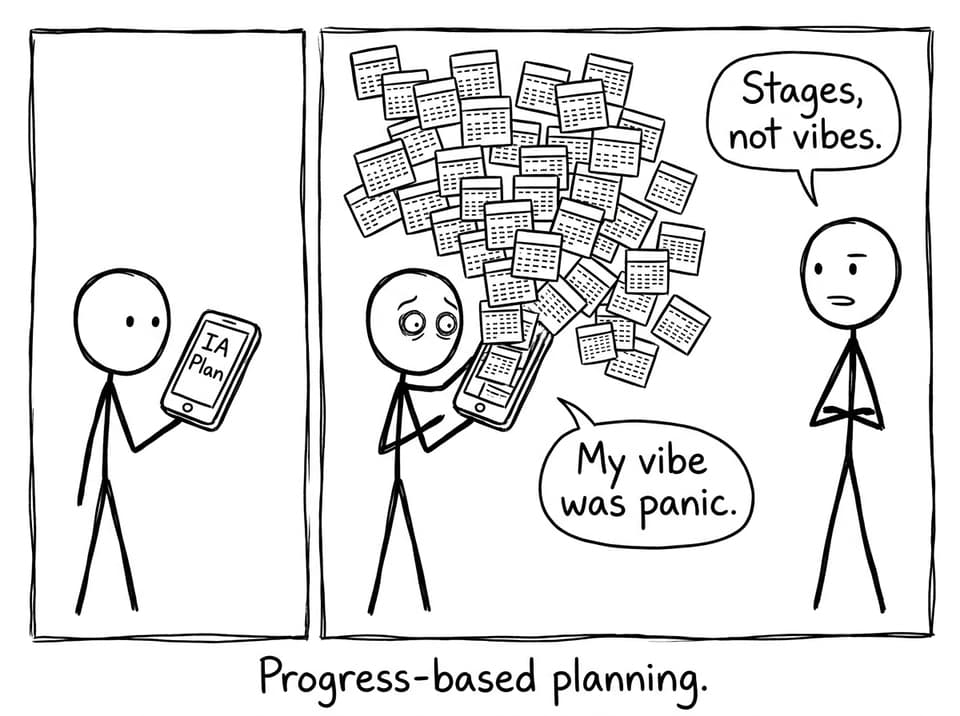
A better plan is progress-based: every session ends with something you can point to. A tightened research question. One paragraph of analysis that explains what your results mean. A short evaluation list that names limitations and fixes.
Plan your IA by stages, not by vibes
A strong IA moves through stages that each produce a clear result:
Focus stage
Your goal is one sharp, feasible question (and a method you can actually do). Use How to Write a Strong IA Research Question or browse subject hubs in IB Internal Assessment Guides.
Evidence stage
Collect only what you will use. More data or quotes rarely saves a weak plan. It usually delays analysis.
Analysis stage
This is where marks live. You’re explaining patterns, interpreting outcomes, linking to theory, and making justified claims.
Evaluation stage
You’re stress-testing your work: limitations, reliability, alternative explanations, improvements.
Polish stage
Clarity, structure, citations, visuals, and formatting. Helpful, but only after the argument is real.
Work backwards from submission (with small weekly blocks)
Backwards planning keeps your IA from becoming a last-minute rewrite.
Try this weekly rhythm (it works even in busy exam months):
-
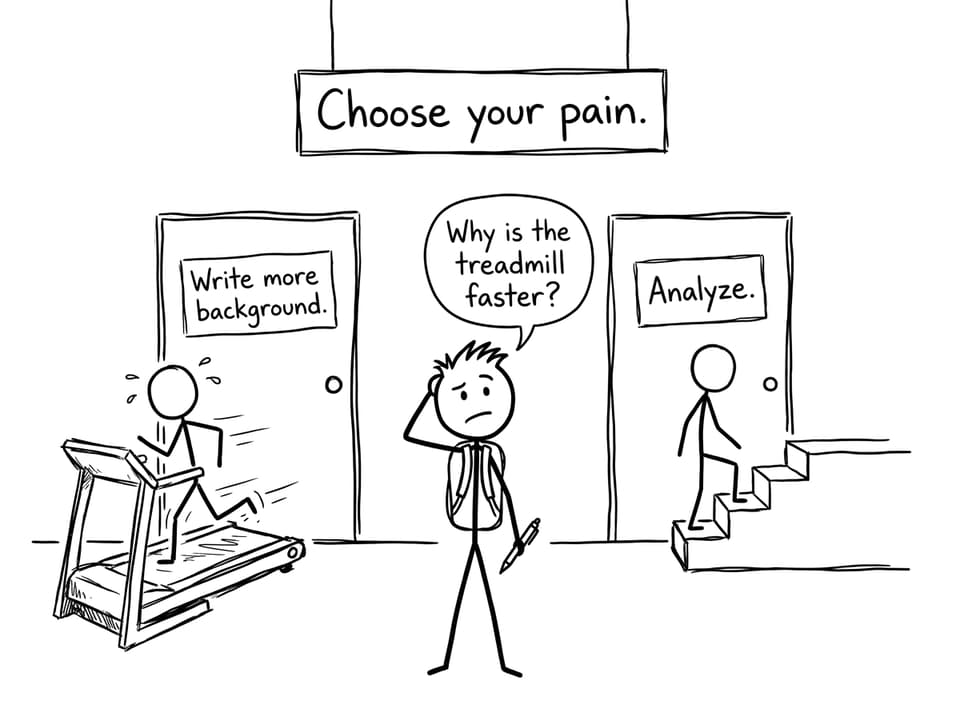
Two short IA sessions (45-60 min): build analysis/evaluation, not background.
-
One IA maintenance session (30 min): citations, figure labels, structure tidy-up.
-
Daily exam maintenance (15-25 min): keep recall alive with IB Flashcards with Spaced Repetition (SRS) and targeted practice using the Questionbank.
If you’re unsure how long your IA should take overall, use How Much Time Should I Spend On My IA?.
Use feedback as a planning tool, not a disruption
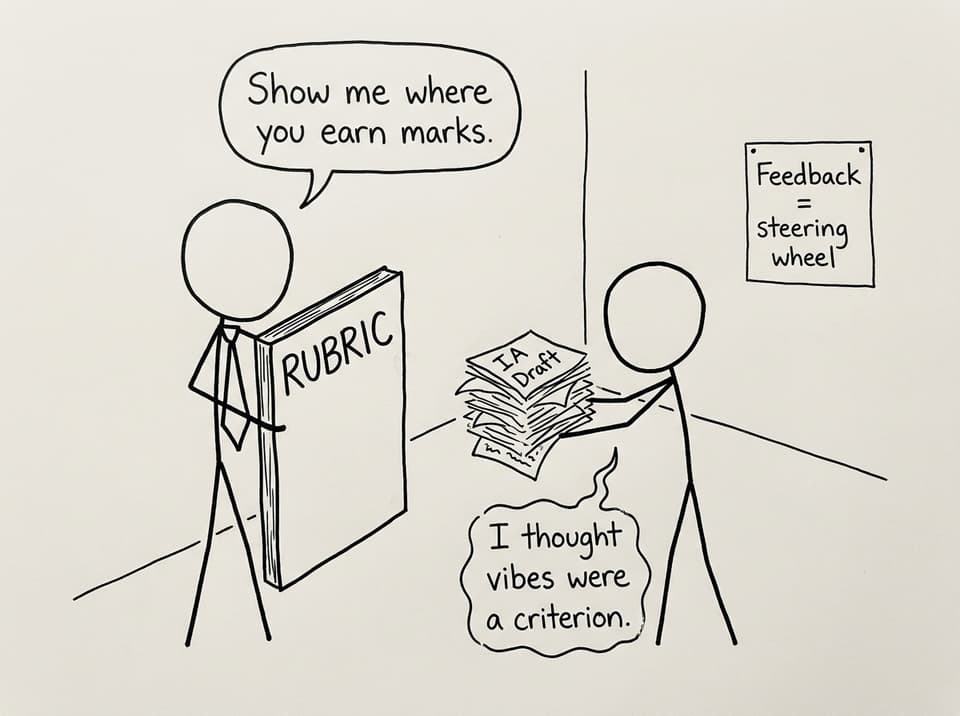
Feedback should tell you which stage you’re stuck in.
Instead of “I need to fix everything,” ask:
-
Is my focus still too broad?
-
Is my analysis missing interpretation?
-
Is my evaluation generic?
When you need fast clarity, RevisionDojo helps you tighten the loop: compare structure and exemplars in Coursework, then use AI Chat to turn comments into next steps. If you want a rubric reality check, pair drafts with the platform’s Grading tools and, when needed, get human guidance from Tutors.
Conclusion: the calm way to finish an IA
The students who finish an IA without falling behind don’t have perfect motivation. They have a simple system: stage-based planning, backwards deadlines, and short weekly sessions that produce real outcomes.
If you want that system in one place, start with the Coursework Guide and use RevisionDojo as your control panel: IA guides for structure, Coursework Library for exemplars, Grading tools for rubric alignment, AI Chat for quick blocks, plus Flashcards and the Questionbank so your IA never steals your exam prep.