

Your IA rarely explodes your schedule in one dramatic moment. It usually leaks time quietly, ten minutes here, an hour there, until you look up and realise you’ve spent three evenings rewriting the same paragraph.
Starting your IA early doesn’t mean turning into a productivity robot. It means buying back time you’d otherwise lose to indecision, messy drafts, and last-minute panic. And for IB students preparing for exams, that time is the most valuable currency you have.
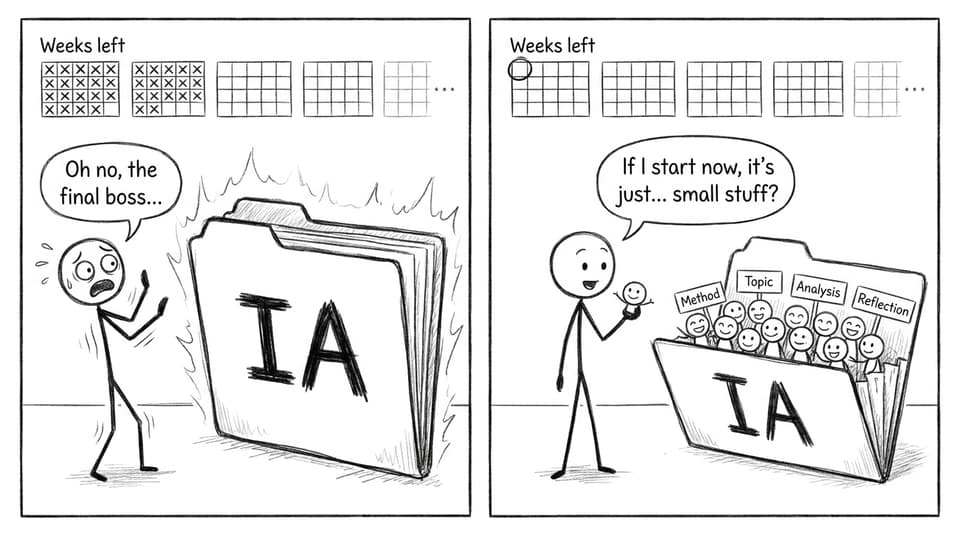
A quick IA early-start checklist (15-30 minutes)
If the word “start” makes your brain jump to “write the whole thing,” use this lighter definition. Starting your IA early can be just:
-
Choosing a research question direction (not the final wording)
-
Skimming the rubric/criteria and highlighting what earns marks
-
Creating a one-page plan: method, data sources, and likely analysis
-
Booking one feedback moment with a teacher or tutor
-
Setting up a simple folder: sources, raw data, reflection notes
If you want a structured overview, RevisionDojo’s IB Coursework Guides make the first step obvious instead of intimidating.
Starting your IA early reduces decision pressure
Most students don’t “run out of time” on their IA because the writing takes forever. They run out of time because every decision becomes urgent at the same time.
When you start late, you’re forced to lock in a topic quickly, accept a weak angle, and hope it works. When you start early, you can let your idea breathe. You can test a question, realise it’s too broad, and adjust before you’ve built 2,000 words on it.
A good place to begin is your research question. RevisionDojo’s guide on how to write a strong IA research question is the kind of resource that saves hours of wandering.
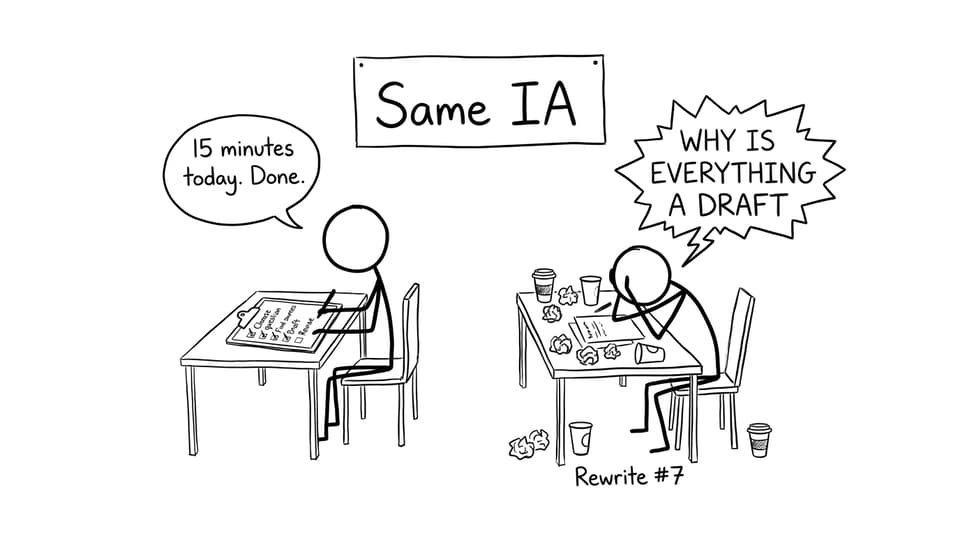
The real time-killer is rewriting (and early IA work prevents it)
Rewriting feels like progress, but it’s often a tax you pay for unclear focus.
Late-stage IA rewrites usually happen because:
-
The question changed after the draft was already built
-
The method didn’t produce usable data
-
The analysis is descriptive, so you try to “add depth” everywhere
-
The structure doesn’t match what the criteria reward
Starting your IA early helps you refine gradually. Small adjustments early stop you from rebuilding later.
Early IA progress reveals problems while they’re still cheap to fix
Here’s the quiet advantage of an early IA start: you spot issues when they’re still small.
If your data collection is unrealistic, you find out before you’ve written pages of background. If your analysis plan is thin, you notice while you can still change the approach. If your visuals are confusing, you can rebuild them without wrecking the narrative.
For example, students often underestimate how much presentation affects clarity. RevisionDojo’s tips on organizing graphs and tables in your IA can prevent the classic “my data looks messy so my analysis feels messy” spiral.
Feedback only saves time when you actually have time
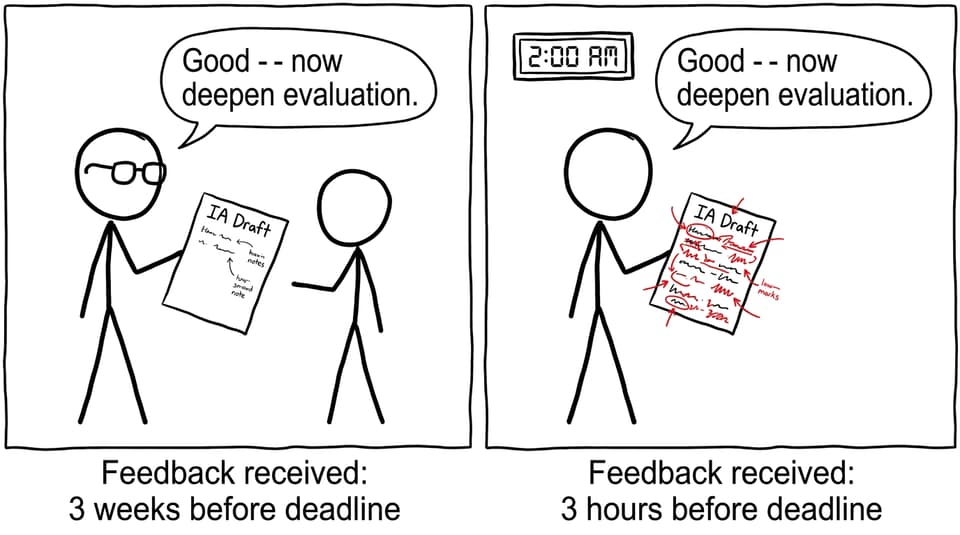
Teacher feedback is powerful, but only if there’s runway to use it.
Starting your IA early lets you:
-
Submit a rough draft without shame
-
Ask focused questions (not “is this good?”)
-
Implement improvements in calm, targeted passes
If you want extra support, RevisionDojo’s IB Coursework Grader gives rubric-aware feedback you can apply immediately, and the IB IA Guides help you interpret that feedback like an examiner would.
The exam-season secret: an early IA protects your revision time
IB students preparing for exams often delay the IA because revision feels more urgent. But the reverse is usually true: a delayed IA eventually steals the best revision weeks.
When your IA is moving steadily, your exam prep becomes simpler. You can run a clean routine: targeted practice in the Questionbank, daily Flashcards, and quick clarification through RevisionDojo AI Chat when something doesn’t click. The IA stops being the surprise storm that wipes out your timetable.
If you need an example of staged planning, read How to Plan an IB IA Without Falling Behind.
Conclusion: start the IA early, get your time back
Starting your IA early is one of the few IB strategies that genuinely saves time instead of just sounding responsible. You decide better, rewrite less, catch problems sooner, and make feedback worth receiving.
If you want a clear next step today, open RevisionDojo’s IB IA Guides, pick your subject, and set a 25-minute timer. One small move now makes the rest of your IA lighter minuteand protects your revision weeks when they matter most.