Join 650k+ students breezing through the IBReady to breeze through the IB?
A strange thing happens with an IA: you can write a beautifully mature evaluation and still watch the marks come back… stubbornly average.
It feels unfair until you realise how examiners read. They don’t “arrive” at the evaluation with a blank slate. By the time they reach it, they’ve already decided how credible your investigation is, how focused your thinking feels, and whether your evidence is doing real work. In other words, many IAs lose marks before the evaluation section even begins.
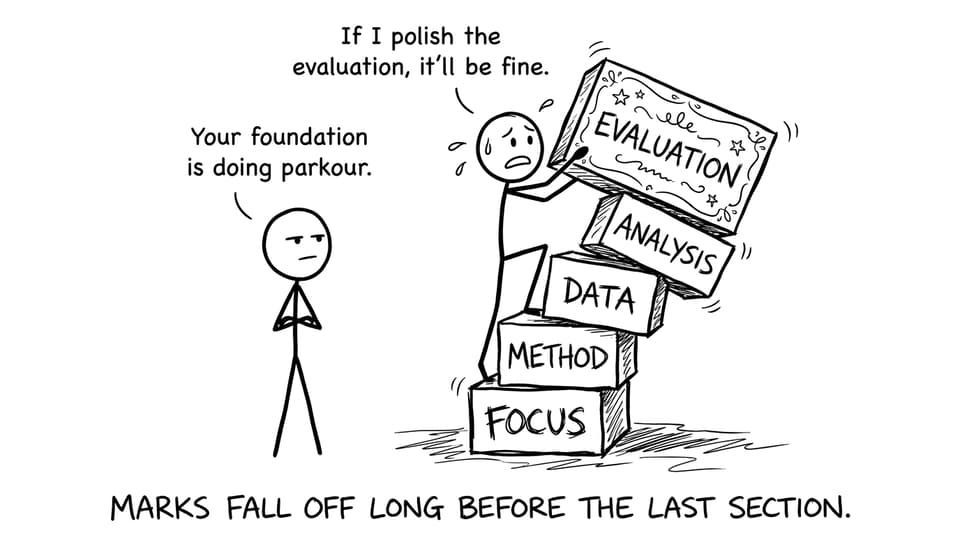
A wobbly IA tower
A quick checklist to stop your IA bleeding marks early
Use this as a fast diagnostic before you rewrite anything:
Focus: Can you state the research question/aim in one sentence without commas doing gymnastics?
Relevance: Does every paragraph clearly serve that aim?
Analysis: Are you interpreting evidence, not narrating it?
Structure: Could a tired examiner find your key moves in 30 seconds?
Evidence handling: Do you explain what data/sources mean and so what?
If two or more items feel shaky, your IA may be capped long before evaluation.
min read
min read
min read
min read
Weak focus caps the IA from page one
Focus is the quiet gatekeeper of a high-scoring IA. When your question is too broad, or your scope shifts midstream, the work starts to read like a tour instead of an argument. You might be working hard, but the examiner is looking for control.
A focused IA is not “interesting.” It’s answerable. It makes a promise and keeps it.
If you want subject-specific guardrails, start with IB IA Guides, then mirror the criterion language as you plan.
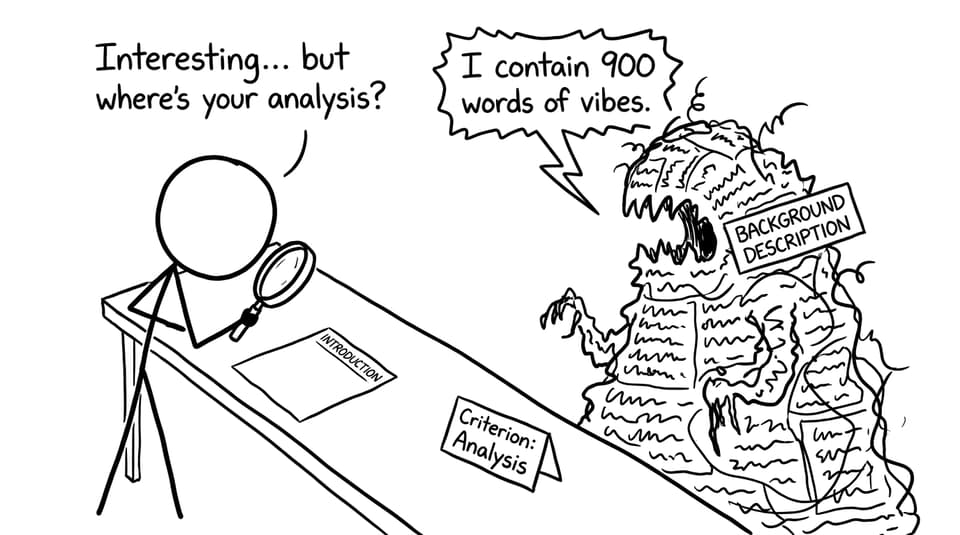
Description overload quietly kills analysis marks
Many students treat the start of an IA like a textbook chapter: long background, lots of definitions, neat history. It sounds academic. But it often earns surprisingly little.
Examiners reward what you do with knowledge.
A simple rule: if a paragraph could be copied into someone else’s IA unchanged, it’s probably description.
Swap this:
“This theory explains…”
For this:
“This theory predicts X, so in this IA I will test/compare/evaluate Y to see whether…”
Sometimes the thinking is there, but it’s buried. An examiner can’t award what they can’t find.
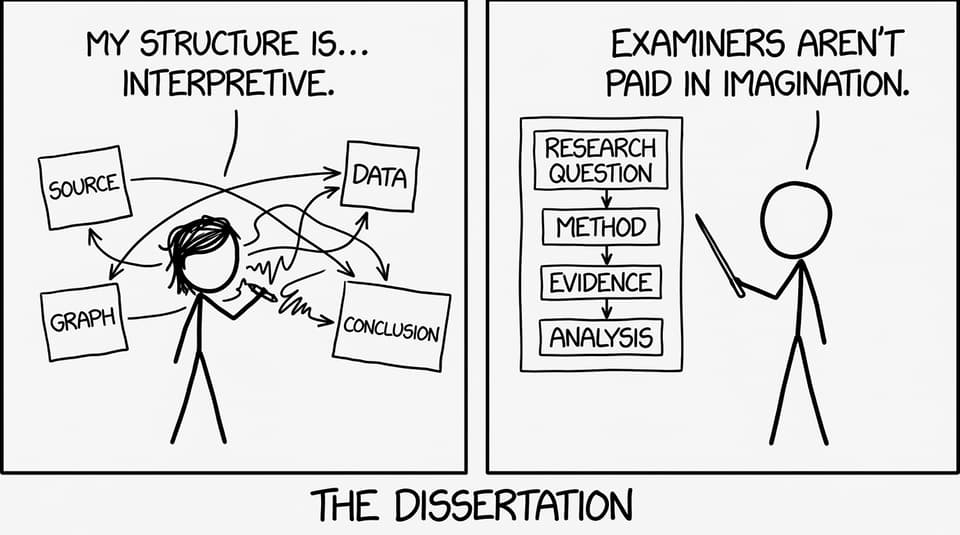
Common early structure issues in an IA:
Analysis mixed randomly into method or background
Headings that don’t signal purpose (e.g., “Section 2”)
Conclusions appearing before the evidence has been interpreted
Try this stress test: ask a friend to skim only your headings and first sentences. Can they explain your argument? If not, your structure is muffling your marks.
Early criteria reward how you use evidence. Many IAs include data, quotes, graphs, or citations that look impressive but don’t change the argument.
Fixes that raise marks fast:
After every table/quote/graph, add a 2-3 sentence “so what” explaining the implication for your aim.
Use evidence to make a decision (keep/reject, compare, prioritise), not just to “show you researched.”
If you need quick practice interpreting evidence under pressure, RevisionDojo’s Questionbank trains the habit of linking an answer to marking logic. That same habit transfers directly into a stronger IA.
Why evaluation can’t rescue a shaky IA
Evaluation matters, but it’s not a magic eraser. A strong evaluation works best when it’s the natural end of a well-controlled investigation.
If your IA has weak focus, heavy description, or unclear structure, the evaluation reads like a motivational speech at the end of a confusing movie. You can say “limitations” and “improvements” perfectly, but the core work still hasn’t demonstrated consistent analytical control.
Spaghetti structure vs flowchart
Building an IA that earns marks before evaluation
The best IAs don’t “save the good stuff.” They build it.
Draft your intro using the checklist in the IA introduction guide, then tighten your scope.
Convert your key theory into short, testable claims, then pressure-test them with Study Notes.
Use Flashcards to lock definitions and variables so your writing stays concise.
Use AI Chat to challenge your logic: “What part of this paragraph is description?”
Run your draft through RevisionDojo’s Grading tools to see where your writing stops being analytical.
When exam season hits, keep your coursework calm by using Predicted Papers and Mock Exams to protect time and energy for the IA.
Conclusion: protect IA marks from the first page
If your IA is losing marks, the problem often isn’t your evaluation. It’s everything that teaches the examiner how to read your work before they get there: focus, analysis, structure, and evidence handling.
Build a foundation that makes evaluation inevitable, not decorative. Start with IB IA Guides, tighten your planning using How to Plan an IB IA Without Falling Behind, and pressure-test your analytical writing with What Real Analysis Looks Like in an IB IA. Then use RevisionDojo’s Questionbank, Study Notes, Flashcards, AI Chat, Predicted Papers, Mock Exams, Coursework Library, Tutors, and Grading tools to keep improving without guessing.
Your IA doesn’t need a prettier ending. It needs a stronger beginning.