
Results Day has a strange way of making smart people forget what they already know.
You can be an IB student who survived IAs, TOK, and revision marathons, and still feel your stomach drop when you imagine one line on UCAS not going your way. The fear is simple: If I don’t meet my firm choice, is everything over?
It isn’t. UCAS is built with multiple routes for exactly this moment, and your job is not to predict the outcome; it’s to prepare for the next move.
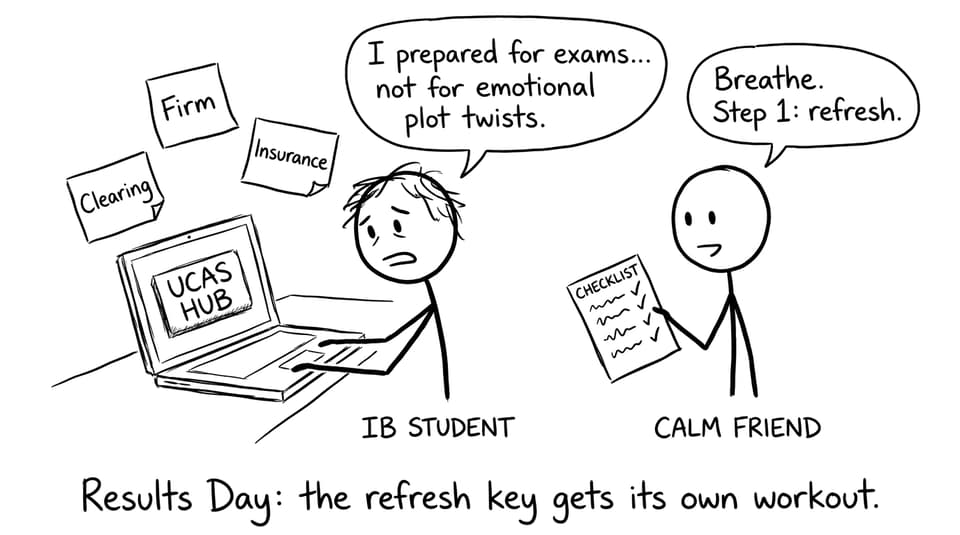
UCAS quick checklist (save this for Results Day)
If you don’t meet your firm choice conditions, UCAS usually follows this order:
-
Check your UCAS Hub/Track status first (don’t guess).
-
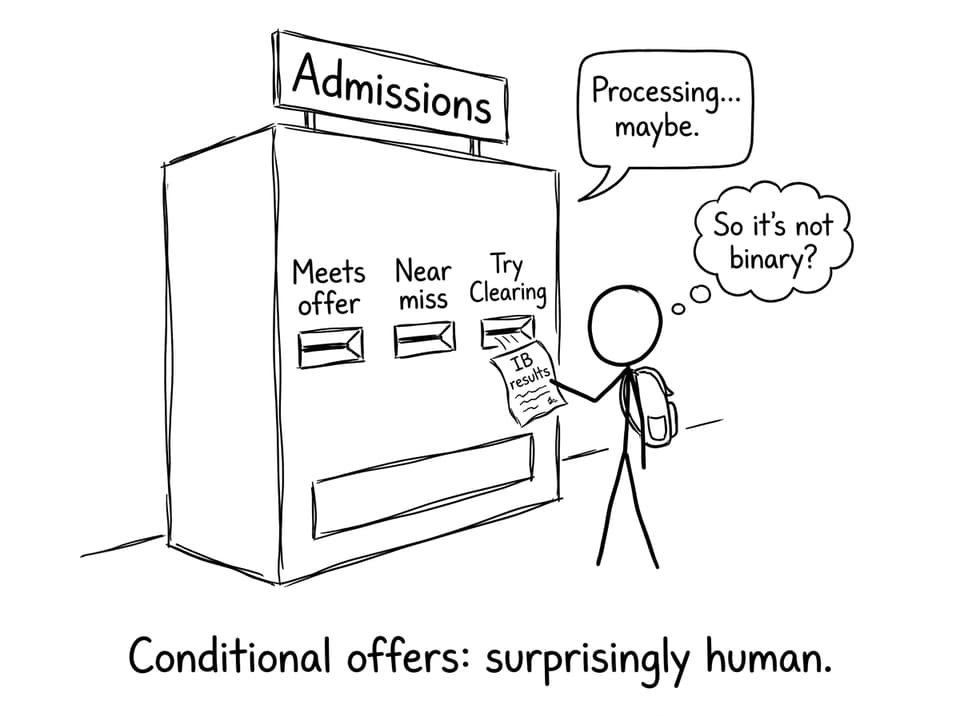
Your firm choice may still confirm you if you narrowly miss.
-
If not, UCAS automatically checks your insurance choice.
-
If neither confirms, you can use UCAS Clearing to find available courses.
-
If you do better than expected, you may be able to explore UCAS Adjustment vs Clearing decisions (depending on what applies in your cycle).
For background reading you can keep open in separate tabs, see UCAS Track Explained: Understand Your Application Status and How to Rank Your UCAS Choices Strategically.
Start with UCAS Hub/Track, not your imagination
On Results Day, your brain will try to do maths at maximum stress: “I dropped one mark in Paper 2, so that means…” Stop. The only reliable signal is what UCAS shows you.
Log in and check your status. Universities update decisions through UCAS and sometimes they confirm students who are slightly below the published offer. That can happen because cohorts vary, spaces open up, or the course team decides your overall profile still fits.
If you want to understand what you’re seeing, revisit UCAS: How to Accept or Decline University Offers. It’s calmer to read it before you need it.
If you miss your firm choice, you might still be accepted
A missed condition isn’t always an automatic rejection. In the real world, decisions can be more flexible than the spreadsheet in your head.
Universities may still confirm you when:
-
You narrowly miss a grade boundary.
-
You meet key subject requirements but miss on a less relevant component.
-
The course has capacity.
-
Your application is otherwise strong.
The important thing is that UCAS will show you the outcome. Your job is to check, then respond.
UCAS insurance choice: the plan you made for your calmer self
If your firm choice doesn’t confirm you, UCAS automatically checks your insurance offer. If you meet those conditions, that’s often the smoothest outcome because you still have a place without extra steps.
This is why the “insurance strategy” matters so much: it’s not pessimism, it’s stress management. Your insurance should be a course you’d genuinely attend, with requirements that are meaningfully more achievable than your firm.
If you want to sanity-check whether you picked well, revisit How to Rank Your UCAS Choices Strategically.
UCAS Clearing: the fast, practical route to a new offer
If you miss both firm and insurance, UCAS Clearing becomes your main route. Clearing can sound like a last resort, but for many students it becomes a reset: a chance to choose with fresh information.
A good Clearing experience is rarely about luck. It’s about preparation.
Before Results Day, build a simple “call sheet” using UCAS Clearing Checklist 2025: What to Prepare Before You Call. Then, if you do go into Clearing, follow a tight process like the one in UCAS Clearing 2025: Secure Your Ideal University Place and the step-by-step after you get an offer in What to Do After Accepting a UCAS Clearing Offer.
How RevisionDojo helps you stay ready for every UCAS outcome
The quiet advantage isn’t knowing which UCAS route you’ll use. It’s building results you can trust.
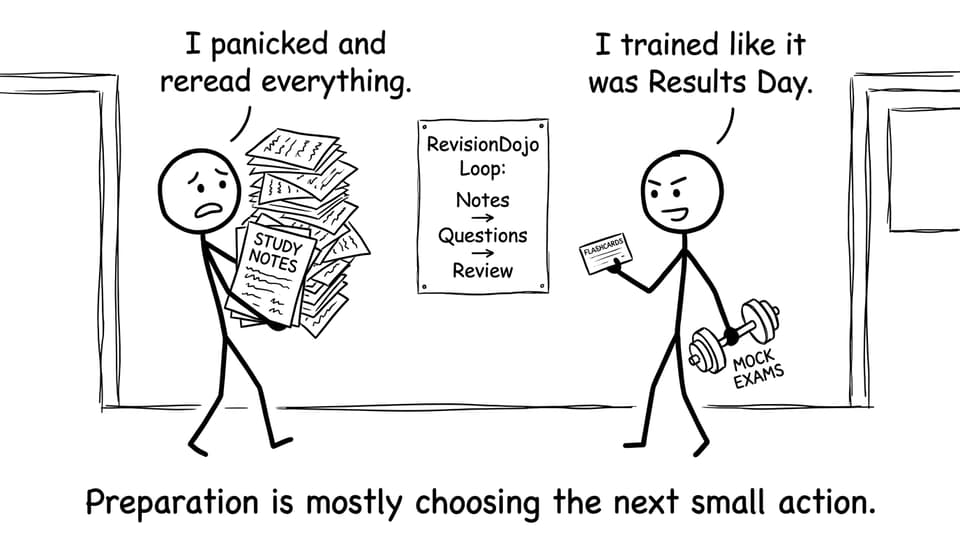
RevisionDojo is designed for IB students preparing for exams who want that trust, because it turns revision into a repeatable loop:
-
Study Notes to get clarity fast
-
Flashcards to keep recall sharp when you’re tired
-
Questionbank practice to build marks by topic and question type
-
AI Chat when you’re stuck and need a tutor-like explanation
-
Grading tools to improve written responses and coursework drafts
-
Mock Exams and Predicted Papers to rehearse timing under pressure
-
Coursework Library to see what strong work looks like
-
Tutors when you need human feedback and accountability
If you want a simple structure, start with How to Study for IB Exams: Step-by-Step Guide and then tighten your routine with How to Study for IB Exams Without Burning Out.
Conclusion: UCAS is a system of routes, not a single door
If you don’t meet your firm choice, it can feel personal. But UCAS is built for reality: near misses happen, offers change, and students need more than one path.
Check UCAS Hub/Track. Let the system do its sequence. And if you end up using insurance or UCAS Clearing, treat it like an informed pivot, not a failure.
If you want to walk into Results Day with more than hope, build the kind of exam readiness that travels with you. Use RevisionDojo’s Questionbank, Study Notes, Flashcards, AI Chat, Grading tools, Predicted Papers, Mock Exams, Coursework Library, and Tutors to turn the next few weeks into something measurable: confidence you’ve earned.