
If you’re deep in IB revision, university decisions can feel like background noise, right up until UCAS pings you with offers and suddenly it’s loud.
This moment is oddly emotional. You’ve done the hard part: choosing courses, writing the statement, waiting. Then the offers arrive and you realise the next step is yours. In UCAS, accepting or declining isn’t just clicking buttons. It’s deciding what you’re committing to while your brain is also trying to remember the Krebs cycle, integration techniques, and how to structure a Paper 2 essay.
At RevisionDojo, we see this pattern every year: the best decisions come from calm structure, not last-minute adrenaline.
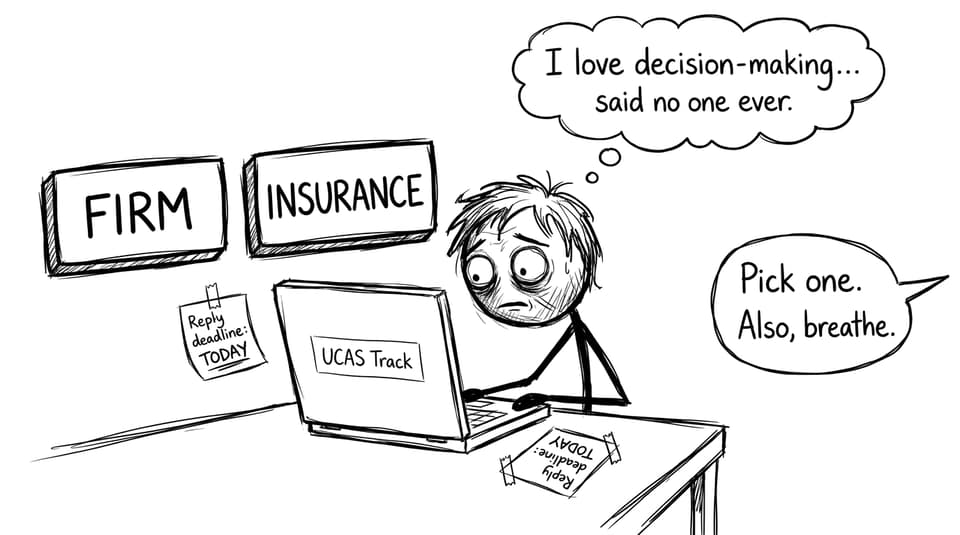
UCAS offer reply checklist (fast, practical)
Before you reply in UCAS, make sure you can tick these off:
-
You’ve received decisions from all your choices (or you’re eligible to reply)
-
You understand each offer: conditional, unconditional, or unsuccessful
-
You can name your firm choice (your top pick)
-
You can name your insurance choice (your realistic backup)
-
You know your UCAS reply deadline and have it in two places (calendar + notes)
If you need to get fully oriented first, read: What UCAS Is and How It Works: Step-by-Step Guide.
Why UCAS makes you wait (and why that’s good)
A common IB-student instinct is to lock things in early so you can “focus on exams.” But UCAS is designed so you don’t commit while you only have half the information.
Waiting until you can see every outcome helps you compare properly: entry requirements, course fit, and how each offer will feel on results day. That last part matters more than people admit. When your IB exams end, you’ll want fewer surprises, not more.
If you’re unsure what each status actually means, use: How UCAS Track Works: Understanding Your Application Status.
Firm choice vs insurance choice in UCAS
In UCAS, you typically respond by choosing:
Firm choice
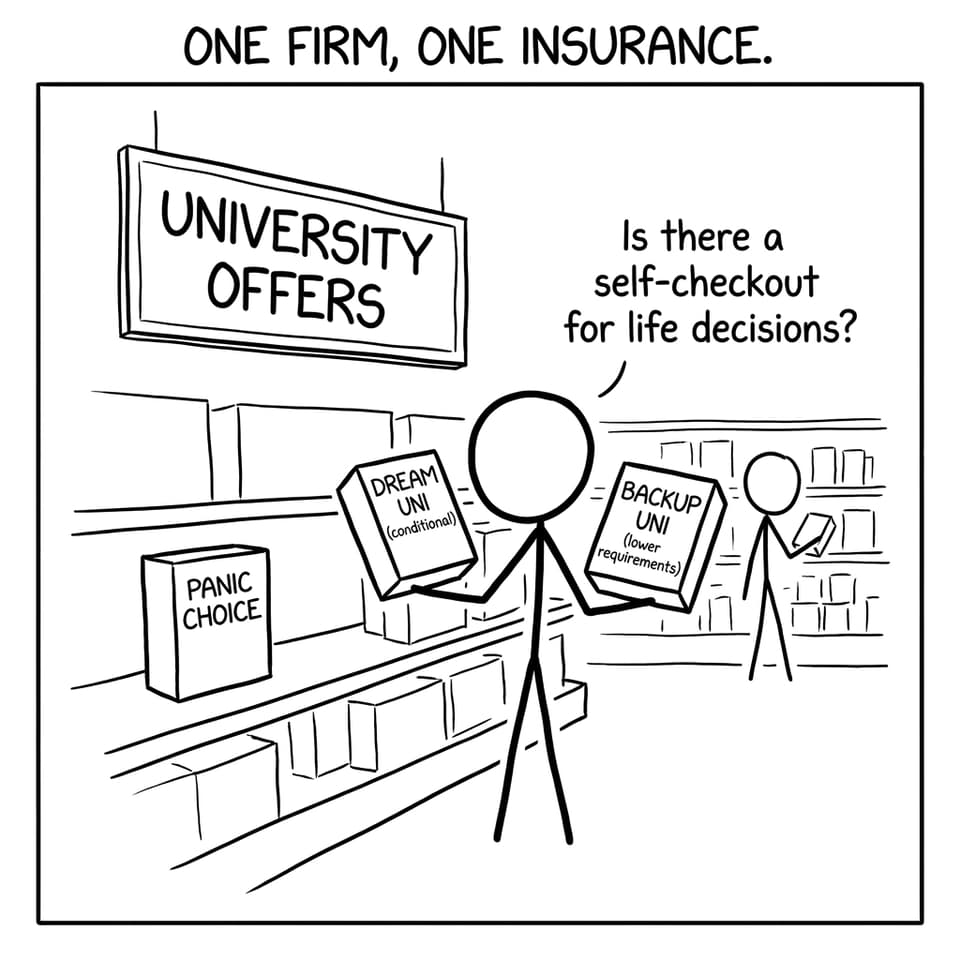
Your first-choice university. If you meet the conditions, you’re in, and you’re committed.
Insurance choice
Your backup plan. Usually it has lower entry requirements than your firm. It should also be somewhere you’d genuinely attend, not a choice you secretly resent.
RevisionDojo has a full breakdown here: Understanding the Role of the Insurance Choice.
How to accept offers in UCAS (step-by-step)
When you’re ready to act, UCAS Track is where you reply.
Steps to accept in UCAS
-
Log in to Track and review each offer carefully
-
Select your firm choice
-
Select your insurance choice (recommended for most IB students)
-
Decline the other offers
-
Confirm your selections and double-check the confirmation screen
That’s it mechanically. The strategic part is choosing firm and insurance wisely.
A helpful way to sanity-check your firm: ask, “If I hit my predicted grades exactly, does this offer still work?” If not, it’s not ambition; it’s misalignment.
How to decline offers in UCAS (and what ‘final’ really means)
Declining in UCAS is simple, but emotionally weird. It’s not personal; it’s logistics.
Steps to decline in UCAS
-
Open the offer
-
Choose “decline”
-
Confirm
Once declined, it’s typically final. Treat it like submitting an IB exam: don’t press the button unless you’re sure.
If you’re the kind of student who overthinks decisions, write a two-line reason for every decline. It sounds basic, but it stops you from spiralling later.
UCAS reply deadlines: the mistake that costs the most
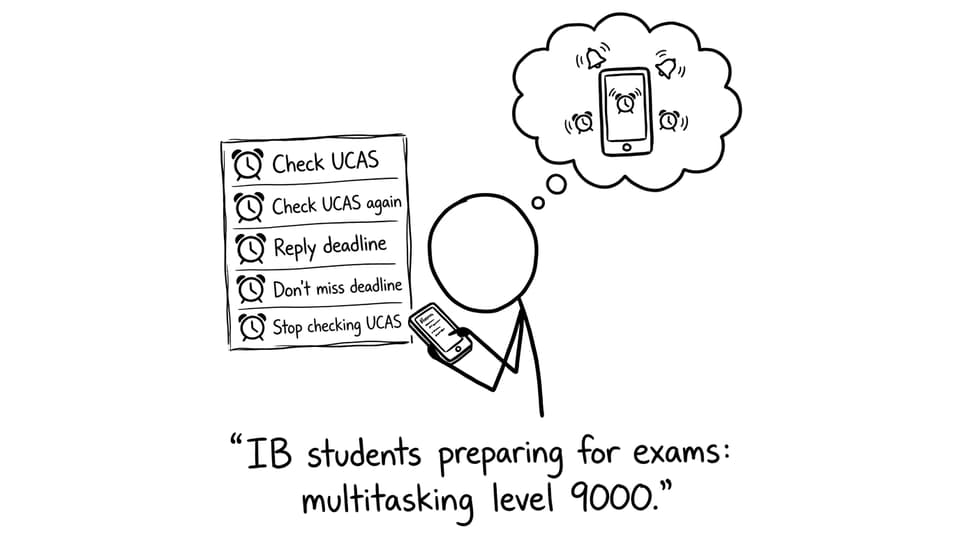
Your UCAS reply deadline is personal and shown in Track. Missing it usually means UCAS will automatically decline your offers, and you may need to use Clearing.
If you want a results-day safety plan, keep this saved: UCAS Clearing Checklist 2025: What to Prepare Before You Call and UCAS Clearing 2025 Guide.
Decision tips that fit an IB exam season
Here’s the quiet truth: the best UCAS decision is the one you can live with on a tired Thursday in May.
-
Choose an insurance with meaningfully lower requirements than your firm
-
Compare not only prestige, but course structure and assessment style
-
Don’t let peers rush you into the “popular” option
-
Plan your decision like revision: gather info, make the call, then move on
And if you’re trying to keep exam performance stable while all this happens, build a routine that feels automatic. RevisionDojo helps by keeping everything in one place: Study Notes for clarity, Flashcards for daily recall, a Questionbank for targeted practice, Mock Exams to build stamina, Predicted Papers for realistic rehearsal, and AI Chat plus Grading tools when you need fast feedback. If coursework stress is stealing your focus, the Coursework Library and Tutors help you stabilise that side too.
To tighten your exam workflow, see: RevisionDojo App: The Smarter Way to Prep for IB Exams and IB Test Templates: Pre-Made Exams for Quick Practice.
Closing: make the UCAS decision, then protect your focus
UCAS offer replies are a short task with long consequences. Choose your firm and insurance with calm logic, respect the UCAS deadline, and don’t decline anything until you’re sure.
Then return to the work that actually moves your grades. If you want your exam season to feel more controlled, RevisionDojo can carry the heavy load: practice with the Questionbank, revise with Study Notes and Flashcards, get feedback via AI Chat and Grading tools, and build confidence through Mock Exams and Predicted Papers. Your UCAS choice matters, but so do the results that unlock it.