
Predicted grades are the weirdest kind of number: they can feel like a verdict, even though they’re really a forecast.
One October afternoon, you’ll hear someone say, “We’ve submitted your UCAS application,” and suddenly those predicted grades feel louder than anything you’ve done all year. But universities don’t read them like a prophecy. They read them like evidence: imperfect, useful, and always paired with the rest of your story.
In this guide, we’ll unpack what predicted grades actually do inside UCAS, how far their influence goes, and what you can do when you’re not thrilled with the forecast.
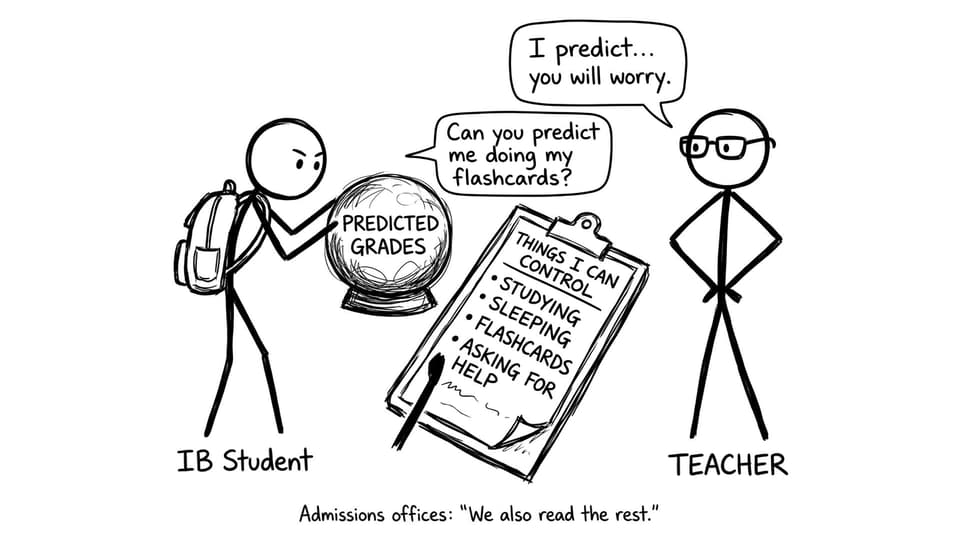
Quick checklist before you spiral (UCAS edition)
-
Know what your school submits as predicted grades and when they lock them.
-
Check how UCAS offers work: most are conditional.
-
Strengthen what you can control: personal statement, references, and exam readiness.
-
If needed, ask for a review with new evidence, not just anxiety.
-
Use structured revision so your final results can meet (or beat) the conditions.
If you’re choosing UK courses right now, this pairs well with How to Choose the Right UCAS Courses (IB Students).
What predicted grades really are (and what they’re not)
Predicted grades are teacher-generated estimates of what you’re likely to achieve in your final IB exams. They’re usually based on a mix of mock exams, timed tests, classwork trends, Internal Assessment progress, and how consistently you meet markscheme expectations.
Two things can be true at once:
-
Predicted grades can be broadly fair, especially when they’re built from exam-like evidence.
-
Predicted grades can still miss, because people aren’t spreadsheets.
If you want a deeper look at reliability, read How Accurate Are IB Predicted Grades for University Applications?.
How UCAS uses predicted grades in university admissions
For IB students applying through UCAS, predicted grades matter because the UK system often works on conditional offers. A university might say “Yes, if you later achieve 36 points with 6,6,5 at HL.” That “if” is the entire point.
In practical terms, UCAS predicted grades help universities:
-
Decide whether you’re likely to meet their entry requirements.
-
Compare applicants applying before final results exist.
-
Make conditional offers aligned with their standard thresholds.
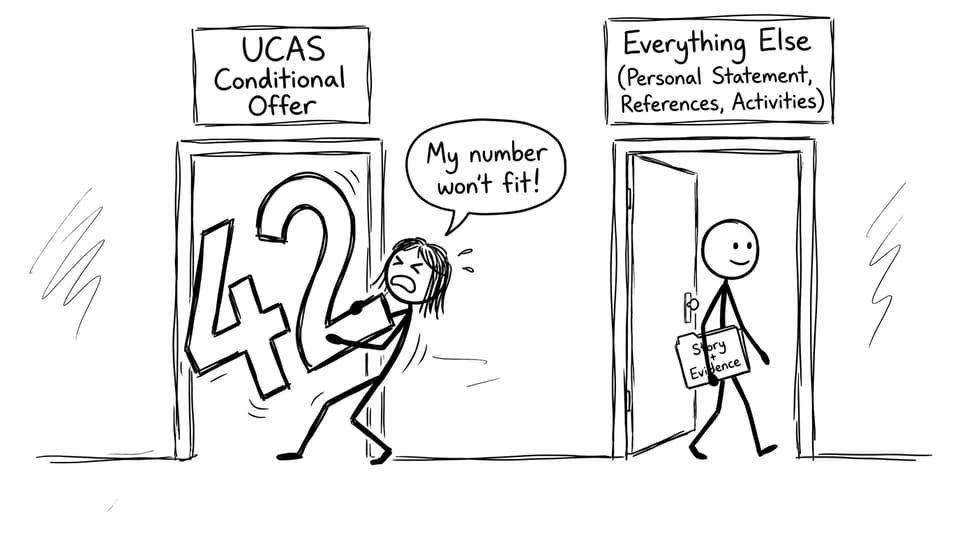
But remember: a conditional offer is not a reward for having a high prediction. It’s a contract. Your job later is to deliver the grades.
The limits of UCAS predicted grades (what they can’t do)
The stressful part is assuming predicted grades decide everything. In reality, UCAS predicted grades are influential, but not absolute.
They can’t:
-
Replace your final IB results (offers are confirmed after results day).
-
Guarantee admission on their own.
-
Fully capture late improvement, especially if your best work happens after predictions are submitted.
Universities also know predictions vary by school and teacher. That’s why your application still needs to hold up as a whole: your academic record, your personal statement, your reference, and sometimes admissions tests or interviews.
To zoom out, How Much Do Predicted Grades Actually Matter? is a useful reality check.
What to do if your predicted grades feel too low for UCAS
The goal isn’t to argue. It’s to build evidence.
Ask for feedback like a strategist
Instead of “Why is my predicted a 5?”, try: “What would you need to see to predict a 6?” Teachers can respond to a plan better than a plea.
If you want practical steps, use How to Improve Your Predicted Grades in IB.
Build an “evidence loop” before the next assessment
This is where RevisionDojo becomes more than motivation. Use Study Notes to patch the concept quickly, Flashcards to keep it alive daily, and the Questionbank to prove it under exam-style pressure. Then use AI Chat to clarify what you keep missing and Grading tools to see how marks are actually awarded.
When you’re ready to simulate pressure, add Mock Exams and IB Predicted Papers to rehearse timing and decision-making.
Apply strategically inside UCAS constraints
UCAS limits you to a small set of choices, so build a balanced list: a couple aspirational picks, solid target choices, and at least one safer option.
If you’re debating whether to apply now or wait, see Should I Apply with Predicted Grades or Wait for Final Scores?.

Common mistakes IB students make with UCAS predicted grades
-
Treating predicted grades as a fixed identity instead of a temporary estimate.
-
Picking every UCAS choice as a reach, then being shocked by rejections.
-
Getting an offer and relaxing too early (the conditions still matter).
-
Revising “more” without revising “smarter” (no feedback loop, no markscheme focus).
A simple tool that helps you stay realistic is the IB Grade Calculator, which turns practice performance into a grounded estimate.
Conclusion: UCAS predicted grades matter, but they’re not your ceiling
In UCAS, predicted grades can open doors because they help universities decide who is likely to meet a conditional offer. But they don’t replace final results, and they don’t tell the whole story of who you are as a student.
If predicted grades are stressing you out, treat them like a weather forecast: useful information, not fate. Then build evidence. Use RevisionDojo to tighten understanding with Study Notes, lock recall with Flashcards, test reality in the Questionbank, and rehearse pressure with Predicted Papers and Mock Exams. When your process becomes measurable, your confidence stops depending on guesses; and your UCAS application gets stronger for it.