
When UCAS Clearing opens, it rarely feels dramatic in the movie way. It feels smaller than that: a phone in your hand, a page of notes you don’t fully trust, and the quiet question of whether you’re ready.
The strange part is that Clearing isn’t won by confidence. It’s won by friction removal. If you can find your details instantly and explain your choice calmly, you sound like someone a university can say “yes” to.
This UCAS Clearing checklist is built for IB students who want to walk into results day with a plan, not a panic spiral.
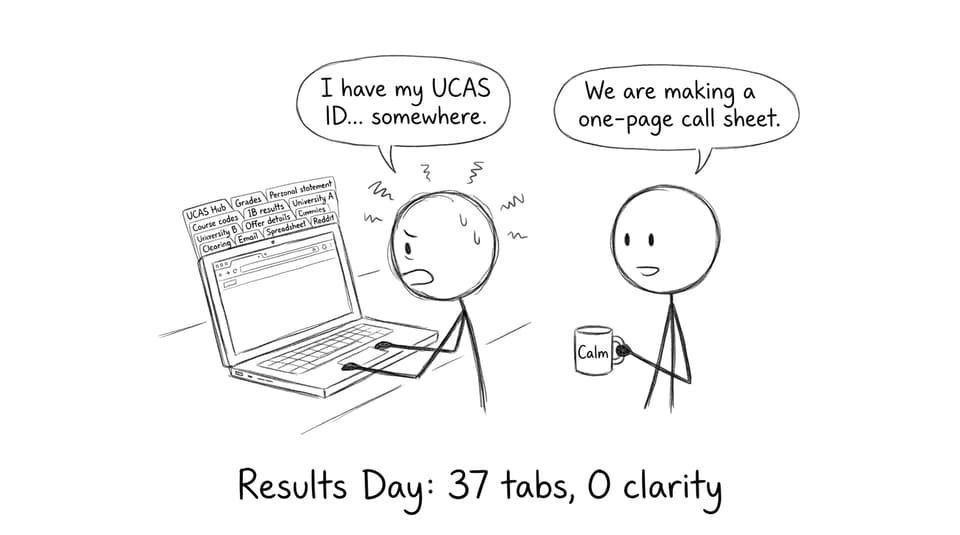
UCAS Clearing checklist (print this before results day)
Keep this as a one-page “call sheet” next to you. The goal is to answer questions fast, without scrambling.
Your must-have UCAS details
-
UCAS ID and login details (write them down somewhere safe)
-
Your phone number and email (the ones on your application)
-
Your current address (some teams confirm it)
If you need a quick refresher on the platform side, read UCAS Track Explained: Understand Your Application Status.
Your grades in a clear, speakable format
Universities want clarity, not storytelling. Prepare:
-
Total IB points
-
Each subject grade (HL/SL)
-
TOK/EE outcome (core points)
-
Any extra qualifications or relevant achievements
For results-day nerves and what to do in the first hour, keep IB Results Day FAQ: Every Question Answered open.
Your personal statement (plus a 30-second pivot)
Have your personal statement ready to reference. Then prepare a 30-second version that fits your Clearing course.
Think: “I’m interested in X because of Y, and I’ve shown it through Z.” Short. Specific. True.
A ranked list of courses (with UCAS codes)
Create a shortlist you actually want, ranked from “best fit” to “solid backup.” Include:
-
Course title + UCAS code
-
Entry requirements
-
2 reasons you’re applying (modules, placements, location, outcomes)
If you’re still deciding how your preferences should work, Understanding the Role of the Insurance Choice is worth a quick read.
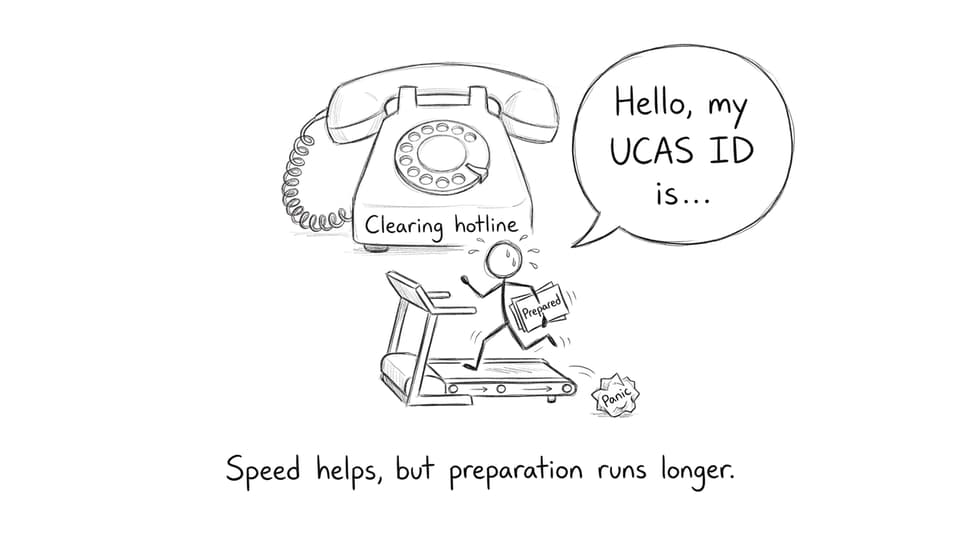
Before you call: organise your room like it’s an exam
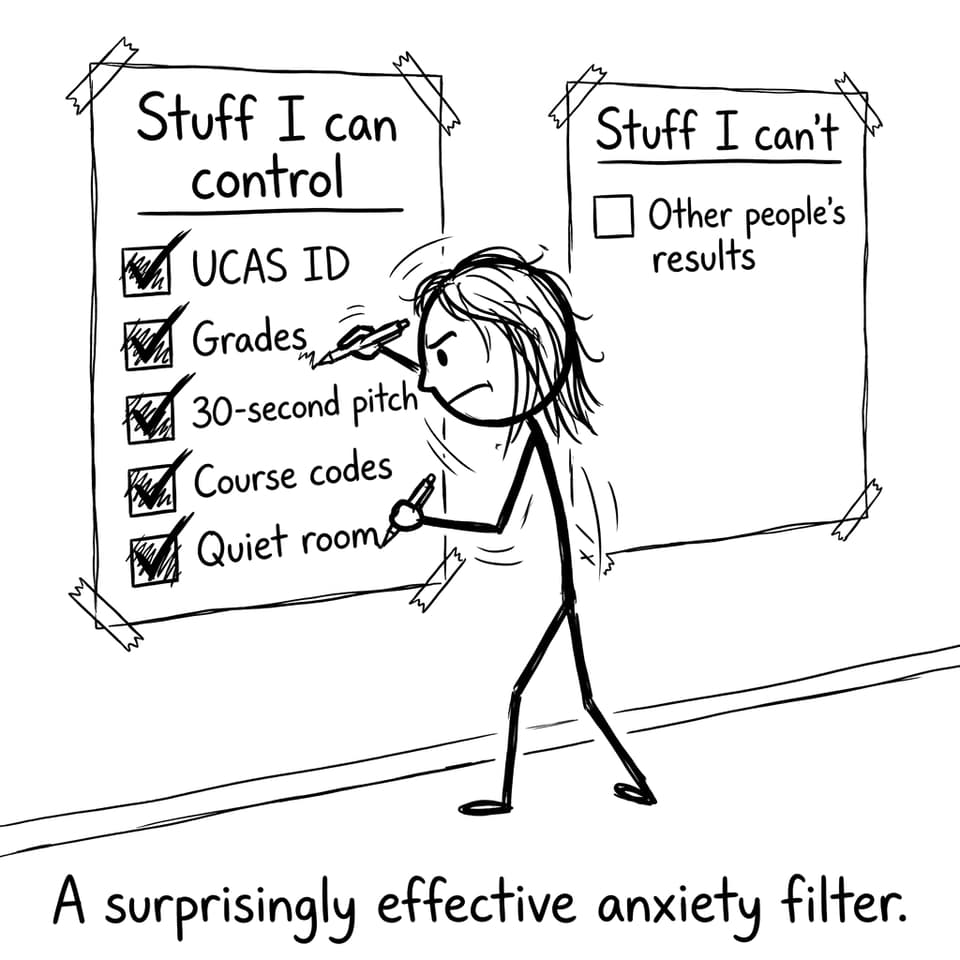
UCAS Clearing rewards the same skill IB exams do: controlling what’s controllable.
Set up a “no-fuss” calling space
-
Charger plugged in
-
Water nearby
-
Quiet room (or headphones)
-
Notes on paper (screens fail at the worst time)
Write a simple opener (and practise once)
Use a script so nerves don’t erase your words:
-
Name
-
UCAS ID
-
Results (IB points + key subject grades)
-
Course you’re asking about + UCAS code
-
One sentence: why you fit
You don’t need charisma. You need coherence.
Use RevisionDojo to get your facts straight fast
Clearing often overlaps with post-exam doubts: “Should I remark?” “Did I underperform?” “What do I do next?”
RevisionDojo is designed for that exact moment of uncertainty. If you’re rebuilding after exams or planning a retake route, you can use:
-
Study Notes to clarify weak topics quickly
-
Flashcards for daily recall when motivation is low
-
Questionbank to target the exact skills you missed
-
AI Chat to get unstuck in minutes, not hours
-
Grading tools to understand what earns marks in written responses
-
Mock Exams and Predicted Papers to rehearse pressure properly
-
Coursework Library to reduce background IA/EE/TOK stress
-
Tutors when you need human strategy, not more advice
If you want the bigger picture system, see RevisionDojo App: The Smarter Way to Prep for IB Exams.
UCAS Clearing in context: what happens next?
Clearing is just one branch of the UCAS results-day decision tree. If you missed your offer, you’re not instantly “out” of options.
To understand the flow (firm, insurance, Clearing, and what flexibility can look like), read UCAS Guide: What Happens If You Don't Meet Your Firm Choice.
If you want a step-by-step Clearing walkthrough, keep UCAS Clearing 2025: Secure Your Ideal University Place Today bookmarked.
A final UCAS Clearing reminder for results day
The best UCAS Clearing call is the one where you don’t hunt for anything mid-sentence. Prepare your sheet, practise your opener, and keep your course list ranked.
Then, once the calls are done, give yourself something IB students rarely do: a system. RevisionDojo is that system: built around Study Notes, Flashcards, Questionbank practice, AI Chat support, Grading tools, Predicted Papers, Mock Exams, a Coursework Library, and Tutors, so the next step feels structured, not improvised.
If you’re exploring multiple application decisions, browse all UCAS guides on RevisionDojo and keep your options open without losing your calm.