
If you have ever stared at your offers and felt your brain do that quiet, unhelpful thing (the one that sounds like, “What if I mess this up?”), you are not alone.
UCAS makes it feel like you are choosing a future in one click. But the truth is calmer: ranking your UCAS choices is just a decision under uncertainty. And the students who do it well do not guess harder. They build a system.
This guide is for IB students juggling exams, predicted grades, and a million tabs open at once. We will make UCAS ranking practical: how to choose a firm, how to choose an insurance, and how to reduce Results Day panic without shrinking your ambition.
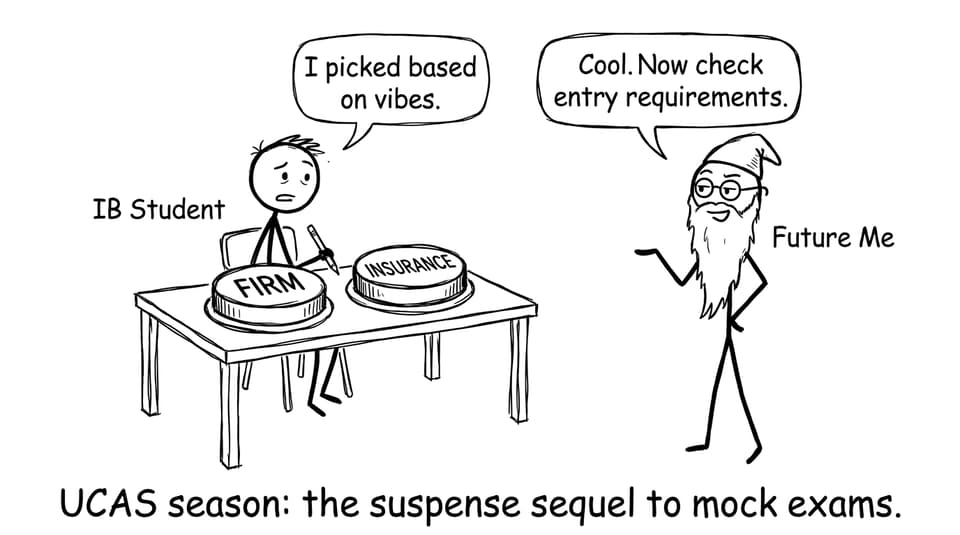
UCAS ranking checklist (fast but strategic)
Use this checklist before you lock anything in on UCAS:
-
You can explain the difference between a firm and insurance choice in one sentence
-
Your firm is the course you genuinely want, not the one that wins dinner-table debates
-
Your insurance has meaningfully lower requirements than your firm
-
You would actually attend both courses (no “throwaway” options)
-
You have checked how your IB predicted grades compare to each offer
-
You know what happens if neither offer is met (Clearing) and you have a calm backup plan
If you want extra context on how universities judge your overall application, read How Universities Assess UCAS Applications.
The core UCAS idea: firm is preference, insurance is probability
The biggest UCAS mistake is mixing up preference and probability.
Your firm choice is about preference: “If everything goes normally, where do I want to be?”
Your insurance choice is about probability: “If results wobble, what is my best realistic landing spot?”
That separation is powerful because it protects your motivation while you revise for the IB. You can aim high without pretending the risk does not exist.
If you need a quick refresher on the wider process, UCAS Application Structure Explained is a clean overview.
Choosing your UCAS firm choice (ambitious, not imaginary)
Your UCAS firm choice should feel like a “yes” even on a tired day. Not because it is perfect, but because the course fits how you learn and what you want next.
When IB students choose a firm strategically, they usually check five things:
Entry requirements vs your current evidence
Look at your predicted grades and your latest exam performance, not just hope. If you are close to the boundary, your plan should include how you will close the gap.
A practical tool here is the IB Grade Calculator. Use it to translate practice performance into something more honest than vibes.
Course structure and assessment style
Two courses with the same title can feel completely different. Scan modules, assessment balance, and any placement or year abroad options.
If you are still refining your shortlist, How to Choose the Right UCAS Courses for You breaks the research down simply.
Lifestyle fit (because you will live there)
Commute, accommodation costs, campus vs city, support services, and the rhythm of the place matter. The IB is intense; you already know environment changes output.
Motivation during IB revision
A strong firm choice can become fuel. When revision gets boring, it helps to know what the work is for.
RevisionDojo students often pair that motivation with structure: Study Notes for clarity, Flashcards for daily recall, and the Questionbank for targeted practice that actually changes scores.
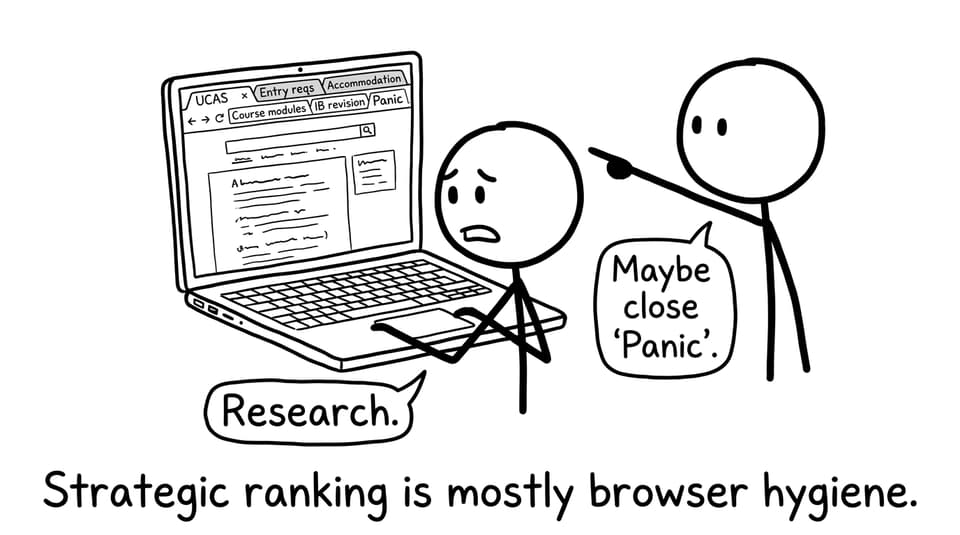
Choosing your UCAS insurance choice (a real safety net)
A good UCAS insurance choice is not a consolation prize. It is a second door you would willingly walk through.
Here is what makes an insurance choice do its job:
The requirements are clearly lower than your firm
Not “slightly lower.” Clearly lower. If the two offers are almost identical, your UCAS insurance stops being insurance.
You still like the course and location
Results Day is emotional. You do not want your backup plan to feel like punishment.
It reduces stress, which protects performance
This part is underrated. The best students are rarely the ones with zero anxiety. They are the ones with anxiety that stays inside a container.
To make your container stronger, practise like the exams are real: use Online IB Mock Exams and RevisionDojo Predicted Papers to train timing and decision-making under pressure.
What about unconditional offers in UCAS?
Unconditional offers can feel like relief. Sometimes they are. But strategically, the question is simple:
“If I got the IB grades for my firm anyway, would I still choose this unconditional course?”
If the answer is no, be careful. Security is not the same as fit.
And if you are tempted to relax because something feels guaranteed, remember: your IB results still matter for scholarships, confidence, and the options you keep open.
Common UCAS ranking mistakes (and the easy fixes)
Choosing prestige as a proxy for happiness
A famous name does not automatically mean the right teaching style, the right city, or the right support.
Picking an insurance that is basically the same as your firm
Fix: create a genuine gap in requirements.
Treating research like a one-night sprint
Fix: take one evening, open a doc, and compare modules, assessment types, and requirements side by side.
Making the decision while burnt out
Fix: decide after sleep, not after a three-hour IB study session.
When you are ready to actually respond to offers, follow How to Accept or Decline Offers in UCAS.
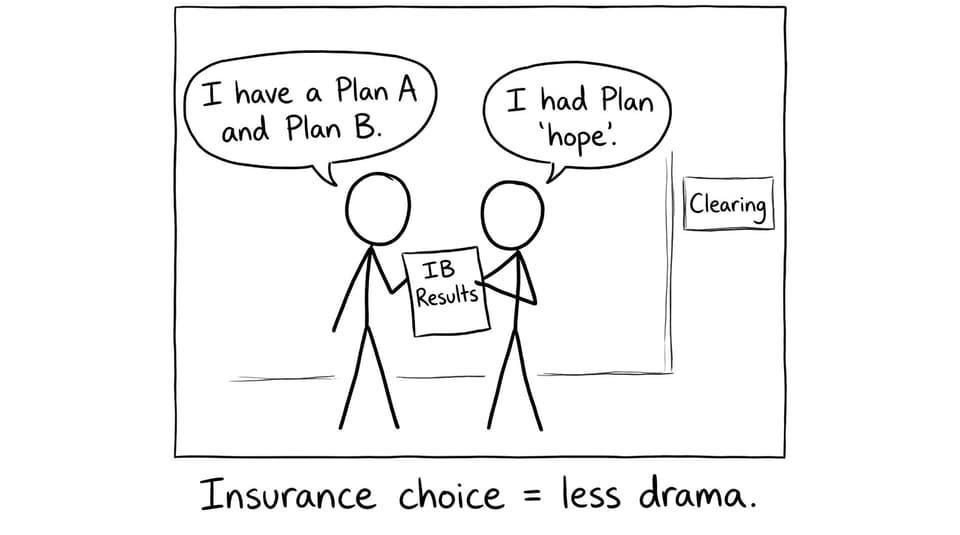
Conclusion: rank your UCAS choices like a strategist
Ranking your UCAS choices well is not about being fearless. It is about being prepared.
Choose a firm that genuinely fits your goals. Choose an insurance that genuinely reduces risk. Then put your energy where it belongs: the IB work that makes both outcomes more likely.
If you want one place to run that whole system, RevisionDojo is built for it: Study Notes to learn fast, Flashcards to remember daily, a Questionbank to practise precisely, AI Chat and Grading tools to fix mistakes, plus Predicted Papers, Mock Exams, a Coursework Library, and Tutors when you want a human plan.
Make your UCAS choices, then let your revision do the talking.