

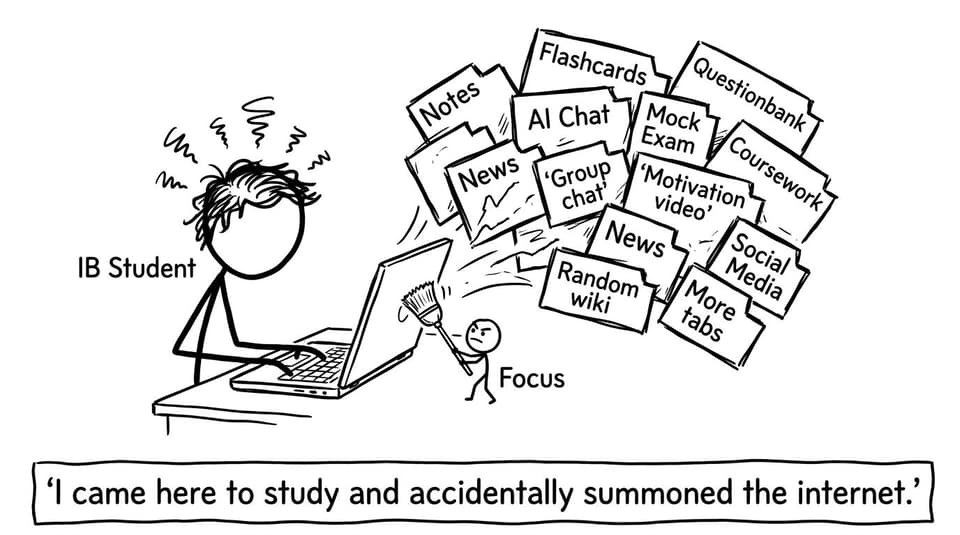
If you've ever sat down to study and felt your brain immediately start bargaining ("I'll do it after one video"), you already know the strange truth of IB life: effort isn't the problem. Direction is.
Most IB students don't fail because they don't study enough. They fail because they study in ways that feel productive but don't show up on exam day. They reread, rewrite, highlight, and tidy their understanding into something that looks impressive, then the first timed question asks them to use the knowledge, and everything goes quiet.
The good news is that you don't need a heroic transformation. You need a repeatable loop. One you can run even when you're tired.
The IB study loop (quick checklist)
If you only take one thing from this post, make it this: your study should move through the same four gears, again and again.
- Understand one small concept (not the whole chapter)
- Recall it without looking (flashcards or self-quizzing)
- Apply it with exam-style questions
- Review mistakes and turn them into your next study target
That's the spine. Everything else is just organization.
When you want that loop in one place, RevisionDojo is built around it: Study Notes, Flashcards, Questionbank, AI Chat, Grading tools, Predicted Papers, Mock Exams, Coursework Library, and Tutors.
Why your current study feels busy but doesn't stick
There's a quiet trap in IB: you can spend hours studying and still not train the skill the exams demand.
Exams don't reward familiarity. They reward retrieval under pressure.
When you reread notes, you get a comforting feeling of recognition. It's real: your brain does recognize the page. But recognition is not recall. And recall is not application. The IB asks for application.
A better question than "How long did I study?" is:
- "How many times did I retrieve this from memory?"
- "How many marks did I earn under timed conditions?"
- "Do I know what my mistakes pattern is?"
That's why tools that force retrieval and feedback matter. A loop without feedback is just effort.
For a deeper structure, these RevisionDojo guides pair well with this post:
- How to Study for IB Exams: Step-by-Step Guide
- Active Recall for IB: The Only Method You Need
- The Ultimate Guide to Revision for IB Students
How to study when you're overwhelmed: make it smaller
The fastest way to restart good study is to shrink the unit of work.
Instead of:
- "I'm going to study Biology."
Try:
- "I'm going to study one subtopic, then do 10 questions on it."
Small targets create clean feedback. Clean feedback creates momentum.
A reliable 60-minute block:
- 10 min: one slice of syllabus-aligned notes
- 35 min: exam-style questions on that exact slice
- 15 min: error review + flashcards for what you missed
RevisionDojo makes this easy because the tools connect:
- Use RevisionDojo for IB as your home base
- Pull clarity from notes, then switch straight into practice
- Use AI feedback to shorten the gap between confusion and correction
Study Notes: stop rewriting, start extracting
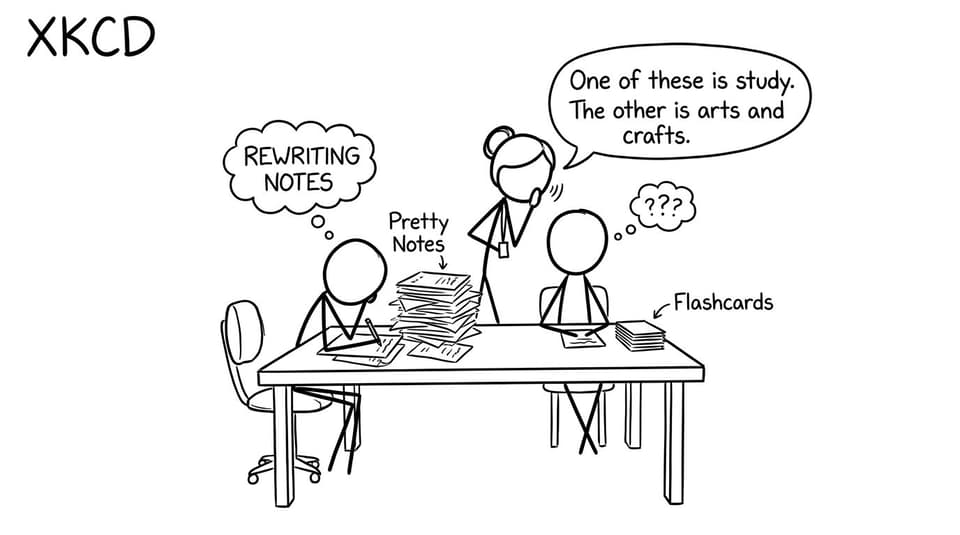
Notes should not be a second textbook you create by hand.
Good study notes are like scaffolding: helpful at first, then gradually removed.
When you use notes well, you read with an exam question in mind:
- What definition would they want?
- What method would earn method marks?
- What command term is this linked to (explain vs evaluate)?
If you want a streamlined system with examiner-written material, start with Notes + Flashcards + Question Bank (Free). It reduces the temptation to spend your whole session "preparing to study" instead of actually doing it.
Flashcards: the daily study minimum that compounds
If your schedule is chaotic, you need a minimum you can keep.
Ten minutes of flashcards a day is not a tiny habit. It's memory maintenance. It stops the "cool down" that makes every session feel like starting from zero.
The best flashcard rule for IB study is ruthless simplicity:
- One idea per card
- Question on the front, answer on the back
- If it takes more than 30 seconds to answer, split it
RevisionDojo flashcards are designed for active recall and spaced repetition, so you're not guessing when to review. If you want a full breakdown, use IB Flashcard System: Active Recall for Better Memory.
Questionbank: where study becomes exam technique
At some point, the most honest form of study is answering questions.
Not because questions are fun, but because they reveal the difference between "I understand this" and "I can earn marks with this."
A strong pattern for Questionbank practice:
- Start topic-specific until you stop bleeding marks
- Then mix topics (because real exams do)
- Tag mistakes and retest them 48 hours later
RevisionDojo's Questionbank is built for this loop: practice by topic, get instant feedback, and track what needs review. If you want to see how RevisionDojo fits into a full routine, this is helpful: RevisionDojo App: The Smarter Way to Prep for IB Exams.
Timed practice: study your pacing like it's content
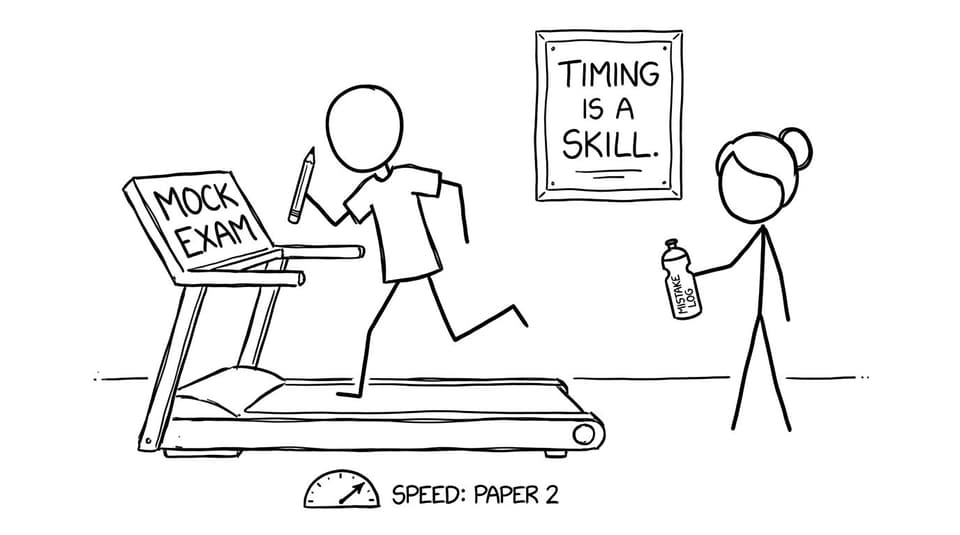
Here's a strange thing about IB: you can know the content and still lose marks to timing.
Timing is not a personality trait. It's a trained skill.
A simple ladder that keeps your study honest:
- Timed sets (15-25 min): small bursts, one topic
- Timed sections (30-60 min): mixed skills
- Full Mock Exams: stamina and strategy
And after every timed session, do a calm review:
- What went wrong (content gap, command term, timing, careless error)?
- Why did it happen?
- What is the smallest fix?
To choose what to prioritize, this post helps when the syllabus feels endless: Do You Need to Study Every Topic for IB?.
AI Chat and Grading tools: compress the feedback loop
The most expensive cost in IB study is staying confused for too long.
Confusion creates procrastination. Procrastination creates panic. Panic creates shallow study.
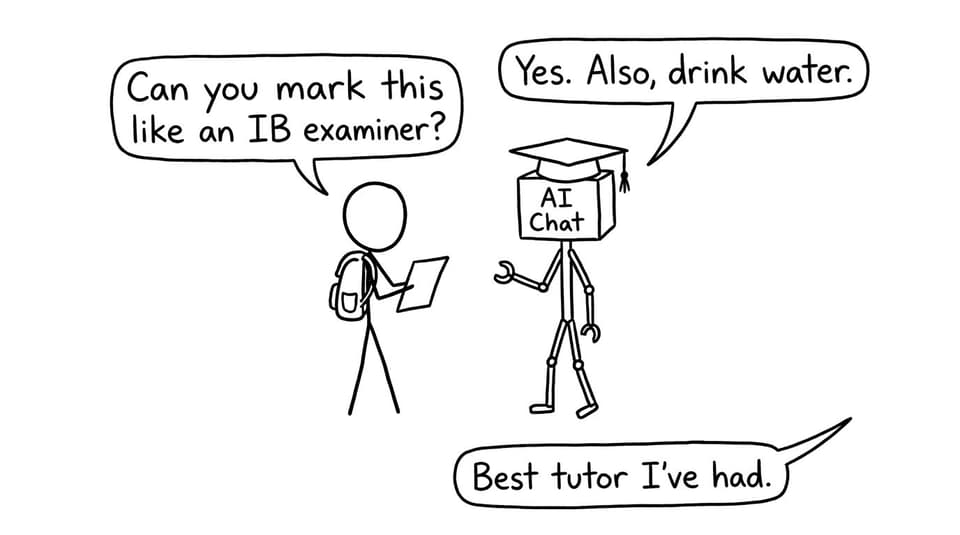
RevisionDojo's AI Chat (Jojo) is most powerful when you use it like a tutor, not a shortcut:
- "Here is my answer. Mark it like an IB examiner. What earned marks, what didn't?"
- "Give me 5 questions on this subtopic, increasing difficulty."
- "Explain this concept using the language of the markscheme."
When written work is involved, speed matters even more. Use rubric-aligned feedback so you're not guessing. The IB Coursework Grader is built for IA/EE/TOK-style drafts, and it pairs naturally with the Coursework Library when you want exemplars and structure.
A weekly study plan you can actually follow
A plan that looks beautiful but collapses by Wednesday is not a plan. It's fiction.
Try this structure instead:
Daily (15-25 minutes)
- Flashcards (your minimum)
- 1 quick error-fix from yesterday (one card, one question type, one concept)
3-5 times per week (45-90 minutes)
- Notes for one subtopic
- Questionbank on the same subtopic
- Mistake log (5 bullets max)
Weekly (60-120 minutes)
- One timed session (section or mock)
- Review for patterns, not just wrong answers
If you're also trying to keep your life intact while you study, this perspective helps: IB Exams Without Pausing Your Life.
Closing: study like you're training, not cramming
The IB doesn't reward the student who can sit the longest at a desk. It rewards the student who can study with feedback, adjust quickly, and keep showing up.
Build the loop: understand, recall, apply, review. Then run it until it feels ordinary.
If you want one place to run that system with less friction, make RevisionDojo your default: Study Notes to learn clearly, Flashcards to keep daily recall alive, Questionbank to turn knowledge into marks, AI Chat to get unstuck, Mock Exams and Predicted Papers to train realism, plus Grading tools, the Coursework Library, and Tutors when you need sharper feedback.
Your next step can be simple: pick one topic and study it the right way today.