
For IB students sitting exams in May 2028 (started DP1 in August 2026).
The best time management May 2028 strategy is to plan one realistic week at a time, assigning focused blocks to six subjects, coursework and CAS rather than trying to schedule the entire Diploma Programme at once. Keep one master deadline calendar, choose three meaningful priorities each week, and measure completed work instead of hours spent at a desk.
That system sounds almost too simple. But complexity is rarely the scarce resource in IB. Attention is.
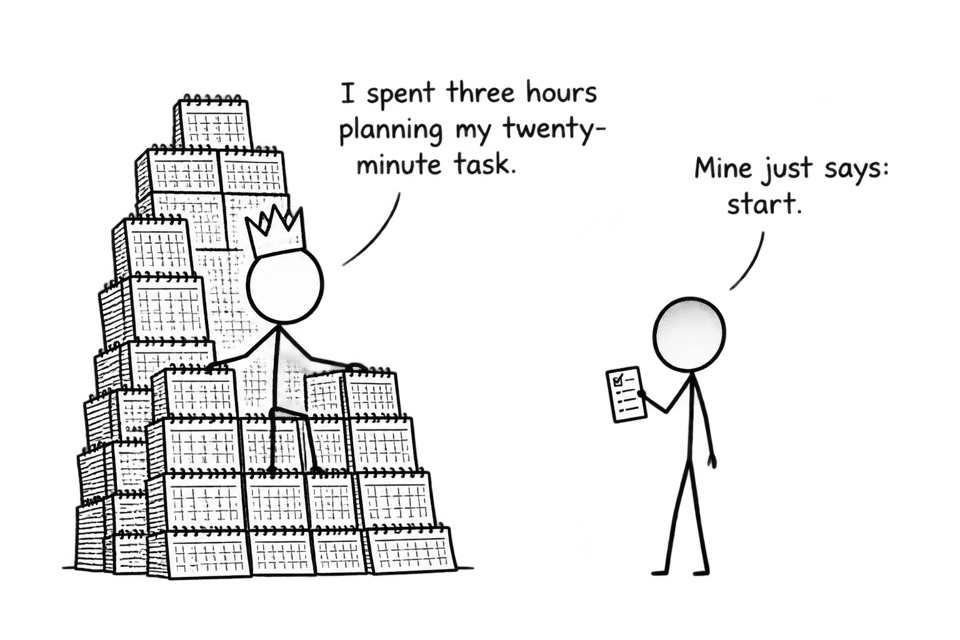
A student can build a beautiful six-month timetable and still avoid the difficult mathematics question waiting on Tuesday evening. Another can use a plain weekly page, begin the right task and steadily pull ahead. The difference is not ambition. It is whether the planning system makes the next action obvious.
Your IB time management checklist
Use this as the basic structure for DP1 and DP2:
- Keep every school deadline, assessment and personal commitment in one calendar.
- Plan only after checking what teachers actually require that week.
- Give each subject at least one recurring maintenance block.
- Add extra blocks for weak or deadline-heavy subjects.
- Break coursework into small deliverables with personal deadlines.
- Schedule CAS as a recurring commitment, not leftover time.
- Leave 15-20% of available study time unallocated.
- Review and rebuild the plan once a week.
- Record what you completed so the following week reflects reality.
Students who want more planning options can compare these IB time management tools and techniques before choosing a system. The best method is not the most sophisticated one. It is the one you will still use during a difficult week.
Build one calendar before building a timetable
Your calendar and timetable have different jobs.
The calendar holds fixed events: school deadlines, tests, CAS commitments, meetings, holidays and important personal obligations. Your weekly timetable decides when you will work on them.
Start by collecting every confirmed date from your school platforms, subject teachers and IB coordinator. Do not rely on generic online timelines because internal milestones differ between schools. Add a reminder one or two weeks before substantial deadlines, then create an earlier personal completion date where possible.
This matters because coursework pressure rarely arrives without warning. It grows quietly while students focus on tomorrow's homework. A master calendar turns that invisible pressure into something you can distribute over several weeks.
For larger projects, consult a practical IA completion timeline and adapt it to your school's checkpoints. The aim is not to finish everything immediately. It is to prevent several major tasks from becoming urgent together.
Use a weekly allocation for six subjects
Equal time is not always fair time. A subject you understand well may need one maintenance session, while a weaker Higher Level subject may need three focused blocks.
At the start of each week, classify your subjects:
| Subject status | Weekly response |
|---|---|
| Stable | One short retrieval or question-practice block |
| Developing | Two focused blocks on specific weaknesses |
| Urgent | Deadline work plus a separate learning block |
| Neglected | A protected restart block early in the week |
This prevents two common mistakes. The first is studying only the subject you enjoy. The second is spending every evening on whichever teacher set the loudest deadline.
A useful weekday block might last 30-60 minutes, depending on your energy, commute and other responsibilities. Give it a precise output: complete eight targeted questions, make flashcards for one concept, revise one subsection or produce a paragraph-level coursework outline. “Do chemistry” is not a task. It is a category.
For more examples, see these IB time management hacks for six subjects and guidance on staying organized with a full IB timetable.
Turn coursework into a production line
Coursework becomes intimidating when it remains one large noun: “the IA,” “the essay” or “the presentation.” Convert it into verbs.
A workable sequence might be:
- interpret the requirement;
- choose and test a direction;
- gather appropriate evidence;
- build an outline;
- draft one section;
- check the work against the criteria;
- revise structure and reasoning;
- proofread and submit.
Each step belongs on a different date. Where school rules permit, RevisionDojo's Coursework Library can help you understand the shape and standard of academic work, while Grading tools can give structured feedback on practice. Always follow your school's academic integrity requirements and ensure submitted work remains your own.
If a project continues to stall, a Tutor can help diagnose the conceptual obstacle. That is often more efficient than repeatedly rewriting a section whose underlying argument is unclear.
Treat CAS as a recurring rhythm
CAS is easiest to manage when it is regular. One sustainable activity every Wednesday is easier to plan around than a vague promise to “catch up later.” Before agreeing to an experience, consider its weekly time cost, travel, preparation and reflection requirements.
The goal is not to minimize meaningful participation. It is to choose commitments you can sustain alongside six subjects. This guide to choosing CAS activities without overcommitting offers a useful decision framework.
Reserve a brief weekly admin block for recording evidence and reflections while the experience is still clear in your mind. Confirm all expectations with your CAS coordinator, since your school is the authority on its processes and deadlines.
Separate learning, practice and diagnosis
Many study plans fail because they label every activity “revision.” In reality, effective study has three stages:
- Learning: understand the idea through lessons, Study Notes or AI Chat.
- Retrieval: recall it without looking, using Flashcards or a blank page.
- Application: answer relevant Questionbank problems and inspect errors.
After practice, record the reason for each important mistake. Was the concept missing? Did you misread the command term? Did you know the method but execute it inaccurately? Your next study block should respond to that diagnosis.
RevisionDojo works best as one connected study environment rather than a collection of isolated resources. Study Notes and AI Chat can clarify confusion, Flashcards support retrieval, and the Questionbank turns understanding into application. Later in the programme, Predicted Papers and Mock Exams can support timed practice under realistic constraints.
Protect slack in your DP1 time management system
A timetable filled to 100% capacity is already behind. Illness, difficult homework and unexpected school events are not planning failures. They are normal variation.
Leave at least one flexible block during the week and avoid assigning every hour of the weekend. If nothing goes wrong, use the spare block for a neglected subject, preparation for the following week or rest. If something does go wrong, you can move work without dismantling the entire plan.
This is also why sleep and stopping times belong in a schedule. More available hours do not automatically create more useful work. A sustainable approach to IB study-life balance protects the concentration on which good study depends.
Review the system every Sunday
Spend 15 minutes reviewing four questions:
- What did I complete?
- What moved forward but remains unfinished?
- What repeatedly slipped, and why?
- What are next week's three most important outcomes?
Do not automatically transfer every unfinished task. Remove work that no longer matters, reduce tasks that were too broad and reschedule only what still supports a real deadline or learning need. For alternative review routines, explore these nine IB time management tools.
The May 2028 exam session may feel distant in DP1. That distance is valuable only when it is converted into small, repeated actions. The objective is not to live two years in advance. It is to make this week's work slightly more deliberate than last week's.
Your next step: create a free RevisionDojo account today, list your six subjects, complete one short Questionbank set in your weakest topic, and record the score and completion date as the first entry in your weekly progress tracker.