



The first time most students realize the IB is different is not in class. It’s at 11:48 p.m., when you’re staring at six subjects, three core components, and a calendar that doesn’t care how motivated you are.
That moment feels like chaos. But it’s also useful information: the IB isn’t won by intensity alone. It’s won by turning effort into a repeatable system, one that starts earlier than you think, and gets simpler as exams get closer.
This complete guide walks you through the whole arc: subject selection, EE/TOK/CAS foundations, revision habits, and the final exam stretch. Along the way, you’ll see how RevisionDojo can turn your IB workload into a calm loop: Study Notes for clarity, Flashcards for recall, Questionbank for exam practice, AI Chat and Grading tools for feedback, plus Predicted Papers, Mock Exams, a Coursework Library, and Tutors when you want the extra edge.
The IB game plan (save this checklist)
If you only keep one framework, keep this:
-
Choose your IB subjects like you’re building a balanced team (not proving a point).
-
Lock in EE/TOK/CAS early so they don’t steal revision time later.
-
Study in loops: understand -> recall -> apply -> review.
-
Train exam performance weekly with timed practice.
-
Track mistakes like data, not drama.
For a deeper overview of study loops that actually hold, see How to Study for IB Exams: Step-by-Step Guide.
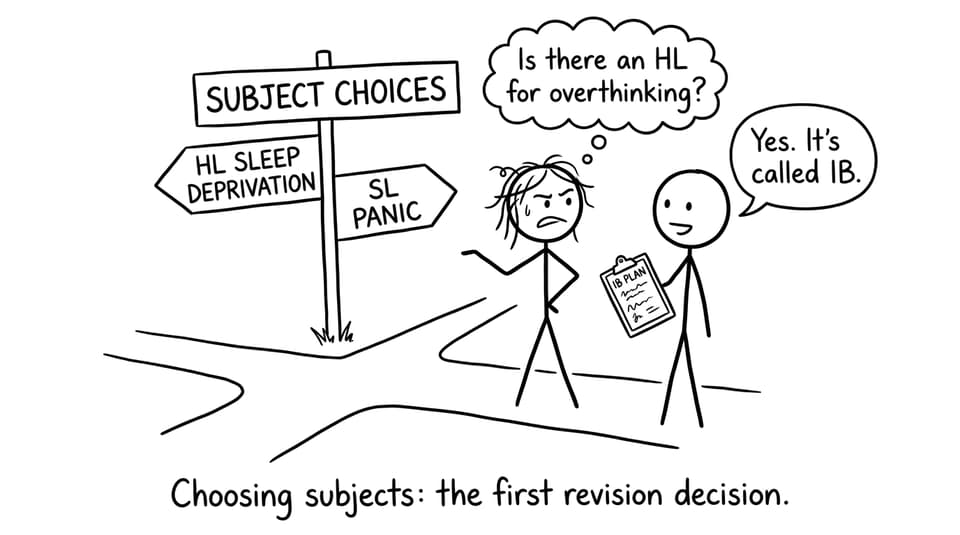
Subject selection: your first IB revision decision
In the IB, the “right” subjects are rarely the hardest ones. They’re the ones you can sustain. You’ll live with these courses for two years, through deadlines, tired weeks, and the slow grind of improvement.
When choosing, ask three questions:
What can I do consistently, not perfectly?
HLs reward students who can keep showing up. If you need to relearn a topic every month because you hate it, it becomes expensive.
What do my future options require?
Many university pathways have prerequisites. Confirm them early, then build around them with realistic strengths.
Is my set balanced?
A balanced IB combination reduces burnout: mix writing-heavy and calculation-heavy subjects, and be honest about your energy.
If you want course-by-course direction, use The Ultimate IB Subject Guide: Specific Revision Tips for Every Course.
EE, TOK, CAS: protect your future exam time
Most IB stress is not caused by one huge task. It’s caused by tasks overlapping.
Extended Essay (EE)
The EE is 4,000 words, but the real cost is decision fatigue. Pick a topic narrow enough to finish. Start earlier than feels necessary. A “good enough” draft in month one beats a “perfect plan” in month three.
RevisionDojo’s Coursework Library can help you benchmark what strong work looks like, and the Grading tools can turn feedback into a clearer next draft.
Theory of Knowledge (TOK)
TOK rewards clarity. If you can explain ideas simply, you can usually score well. Collect examples as you go, your best TOK material often comes from normal life, not a last-minute brainstorm.
Creativity, Activity, Service (CAS)
CAS is less about doing everything and more about documenting thoughtfully. Keep reflections short and regular, so CAS never becomes a sudden weekend emergency.
How to revise for IB (the loop that produces marks)
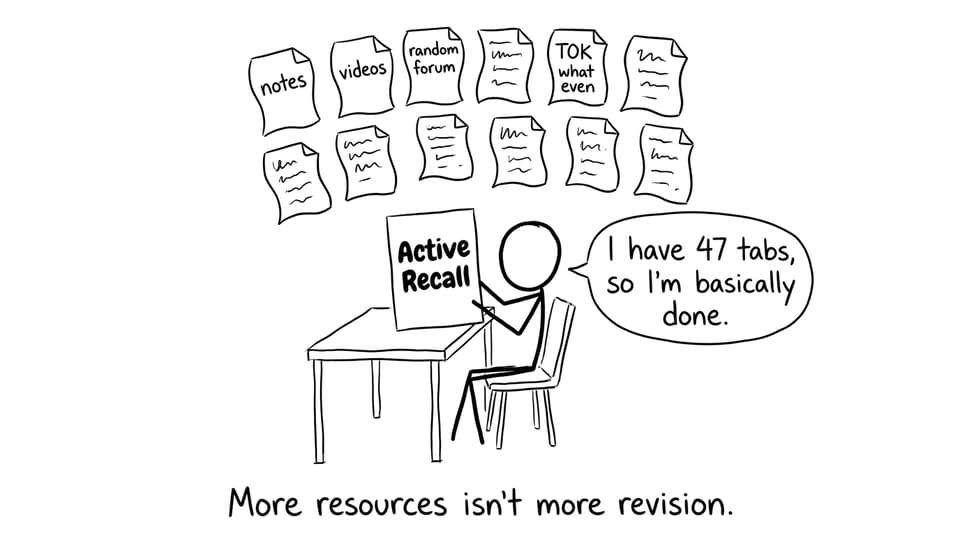
Many students revise by collecting resources. The IB marks you for outputs: correct answers, clear explanations, and strong exam technique.
A practical weekly loop looks like this:
-
Understand: use concise explanations, then stop.
-
Recall: daily IB Flashcards (short, consistent).
-
Apply: do topic-based exam questions.
-
Review: log mistakes and retest them.
RevisionDojo is built around that exact rhythm: Study Notes (understand), Flashcards (recall), Questionbank (apply), then AI Chat plus analytics (review). For more strategy options, read 10 Proven Study Techniques for IB Students.
Build a schedule you can keep
A good IB schedule is boring on purpose. It repeats. It leaves room for real life.
Start with a structure like:
-
10-20 minutes daily Flashcards
-
3-5 topic practice sessions per week (Questionbank)
-
1 timed session weekly (Mock Exams or Predicted Papers)
If planning is your weak point, use How to Create a Balanced IB Study Schedule and The Ultimate Guide to IB Revision Planning in 2025.
The final stretch: from knowing content to performing under time
The last weeks of IB revision should feel like training, not rereading.
Switch to “questions first”
If you don’t know what to do next, do this: attempt questions before you review notes. Notes are supportive. Questions are diagnostic.
Train timing like a skill
Timed practice is where confidence comes from. Use Mock Exams to build stamina, then tighten weak areas using targeted Questionbank sets.
Use feedback fast
Don’t wait for a teacher to return work. When you miss a question:
-
Ask RevisionDojo AI Chat why your reasoning failed
-
Use Grading tools to check structure (especially in essay subjects)
-
Turn the fix into Flashcards
If you’re unsure how early to start, use How Long in Advance Should I Study for My IB Exams? and How to Revise for IB Exams: A Month-by-Month Revision Plan.
The quiet advantage: make IB revision repeatable
The IB feels big because it is big. But your job isn’t to carry it all at once. Your job is to build a loop you can repeat tomorrow.
If you want one home base for that loop, use RevisionDojo: practice with the Questionbank, learn with Study Notes, remember with Flashcards, get unstuck with AI Chat, improve writing with Grading tools, train pressure with Predicted Papers and Mock Exams, steady coursework with the Coursework Library, and get personalized support from Tutors.
Start small: pick one IB paper, one topic, and one timed set this week. Then repeat. That’s how the finish line gets closer.