


A quiet truth about IB motivation
The hardest part of IB revision usually isn’t the content. It’s the moment you sit down, open your notes, and realise your brain is negotiating like a lawyer: “We could start tomorrow. Tomorrow is basically the same as today.”
Top scorers don’t avoid that feeling. They expect it. Then they build systems that work even when motivation is low.
In this guide, you’ll learn practical IB strategies top students use to stay motivated during revision without burning out. You’ll also see how RevisionDojo makes those strategies easier to repeat: Study Notes for quick clarity, Flashcards for daily recall, Questionbank practice for proof, AI Chat when you’re stuck, Grading tools to understand marks, Predicted Papers and Mock Exams for stamina, plus a Coursework Library and Tutors when you need support.
IB motivation checklist (save this)
If motivation drops, run this short IB checklist before you “try harder”:
-
Pick one IB subject and one micro-topic.
-
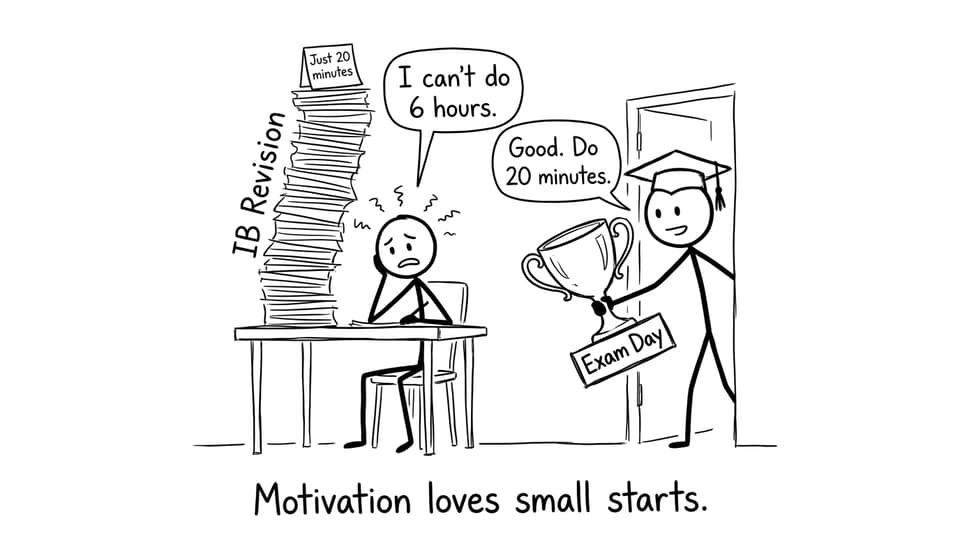
Set a timer for 20-25 minutes.
-
Do active recall (questions or flashcards), not rereading.
-
Track one measurable win (accuracy %, questions completed, one skill improved).
-
Write one error rule (a sentence that prevents the same mistake).
-
End by choosing tomorrow’s first task.
This is basically how top scorers protect momentum: they reduce the cost of starting and increase the reward of finishing.
Why top scorers stay motivated (even when they don’t feel like it)
Motivation in IB isn’t a personality trait. It’s feedback.
When your revision produces evidence, such asa higher score, fewer careless errors, a clearer explanation, youryour brain relaxes. When revision is vague (“I revised Biology for hours”), your brain stays anxious. Anxiety kills motivation.
That’s why top scorers lean on practice-heavy loops:
-
Learn quickly (short explanations)
-
Test immediately (questions)
-
Review mistakes (markscheme logic)
-
Retest (prove the fix)
RevisionDojo is built around that loop: use Study Notes to get unstuck fast, then jump into the Questionbank to generate proof. If confusion blocks you mid-session, AI Chat can clarify in minutes so you don’t lose the hour.
Helpful reads to extend this idea:
Build an IB revision routine that survives bad days
Top scorers rarely rely on big heroic study days. They rely on a base routine that’s almost too small to fail.
Use a “minimum viable session”
On low-energy days, aim for a session that still counts:
-
10 minutes: Flashcards (definitions, processes, command terms)
-
10-15 minutes: Questionbank set (5-10 questions)
-
5 minutes: review errors and write 1-2 “error rules”
You can scale up when you feel good. But the win is that you don’t break the chain.
If you want a broader structure, borrow from:
Use rewards the way top scorers do (without bribing yourself)
A reward system works best in IB when it’s tied to process, not outcomes. Top scorers reward consistency.
Try these:
-
After one timed block: walk outside, music, snack.
-
After three days in a row: meet a friend, a longer episode, gaming.
-
After a full review cycle (attempt, mark, redo): something that feels genuinely “earned.”
The trick: rewards come after effort, and they’re small enough that you don’t start studying only for the reward.
To keep rewards aligned with progress, use measurable sessions: a fixed number of questions, one timed response, or a flashcard target.
Make motivation social, not solitary
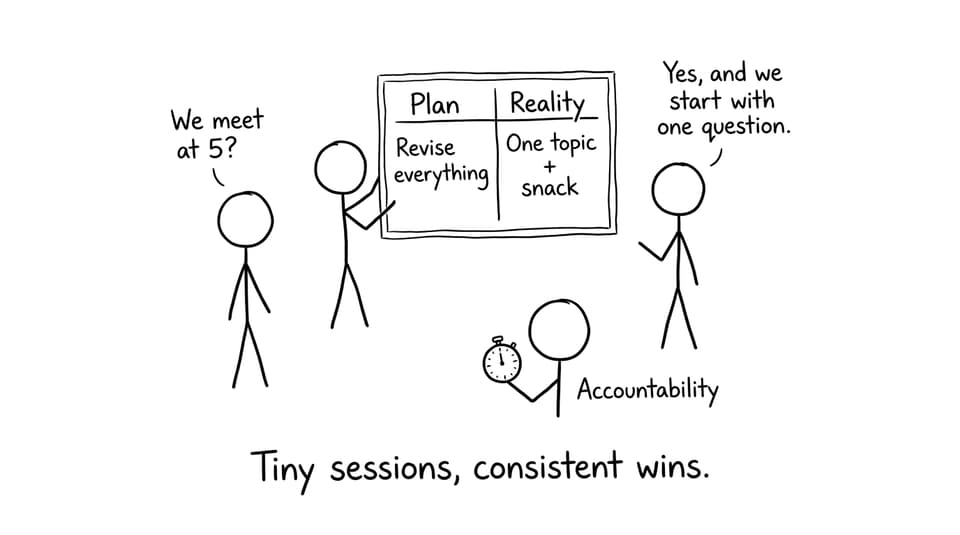
Top scorers often have a simple advantage: someone else knows what they planned to do.
Study groups that actually work
A good IB study group is not “we sit together and suffer.” It’s:
-
One topic per person
-
Short teaching moments (5 minutes)
-
Timed practice (everyone does the same section)
-
Quick marking and discussion of common errors
When your group gets stuck, it’s useful to have a shared source of truth: RevisionDojo Study Notes for clarity, then Questionbank items to test whether you truly understand.
More support strategies:
Train confidence with timed practice (the top scorer secret)
Confidence in IB comes from familiarity under time pressure.
Top scorers don’t wait until the final stretch to do timed practice. They sprinkle it in weekly:
-
1 timed section per week (build pacing)
-
1 longer simulation occasionally (build stamina)
-
Longer review than attempt (build learning)
On RevisionDojo, Mock Exams and Predicted Papers help you rehearse realistic exam conditions, while Grading tools show you where marks are actually earned (especially in written responses).
Useful deep dives:
Closing: IB motivation is built, not found
Staying motivated during IB revision isn’t about feeling inspired every day. It’s about building a system that keeps moving when you’re tired, stressed, or bored. Start small. Make the work measurable. Turn mistakes into rules. Repeat.
If you want one place to run that entire IB loop, RevisionDojo gives you the tools top scorers quietly rely on: Questionbank, Study Notes, Flashcards, AI Chat, Grading tools, Predicted Papers, Mock Exams, the Coursework Library, and Tutors. Pick one subject, set a 25-minute timer, and earn the kind of motivation that comes from evidence.