

Eukaryotic Cells Divide Labour Among Membrane-Bound Organelles
Eukaryote
A eukaryote is a type of cell that contains a nucleus and membrane-bound organelles, enabling it to carry out specialized and coordinated functions. These cells are found in plants, animals, fungi, and protists.
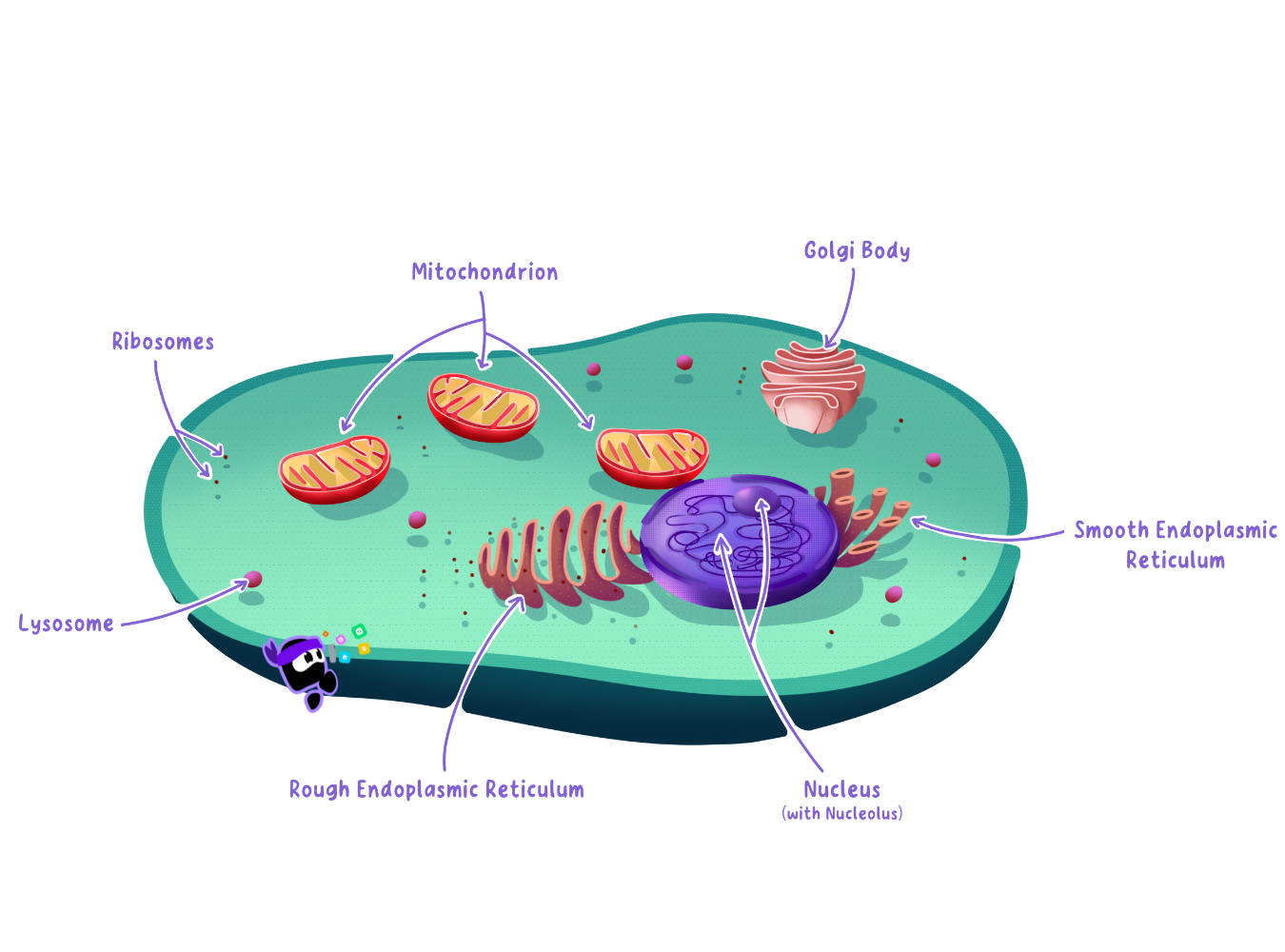
- A eukaryotic cell keeps its DNA inside a nucleus and splits its work among separate organelles.
- Each organelle handles one job, and together they keep the whole cell alive.
The Plasma Membrane Controls What Enters and Leaves
Plasma membrane
The plasma membrane is the thin, flexible boundary that surrounds a cell, separating its internal environment from the external surroundings. It is composed of a phospholipid bilayer with embedded proteins, cholesterol, and carbohydrates.
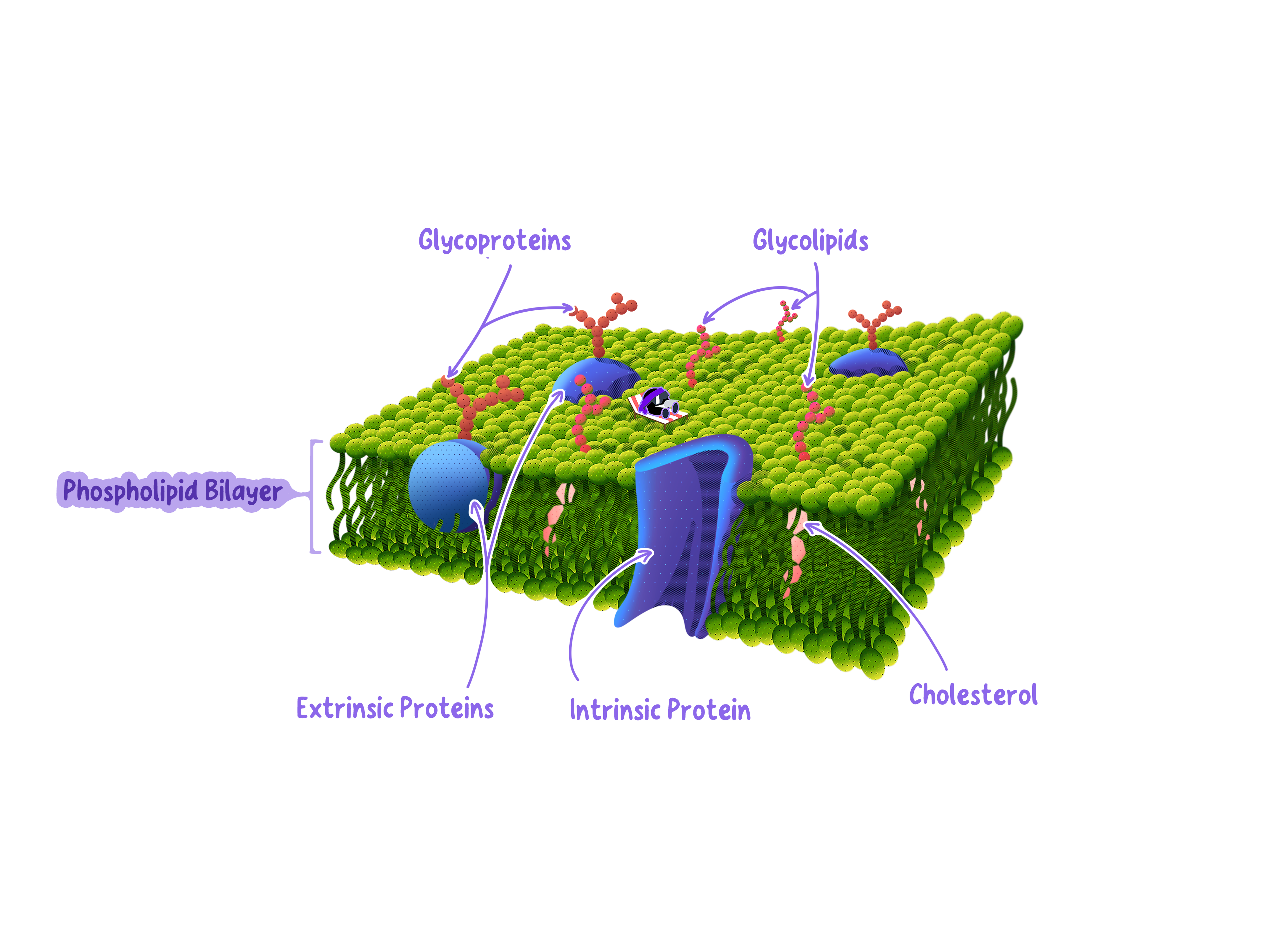
- The plasma membrane regulates the exchange of substances, letting nutrients in and waste out.
- It keeps the inside of the cell stable and maintains homeostasis.
- It also carries receptors for cell communication with the surroundings.
- The membrane is more than a barrier.
- It takes an active part in signalling and transport.
The Cytoplasm Is Where Most Reactions Happen
Cytoplasm
The cytoplasm is the jelly-like substance inside a cell, excluding the nucleus, where various cellular activities occur.
- The cytoplasm is the site of many metabolic reactions.
- It holds the organelles, allowing compartmentalisation so different reactions run at once in separate places.
80S Ribosomes Build the Cell's Proteins
80S Ribosomes
80S ribosomes are larger ribosomes found in eukaryotic cells that synthesize proteins.
- Ribosomes are found free in the cytoplasm or attached to the rough endoplasmic reticulum.
- They translate mRNA into proteins that the cell needs to grow and work.
- Eukaryotes have 80S ribosomes, while prokaryotes have 70S ribosomes.
- The 80S ribosome is the larger of the two.
The Nucleus Stores DNA and Directs the Cell
Nucleus
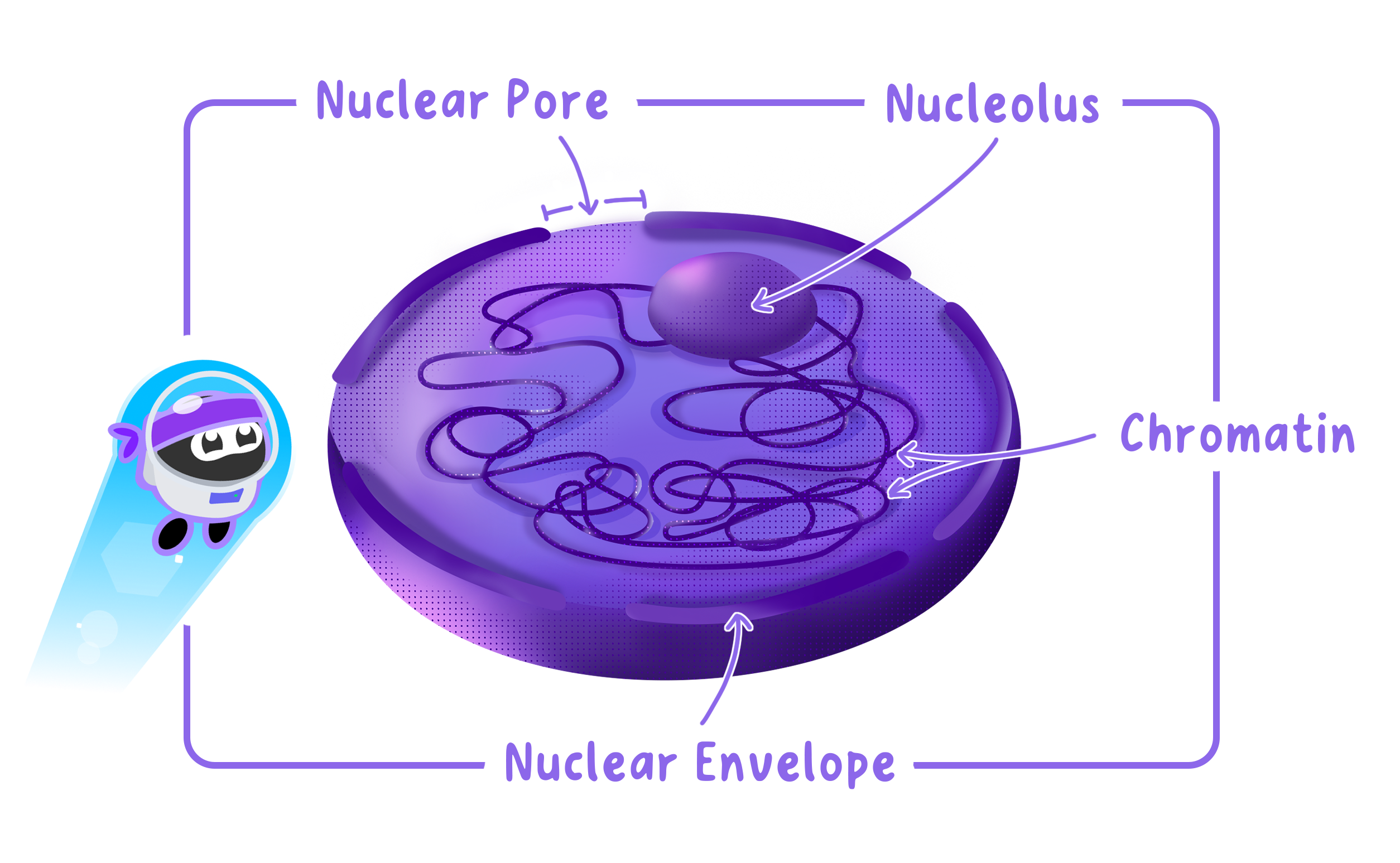
The nucleus is a double-membrane-bound organelle containing the cell’s DNA.
- The nucleus holds linear chromosomes made of DNA wound around histone proteins.
- The nuclear envelope has pores that control which RNA and proteins pass through.
- It directs the cell by controlling gene expression and passing on genetic information during cell division.
- Nuclear pores work like security checkpoints on an administrative building.
- Only approved molecules are allowed in or out.
Membrane-Bound Organelles Separate the Cell's Jobs
- Unlike prokaryotes, eukaryotic cells contain membrane-bound organelles in the cytoplasm.
- Examples include the mitochondria and endoplasmic reticulum.
Mitochondria Release Energy for the Cell
Mitochondria
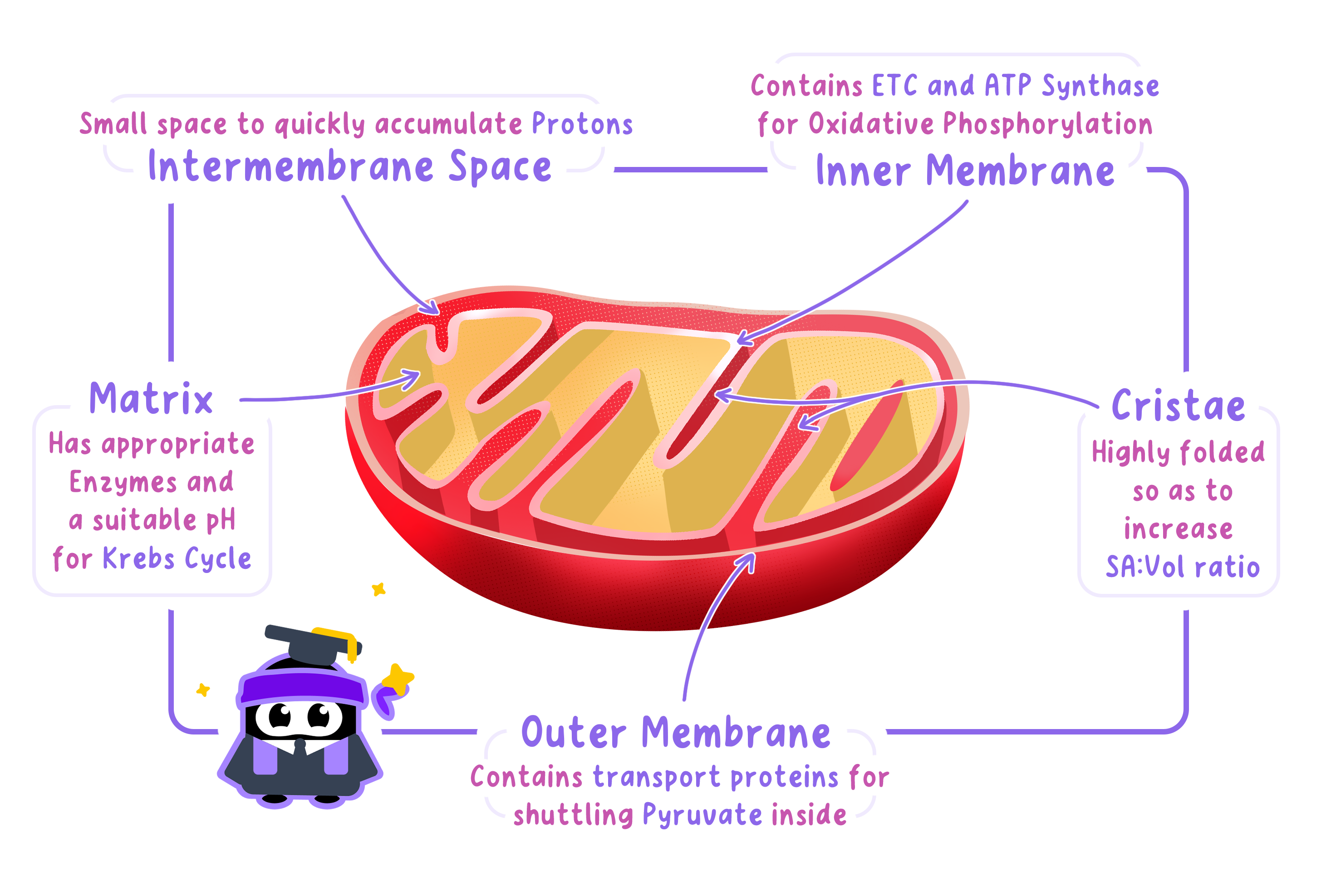
Mitochondria are double-membrane-bound organelles responsible for producing ATP through aerobic respiration.
- The inner membrane folds into cristae that increase the surface area for energy release.
- The matrix holds the enzymes for the Krebs cycle and other pathways.
- Mitochondria contain their own DNA and ribosomes.
- This unusual feature is explored further in the HL topic on the origin of organelles.
The Endoplasmic Reticulum Makes and Moves Molecules
Endoplasmic Reticulum
A network of membranes involved in synthesis and transport.
- The endoplasmic reticulum is a network of membranes that moves materials through the cell.
- Rough ER is studded with ribosomes and makes proteins for secretion or for membranes.
- Smooth ER has no ribosomes and handles lipid synthesis, detoxification, and calcium storage.
- The ER is like the highway system of the cell, carrying goods to where they are needed.
- Rough ER is the assembly line for proteins, and smooth ER is the chemical plant for lipids.
The Golgi Apparatus Modifies and Ships Products
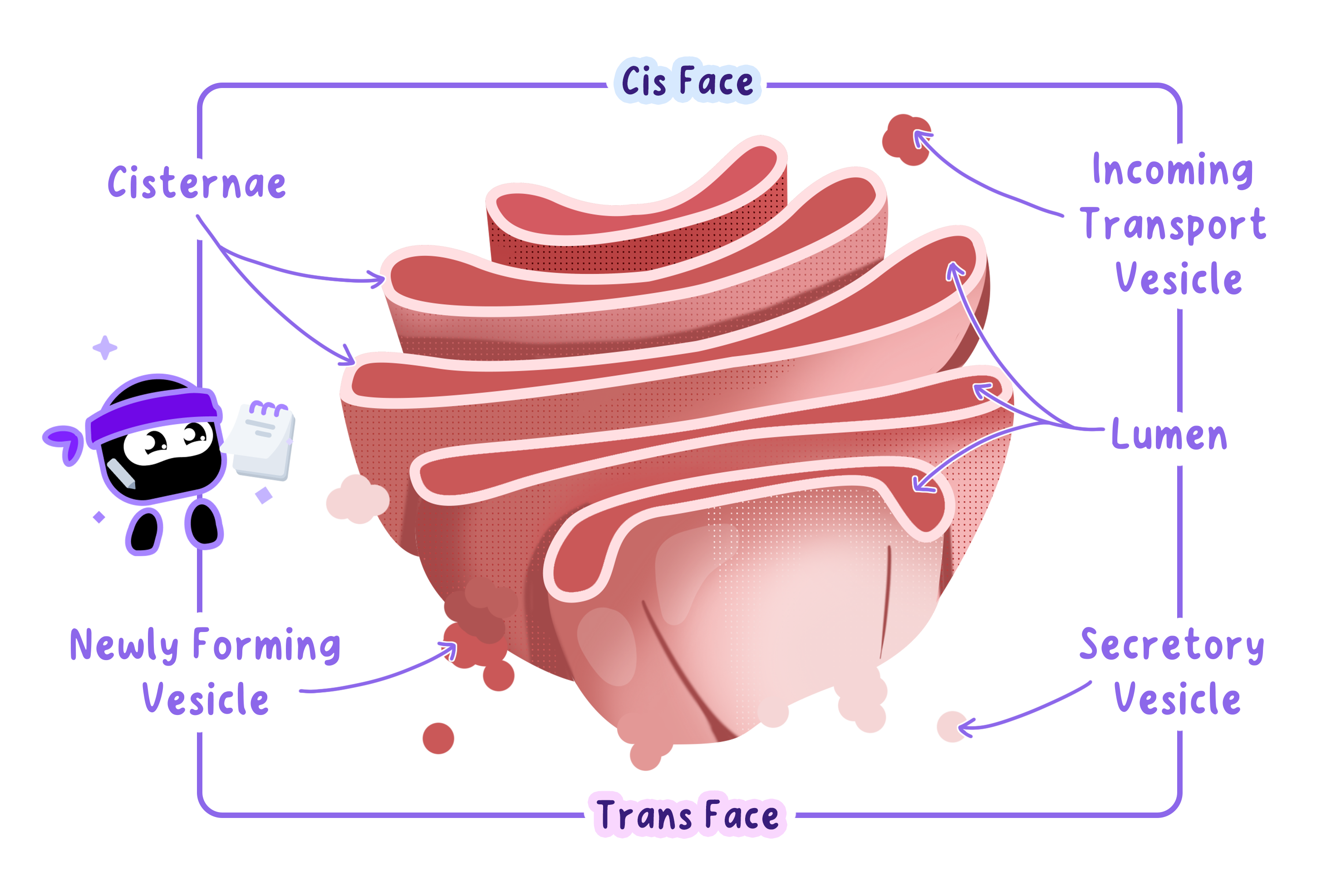
Golgi apparatus
A stack of flattened, membrane-bound sacs that process, package, and distribute proteins and lipids.
- The Golgi apparatus modifies molecules, for example by adding sugars to proteins.
- It then packages them into vesicles for delivery.
- Think of the Golgi as the cell's post office, labelling and shipping each product.
Vesicles, Lysosomes and Vacuoles Store and Recycle Materials
Vesicles
Vesicles are small, membrane-bound sacs composed of a phospholipid bilayer. They enclose a fluid-filled space and can carry various substances.
Vacuoles
Larger compartments, especially prominent in plant cells, where they store water, nutrients, or waste.
- Vesicles are small membrane sacs that store or transport substances.
- Lysosomes hold hydrolytic enzymes that digest waste and pathogens.
- The large central vacuole, prominent in plant cells, stores water and ions and provides turgor pressure.
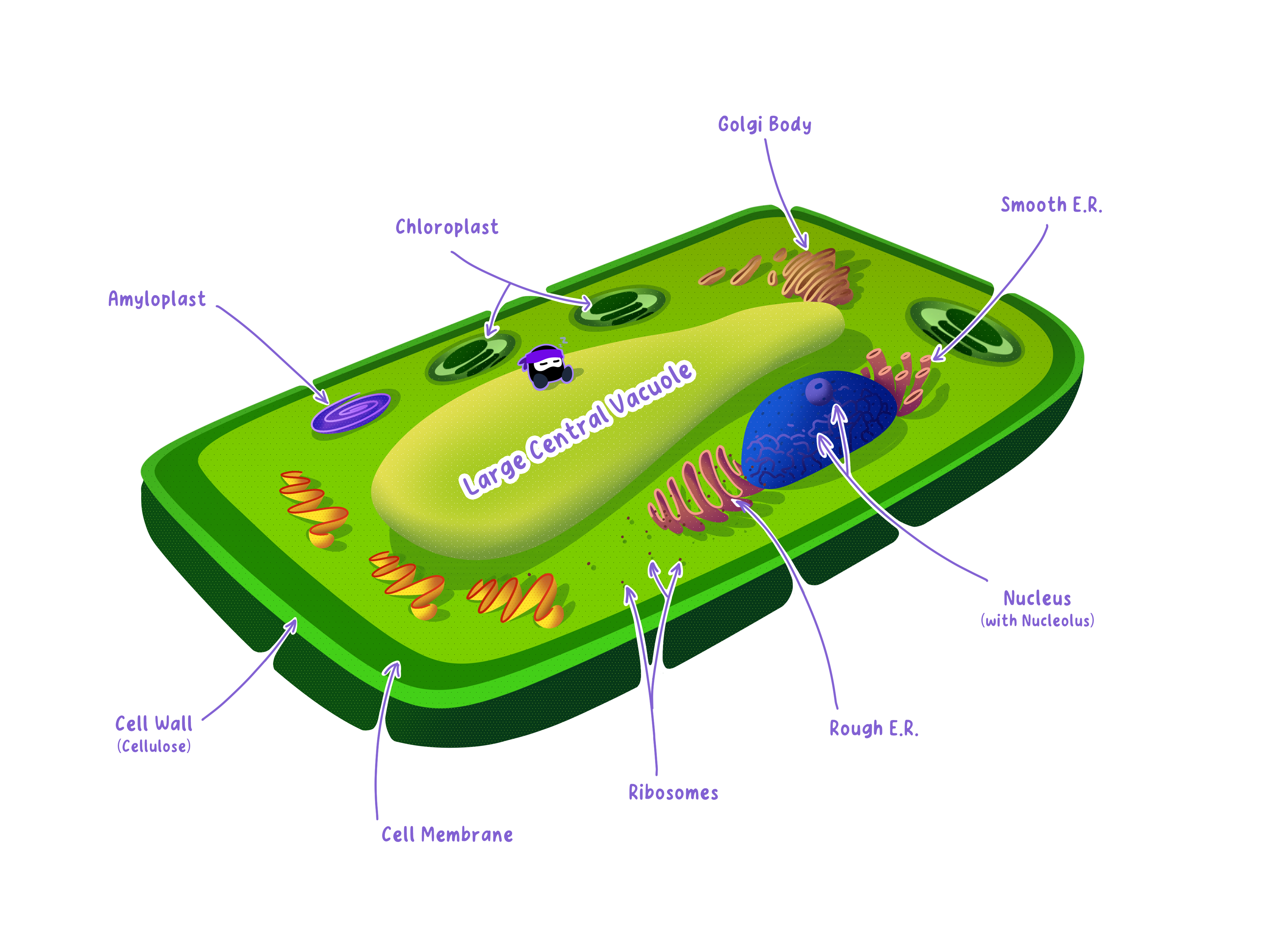
Lysosome
Lysosomes are specialized vesicles containing digestive enzymes.
- Do not confuse lysosomes with vacuoles.
- Lysosomes specialise in digestion and recycling, not just storage.
The Cytoskeleton Gives Shape and Guides Transport
Cytoskeleton
A network of protein fibers, including microtubules, microfilaments, and intermediate filaments.
- The cytoskeleton is a network of fibres that supports the cell and moves things around inside it.
- Microtubules are hollow tubes that hold the cell's shape and act as tracks for organelle movement.
- Microfilaments are thin fibres that support shape and enable movement, such as in muscle cells.
- Microtubules act like train tracks that guide vesicles to their destinations.
Chloroplasts Capture Light Energy for Photosynthesis
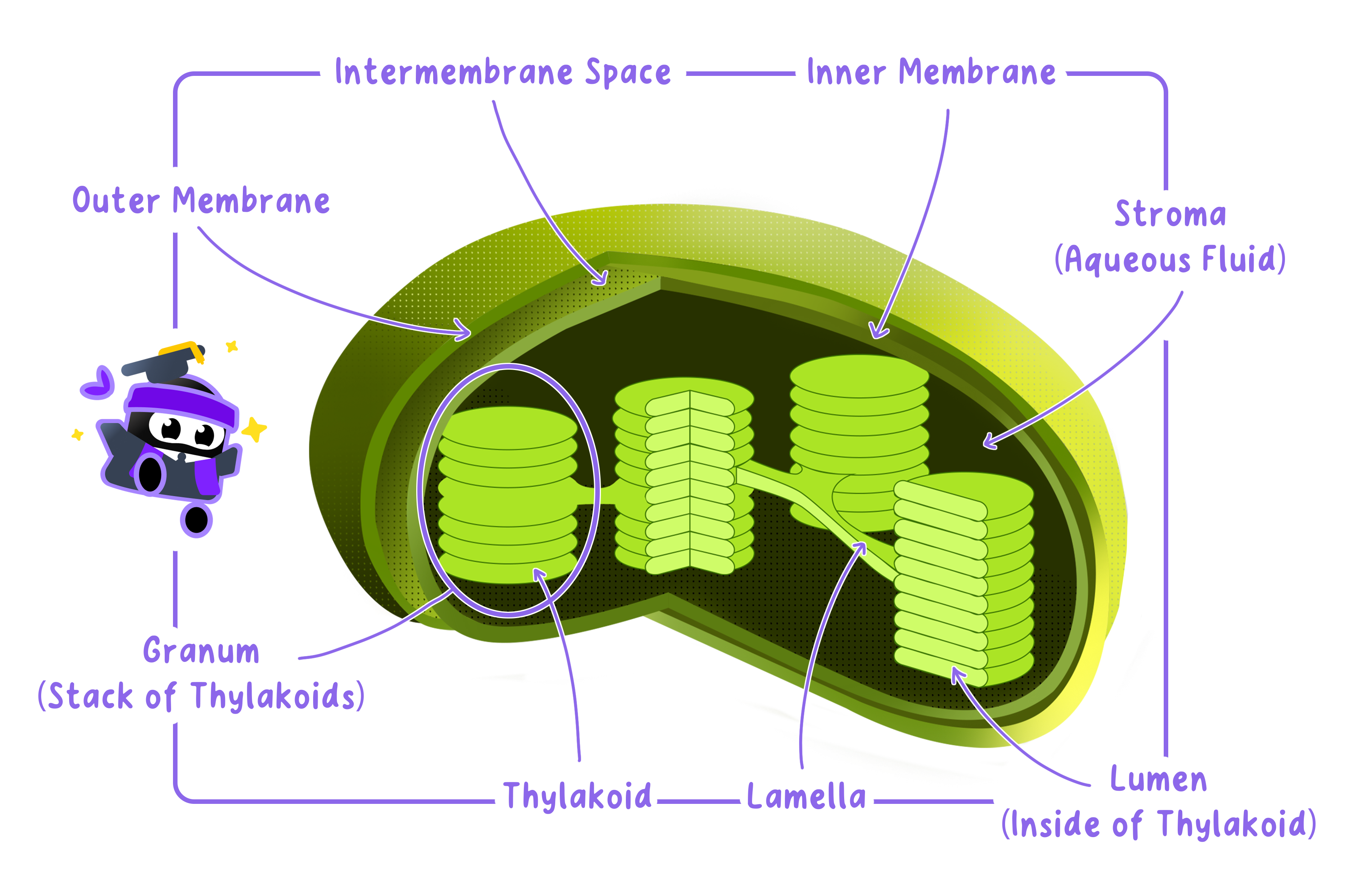
Chloroplast
An organelle found in plant and algal cells that is responsible for photosynthesis, the process of converting light energy into chemical energy
- Chloroplasts have a double membrane with internal thylakoid membranes stacked into grana.
- They are the site of photosynthesis, and they occur in plant and algal cells.
The Organelles Work Together as One System
- The plasma membrane controls exchanges with the environment.
- The nucleus directs the cell, and the mitochondria supply energy.
- The ER, Golgi apparatus, and vesicles handle production, packaging, and transport.
- The way a cell divides labour among its organelles mirrors how a society divides work among its members.
- What is the function of the pores in the nuclear envelope?
- How do rough ER and smooth ER differ in structure and role?
- What do cristae do inside a mitochondrion?
- What is one difference between a lysosome and a vacuole?
- Name the ribosome type found in eukaryotes and state its size.