Your worst IB revision days rarely start with laziness.
They start with a good intention and a bad plan.
You sit down. You open notes. You highlight a paragraph. Then another. An hour passes and it feels like progress because your page is now neon. But when you close the book, your brain goes quiet. Nothing comes back.
That is the most common IB trap: confusing familiarity with readiness.
This guide gives you 10 proven study techniques for IB students that turn time into results. Not by studying harder, but by studying in a way that matches how memory and exam performance actually work.
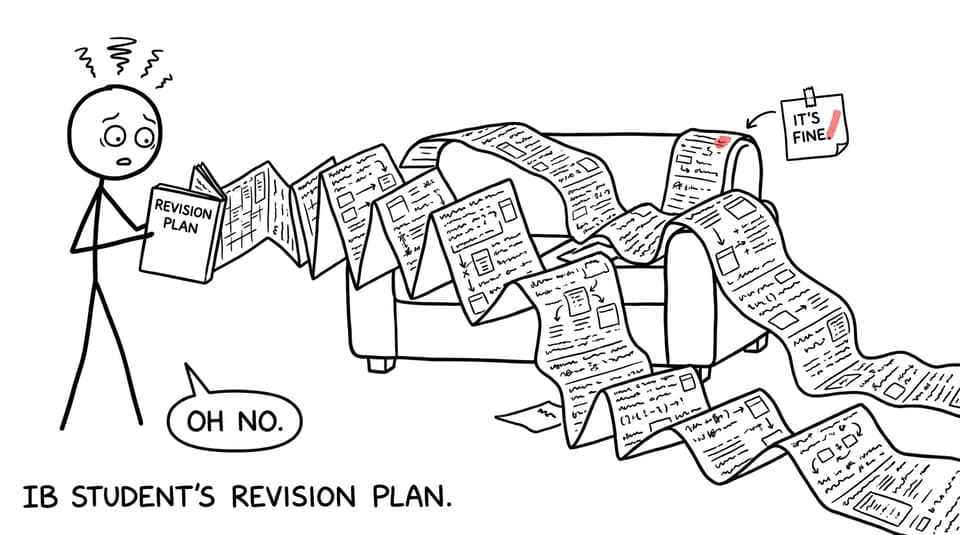
Quick IB revision checklist (save this)
If you want a simple loop you can run every week of IB season, use this:
-
Pick one paper goal (not the whole subject)
-
Learn or patch understanding with Study Notes
-
Lock memory with daily Flashcards
-
Convert knowledge into marks with a Questionbank
-
Train timing with Mock Exams and Predicted Papers
-
Get feedback fast using AI Chat and Grading tools
-
Log mistakes and reattempt within 48 hours
For a bigger framework, keep The Ultimate Guide to Revision for IB Students open as your “home base.”
Active recall (the most important IB skill)
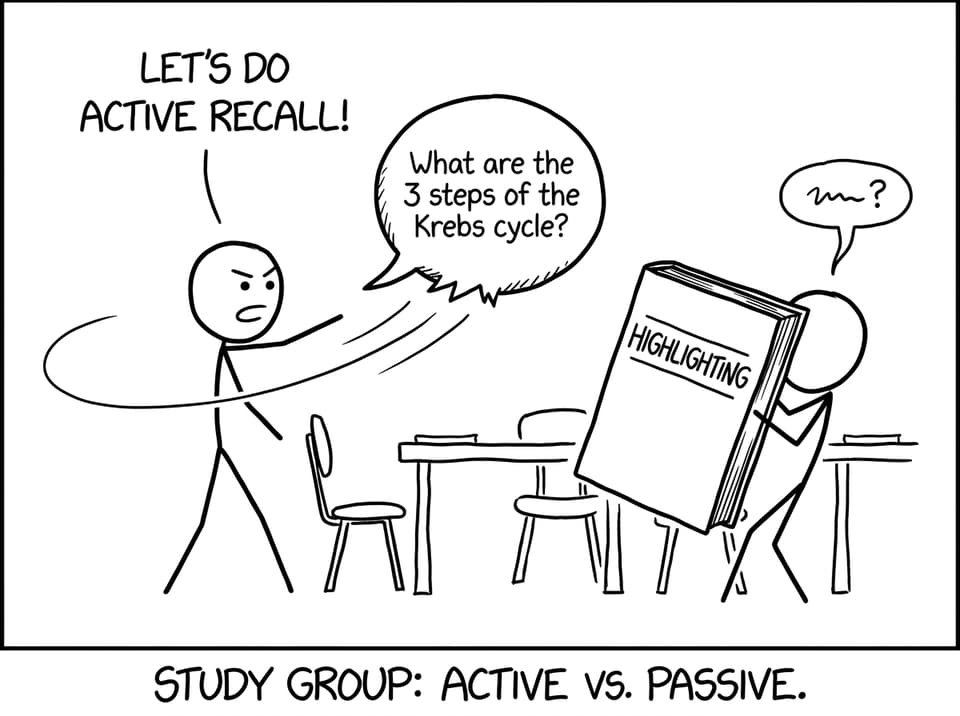
Active recall means pulling information out of your head without looking first. That discomfort is the point. In IB, you are graded on what you can retrieve under pressure, not what looks familiar on a screen.
Try it today: read one section, close it, and write down everything you remember. Then check what you missed. On RevisionDojo, you can run this loop quickly using Flashcards and topic quizzes in the Questionbank.
If you want a deeper explanation, read The Science Behind Effective IB Revision: How to Study Smarter, Not Harder.
Spaced repetition (make IB memory compound)
Spaced repetition is the quiet reason some IB students look “naturally consistent.” They are not cramming. They are revisiting ideas right before they fade.
How to use it: keep reviews short and frequent. A 10-minute Flashcards session daily is more powerful than a two-hour reread once a week. RevisionDojo Flashcards are built for that kind of rhythm.
To build a calendar around this, use How to Revise for IB Exams: A Month-by-Month Revision Plan.
The Feynman technique (turn confusion into clarity)
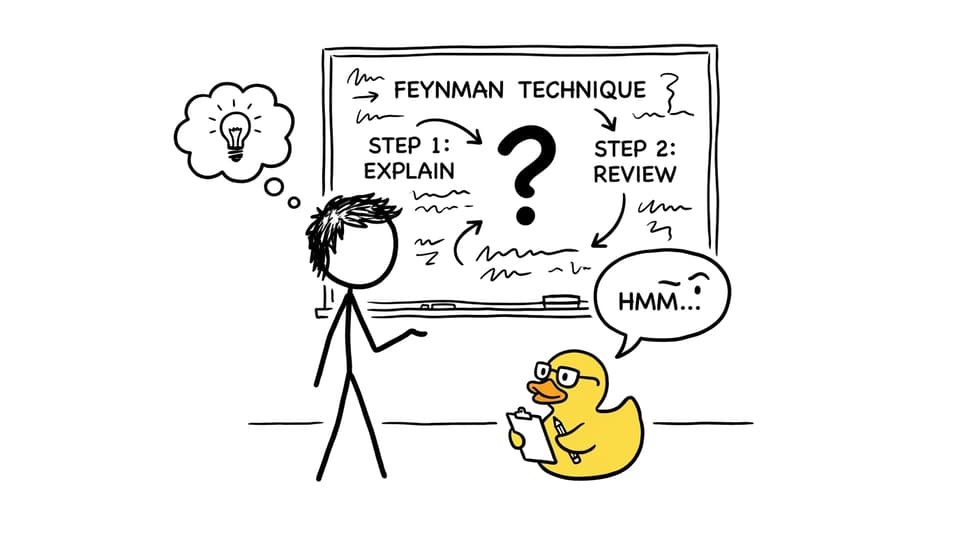
If you cannot explain a concept simply, you do not yet own it.
The Feynman technique is straightforward: you teach the idea as if to a beginner, then notice where you stumble. Those stumbles are your real revision targets.
Practical IB version: record a 90-second voice note explaining a topic. Then compare your explanation to Study Notes and fix the gaps. If you want instant feedback, ask RevisionDojo AI Chat to quiz you on the exact weak point you just found.
Mind mapping (see the IB syllabus as a network)
Mind maps help when IB content feels like scattered facts. The goal is not pretty pages. The goal is connections.
How to do it well: start with one central idea, then branch into subtopics, then branch into examples, definitions, and common question types. End the mind map by writing 3 likely exam prompts that could come from it.
This works especially well when paired with Subject-Specific IB Revision Tips: From Math to History.
The Pomodoro technique (focus without burnout)
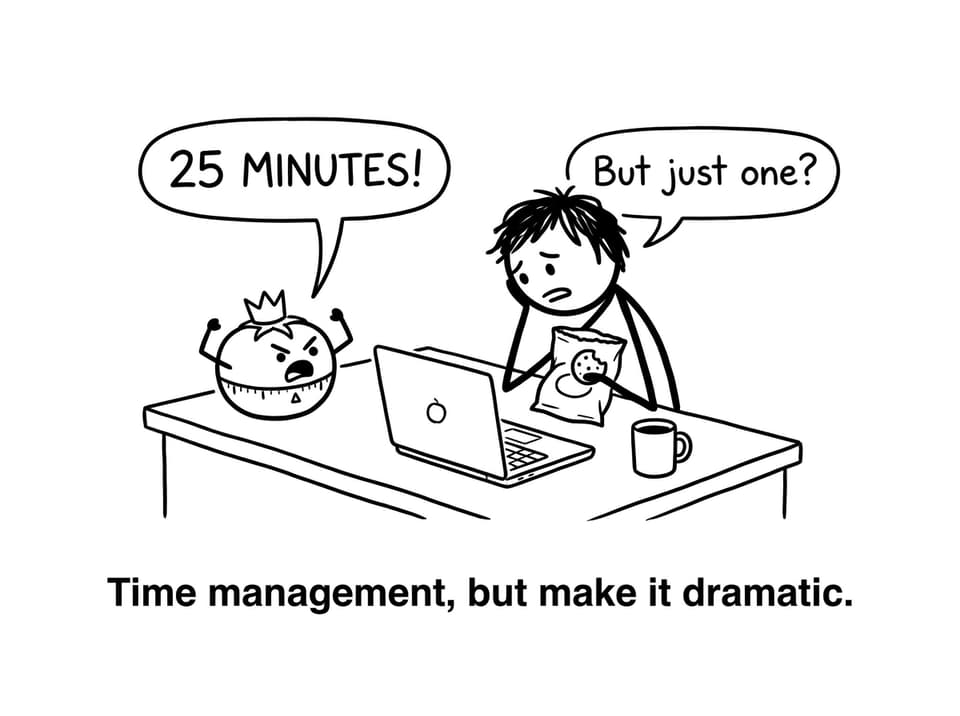
The Pomodoro technique uses short work sprints (often 25 minutes) followed by short breaks. It is not magic. It is a boundary.
In IB revision, boundaries matter because the work expands to fill whatever time you give it.
Try this: 25 minutes of Questionbank practice, 5 minutes break, then 10 minutes of mistake review. After four rounds, take a longer break.
SQ3R reading (stop rereading like it counts)
SQ3R stands for Survey, Question, Read, Recite, Review. It turns reading into an active process, which is exactly what IB requires.
IB upgrade: after the “Recite” step, write two exam-style questions you think an examiner could ask. Then answer one without notes. That one extra step bridges content to performance.
If you keep slipping into passive reading, You're Not Lazy: Your IB Study Method Is Broken is worth a careful read.
Cornell notes (notes that can be tested)
Cornell notes work because they are designed for retrieval.
-
The main notes capture the idea.
-
The cue column becomes your quiz.
-
The summary forces you to compress meaning.
Make it IB-friendly: write command terms in the cue column (e.g., “evaluate,” “compare,” “to what extent”) and practise answering in the right style.
Visualization (memory hooks for heavy content)
Visualization is not just for “visual learners.” It is for any IB student trying to remember sequences, processes, and relationships.
Examples:
-
Turn a biological pathway into a story with characters.
-
Turn a history timeline into a “scene” you can walk through.
-
Turn an economics chain of effects into a simple comic.
Then convert those visuals into Flashcards so the image becomes retrievable, not just admired.
Study groups (use other people as feedback)
A good study group is not four people quietly doing their own work. It is structured practice.
Rules that make it work:
-
Start with a shared goal (“We will each do 6 questions timed.”)
-
Assign roles (timekeeper, marker, explainer)
-
End with each person stating one mistake pattern and one fix
If you keep drifting off-task, revisit Common Mistakes to Avoid During IB Revision and set stricter constraints.
Healthy habits (sleep, food, movement)
IB revision is a cognitive sport. Sleep is not a reward after revision. Sleep is part of revision.
When you cut sleep, you usually lose more in memory and accuracy than you gain in extra minutes.
If you need a practical reset, read The Role of Sleep and Nutrition in Effective IB Revision and commit to one small change for a week.
How to combine these techniques into one IB system
The biggest upgrade for most IB students is not learning a new trick. It is building a repeatable loop:
-
Study Notes for fast clarity
-
Flashcards for daily active recall and spaced repetition
-
Questionbank to practise exam-style questions by topic
-
AI Chat to diagnose weaknesses and generate targeted drills
-
Grading tools to tighten written responses
-
Mock Exams and Predicted Papers for timing and stamina
-
Coursework Library to reduce background stress from IAs
-
Tutors when you need a human to raise your ceiling
If you want this shaped into a weekly routine, use How to Study for IB Exams: Step-by-Step Guide.
Closing: make IB revision smaller, then make it consistent
The students who thrive in IB rarely feel confident all the time. They just stop negotiating with vague plans.
Pick two techniques from this list and run them daily: active recall and spaced repetition are a strong start. Then add exam-style questions and a weekly timed session. Keep the loop small enough that you can repeat it when school gets busy.
If you want one place to run that entire system, use RevisionDojo: Study Notes to understand, Flashcards to remember, Questionbank to apply, AI Chat and Grading tools to improve, and Mock Exams plus Predicted Papers to make exam day feel familiar.
Your IB success will look less like a heroic sprint and more like quiet compounding. Start today, keep it simple, and let consistency do the heavy lifting.