
The door closes behind you. Your pen finally stops. And in the two seconds of silence after an IB exam paper, your brain does something unhelpful: it rewinds.
It replays the question you weren’t sure about. It imagines the mark you “must have lost.” It starts negotiating with the past.
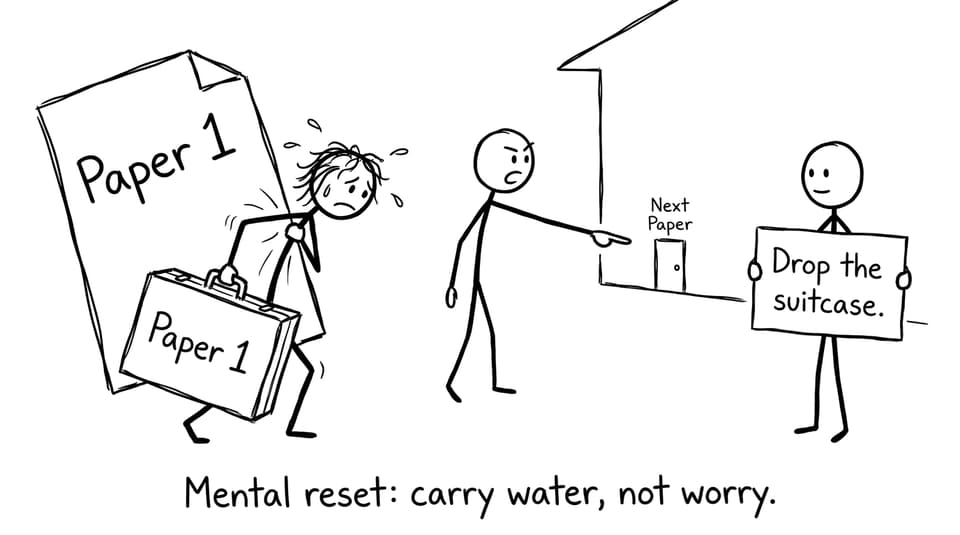
But IB exams aren’t a single performance. They’re a sequence. If you carry the emotional weight of one paper into the next, you’re asking your mind to sprint while holding a backpack full of bricks.
The IB mental reset in one checklist
Between IB exam papers, your goal isn’t to feel amazing. It’s to feel usable.
-
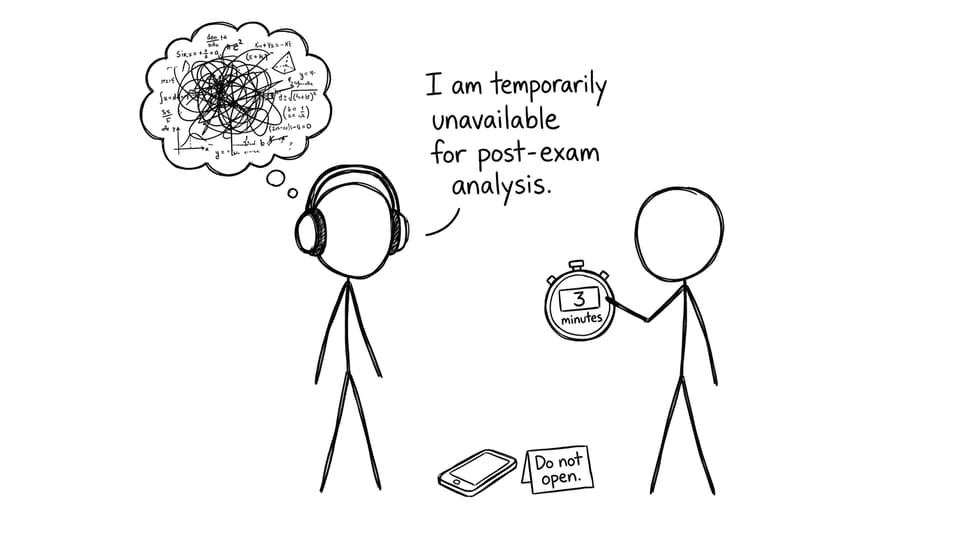
Stop post-paper analysis (no debriefs, no “what did you get for Q4?”)
-
Bring your nervous system down (breathing + movement)
-
Switch attention to the next controllable action (food, water, plan)
-
Keep the routine identical whether the last paper felt good or bad
If you want a calm structure for the full exam window, anchor your days using the RevisionDojo Study Planner.
Why resetting between IB papers changes your score
In IB exams, the difference between “I know this” and “I can show this under pressure” is often mental bandwidth.
Rumination eats that bandwidth. It hijacks working memory, shortens patience, and makes you rush. That’s why the reset matters: not because it’s motivational, but because it’s mechanical.
A good reset is like clearing tabs in your brain. You can’t open the next one cleanly if the last ten are still buffering.
For exam-week pacing (not just revision pacing), it helps to read IB Exam Week-by-Week Survival Guide.
The biggest trap: the parking-lot post-mortem
Right after an IB paper, your classmates’ certainty can feel contagious.
One person “knows” the right answer. Another “looked it up.” Suddenly you’re arguing about a mark you cannot influence.
Here’s the rule: do not review answers between papers.
If you need something to do with your hands instead, open a tiny, low-stress task that supports the next paper: skim one page of RevisionDojo for IB resources, or run a 5-minute recall set using IB Flashcards with Spaced Repetition (SRS). Nothing heavy. Nothing evaluative.
A 7-minute reset routine you can repeat every time
Consistency beats intensity during IB exams. Try this after every paper:
Minute 0-2: breathe like you mean it
Inhale 4 seconds, exhale 6 seconds. Do it 6 times. Longer exhales tell your body the threat has passed.
Minute 2-5: walk without commentary
Walk alone if you can. No analysing. No replaying. Just movement and environment.
Minute 5-7: one practical action
Drink water, eat something simple, or check logistics for the next room. Your mind follows your behaviour.
If you’re studying in the days between exams, keep your work narrow: one topic, one skill, one set. The Questionbank is ideal here because it keeps practice targeted without you having to decide what “counts.”
What to do when an IB exam felt terrible
This is the moment most students lose the next paper.
Not because the last exam was actually disastrous, but because the story becomes disastrous: “I’ve ruined everything.”
Instead, use a three-step script:
-
Name it: “That felt rough.”
-
Refuse to score it: you don’t have enough information to grade yourself.
-
Narrow the next target: “My job is the next paper’s first 10 minutes.”
Then lean on tools that reduce decision fatigue. RevisionDojo’s AI Chat can clarify one concept you’re spiralling about, and its Study Notes can give you a clean, syllabus-aligned explanation without sending you down a rabbit hole. If you’re training stamina at home, use Mock Exams and Predicted Papers inside RevisionDojo to make the real day feel familiar.
For broader burnout prevention during IB season, pair this with How to Study for IB Exams Without Burning Out and the routines in How 45-Point IB Students Prepare for Exams.
Closing: treat the space between IB papers like a skill
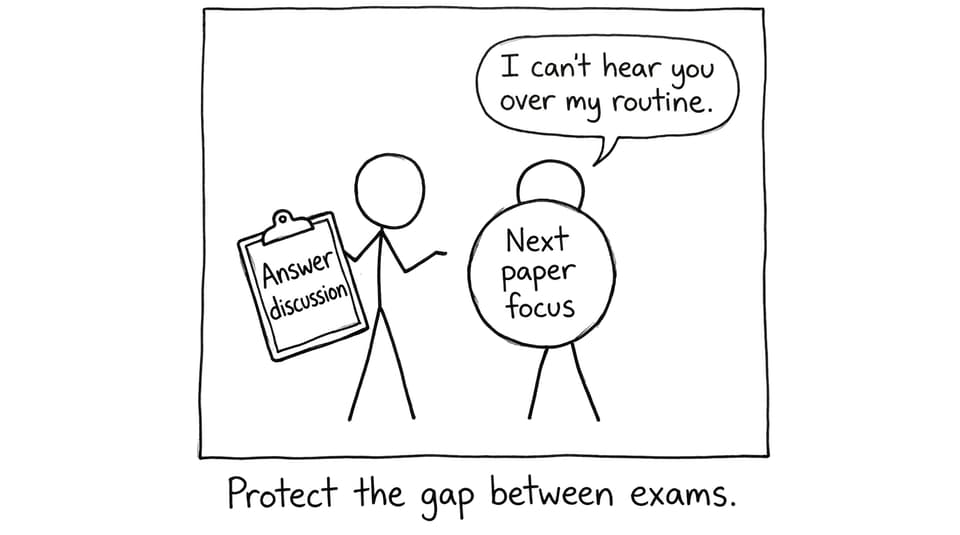
The gap between papers looks empty, but it’s where momentum is either protected or lost.
In IB exams, the best students aren’t the ones who never feel stress. They’re the ones who can set it down quickly, pick up the next task, and keep going.
If you want a system that makes that easier, build your routine around RevisionDojo: Flashcards for calm recall, Questionbank for targeted practice, AI Chat for fast clarity, Grading tools for learning how marks are earned, plus Predicted Papers, Mock Exams, the Coursework Library, and Tutors when you need deeper support. Start by mapping your exam days with the RevisionDojo Study Planner and keep your focus where it belongs: on the next page, not the last one.