


When teachers walk into school right before IB exam week, they can usually tell who will perform steadily.
Not because those students are “smarter.” Not because they studied 12 hours a day. It’s because their preparation looks boring: the same few habits, repeated calmly, with almost no drama.
If you’re an IB student preparing for exams, the goal in the final days isn’t to become a new person. It’s to protect the version of you that answers well under pressure.
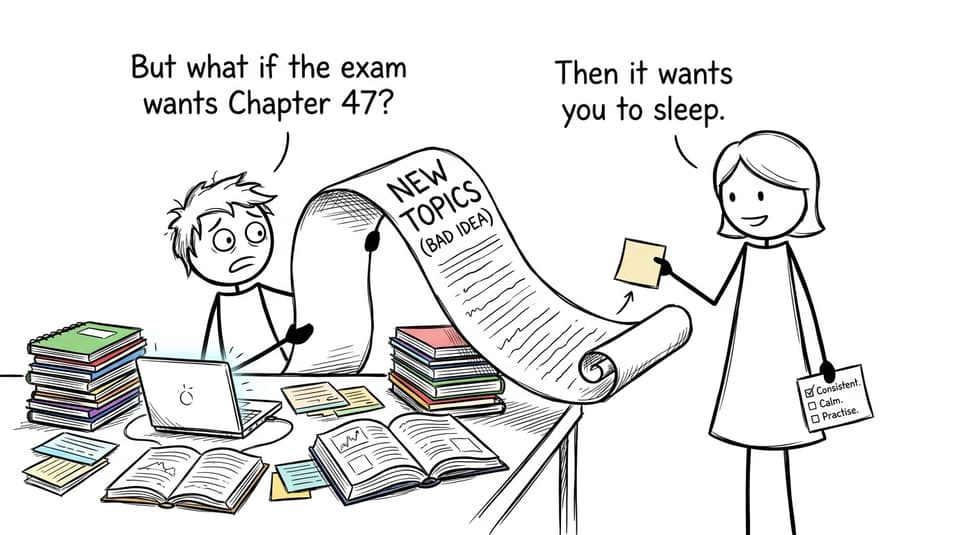
The teacher-approved IB pre-exam checklist
Use this as your “48-hours-before” reset:
-
Keep your routine consistent (study blocks, meals, bed time)
-
Stop heavy new learning and focus on consolidation
-
Practise exam technique (timing, command terms, structure)
-
Review mistakes and create a tiny “error list”
-
Protect sleep like it’s part of the syllabus
If you want a stable framework, build it once and reuse it with the RevisionDojo Study Planner.
Consistency is what teachers are really grading (quietly)
In the IB, inconsistency is expensive. Students change methods in the final week: new note system, new app, new “perfect” schedule. Teachers see the result immediately: stress rises, confidence drops, and simple tasks start taking too long.
A better approach is to keep one repeatable loop. RevisionDojo is designed around that loop: Study Notes for clarity, Flashcards for recall, Questionbank for exam-style practice, AI Chat for fast explanations, and Grading tools when you need feedback that actually changes your answers.
If your daily rhythm is shaky, borrow a simple structure from How to Build a Study Routine That Actually Works.
Finish “heavy learning” early, then taper like an athlete
Teachers don’t want you trying to learn three brand-new topics the night before an IB paper. Not because curiosity is bad, but because your brain can’t reliably file, retrieve, and apply brand-new material under time pressure.
In the final days, shift to:
-
short refreshes using your core notes
-
targeted questions on known weak areas
-
light timed practice to keep pacing familiar
To make that practical, combine:
-
RevisionDojo Flashcards for daily retrieval
-
the subject-specific Questionbank (example: IB Chemistry Questionbank) for targeted drills
Teachers want exam technique, not “more content”
A common IB trap is thinking that more notes automatically means more marks. But many marks are lost on execution: not addressing the command term, writing too generally, or mismanaging time.
So in the pre-exam window, teachers want you to practise:
-
command term response style (define vs explain vs evaluate)
-
paragraph structure (especially in writing-heavy subjects)
-
timing decisions (when to move on, when to return)
A strong way to train this is to run timed rehearsal using Custom IB Mock Exams: Build Practice Tests by Topic, then tighten answers with RevisionDojo’s Grading tools and AI Chat.
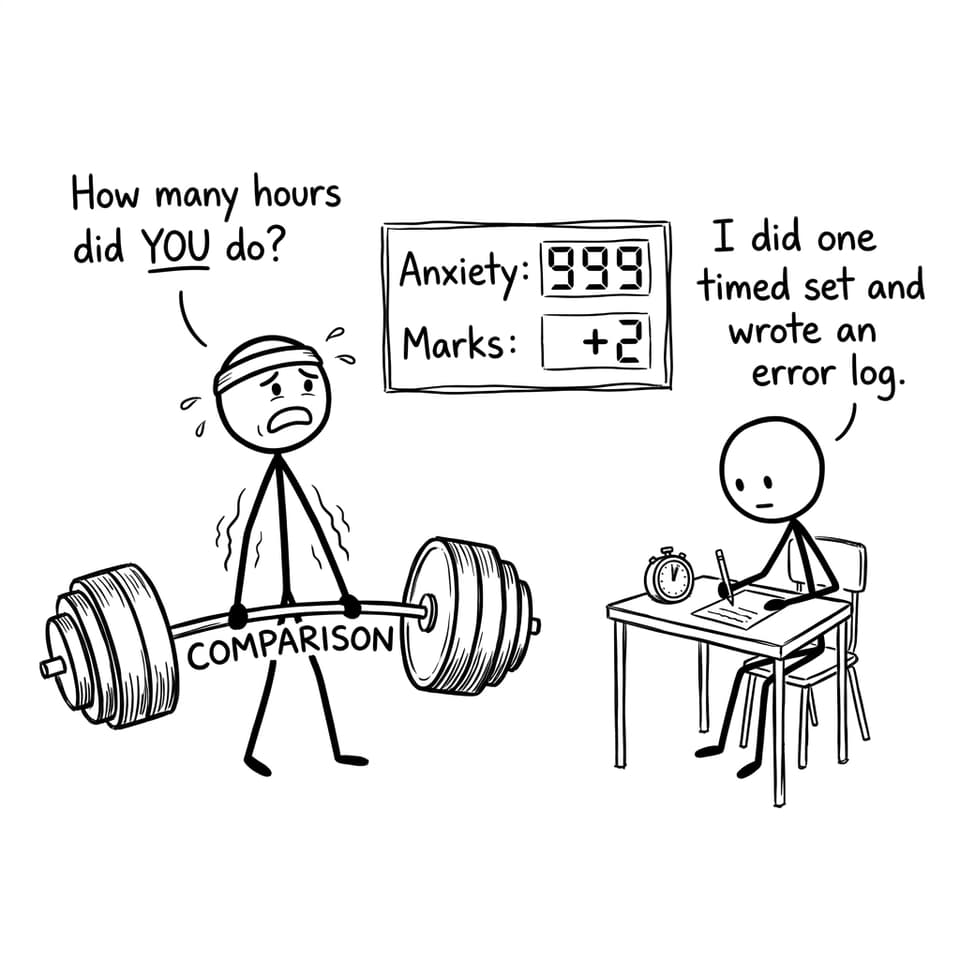
Stop comparing. It feels productive, but it isn’t
Teachers wish students would stop turning revision into a social leaderboard. Comparing hours, resources, and “readiness” spikes anxiety without improving recall or technique.
Your job is not to win a revision conversation. Your job is to walk into an IB exam with predictable focus.
If you want a calmer schedule that still gets results, use the weekly reset ideas in Balanced IB Study Schedule That Actually Works.
Sleep is the revision strategy most students refuse to believe
Teachers see this every year: strong students underperform because they enter exam week depleted.
The point of sleep right before IB exams isn’t “wellness.” It’s retrieval. It’s attention. It’s the ability to read a question once and understand it.
If you’re tempted to push late nights, revisit the burnout-proof logic in How to Study for IB Exams Without Burning Out.
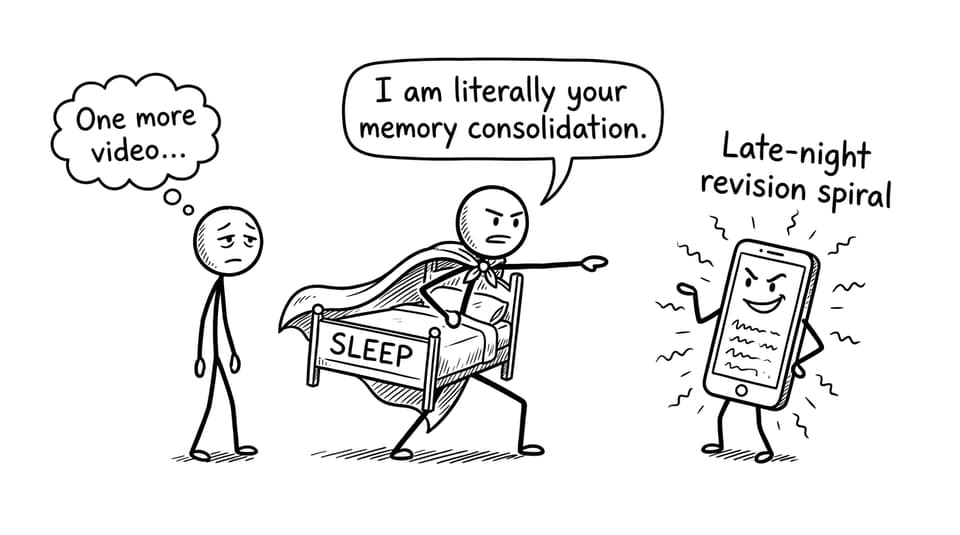
A calm IB exam week starts before the first paper
The best teachers aren’t hoping you “work harder” right before exam week. They’re hoping you get simpler: fewer changes, more practice, better sleep, and a steady routine.
If you want one place to run that teacher-approved approach, make RevisionDojo your home base: Questionbank for targeted practice, Study Notes and Flashcards for fast recall, AI Chat and Grading tools for feedback, plus Predicted Papers, Mock Exams, the Coursework Library, and Tutors when you need extra support.
Build your plan now in the RevisionDojo Study Planner and walk into your next IB exam week feeling prepared, not improvised.