


If you have ever stared at an IB question you know you studied, only to feel your brain return an error message, you have already met the real enemies of revision: fatigue and empty fuel. The strange part is that most students respond by doing the one thing that makes it worse, they borrow hours from sleep and replace meals with whatever is closest.
It feels responsible. It feels like commitment. In IB exam season, it is often the quiet reason your revision stops converting into marks.
The quick IB checklist (sleep + nutrition)
If you want a simple baseline for IB revision, start here:
-
Protect 7-9 hours of sleep most nights.
-
Keep a consistent wake-up time (your body clock likes routines).
-
Set a heavy-study cutoff 60-90 minutes before bed.
-
Eat regular meals with protein + slow carbs + healthy fats.
-
Hydrate steadily (don’t wait until you feel awful).
-
Use tools that shorten study time: RevisionDojo Study Notes, Flashcards, and Questionbank.
For your wider IB routine, the structure in The Best Daily Routine for a Balanced IB Student pairs well with the ideas below.
Why sleep is a revision multiplier in IB
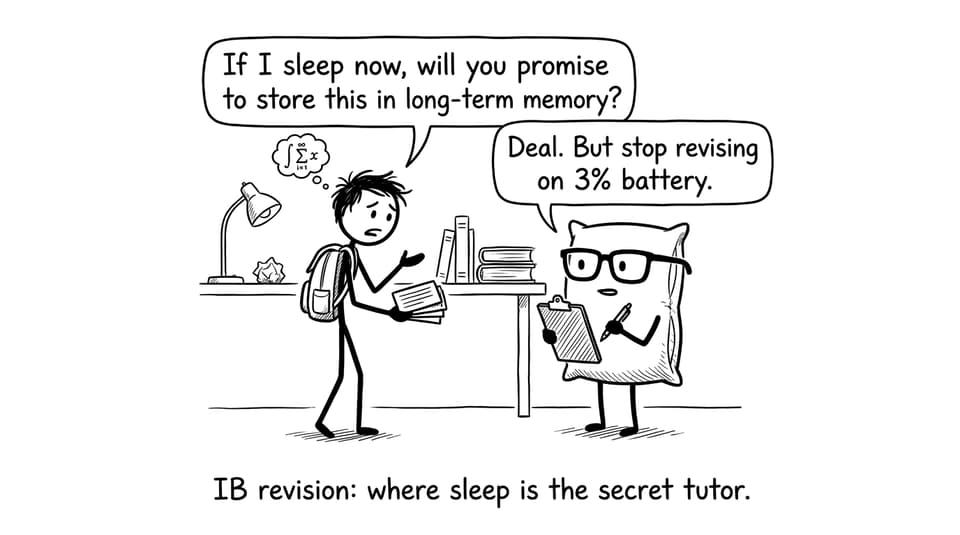
Sleep is not “rest” in the lazy sense. It is where your brain files what you learned. When you revise for IB, you are constantly asking your memory to do two jobs: store information and retrieve it under pressure. Sleep is the bridge between those.
A useful detail for IB students: sleep moves in cycles of roughly 90 minutes, and those cycles contain different stages that support memory and emotional regulation. That is why a night of broken, short sleep often feels like you are studying through fog, even if you technically “did the hours.”
If you want a deeper sleep plan designed for exam stress, borrow the cutoffs and routines from Best Sleep Routine for IB Students (That Actually Works) and How Sleep Affects Academic Performance in IB/AP.
The IB sleep rule most students ignore
Stop doing heavy IB learning right before bed.
Late nights often turn revision into passive reading. You “recognize” the content, then assume it is learned. But your exam does not reward recognition, it rewards retrieval.
A better swap is: finish your hardest IB work earlier, then end the day with light recall. This is where RevisionDojo Flashcards shine: short, active, and closed-ended. If you want the system behind this, How to Effectively Use Flashcards for Revision explains how to keep them efficient.
Nutrition for IB revision: fuel, not perfection
Nutrition advice becomes noisy because it gets moral fast. For IB students, the goal is simpler: stable energy, stable focus.
Think of revision like a long exam. The best food is the kind that prevents spikes and crashes.
What to eat when you need your brain to behave
Aim for meals that include:
-
Protein (eggs, yogurt, tofu, chicken, beans) for steadier energy.
-
Complex carbs (oats, whole grains, rice, potatoes) for longer focus.
-
Healthy fats (nuts, olive oil, avocado) that keep you full.
-
Foods with omega-3s and antioxidants (fish, walnuts, berries) that support overall brain health.
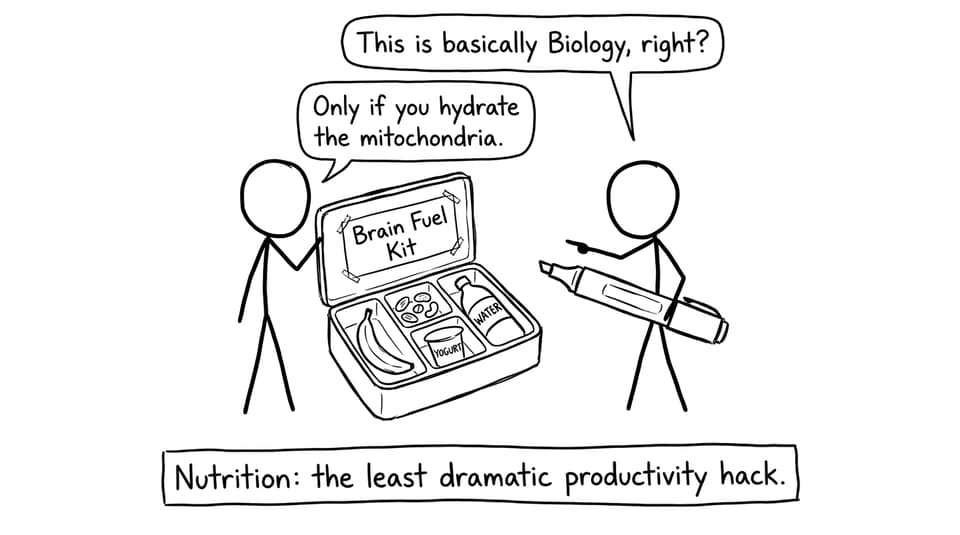
And yes, hydration counts. A dehydrated brain is an uncooperative brain.
For a subject-linked take (especially useful if you are in IB Sports, Bio, or just like cause-and-effect explanations), How to Revise Hydration and Nutrition makes the principles memorable.
Timing matters more than “superfoods”
Most IB energy crashes are not from missing a miracle ingredient. They happen because you skip meals, then overcorrect with sugar and caffeine.
Try this structure:
-
Breakfast: something you can repeat (less decision fatigue).
-
Study snack: fruit + nuts, or yogurt.
-
Lunch: a real meal, not a bargaining chip.
-
Evening: lighter dinner if late meals disrupt your sleep.
If you want your revision method to match this same “repeatable system” mindset, The Science Behind Effective IB Revision and 10 Proven Study Techniques for IB Students connect the biology to practical study loops.
The caffeine trap: useful, then expensive
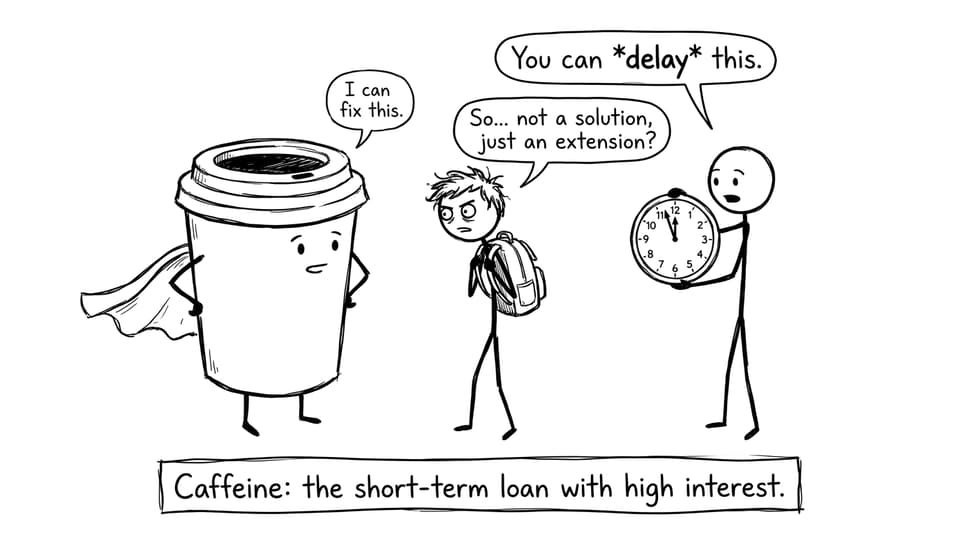
Caffeine can be helpful for IB revision, but it is best treated like a tool, not a personality.
Many students find that caffeine after mid-afternoon drags sleep quality down, even if they technically fall asleep. Then the next day’s revision requires more caffeine, which makes the next night worse. It is a loop that feels productive from the inside.
If you are already deep in that cycle, Is It Worth Sacrificing Sleep to Study for IB Exams? is a good reset.
How to pair sleep, nutrition, and RevisionDojo for faster IB gains
Here is a calm loop that respects your biology and your deadlines:
-
Study Notes: rebuild understanding quickly (no wandering).
-
Questionbank: immediately practise what the exam will ask.
-
AI Chat: clarify one exact doubt (keep it narrow).
-
Grading tools: get fast feedback so mistakes don’t repeat.
-
Flashcards: lock in definitions, processes, essay points.
-
Mock Exams and Predicted Papers: train timing and pressure.
When you feel behind in IB, the instinct is to add hours. A better move is to improve feedback and reduce wasted effort, something Common Mistakes to Avoid During IB Revision explains clearly.
A calmer finish: the IB advantage no one brags about
The students who do well in IB are not always the ones who suffer the most. Often, they are the ones who protect sleep, eat like they want stable energy, and use tools that make revision shorter and sharper.
If you want that kind of advantage, build your next week around one promise: treat sleep and nutrition as part of IB revision, not as what happens after it. Then use RevisionDojo to make every focused block count: Study Notes to understand, Questionbank to apply, Flashcards to retain, AI Chat and Grading tools to fix mistakes, plus Mock Exams and Predicted Papers to practise under pressure. Your future self will feel the difference when the exam paper stops looking unfamiliar.