



Your IB revision doesn’t usually fail because you’re lazy. It fails because your environment quietly votes against you.
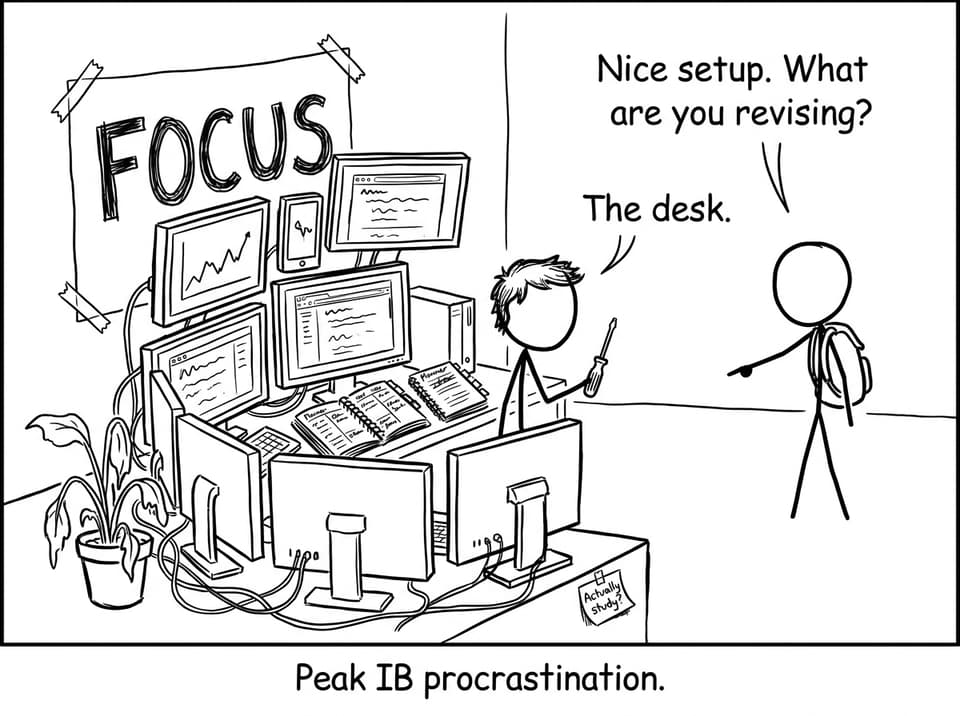
One night you sit down “for an hour,” and two hours later you’ve reorganized your highlighters, scrolled three apps, and opened a document titled FINAL FINAL notes. Your brain did work, just not the kind that moves marks.
A perfect IB study space isn’t expensive or aesthetic. It’s a small system that makes focus the default and distractions the exception. Here’s how to build it.
The IB study space checklist (copy this)
-
One consistent location (same chair, same desk when possible)
-
Light that keeps you awake (preferably natural)
-
A clear “work surface” with only today’s materials
-
Phone out of reach (not face-down, not “silent”)
-
One active task open (not 17 tabs)
-
A simple loop: notes → recall → questions → review
If you need a ready-made loop for IB, keep these guides open for reference: How to Study for IB Exams: Step-by-Step Guide and The Ultimate Guide to Revision for IB Students.
Choose a location that protects your attention (not your mood)
The best IB study space is boring in the right way. Same spot, same cues, fewer surprises. Your brain learns, “when I sit here, we do questions.”
Quiet beats cozy
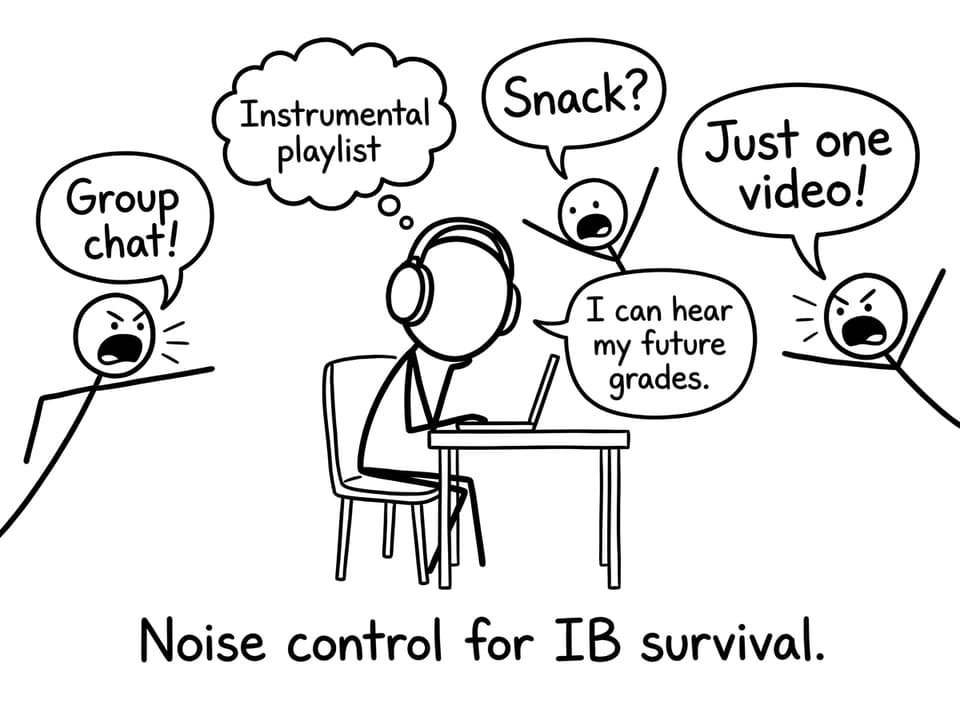
Pick the quietest realistic option: a desk in a corner, a library seat, or even a consistent kitchen spot during a quiet hour. If home is chaotic, noise control is part of your setup, not a bonus.
Comfort matters because time matters
For IB, you’re training stamina. Use a chair with back support and a desk height that doesn’t fold you into a pretzel. If you’re constantly shifting, your focus leaks away in tiny drops.
Set your desk to “exam mode”: fewer objects, clearer thinking
A desk isn’t just a surface. It’s a decision filter. The more clutter you see, the more micro-decisions you make.
Use zones, not piles
Make three visible zones:
-
Do: the single task you’re working on right now
-
Reference: one book/notes page you’re allowed to consult
-
Later: everything else
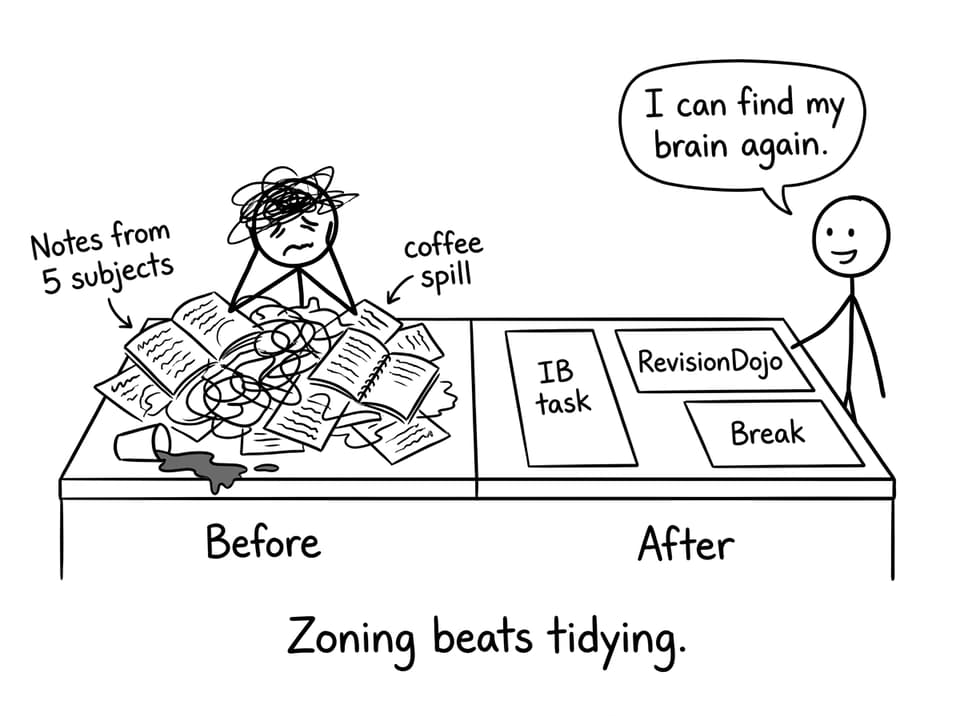
This is especially powerful for IB students who juggle six subjects. Zones stop your desk from becoming a museum of unfinished intentions.
Lighting that keeps you honest
Natural light is ideal. If it’s evening, use a lamp that lights the page evenly (no shadows across your notebook). If your space is dim, your brain will negotiate sleep instead of revision.
Build an IB revision workflow that fits your space
A perfect IB study space isn’t complete until your resources are one click away. This is where RevisionDojo helps, because it reduces the “what do I do next?” problem.
Try this simple sequence:
-
Clarify the topic quickly with RevisionDojo for IB
-
Learn the concept, then move fast into practice using the Questionbank
-
Use IB Flashcards with Spaced Repetition (SRS) as your daily minimum
If you want deeper strategy, read IB Question Bank | How to Use It Effectively and IB Flashcard System: Active Recall for Better Memory.
RevisionDojo also fits naturally into a high-performance desk setup because your tools are connected: Study Notes, Flashcards, AI Chat, Grading tools, Predicted Papers, Mock Exams, a Coursework Library, and Tutors when you want human feedback. The less you search, the more you study.
Reduce digital distractions (the way IB students actually can)
“Just use self-control” is not a plan. A plan is friction.
-
Put your phone outside the room or across the room with a timer running
-
Turn off notifications on laptop and tablet during blocks
-
Use the “one tab rule”: one task tab, one resource tab
When you’re close to exams, pair this with a short routine like IB: The Last 2 Weeks Before Exams (What Matters) so your space and your schedule agree.
A final thought: your IB study space should make starting easy
The perfect IB study space isn’t a Pinterest desk. It’s a small, repeatable setup that helps you begin, continue, and finish a revision block without negotiating with your distractions.
If you want your space to do more work for you, build your routine around RevisionDojo: start with Study Notes, lock in memory with Flashcards, prove it with the Questionbank, and use AI Chat and Grading tools to tighten your answers. Keep it simple, keep it consistent, and let your IB results catch up to the effort you’re already putting in.