

The IB timetable isn’t “your schedule” -- it’s the school’s control room
On paper, the IB exam timetable looks simple: dates, sessions, subjects. But in school offices, it becomes something else entirely -- a master blueprint that decides where hundreds of people stand, what doors stay locked, and why you’re told the same instructions three times.
If you understand how your school uses the IB timetable internally, exam days feel less like arbitrary strictness and more like a system designed to protect fairness.
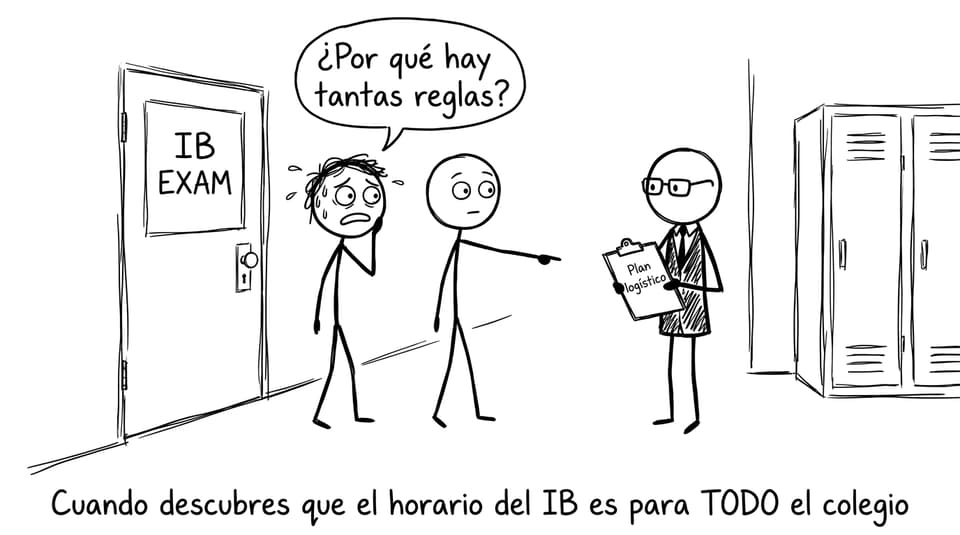
Quick checklist: what the IB timetable triggers behind the scenes
When the IB timetable lands, schools typically start planning:
-
Exam room allocation (who sits where, and why)
-
Invigilator schedules and handovers
-
Student movement routes and supervised breaks
-
Security procedures for exam materials
-
Clash management (two exams same day, overlaps, or long gaps)
For students, this explains the “big mood shift” in school during the IB session: your campus becomes a logistics operation.
The IB timetable as a logistics map (not a calendar)
A useful way to think about the IB timetable is like an airport departures board. It’s less about your personal journey and more about traffic control.
Schools use the IB timetable to make decisions that sound boring but matter a lot:
-
Room capacity and seating plans: spacing, candidate numbers, access needs, and visibility.
-
Noise and disruption control: moving classes away from exam corridors, limiting announcements, and managing lunch flow.
-
Invigilator coverage: ensuring every room has trained staff, plus backups for breaks and emergencies.
When something shifts -- even slightly -- it can ripple into dozens of staff changes. That’s why schools treat the IB timetable like a fixed anchor.

Why schools feel strict during IB exams
Most rules you experience on the day aren’t your teacher being intense. They’re your school following IB regulations designed to protect exam integrity.
That’s why you’ll see:
-
Fixed arrival times and identity checks
-
Controlled movement (especially between sessions)
-
Supervised waiting if you finish early or have another exam later
-
No phone access, even during breaks
If you want to plan your energy around those long, supervision-heavy days, use the strategies in IB Exam Week-by-Week Survival Guide and How to Plan Final IB Revision Using the Official Timetable.
How schools manage clashes and double-exam days
Clashes are where the internal use of the IB timetable becomes most visible. If you have two exams on the same day, or a long gap between papers, schools will usually arrange:
-
A supervised waiting room
-
Rotating invigilators (so supervision stays consistent)
-
Approved procedures for start times and transitions
The key point: you’re not expected to “figure it out.” Your school is running an IB-aligned process that keeps conditions fair for everyone.

What students can control (even when the timetable controls everything else)
You can’t negotiate the IB timetable. But you can control how you prepare for the reality it creates.
A calm, effective approach looks like this:
-
Convert dates into a plan: Use RevisionDojo Study Planner to map revision around heavy weeks.
-
Practice like the environment: Build accuracy and timing with the Questionbank and then step up to timed practice.
-
Make pressure feel familiar: Use IB Predicted Papers and your subject hubs (e.g., IB Biology Resources or IB Physics Resources) to rehearse exam behavior, not just content.
-
Reduce mental overhead: When coursework anxiety leaks into exam prep, RevisionDojo’s Coursework Library, Grading tools, AI Chat, Mock Exams, Flashcards, and Study Notes help you keep momentum without guessing.
For a strong endgame routine, keep IB: The Last 2 Weeks Before Exams (What Matters) open and follow it like a checklist.
A calmer way to walk into IB exam day
Once you realize the IB exam timetable is a school-wide logistics system, the strictness starts to make sense. It’s not personal. It’s a structure built to keep conditions consistent, secure, and fair.
Your job is simpler: prepare like the environment is real. Use RevisionDojo to turn the IB timetable into action with the Study Planner, drill weak spots with the Questionbank and Study Notes, lock recall with Flashcards, ask AI Chat when you’re stuck, and rehearse with Mock Exams and Predicted Papers. Then exam day stops feeling like chaos, and starts feeling like something you’ve already practiced.