


Introduction: the quiet moment when IB revision gets real
There’s a specific kind of silence that shows up a few weeks before exams. You sit down to revise, open your notebook, and realize the problem isn’t effort. It’s direction. The IB is wide by design: different subjects, different skills, different mark schemes, different ways to lose marks even when you “know the content.”
So this guide is built for the moment when motivation is no longer the missing ingredient. You need a plan that respects how the IB actually works: targeted practice, markscheme-aware answers, and subject-specific revision that turns knowledge into points.
The IB revision checklist (use this for every subject)
Before we go course by course, keep this simple IB checklist on your desk:
-
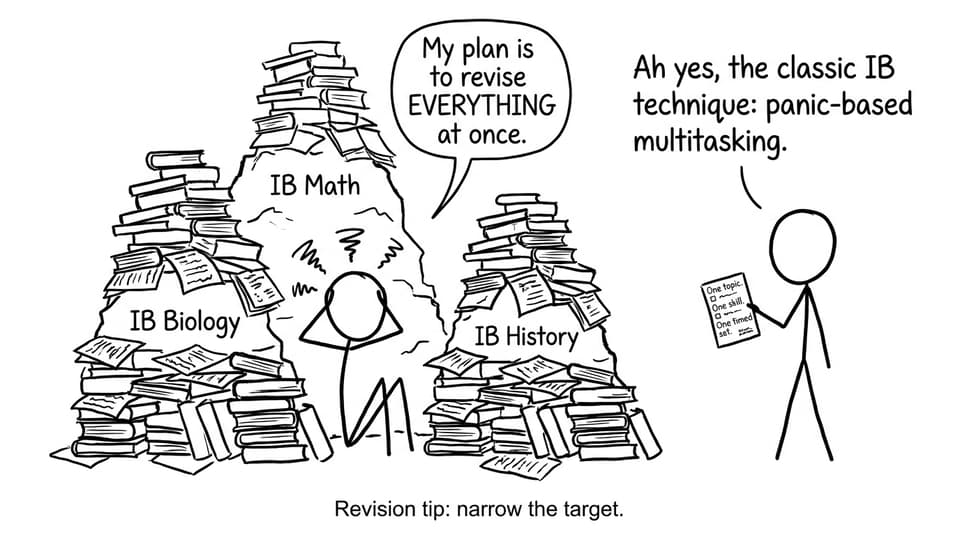
Pick one paper, one topic, one skill (not “revise the whole subject”).
-
Patch understanding fast using Study Notes.
-
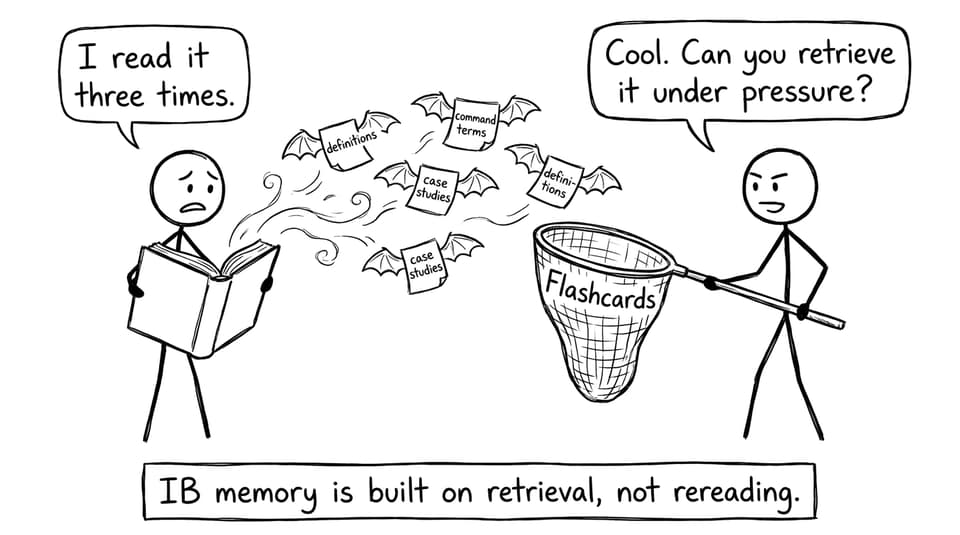
Lock recall daily with Flashcards (short sessions beat long ones).
-
Convert knowledge into marks with a topic-filtered Questionbank.
-
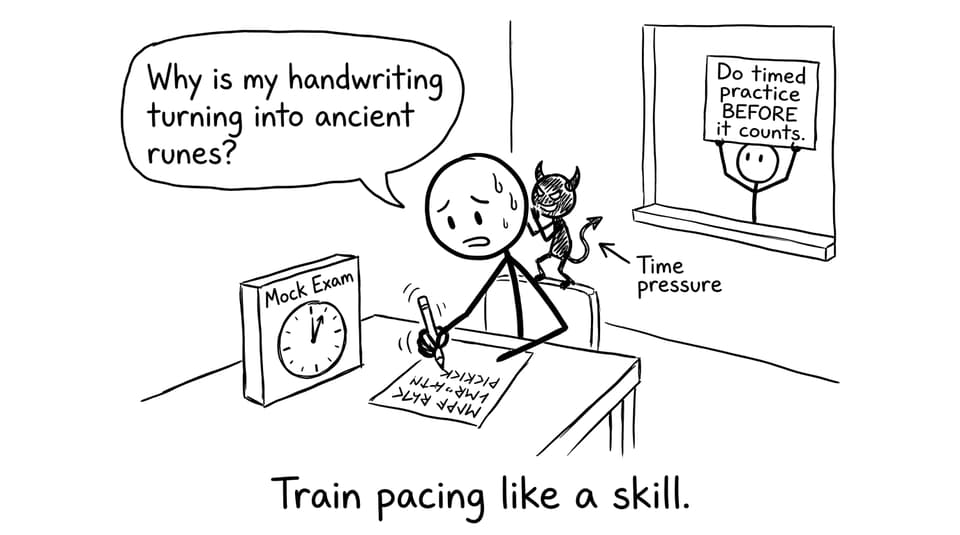
Train timing weekly using Mock Exams and Predicted Papers.
-
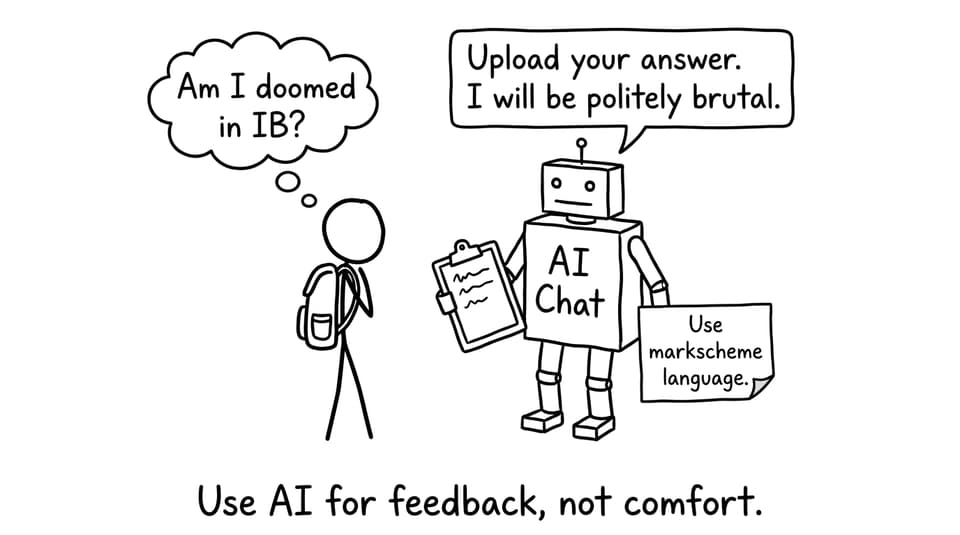
Close the loop with AI Chat and Grading tools (feedback, error log, reattempt).
If you want the bigger structure around this loop, use The Ultimate Guide to Revision for IB Students and How to Revise for IB Exams: A Month-by-Month Revision Plan.
IB Mathematics (AA and AI): revise methods, not pages
In IB Math, marks often disappear in the gap between “I understand” and “I can execute cleanly under time pressure.” Your revision should feel like learning choreography.
What to prioritize
-
AA: algebraic fluency, calculus methods, proof-like reasoning, non-calculator accuracy.
-
AI: statistics and probability interpretation, calculator strategy, modelling and context-based justification.
IB Math revision tips
-
Build a “methods list.” For each topic, write the 5-10 repeatable methods that generate marks (solve trig equation, differentiate composite, interpret regression output). Then drill them until they feel automatic.
-
Practice with intentional variety. Do short mixed sets from the same skill family to avoid pattern-matching.
-
Mark for method marks. Don’t just check the final answer. Ask: “Would an examiner see enough working?”
To stop the most common mark leaks, read Common Mistakes in IB Math HL exams. For practice that mirrors IB style, use the free Questionbank.
IB Biology: turn content into diagrams and definitions
IB Biology punishes vague understanding. A student can “get the idea” of a process but lose marks because the explanation isn’t precise, sequenced, or using expected terminology.
What to prioritize
-
Core: cells, genetics, metabolism, evolution, ecology.
-
Skills: labelled diagrams, data-based questions, clear definitions.
IB Biology revision tips
-
Diagram first, then explain. For processes like photosynthesis or immunity, start with a clean diagram from memory, then add a sentence-per-step explanation.
-
Make definition flashcards in examiner language. Many Biology marks are paid out for exact phrasing and key terms.
-
Train data questions weekly. Biology is not only memorization; it’s interpretation under constraints.
A strong routine is Study Notes for clarity, Flashcards for recall, and Questionbank drills for paper-style prompts. That loop is very “IB,” and it compounds fast.
IB Chemistry: memorize less, understand patterns more
Chemistry revision often breaks when students treat reactions as a list rather than a system. The IB rewards students who can predict outcomes and justify them.
What to prioritize
-
Core: bonding, energetics, kinetics, equilibrium, acids and bases, redox, organic mechanisms.
-
Skills: calculations (stoichiometry), structured explanations, mechanism logic.
IB Chemistry revision tips
-
Make a “reaction map.” Link reagents, conditions, and typical products. If you can’t connect it, you don’t own it.
-
Practice calculations under realistic time. Many students can do them slowly. The IB asks for accuracy and pace.
-
Use error logs by question type. For example: “equilibrium ICE tables,” “pH logs,” “nucleophilic substitution.” Reattempt within 48 hours.
To keep your revision evidence-based, borrow the retrieval principles from The Science Behind Effective IB Revision: How to Study Smarter, Not Harder.
IB Physics: train problem-solving like a sport
Physics is where the IB reveals whether you can translate words into models. Revision should focus on modelling decisions: what to assume, what to ignore, what equation actually fits.
What to prioritize
-
Core: mechanics, waves, electricity and magnetism, energy, modern physics.
-
Skills: diagramming, proportional reasoning, correct units, clear method steps.
IB Physics revision tips
-
Start every problem with a picture. Free-body diagrams and circuit sketches are not optional; they are a thinking tool.
-
Create an “equation triggers” list. Instead of memorizing formulas, learn what signals each one (e.g., “field strength,” “potential difference,” “SHM”).
-
Do one timed set every week. Physics confidence comes from repetitions under time.
Then reinforce timing and stamina with RevisionDojo Mock Exams and Predicted Papers, and diagnose mistakes quickly using AI Chat.
IB English Language and Literature: your structure is your safety
In IB English, talent helps, but structure scores. Under timed pressure, even strong students drift into summary. Your revision should be about repeatable moves.
What to prioritize
-
Paper skills: guided analysis, writer’s choices, purpose and audience.
-
Toolbox: thesis statements, paragraph architecture, integrated evidence.
IB English revision tips
-
Write “micro-plans,” not full essays every time. 10 minutes planning, 15 minutes writing one strong paragraph, 5 minutes self-marking.
-
Build a technique bank. For each text type, list the moves that earn marks: tone, register, structure, imagery, framing, perspective.
-
Practice transitions. IB markers reward coherence, not scattered good points.
For overall exam technique and avoiding common traps across subjects, keep Common Mistakes to Avoid During IB Revision open while you plan.
IB History: revise arguments, not timelines
History revision fails when it becomes a museum tour: lots of facts, no argument. The IB wants analytical writing anchored to evidence.
What to prioritize
-
Core: causes, consequences, change and continuity, significance.
-
Skills: thesis-driven essays, historiography awareness, structured evaluation.
IB History revision tips
-
Turn each topic into 3 debates. For example: “Was ideology or pragmatism more important?” Debates force evaluation.
-
Make “evidence packets.” For each argument, collect 3-5 precise facts, one counterpoint, and one historian perspective.
-
Time your introductions. A strong thesis and roadmap in 5 minutes steadies the whole essay.
RevisionDojo’s Grading tools are especially useful here: you can test whether your paragraph is actually answering the question, not circling it.
IB Economics: diagrams are your second language
Economics in the IB is a blend of clean diagramming and clear evaluation. Many students know the model but fail to explain it precisely.
What to prioritize
-
Micro: market failure, elasticity, market structures.
-
Macro: AD/AS, inflation, unemployment, policy evaluation.
-
International: exchange rates, trade, development.
IB Economics revision tips
-
Redraw diagrams from memory daily. Label axes and shifts correctly, then write a 4-6 sentence explanation.
-
Collect evaluation phrases. For every policy, train “depends on” factors: time lags, stakeholder impacts, external shocks, equity vs efficiency.
-
Use real examples lightly but sharply. One relevant example beats three vague ones.
If your schedule is collapsing under multiple subjects, use Balanced IB Study Schedule That Actually Works to reset.
IB Visual Arts: revise by curating, not cramming
Visual Arts revision isn’t about last-minute intensity. It’s about coherence: showing a clear line from investigation to experimentation to final outcomes.
What to prioritize
-
Process: development, intention, reflection.
-
Language: how you explain choices, influences, and growth.
IB Visual Arts revision tips
-
Audit your portfolio like a stranger. What story does it tell? Where does it jump?
-
Write short artist statements on a timer. Clarity under time is a skill.
-
Collect references with purpose. Don’t just name artists; explain what you learned and how it changed a decision.
RevisionDojo supports coursework-heavy subjects with a Coursework Library for exemplars, plus Tutors when you need human-level critique and direction.
Conclusion: make IB revision smaller so your results get bigger
The IB doesn’t reward the student with the most pages revised. It rewards the student who can retrieve, apply, and communicate under pressure. That is why the best revision is often narrower than you expect: one topic, one skill, one timed set, repeated until the pattern becomes familiar.
If you want one place to run that entire IB loop, build it with RevisionDojo: Study Notes for clarity, Flashcards for daily recall, Questionbank practice for marks, AI Chat and Grading tools for feedback, and Predicted Papers plus Mock Exams for realistic rehearsal. When you study like that, you don’t just revise the IB. You train for it.