



It happened in the quiet minute after class, when everyone was packing up fast.
A student asked the question that usually hides behind “Should I do HL?” or “Will this look good?”
“What actually makes me stand out?”
In a world where strong grades are common in competitive schools, the answer is rarely a single score. It’s usually a signal: proof that you can think, write, and adapt across contexts. That’s where IB Languages, and specifically the IB Bilingual Diploma, can quietly reshape your university journey.
What the IB Bilingual Diploma is (and how you earn it)
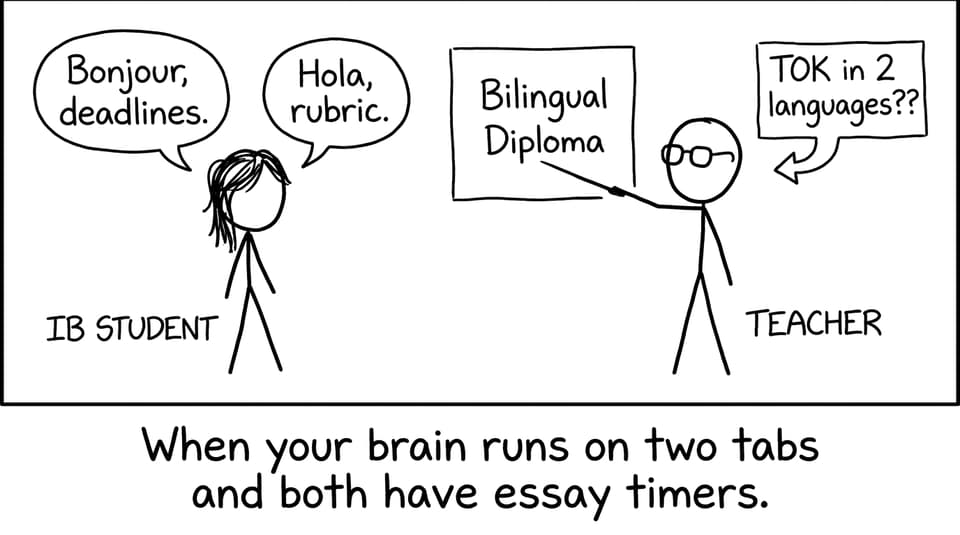
The IB Bilingual Diploma is a distinction awarded when you complete the IB Diploma Programme while demonstrating strong academic performance in two languages.
In practice, it’s one of the clearest “receipts” you can show universities that your IB Languages profile isn’t casual. It’s sustained. It’s assessed. And it’s rigorous.
Quick requirements checklist
You can earn the bilingual distinction through one of these routes:
-
Two Language A subjects (Literature or Language and Literature) in different languages.
-
One Language A plus an additional subject studied in a different language (often Group 3 or Group 4), depending on your school’s offerings.
-
Minimum grade requirement: you generally need at least a 3 in the qualifying language(s) and subject(s).
If you’re deciding between English pathways, it helps to compare course demands before you commit: Is IB English Literature More Difficult Than IB English Language and Literature?
Why IB Languages matter more at university than you expect
Most students think universities value bilingualism because it “looks impressive.” That’s true, but incomplete.
Universities value IB Languages because language study forces a specific kind of thinking: you can’t hide behind memorization. You have to interpret, argue, structure, and make choices under time pressure.
Here’s what that turns into once you arrive on campus.
A stronger academic signal for admissions
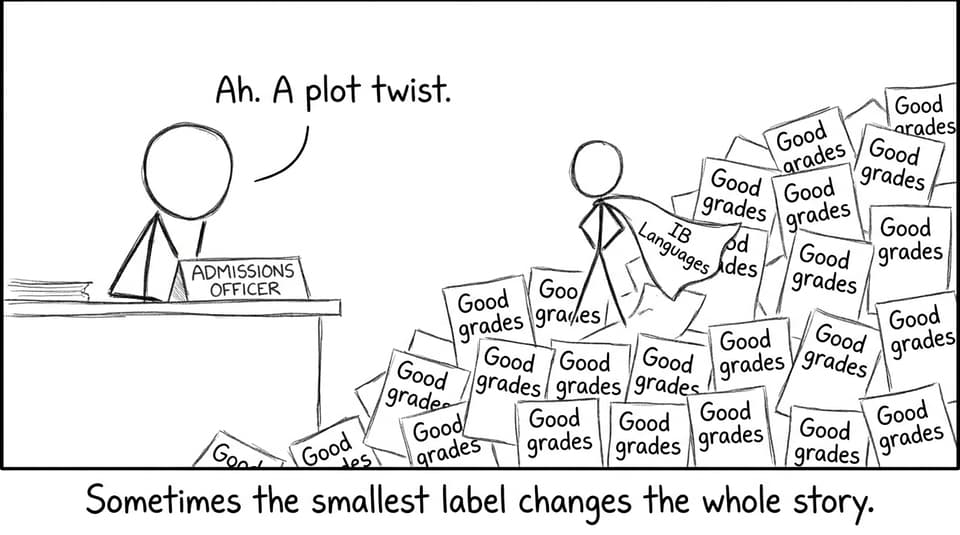
Admissions readers see many applicants with top grades. The bilingual diploma adds an extra layer: it suggests you can handle complexity while maintaining accuracy.
It’s similar to what examiners reward in strong Paper 1 analysis: not more words, but sharper control.
If your Language A path includes heavy exam prep, build your foundation early with targeted strategies like Preparing for IB English A: Literature Exams.
Better writing across every subject (yes, even STEM)
University writing is often less about “being smart” and more about building a claim, supporting it, and staying coherent.
Students strong in IB Languages usually arrive with:
-
cleaner paragraph logic
-
stronger thesis clarity
-
better evidence integration
-
more awareness of audience and purpose
That’s why language skills quietly raise performance in history essays, psychology ERQs, lab reports, and even scholarship applications.
For the thesis side of language work, this guide is a reliable anchor: Crafting a Strong HL Essay Thesis
Cultural competence that becomes practical
“Cultural competence” sounds like a brochure phrase until you’re in a seminar with people from ten countries, discussing politics, ethics, healthcare, or literature.
Students with strong IB Languages experience tend to:
-
interpret tone and implication faster
-
navigate disagreement more calmly
-
notice assumptions in texts and arguments
Those are real university survival skills.
The trade-offs: what gets harder with IB Languages
A bilingual diploma is valuable, but it is not free.
The workload is real
Two languages often means more reading, more writing, and more time spent polishing clarity.
If you’re choosing levels, understand the reading and assessment jump before you commit: Should I Take English A: Literature SL or HL?
And if you’re staring at an expanding reading list, it helps to know what’s normal: How Many Texts Do You Study in IB English Literature?
Stress can spike if your systems are messy
Language success is rarely about “talent.” It’s about repetition with feedback.
If your plan is vague (read more, write more), stress grows. If your plan is specific (one prompt, one technique, one feedback loop), confidence grows.
That’s where RevisionDojo is designed to help IB students preparing for exams: you can rotate between Study Notes, Flashcards, and the Questionbank, then use AI Chat to unblock confusion fast. When you need realism, you move into Mock Exams and Predicted Papers. And if coursework is the pressure point, the Grading tools plus Coursework Library make expectations visible. If you want human strategy, Tutors can turn feedback into an actual plan.
A solid “system” approach is laid out here: RevisionDojo App: The Smarter Way to Prep for IB Exams
A simple exam-prep plan for IB Languages students
You don’t need a motivational speech. You need a loop you can repeat.
The 4-step loop (steal this)
-
Understand: Use RevisionDojo Study Notes to clarify one micro-skill (thesis framing, writer’s choices, comparative angles).
-
Recall: Use Flashcards for terminology, text features, and “move sets” (e.g., tone shift analysis, structure-to-meaning links).
-
Apply: Drill exam-style responses in the Questionbank and build timed sets.
-
Fix: Use AI Chat and Grading tools to identify exactly why marks leaked, then retest.
If you need practical techniques for daily study, start here: Effective Study Techniques for IB English A: Language and Literature
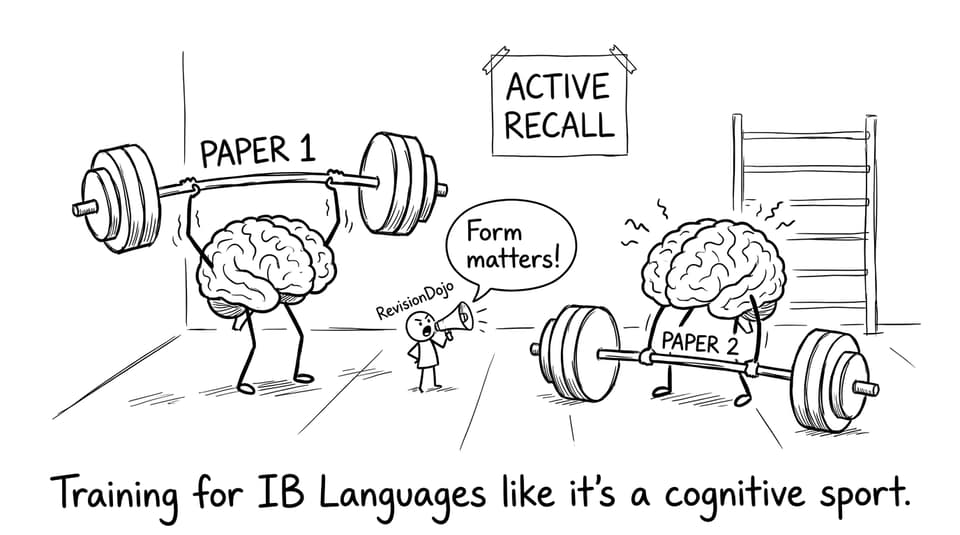
And if you’re balancing different paper styles, this comparison helps you plan smarter sessions: What's the Best Way to Study for Paper 1 vs. Paper 2?
Closing: make IB Languages your unfair advantage
The bilingual diploma isn’t valuable because it’s rare. It’s valuable because it changes who you become while earning it.
You learn to think in two systems. You learn to write with precision. You learn to hold nuance without dropping the argument. And when university gets loud and fast, those are the skills that keep you steady.
If you’re serious about making IB Languages your advantage, build the habits now: practice with the Questionbank, lock in core skills with Study Notes and Flashcards, get unstuck with AI Chat, and pressure-test your progress with Mock Exams and Predicted Papers. RevisionDojo brings that whole loop into one place, so your effort actually compounds.