
The fastest way to lose marks in IB Languages is surprisingly ordinary: you walk into the exam thinking both papers want the same version of you.
But Paper 1 and Paper 2 ask for different skills, different pacing, and a different kind of calm. One rewards a controlled writing process. The other rewards quick meaning-making under a moving clock.
If you can separate the two, your prep gets lighter, not heavier.
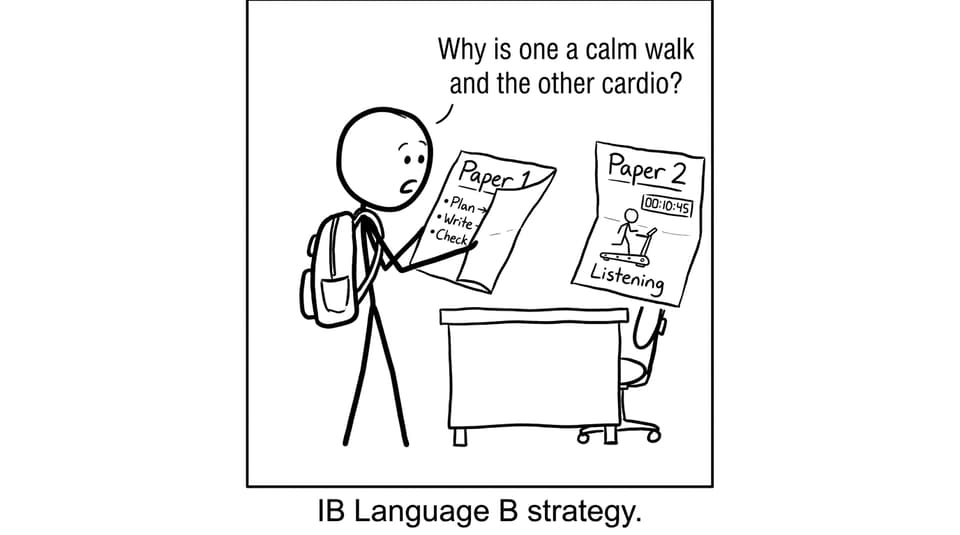
IB Languages Paper 1 vs Paper 2: a quick checklist
Use this before every practice session in IB Languages:
-
Paper 1: plan first, then write clean, then check smart
-
Paper 2: extract meaning fast, don’t chase perfection
-
Train timing weekly (not “when you have time”)
-
Review mistakes as patterns (register, structure, inference), not as one-off errors
For a broader map of what your exam days will actually look like, keep this open: IB Language B Exam Format, Timing, and Strategy.
What Paper 1 is really testing (and how to time it)
Paper 1 in IB Languages is productive: you create a text that fits a purpose, audience, and text type. It’s less about showing off every fancy tense, and more about being reliably understood.
A simple pacing model:
-
Plan (8-10 minutes): decide audience/purpose, outline 3 body points, list a few high-control phrases
-
Write (most of your time): execute paragraph by paragraph
-
Check (final 5-10 minutes): fix agreement/tense, register mistakes, missing text-type features
If you’re unsure what “Paper 1 timing” looks like in real terms, this page anchors the expectations: Paper 1 (Writing) Format and Timing Notes.
And when you need reps, don’t improvise practice. Use a bank that mirrors exam prompts: English B Paper 1 Questionbank.
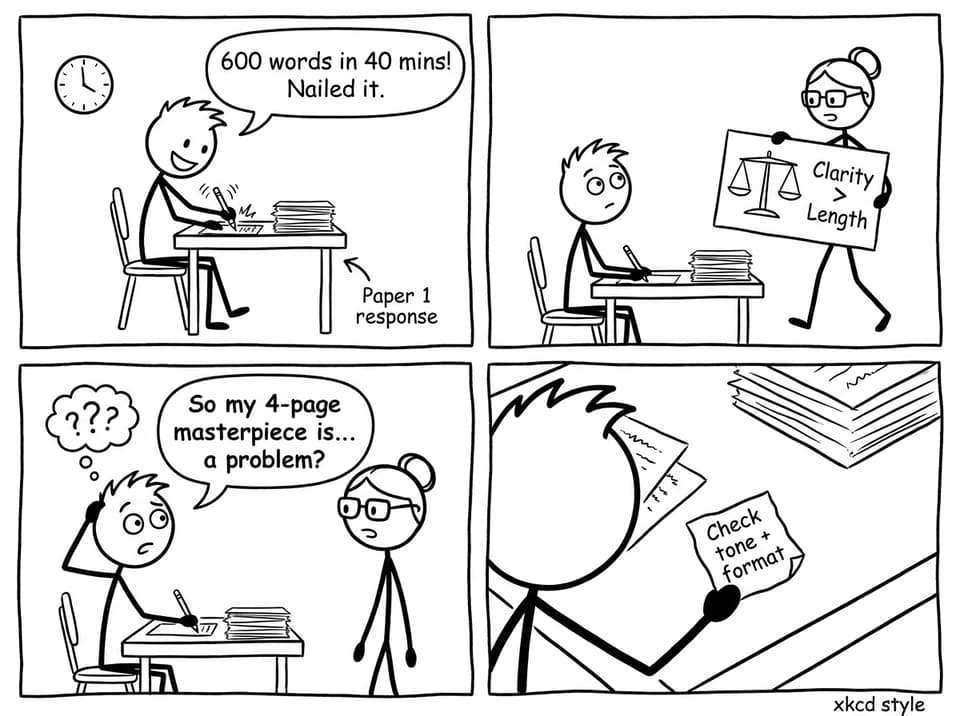
Paper 1 strategy in one sentence
In IB Languages, Paper 1 is a “build a product” task: clear structure, correct register, and controlled accuracy beat long, risky writing.
What Paper 2 is really testing (and how to stay steady)
Paper 2 in IB Languages is receptive: reading and listening comprehension. You are not setting the pace, especially in listening, so your job is to stay with the message.
What high scorers actually do:
-
Predict topic vocabulary from the questions
-
Listen/read for signposts (contrast, cause, opinion shifts)
-
Write keywords and symbols, not full sentences
-
If you miss something, rejoin the flow instead of replaying it in your head
To practice in a focused way, use: English B Paper 2 (Listening) Questionbank and this breakdown: How IB Language Listening Exams Are Structured.
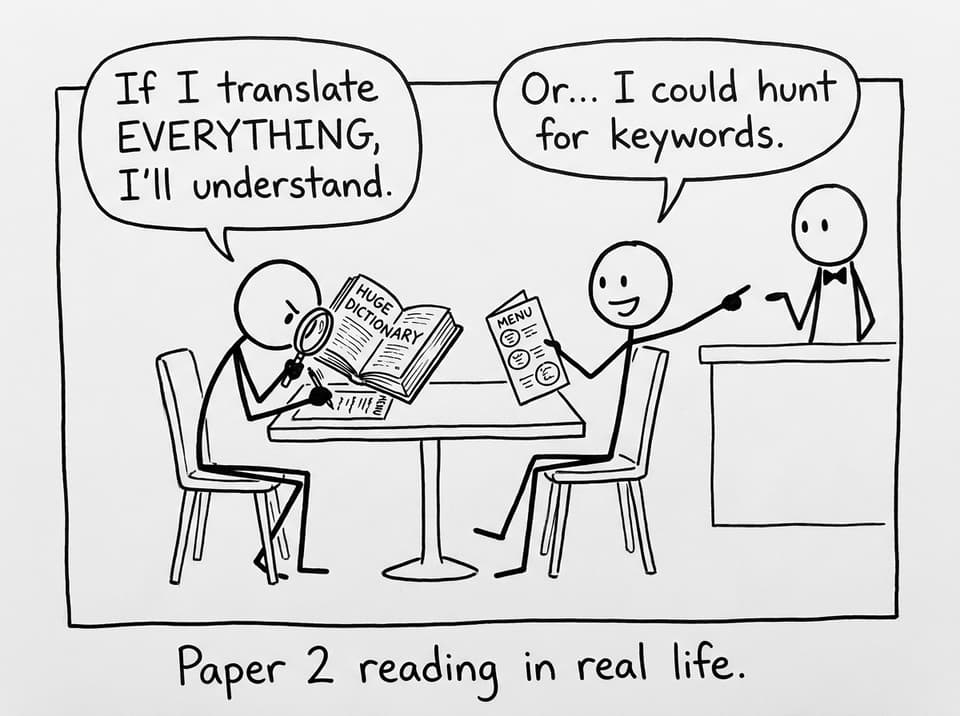
Paper 2 strategy in one sentence
In IB Languages, Paper 2 rewards accurate extraction of meaning under time pressure, not perfect understanding of every word.
The most common mistakes (and the fix)
-
Mistake: overwriting in Paper 1
- Fix: commit to a plan, then write to your structure, not your anxiety
-
Mistake: panicking when listening “runs away”
- Fix: train re-entry: miss a phrase, then immediately catch the next idea
-
Mistake: revising both papers the same way
- Fix: separate lanes: one lane for text types and writing routines, one lane for timed comprehension sets
For writing-specific pitfalls, use: How to Avoid Common Mistakes in Language B Writing.
A simple RevisionDojo routine that covers both papers
A calm week for IB Languages can be built around one idea: small, repeatable loops.
-
Use RevisionDojo Study Planner to split Paper 1 and Paper 2 sessions so you don’t “accidentally” avoid listening.
-
For Paper 1, use writing prompts from the Questionbank, then get feedback with AI Chat and Grading tools (so your mistakes become specific).
-
For Paper 2, build timed sets with the Questionbank, then convert recurring errors into Flashcards.
-
Add one weekly “pressure rep” with Mock Exams and (when available) Predicted Papers to train decision-making under stress.
-
If you need a fast reset from a human, book a session with Tutors.
If you want more listening-specific training, keep this guide nearby: IB Language B Listening Practice: Best Strategies.
FAQ
Is Paper 1 harder than Paper 2 in IB Languages?
It depends on your profile, but they’re difficult in different ways. Paper 1 feels hard when you haven’t automated structure, register, and text-type conventions, so every decision costs time. Paper 2 feels hard because comprehension happens in real time, especially in listening where you cannot pause the speaker. Many students are “good at languages” but still lose marks because they confuse complexity with clarity in Paper 1. Others write well but panic when they miss one line of audio in Paper 2 and mentally fall behind. The safest mindset is to treat them as separate sports with separate training.
Should I revise Paper 1 and Paper 2 together?
You can study them in the same week, but don’t revise them in the same way. Paper 1 revision should look like producing small texts frequently, under time limits, with feedback on structure, register, and accuracy. Paper 2 revision should look like timed comprehension sets where you practice extracting meaning quickly, then reviewing why you misread or misheard something. If you blend the methods, you usually end up doing the comfortable thing (writing) and avoiding the uncomfortable thing (listening). A simple fix is to schedule separate blocks in RevisionDojo Study Planner and keep each block pure. Over time, your confidence rises because your practice finally matches what the papers demand.
Does listening matter more than reading in Paper 2?
For many students, yes, because listening is less controllable and more time-compressed. In reading, you can re-scan and confirm evidence, even when you’re stressed. In listening, the audio keeps moving, so hesitation has a bigger penalty. That said, both skills are trainable when you focus on process: predicting, catching signposts, and extracting anchors like names, numbers, and opinions. The goal is not perfect capture, it’s accurate selection of what the question is testing. If you want to understand the mechanics, this guide is useful: How IB Language Listening Exams Are Structured. Build the habit, then reinforce it with timed drills and Flashcards.
Closing: make Paper 1 calm and Paper 2 predictable
A lot of IB Languages stress comes from treating two different papers like one big blur. Split them. Train the timing separately. Build a writing routine for Paper 1 and an extraction routine for Paper 2.
If you want a single home base to run that system, use RevisionDojo Study Planner with the Questionbank, Study Notes, Flashcards, AI Chat, Grading tools, Mock Exams, Predicted Papers, Coursework Library, and Tutors to keep practice consistent and feedback immediate.
The goal isn’t to work more. It’s to make IB Languages feel controllable again.