
The night your book stops feeling like a book
You know the moment. You open a familiar novel, and it suddenly feels like a maze. Quotes you underlined look like someone else’s handwriting. Themes blur together. And the worst part is the quiet thought: What if I freeze on exam day?
That’s why IB English exam preparation can’t be built on motivation. It has to be built on a routine you can repeat when you’re tired, busy, or nervous. The students who improve fastest aren’t necessarily the “most literary.” They’re the most consistent at turning reading into evidence, evidence into analysis, and analysis into marks.
This guide gives you a practical IB English plan for Paper 1, Paper 2, and the Individual Oral, with tools you can keep using right up to exam week.
A quick IB English checklist (save this)
Use this checklist to keep IB English revision focused and measurable:
-
Pick the assessment you’re training: Paper 1, Paper 2, or Individual Oral
-
Choose one skill outcome (not “revise English”): e.g., “write 2 timed paragraphs”
-
Prepare a tiny evidence set: 6 short quotes or precise moments
-
Practice under time (even 15 minutes counts)
-
Get feedback using a rubric or a grader
-
Log one mistake pattern to fix next session
If you want a central home base for course-specific practice, keep IB English A Lit Resources bookmarked.
Know what the IB English exams actually reward
A lot of students revise IB English like it’s a memory contest: more quotes, more context, more notes. But examiners reward something quieter: controlled interpretation.
In high-scoring responses, you can see the chain of thinking:
-
Authorial choice (technique)
-
Evidence (quote or precise reference)
-
Effect (what it makes the reader notice/feel/realise)
-
Meaning (how it shapes theme, character, power, conflict, worldview)
That’s the skill you’re training across every part of IB English.
To build that chain quickly, use RevisionDojo’s Study Notes to clarify techniques, then convert them into Flashcards for recall, then prove them in the Questionbank. When you write full responses, use Grading tools or AI Chat to tighten thesis clarity and analysis depth.
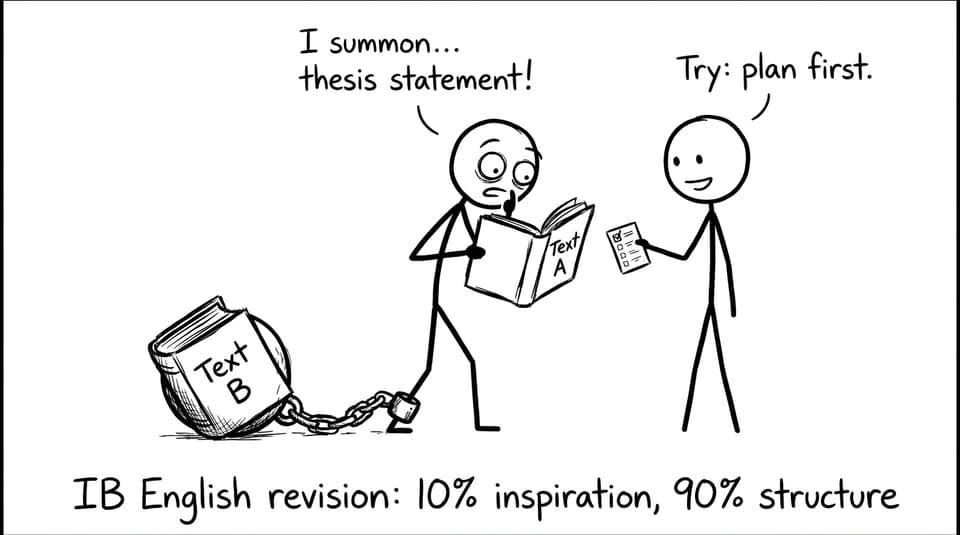
IB English Paper 1: train your method, not your confidence
Paper 1 is where students feel exposed because the text is unseen. That’s also why Paper 1 is surprisingly coachable. Your advantage in IB English Paper 1 is a repeatable method.
A strong routine looks like this:
Build a 10-minute planning ritual
-
First read: identify purpose, audience, tone
-
Second read: mark patterns and shifts (structure, imagery, diction, contrasts)
-
Choose 2-3 techniques you can explain clearly
-
Draft a one-sentence thesis that answers “so what?”
Then write paragraphs that stay technique-first.
For a deeper walk-through, use IB English Paper 1: Best Ways to Prepare and the Paper 1 Lit hub.
The most common Paper 1 mistake (and how to fix it)
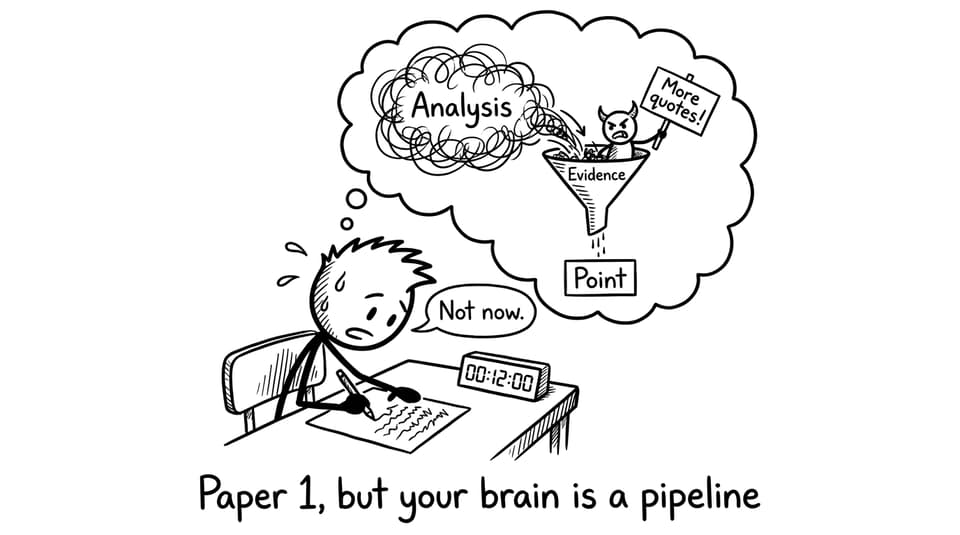
In IB English, the classic Paper 1 trap is writing “analysis” that is really description.
Fix it with one sentence you force yourself to include in every paragraph:
“This choice matters because…”
That single phrase pushes you from noticing into interpreting.
IB English Paper 2: comparison is a skill you rehearse
Paper 2 feels calmer because you know the texts, but it punishes a hidden habit: writing two separate mini-essays. IB English Paper 2 is one argument, built from two works at the same time.
A fast Paper 2 preparation loop
-
Build 3-5 theme “comparison cards” (Theme + Text A moment + Text B moment)
-
Memorise quotes that are flexible (short, technique-rich)
-
Practice 10-minute plans more often than full essays
If you want structured practice materials, explore IB English HL/SL Paper 2 Sample Papers and Exemplar Responses Notes and the strategy guide IB English Paper 2 Under Time Pressure.
The Individual Oral: make it feel like muscle memory
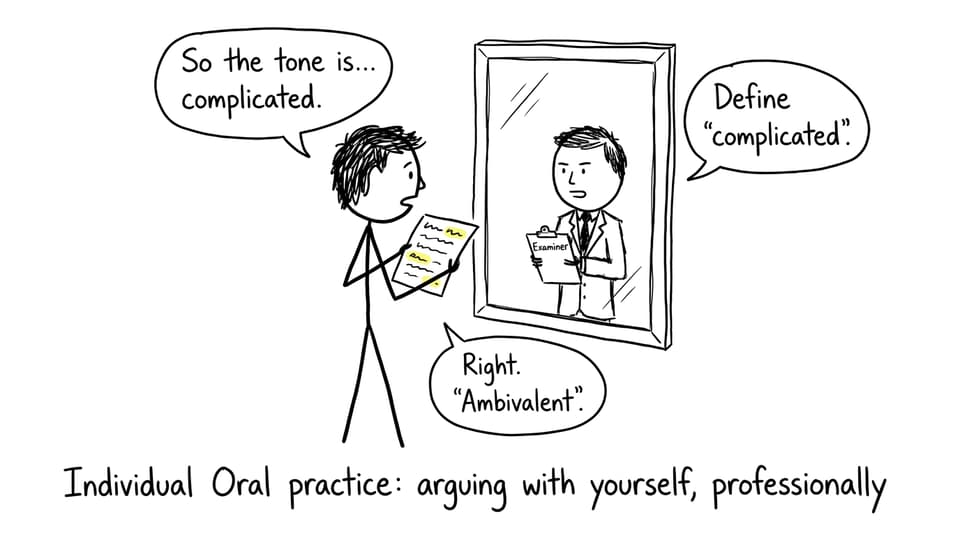
The Individual Oral rewards calm structure. Not a perfect voice. Not “sounding smart.” Just a clear line of inquiry, consistent references, and technique-based commentary.
A simple IO practice framework
-
Choose a short extract you can discuss in detail
-
Identify 2-3 authorial choices you will return to
-
Link each point to the wider work (and your global issue, if relevant)
-
Practise with timing: speak, pause, reset, continue
RevisionDojo helps here in a very practical way: you can store plans in your own workflow, drill technique terms via Flashcards, and use AI Chat to test whether your claims are actually arguable. If you want models, the Coursework Library and exemplar pages are useful for seeing what “controlled argument” looks like on the page, such as About English A Lit Coursework Exemplars.
A two-week mini plan for IB English (realistic, not heroic)
Here’s a repeatable schedule you can actually sustain:
Weekdays (45-60 minutes)
-
15 min: Flashcards (quotes + techniques + thesis stems)
-
30-40 min: one output (timed paragraph, plan, or outline)
-
5 min: mistake log (one pattern, one fix)
Weekend (90-120 minutes)
-
One timed section using Mock Exams or an exam builder
-
Review using Grading tools, then rewrite one paragraph to top-band quality
To strengthen your overall routine, combine this with IB English Study Techniques That Actually Work and the broader structure from How to Study for IB Exams: Step-by-Step Guide.
The calm ending: make IB English feel repeatable
The goal isn’t to become a different kind of person before the exam. It’s to make IB English preparation so repeatable that your confidence becomes a side effect.
If you want one place to run that routine, RevisionDojo is built for it: Questionbank practice for Paper 1 and Paper 2 skills, Study Notes for technique clarity, Flashcards for quotes and terminology, AI Chat for quick guidance, Grading tools for feedback, plus Predicted Papers, Mock Exams, the Coursework Library, and Tutors when you want human support.
Start small today: one timed paragraph, one mistake fixed, one step closer to an exam you can handle.