

Sometimes IB Chinese B feels like everyone else got a secret head start.
You hear classmates answer in smooth, effortless Mandarin, while you’re still negotiating tones, word order, and the moment your brain forgets how to write the one character you swore you knew. For non-native learners, the course can feel less like “language acquisition” and more like learning to juggle while running.
But here’s the quiet truth many top scorers eventually learn: IB Languages rewards systems more than talent. If you build the right routines (and practice the exact exam skills), you can outperform students who rely on background exposure.
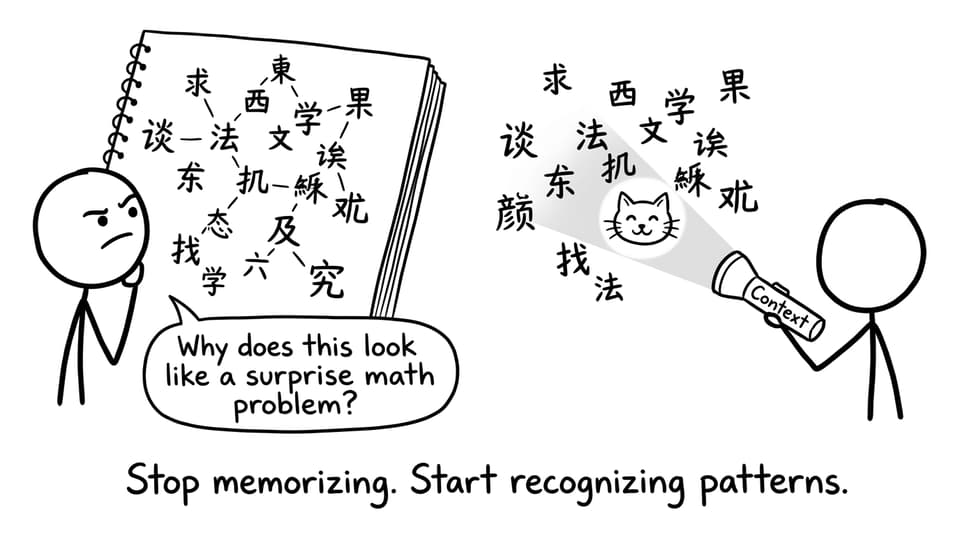
Quick checklist: your IB Languages Chinese B game plan
If you only keep one section open while revising, make it this.
-
Learn Chinese B by theme, not by random vocabulary lists.
-
Turn vocabulary into reusable sentences (so it appears in writing and speaking).
-
Train listening with short, frequent reps (not rare marathons).
-
Build a weekly loop: write one task, fix it, rewrite it.
-
Prepare oral answers with structures, not scripts.
-
Use one hub to keep everything together: notes, flashcards, practice, feedback.
A strong starting point is the IB Chinese B Resources hub, where you can move between Questionbank practice, Study Notes, Flashcards, and tools that simulate exam work.
Why non-native learners struggle (and how to flip it)
Non-native learners often don’t struggle because they “lack ability.” They struggle because they study the wrong unit.
They study words instead of messages. They study characters instead of patterns. They study Chinese instead of Chinese B assessment.
That shift matters in IB Languages, because the exams reward communication: clear meaning, correct register, theme awareness, and cultural reference points. You do not need to sound like a native speaker. You need to sound like a student who can communicate under exam conditions.
To keep your course map simple, bookmark these two overviews:
IB Languages tip: build “theme sentences,” not vocabulary lists
The fastest progress for non-native learners comes from a small, high-frequency toolkit you can reuse across prompts.
Instead of collecting 40 isolated words for “Sharing the Planet,” build 8-12 theme sentences you can adapt:
-
Opinion + reason: 我认为…因为…
-
Cause/effect: 由于…因此…
-
Comparison: 跟…相比…
-
Suggestion: 我建议…这样可以…
When you learn this way, one sentence becomes:
-
a speaking expansion in the oral
-
a paragraph backbone in writing
-
a comprehension anchor in reading/listening
On RevisionDojo, you can reinforce this with IB Flashcards (spaced repetition) and then stress-test your recall with the Questionbank, so your vocabulary becomes usable under pressure.
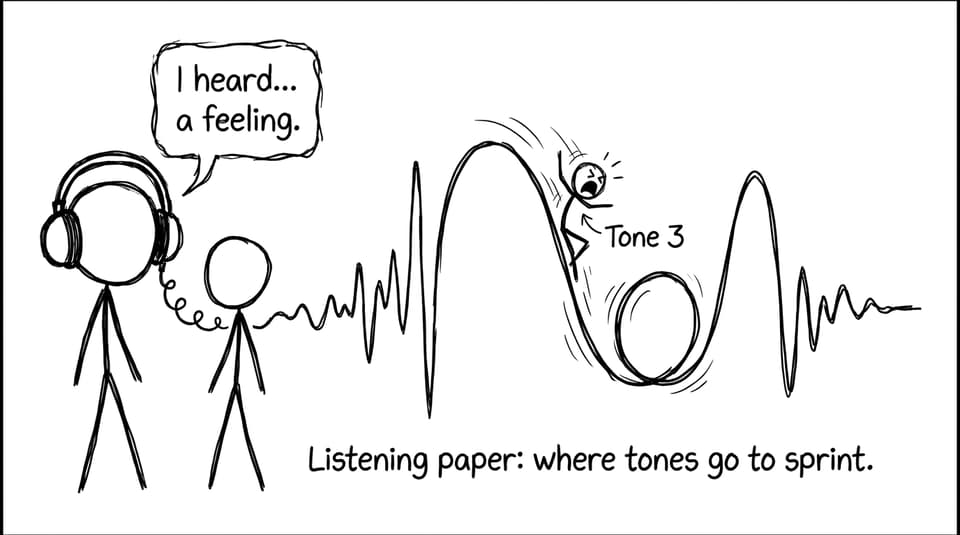
IB Languages listening: stop aiming for 100% understanding
Listening is where non-native learners often lose confidence fastest. The audio feels too quick, tones blur, and by the time you decode one sentence, the recording has already moved on.
The fix is counterintuitive: train for gist and signal words first, then detail.
Try this 3-step loop:
First pass: catch the frame
Listen for:
-
who is speaking (student? parent? announcer?)
-
what topic/theme it’s linked to
-
the speaker’s attitude (supportive, critical, uncertain)
Second pass: hunt signal words
Words like 但是, 因为, 所以, 不但…而且…, 一方面…另一方面… tell you where meaning turns.
Third pass: collect details that repeat
In exam-style audio, key ideas repeat. Your job isn’t perfect translation. Your job is accurate selection.
For structured practice, pair the IB Chinese B Paper 2 Listening Strategies notes with regular exam-style drills from the IB Chinese B Lessons.
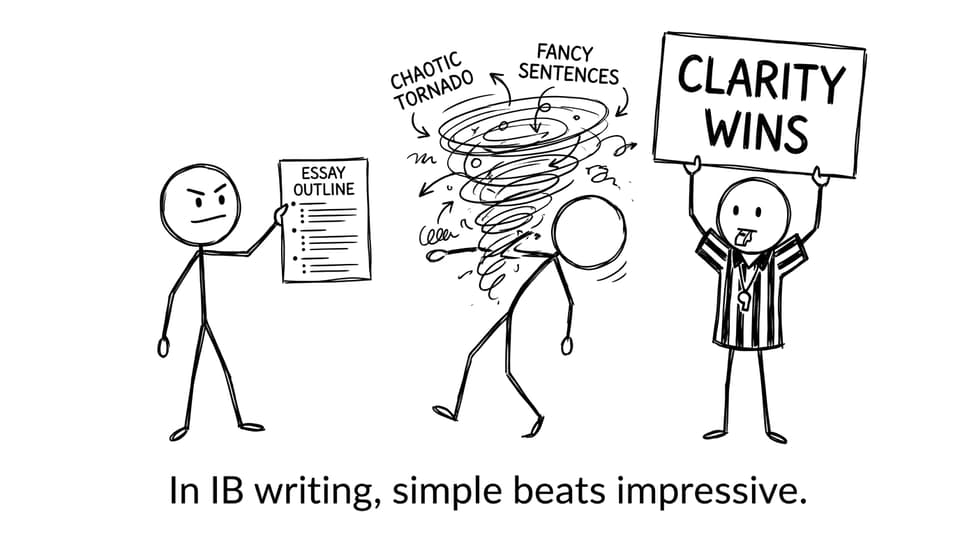
IB Languages writing: clarity beats complexity every time
In Paper 1, non-native learners often make the same costly trade: they try to sound advanced, then accuracy collapses.
A better strategy is to write like a calm adult with clean structure.
A writing routine you can repeat weekly
-
Pick a theme + text type.
-
Plan 3 points (not 7).
-
Use 6-10 connectors you trust.
-
Add one cultural detail that fits naturally.
-
Proofread for your personal “usual mistakes.”
For a step-by-step workflow, keep IB Languages: Improve Writing in IB Chinese B open while you practice. Then use RevisionDojo’s Grading tools to get feedback you can actually act on: what’s unclear, what’s off-register, what grammar patterns keep recurring, and what to fix first.
IB Languages speaking: prepare “expansion paths,” not a script
The Individual Oral becomes manageable when you treat it like a trained routine.
A simple expansion path looks like this:
-
Describe what you see
-
Interpret what it suggests
-
Connect to a theme
-
Add a cultural comparison
-
Give an example (real or plausible)
This method protects non-native speakers from blank moments. You’re not searching for perfect lines. You’re moving along a map.
Use the dedicated guide How to Prepare for the IB Chinese B Individual Oral Exam, and when you need quick, precise phrasing help, RevisionDojo’s AI Chat is ideal for generating alternative sentences that stay within your level.
How to turn RevisionDojo into an IB Languages system
Non-native learners improve fastest when they reduce friction: fewer tabs, clearer feedback, consistent routines.
A practical weekly loop inside RevisionDojo:
-
Study Notes for one theme area (use the Study Notes feature to keep it tight).
-
Flashcards daily for 8-12 minutes (focus on sentences, not single words).
-
Questionbank 2-3 times a week to practice reading/listening/writing decisions.
-
Mock Exams once a week for stamina.
-
Predicted Papers near the end of revision for realistic targeting.
-
Coursework Library when you need models (see IB Chinese B Exemplars).
-
Tutors if you want accountability and live correction.
If you want the bigger picture of how the platform fits together, see RevisionDojo App: The Smarter Way to Prep for IB Exams.
FAQ: IB Chinese B for non-native learners
Is IB Chinese B realistic for non-native learners aiming for a 6 or 7?
Yes, and it happens more often than you think. In IB Languages, examiners are not awarding marks for sounding native; they are awarding marks for effective communication and task fulfilment. Non-native learners often do well because they’re more willing to follow structure, checklists, and feedback loops. The key is to train the assessed skills on purpose: timed comprehension, controlled writing, and structured speaking. If you build weekly reps with RevisionDojo’s Questionbank and then fix mistakes using Grading tools and AI Chat, your progress becomes predictable. Over time, predictability is what turns into high scores.
How many characters do I actually need to know for IB Chinese B?
There isn’t one magic number, because the exam tests comprehension and communication, not character collecting. You need enough recognition to read typical texts and enough production to write clearly without constantly stalling. For many non-native learners, the most efficient path is to prioritize high-frequency characters that show up across the five themes and the text types you write most often. Build character knowledge through sentences, because characters learned in isolation fade quickly under stress. Use Flashcards for spaced repetition, then confirm you can use those characters in timed writing practice. If you’re unsure what to prioritize, start with the theme guidance in RevisionDojo’s Chinese B hub and let your practice results guide what you learn next.
What should I do if I forget a character during writing?
First, don’t panic and don’t freeze your whole paragraph for one missing character. In IB Languages writing, communication is the priority, so your best move is usually to rephrase with words you can confidently write. Keep a small set of “escape phrases” you can deploy, like 换句话说, 我的意思是, 或者, 比如说, to buy yourself structure while you pivot. After the task, add that missing character or phrase to a Flashcards deck and review it the next day, not next month. Over time, this turns forgotten characters into a shrinking list rather than a repeating crisis. RevisionDojo makes this loop easier because your writing practice, feedback, and spaced repetition can live in one place.
How can I improve listening if authentic audio still feels too fast?
Speed is a symptom; the deeper issue is often that your brain is trying to translate everything. Train yourself to listen for meaning chunks: relationships, opinions, cause/effect, and contrast. Use short daily audio reps so your ears adapt gradually, the way muscles adapt to consistent exercise. When you practice, re-listen with a specific goal each time: first gist, then signal words, then details that repeat. Pair that with targeted notes like the RevisionDojo listening strategies page, and you start building a reliable method instead of relying on luck. Also, simulate pressure occasionally with timed blocks so exam day doesn’t feel like the first time you’ve heard fast Mandarin.
Closing: your advantage is that you can build the system
Non-native learners rarely win by “studying harder.” They win by studying smarter, with a repeatable IB Languages routine that trains the exact skills the exam rewards.
Start small: one theme sentence bank, one weekly writing task, short listening reps, and oral expansion paths you can trust. Then let RevisionDojo hold it all together with Chinese B resources, Study Notes, Flashcards, AI Chat, Grading tools, Questionbank practice, Mock Exams, Predicted Papers, and support from Tutors when you need it.
When you’re ready, open the IB Chinese B Resources hub and build your plan around what’s assessed. IB Languages success is rarely dramatic. It’s quiet, consistent, and earned.