
In the first week of IB English, most people ask the same question in the same tone you use when you discover a group project exists: How many texts are we actually doing? Not because you dislike reading. But because you can feel the calendar tightening. The number matters, not as trivia, but as a planning tool. If you understand the text requirements early, you stop reading in panic and start reading with purpose.
This guide breaks down how many texts you study in IB English Literature (SL vs HL), what kinds of texts they are, how assessments pull from them, and how to manage the workload without turning your desk into a permanent paper avalanche.
Quick checklist: what you need to know for IB English
Before the details, here’s the fast version you can screenshot:
-
IB English Literature SL studies at least 9 works.
-
IB English Literature HL studies at least 13 works.
-
Your list must include works in translation (texts originally written in another language).
-
You’ll use your studied works across Paper 2, the Individual Oral, and (HL only) the HL Essay.
-
The goal isn’t to “know every page” equally. The goal is to know a few texts deeply and the rest strategically.
If you want a bigger curriculum overview for IB English, see What Is the IB English Curriculum? A Complete Breakdown.
How many texts do you study in IB English Literature?
The official minimums are straightforward, and they set the pace for everything else you do in IB English.
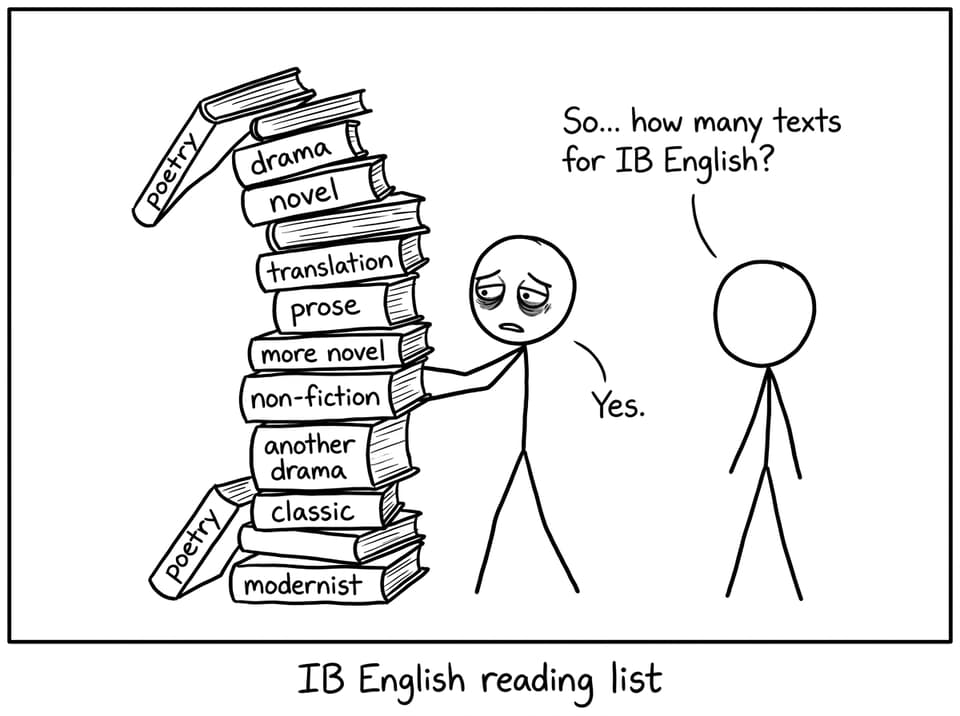
IB English Literature SL: minimum 9 works
At Standard Level, you study at least 9 literary works. Those works are selected across categories so your reading isn’t accidentally all modern novels or all poetry. A balanced list helps you handle different styles of language and structure when assessments demand flexibility.
A typical SL list includes:
-
Works in translation (at least 3)
-
A range of genres (drama, poetry, prose, etc.)
-
Texts chosen for depth of analysis, not just story value
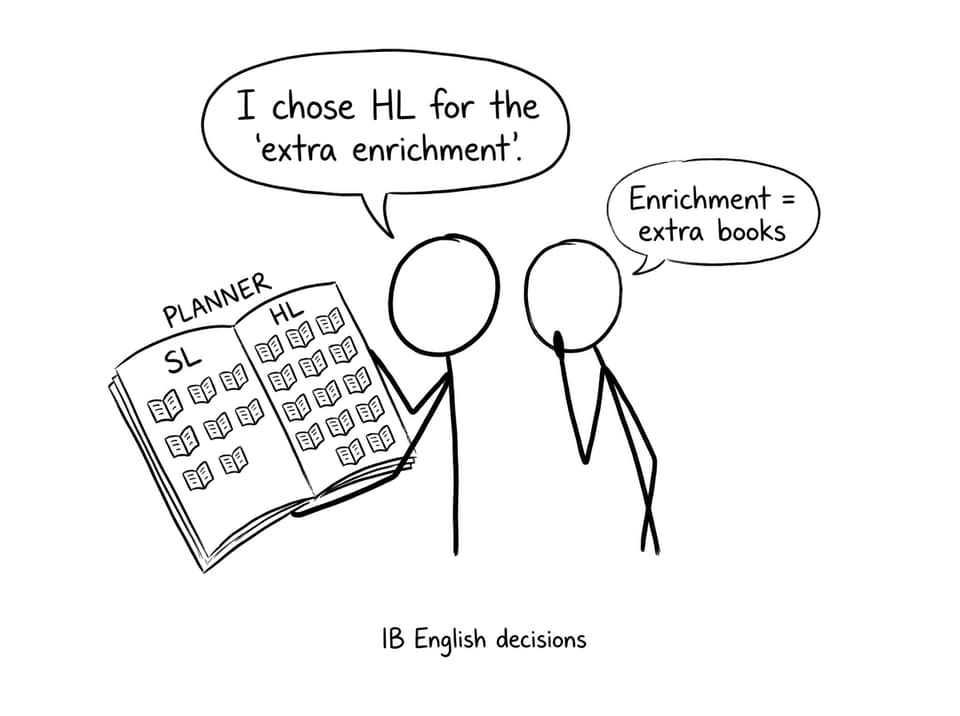
IB English Literature HL: minimum 13 works
At Higher Level, you study at least 13 literary works. The extra texts aren’t just “more reading” (though, yes, it is more reading). They exist because HL asks for more sustained independence and breadth, especially when you write the HL Essay and build comparative arguments.
A typical HL list includes:
-
Works in translation (at least 4)
-
More variety across time periods and forms
-
Enough material to support richer comparison and more original lines of inquiry
If you’re deciding between levels, Should I Take English A: Literature SL or HL? helps you weigh workload vs goals in IB English.
What counts as a “text” in IB English?
In IB English Literature, a “text” usually means a literary work: a novel, a play, a poetry collection, or a set of short stories treated as a single work (depending on how your school structures it). The key idea is that you’re studying works that can carry repeated analysis: language, structure, characterization, style, context, and interpretation.
You’ll usually encounter:
-
Poetry: compressed language, layered imagery, tight structure
-
Drama: stagecraft, dialogue, dramatic irony, performance choices
-
Prose (novels/short stories): narration, character arcs, setting, plot as meaning
-
Works in translation: how culture and context shape voice, and how translation can alter texture
One of the quiet skills of IB English is learning to read for authorial choices, not just events. If you need help building that habit, Effective Study Techniques for IB English A is a solid starting point.
How assessments use your IB English texts
The text count matters because assessments pull from your reading list in different ways.
Paper 2: the “know your texts” exam
Paper 2 asks you to write a comparative essay using two works you have studied. That means your best strategy in IB English is not to treat every text equally. Instead, choose 2-3 anchor texts you know extremely well: themes, techniques, key scenes, and flexible quote banks.
For guidance on writing and structuring, use Writing Your English Lit Paper 2 Essay and the deeper English Lit Paper 2 Essay Notes.
Individual Oral: depth, not breadth
The Individual Oral rewards precise selection and interpretation. You’re not proving you read 9 or 13 texts. You’re proving you can zoom in, choose an extract wisely, and speak about it with control.
RevisionDojo’s How to Master the IO Notes can help you build a repeatable preparation routine for IB English.
HL Essay: the reason HL needs extra reading
HL students also write the HL Essay (a 1,200-1,500 word literary analysis). It rewards independence: choosing a strong line of inquiry, narrowing scope, and sustaining analysis without drifting into plot summary.
To plan it efficiently, use How to Master the HLE Notes and browse inspiration in HL Essay Ideas for IB English.
Managing the reading load without burning out
The students who do best in IB English rarely read “more.” They read smarter.
Build a two-layer system: deep texts + supporting texts
-
Pick 2-3 deep texts: these become your Paper 2 backbone and your richest quote source.
-
Keep the rest as supporting texts: know their big themes, authorial style, and 5-8 high-value moments.
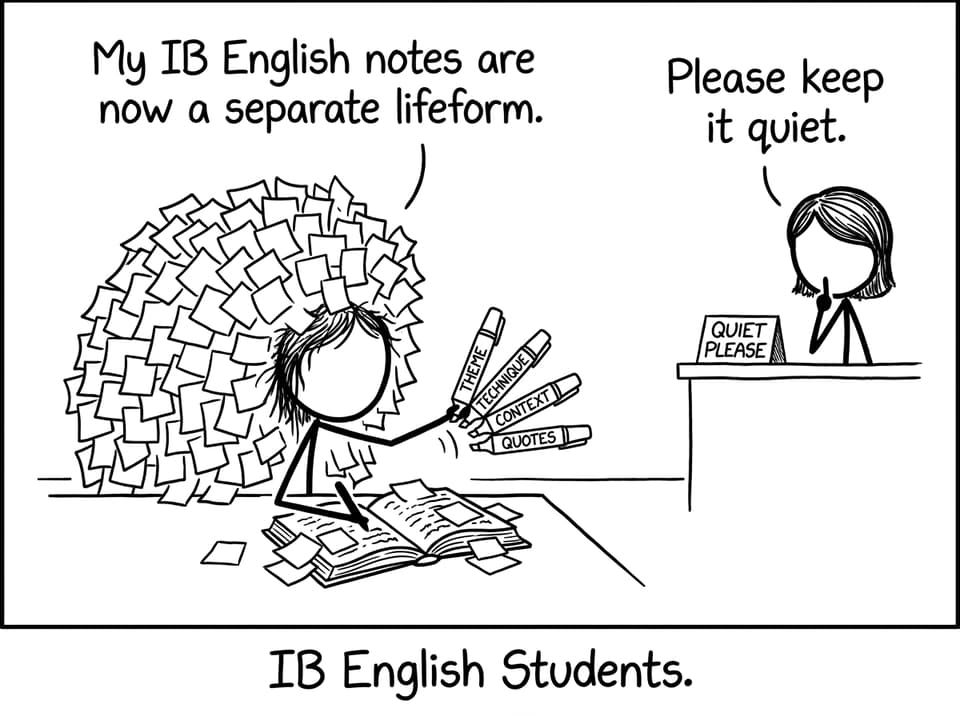
Annotate for patterns, not for decoration
Annotation should make future essays easier. Aim for:
-
recurring themes and contradictions
-
3-5 key techniques the author relies on
-
moments that reveal character power dynamics
-
scenes that can flex across many Paper 2 questions
If note-taking is your weak point, Effective Note-Taking Strategies for IB English gives structures that work under pressure.
Use RevisionDojo to turn reading into exam readiness
RevisionDojo is built for exactly this moment in IB English: when you’re trying to turn a reading list into marks.
-
Use the Study Notes to clarify theme/technique patterns fast.
-
Drill weak skills with the Questionbank and build timed habits.
-
Convert recurring insights into Flashcards (quotes, devices, thesis stems).
-
Ask AI Chat to test your interpretations or generate alternative comparative angles.
-
Use Grading tools to self-check clarity and analysis vs summary.
-
Add pressure practice with Predicted Papers and Mock Exams.
-
For coursework support, the Coursework Library and Tutors help you model top-band standards.
If you’re also juggling Language and Literature tasks, IB English A Lang & Lit Resources is a useful hub.
Closing: the number matters, but your system matters more
Yes, IB English has a real text load: 9 works at SL and 13 works at HL. But the students who feel calm in April aren’t calm because they read faster. They’re calm because they built a system early: anchor texts for depth, supporting texts for breadth, and consistent practice turning reading into arguments.
If you want that feeling, build your toolkit now. Use RevisionDojo’s Questionbank, Study Notes, Flashcards, AI Chat, Grading tools, Predicted Papers, Mock Exams, Coursework Library, and Tutors to turn your IB English reading list into exam-ready confidence.