
If you have ever stared at a blank document thinking, I know the book… so why can’t I start? the problem usually is not your knowledge. It is your thesis.
In IB English, the HL Essay rewards students who can turn close reading into a focused argument. A strong thesis is the quiet engine behind that: it gives you direction, helps you avoid plot summary, and shows the examiner you understand not only what a text says, but how it constructs meaning.
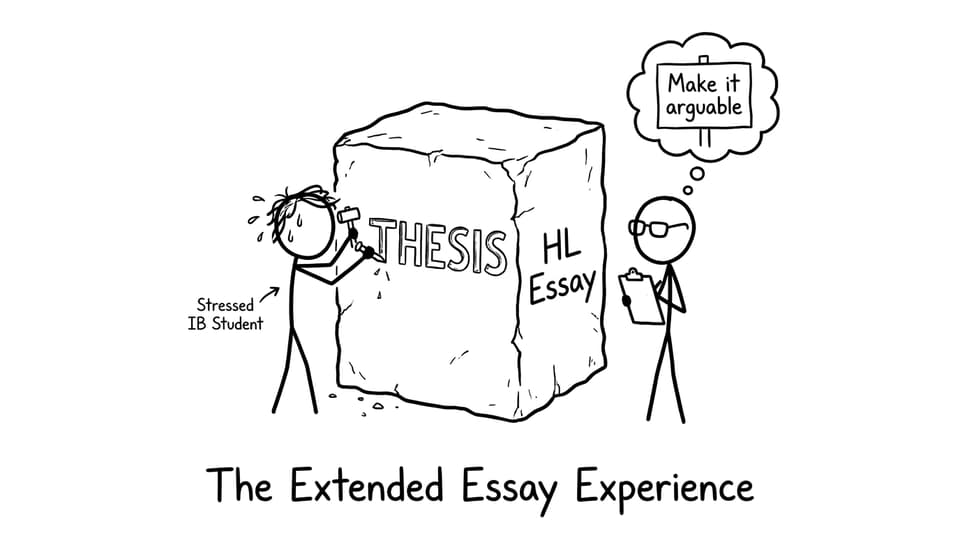
Why your HL Essay thesis matters in IB English
A thesis is the promise your essay makes. Everything you write either proves it, complicates it, or sharpens it.
In IB English, the HL Essay is a polished 1,200-1,500 word exploration of a line of inquiry. That means the thesis has to do more than announce a theme. It must argue an interpretation about authorial choices.
A strong thesis usually does four things:
-
Takes a position (something debatable, not obvious)
-
Names the craft (techniques like structure, narration, imagery, symbolism, diction)
-
Connects craft to meaning (what the choices reveal, critique, or construct)
-
Creates a roadmap (so your paragraphs can follow a clear logic)
If you want a broader view of how HL Essay expectations fit into the course, see Understanding the HL Essay for IB English A.
A quick thesis checklist (steal this before you draft)
Use this as a one-minute filter before you commit to a thesis in IB English:
-
Does it answer a focused line of inquiry?
-
Does it mention how meaning is made (technique), not just what happens?
-
Is it specific to this text (could it fit ten other novels)?
-
Can you prove it with multiple moments of evidence across the work?
-
Does it push beyond description into interpretation?
For more general guidance across Paper 1, Paper 2, and HL Essay writing, keep What Makes a Good Thesis Statement for IB English Essays? bookmarked.
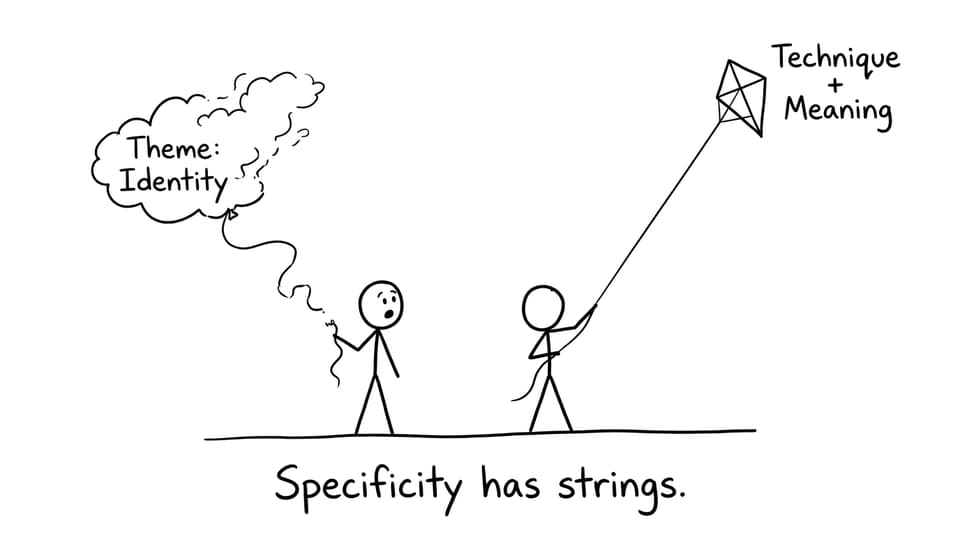
Start with a line of inquiry, not a theme (IB English trap to avoid)
Many HL Essays in IB English start with something like: “This text explores identity.” That is not wrong. It is just unusable.
A theme is a territory. A line of inquiry is a path.
Try building your line of inquiry around a craft choice:
-
narrative perspective and reliability
-
recurring motifs or symbolism
-
structural fragmentation or chronology
-
voice, tone, irony
-
setting as psychological mirror
-
patterns of imagery or diction
Example shift:
-
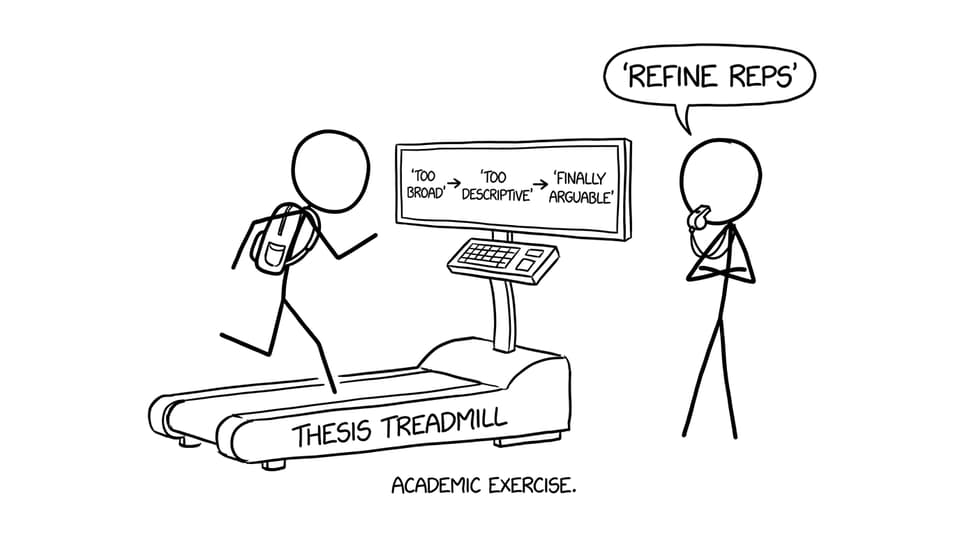
Too broad: How is isolation shown in the text?
-
Better: How does shifting setting and spatial confinement externalize the protagonist’s isolation?
Need inspiration for directions that are narrow enough to argue? Use HL Essay Ideas for IB English A to generate lines of inquiry you can actually sustain.
Turn the line of inquiry into a claim (the thesis formula that works)
Here is a dependable HL Essay thesis pattern for IB English:
Technique(s) + what they do + so what (interpretation).
Example:
Through fragmented chronology and restrained first-person narration, the writer turns memory into a form of self-censorship, suggesting that the protagonist’s identity is built as much from omission as from confession.
Notice what makes it score-friendly:
-
It is arguable (someone could disagree)
-
It points to craft (chronology, narration)
-
It predicts analysis (omission vs confession is a pattern you can prove)
When you draft, you can also borrow the “technique → effect → purpose” habit that RevisionDojo reinforces in its close-reading notes, such as Structure in Prose.
Add interpretation: what is the author doing to the reader?
In IB English, the examiner is listening for an idea that goes beyond naming devices. Interpretation is where you show maturity.
To push your thesis into interpretation, add one of these lenses:
-
emotional effect (unease, intimacy, distance, disgust)
-
ethical pressure (who gets sympathy? who is silenced?)
-
tension or contradiction (freedom vs control, care vs cruelty)
-
critique (what social logic is exposed?)
If you are also refining how you open the essay, pair your thesis work with How to Write a Strong Introduction for IB English Essays so your hook and thesis feel like one coherent move.
Make it text-driven: the “could this fit another text?” test
A thesis weakens when it becomes a slogan.
Run this test: if you swap in a different author and the sentence still works, it is probably too general for IB English.
To make it text-driven, anchor it in:
-
a distinctive structural pattern (refrains, shifts, framing)
-
a recurring image cluster (light/dark, machinery, domestic spaces)
-
a specific contradiction in voice (tender language used for violence, humor masking fear)
If you want models of what text-anchored arguments look like, browse IB Language A: HL Essay Examples and compare how each thesis predicts the paragraphs.
Stress-test your thesis before you write paragraphs
Before drafting body paragraphs, answer these four questions:
-
Can I find 3-4 strong pieces of evidence that are not all from the same chapter/scene?
-
Can each paragraph start with a mini-claim that clearly supports the thesis?
-
Does my thesis force me into analysis rather than summary?
-
Do I know what a “counter-reading” might say (and can I address it)?
If you want rubric-aligned feedback, the IB Language A: HL Essay Grader can help you evaluate focus and organization before a teacher sees it.
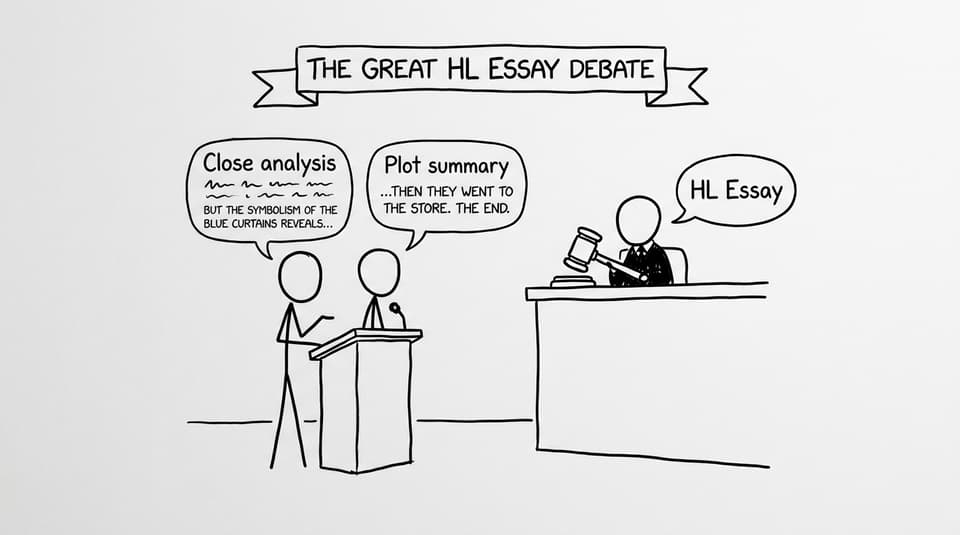
Conclusion: your thesis is a decision, not a decoration
A strong HL Essay thesis in IB English is not there to sound impressive. It is there to make every paragraph easier to write and every piece of evidence easier to justify.
If you build your thesis from a technique-based line of inquiry, add a clear interpretation, and stress-test it before drafting, you will feel the essay click into place.
When you are ready to practice, RevisionDojo pulls everything into one workflow: Study Notes for close reading, Flashcards for technique language, a Questionbank to sharpen lines of inquiry, AI Chat to test arguability, Grading tools to check rubric alignment, and Mock Exams plus Predicted Papers to keep exam prep realistic. If you want human feedback too, RevisionDojo Tutors can help you refine an IB English thesis until it becomes a genuinely defensible argument.