
A school break can create a strange kind of parental anxiety. Your child finally has time to recover, yet the IB deadlines and examinations have not disappeared. Let them rest completely, and you may worry they will fall behind. Encourage too much revision, and the holiday stops being restorative at all.
For parents wondering about half term holiday breaks during IB, the reassuring answer is simple: most students should rest properly while maintaining a small amount of consistent academic contact. During a typical half-term, one focused 20-30 minute session on most days is a sensible baseline, with at least one or two study-free days. Longer holiday study should increase only when examinations, mock exams, or important coursework deadlines are genuinely close.
The goal is not to recreate school at home. It is to prevent avoidable forgetting, resolve a few weak areas, and make the return to school feel manageable.
The short answer for IB diploma parents
A useful holiday plan can be reduced to five principles:
- Protect sleep, family time, movement, and genuine relaxation.
- Use short, defined sessions rather than open-ended study days.
- Prioritize active recall and targeted questions over passive rereading.
- Adjust the workload according to upcoming deadlines and exam proximity.
- Stop at the agreed time, even when more work remains.
This balance is consistent with established learning research. Spacing study across separate days generally supports longer-term retention better than compressing the same effort into one exhausting sitting. Retrieval practice, in which students attempt to recall or apply knowledge, is also more useful than repeatedly looking over familiar pages.
Rest matters just as much. NHS guidance for families emphasizes realistic revision schedules, regular breaks, and adequate sleep; it notes that most teenagers need approximately eight to ten hours of sleep each night. Revision that regularly displaces sleep is not an efficient trade.
For a broader framework, parents can explore IB study support for parents and families, while students may find the guide to healthy study habits for balancing IB and life useful.
How much should an IB student study during each break?
There is no universal number because a DP1 student in October and a DP2 student approaching May examinations are solving different problems. The following ranges are practical starting points, not mandatory quotas.
| Break | Sensible starting point | Main purpose |
|---|---|---|
| October half-term | 20-30 minutes on 4-5 days | Consolidate first topics and organize deadlines |
| Christmas holiday | Several fully protected days, then 20-45 minutes on selected days | Recover, review the term, and prepare for January |
| February half-term | 30-60 minutes on 4-6 days if assessments are approaching | Repair weak topics and begin timed practice |
| Easter break in DP1 | 30-60 minutes on most study days | Consolidate content and progress coursework |
| Easter break before May exams | One or more structured blocks on most days, with planned recovery | Exam practice, feedback, and targeted correction |
These ranges should move down when a student is exhausted or has just completed an intense assessment period. They may move up when a real deadline is near, but intensity should come from purposeful tasks rather than simply sitting at a desk for longer.
Schools also set their own internal calendars. The IB holds main examination sessions in May and November, so families should confirm the applicable schedule, coursework milestones, and mock dates with the school coordinator. The guide to planning final revision using the official timetable can help students translate dates into priorities.
Match the holiday plan to the student's situation
When full rest should come first
A student who reaches the break depleted may need several days without formal study. Warning signs include persistent sleep disruption, frequent tearfulness, physical stress symptoms, unusual irritability, or an inability to concentrate on even small tasks.
A holiday cannot solve every wellbeing problem, but adding more academic pressure is unlikely to be the first answer. Begin with sleep, meals, movement, social contact, and a calmer routine. The RevisionDojo article on why rest is productive during IB exam preparation explains how recovery can fit within a serious revision plan.
If anxiety or low mood is severe, persistent, or interfering with everyday life, parents should involve the school and seek appropriate professional support. This is not a time to negotiate over flashcards.
When a light maintenance routine works best
For a student who is generally keeping up, the holiday has a modest job: keep knowledge warm without taking over the day. A 20-30 minute session might include:
- five minutes recalling a topic without notes;
- fifteen minutes answering targeted questions;
- five minutes recording errors and choosing the next task.
This approach produces evidence. The student discovers what they remember, what they misunderstand, and what needs attention after the break. By contrast, highlighting a chapter can feel reassuring without revealing much about exam readiness.
Students who want more options can use these proven study techniques for IB revision, including active recall and spaced repetition.
When a heavier plan is justified
Longer sessions make sense when the student is close to examinations, has a clearly defined coursework milestone, or has identified a significant knowledge gap. Even then, the day should have edges.
For example, a DP2 student preparing during Easter might complete two focused blocks: one for a timed section and another for marking, correction, and topic repair. That is more valuable than declaring the entire day a revision day and spending much of it deciding what to do.
The important question is not, “How many hours were spent?” It is, “What changed because of the session?” The student should be able to name the questions attempted, misconceptions corrected, or section completed.
A holiday routine students will actually follow
The most sustainable plan is small enough to start and clear enough to finish.
Choose one concrete outcome
“Revise Biology” is too broad. “Answer eight questions on cell respiration and record three errors” is usable. The task should fit inside the available time without requiring a burst of motivation.
Alternate different kinds of work
A balanced week might rotate between retrieval, application, and correction:
- Recall: flashcards, formulas, definitions, quotations, or essay plans.
- Application: short exam-style question sets.
- Correction: reviewing errors and revisiting only the relevant explanation.
- Coursework: one defined task approved within the student's school plan.
This variety avoids the false comfort of doing only familiar work. RevisionDojo's guide to building a balanced IB study schedule offers a framework for fitting different demands together.
Decide the stopping time before starting
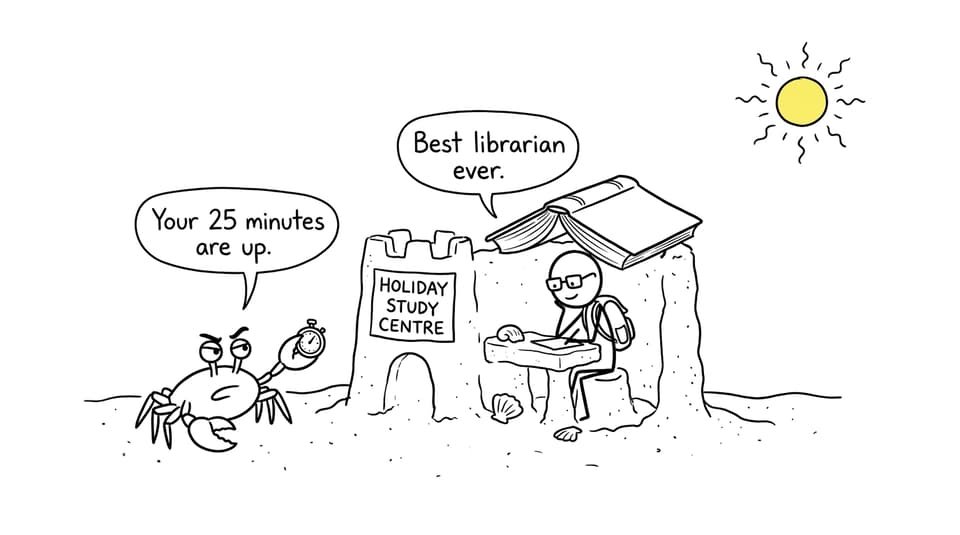
A short session works partly because the student trusts that it will end. Agreeing on 25 minutes and then extending it whenever things are going well quietly destroys that trust.
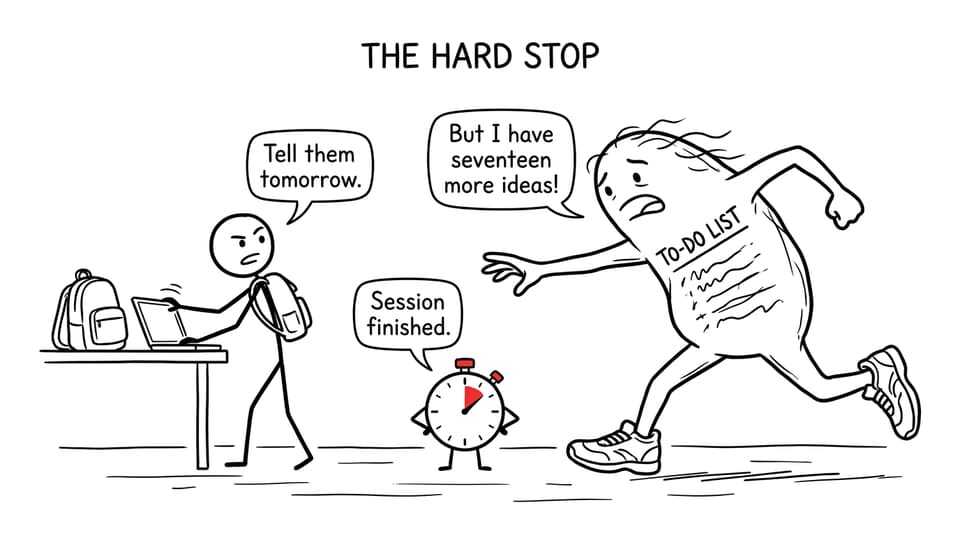
When the timer ends, the student can write down the next action and close the laptop. Unfinished work is not evidence that the plan failed. In the IB, there is nearly always more that could be done. Learning when to stop is part of managing the programme.
How parents can support without policing
Parents are most helpful when they support the structure rather than supervise every answer. Ask, “What is your one task today?” instead of, “Have you done enough?” The first question creates clarity; the second often creates guilt.
Practical support may include protecting a quiet 30-minute window, helping the student display key dates, or making sure family plans do not consume every available day. It can also mean defending rest when anxiety tempts the student to work indefinitely.
Avoid comparing siblings, classmates, or online study routines. A photograph of someone else's twelve-hour revision day says nothing about the quality of their attention, their starting point, or their wellbeing. For more guidance, see how parents can support an IB student's mental health.
A brief weekly conversation is usually more useful than daily monitoring:
- What deadline matters next?
- Which topic feels least secure?
- What would make returning to school easier?
- Do you need academic help, practical help, or simply space?
Make 20-30 minutes count with RevisionDojo
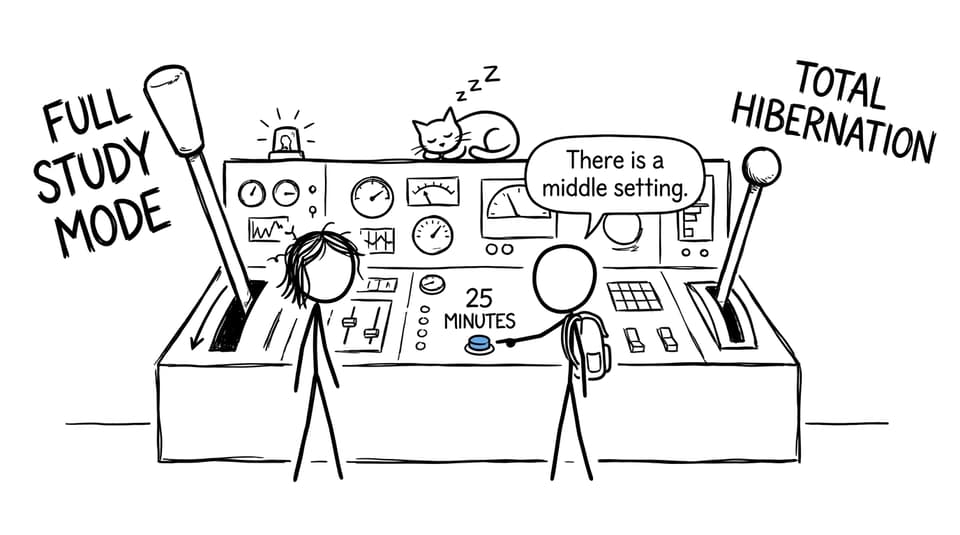
A short holiday session succeeds only when little time is lost choosing resources. This is where RevisionDojo can provide the middle ground between full rest and full study mode.
A student can use Study Notes for five minutes to clarify one concept, test recall with Flashcards, and then complete a small Questionbank set. If confusion remains, AI Chat can help identify the missing step. The session ends with feedback rather than another vague promise to “look at it later.”
Closer to examinations, Predicted Papers and Mock Exams can support planned timed practice. Grading tools help turn an attempt into actionable feedback, while the Coursework Library can clarify the qualities of strong work without replacing teacher guidance or the student's own thinking. When a problem needs more individual explanation, Tutors offer human support.
The RevisionDojo app guide for IB exam preparation shows how these tools connect. Students already feeling overwhelmed can also use the practical advice in IB stress support without burnout.
A break should make the next term easier
The best holiday plan rarely looks dramatic. It may be several days of real rest, a handful of 20-30 minute sessions, and one clear look at the calendar before school returns.
That small routine preserves continuity without turning family life into an extension of the classroom. As examinations approach, the sessions can become longer and more specific. But the principle remains the same: protect recovery, choose tasks that produce feedback, and stop when the planned work is done.
Start with one RevisionDojo session on one weak topic. Twenty focused minutes today can make the return to school feel far lighter than a holiday spent either working constantly or worrying about work left untouched.