
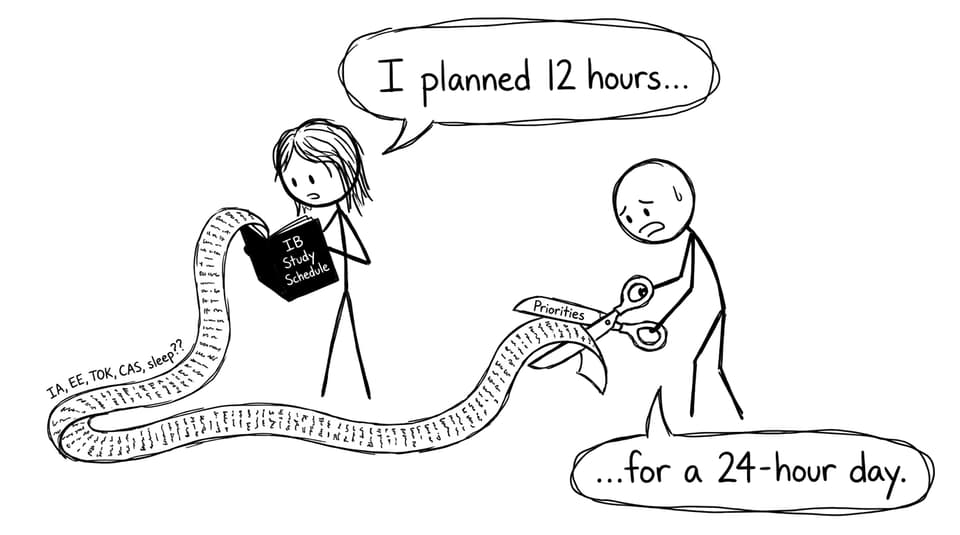
A week in the IB can feel like carrying six plates, plus a spinning seventh called “everything else.” You start with good intentions. Then an IA deadline appears, TOK asks a question that melts your brain, CAS wants reflection, and suddenly your “plan” is just survival.
A balanced IB study schedule isn’t about studying more. It’s about studying with rhythm: the right task at the right time, repeated long enough that your brain starts to trust you.
The balanced IB study schedule checklist
Use this as your weekly reset. If you can tick these off, your IB schedule will hold.
-
Pick 2-3 priority subjects for the week (based on tests, weak areas, or deadlines)
-
Give each HL more time than each SL
-
Build study blocks around active recall (not rereading)
-
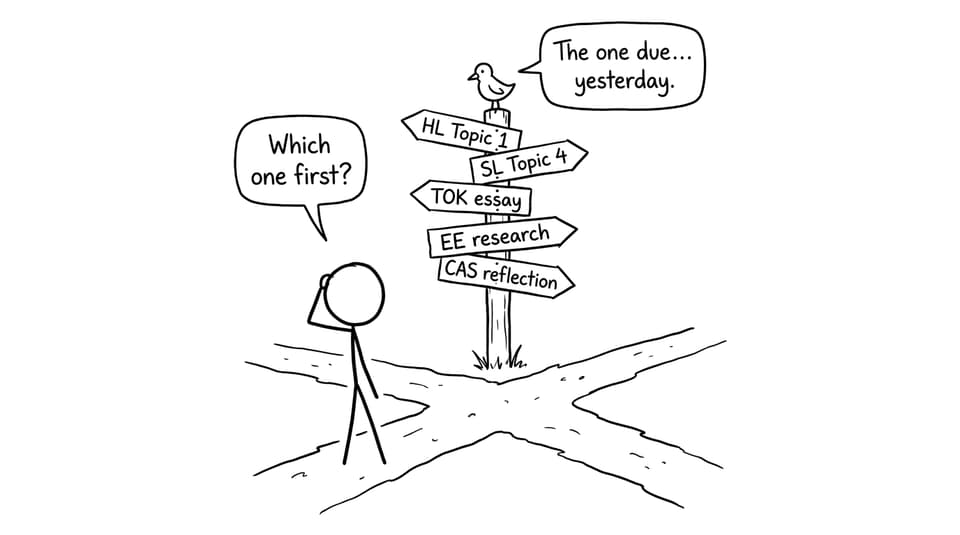
Reserve one block for TOK/EE/IA/CAS progress
-
Add one timed session (Mock Exam style)
-
Protect sleep and one real break
If you want a deeper framework for daily structure, borrow ideas from The Ultimate Daily IB Study Schedule.
Why balance matters in IB (and what “balance” really means)
Balance in the IB doesn’t mean equal time for everything. It means you’re not borrowing energy from tomorrow to pay for today.
When students burn out, it’s rarely because they’re lazy. It’s usually because their schedule has no shock absorbers. A balanced plan has built-in flexibility: lighter days, rotating subjects, and small wins that compound.
If you’ve been stuck in the loop of working hard but feeling behind, read How to Study for IB Exams: Step-by-Step Guide. It reinforces the same idea: structure beats panic.
A realistic daily routine for IB students
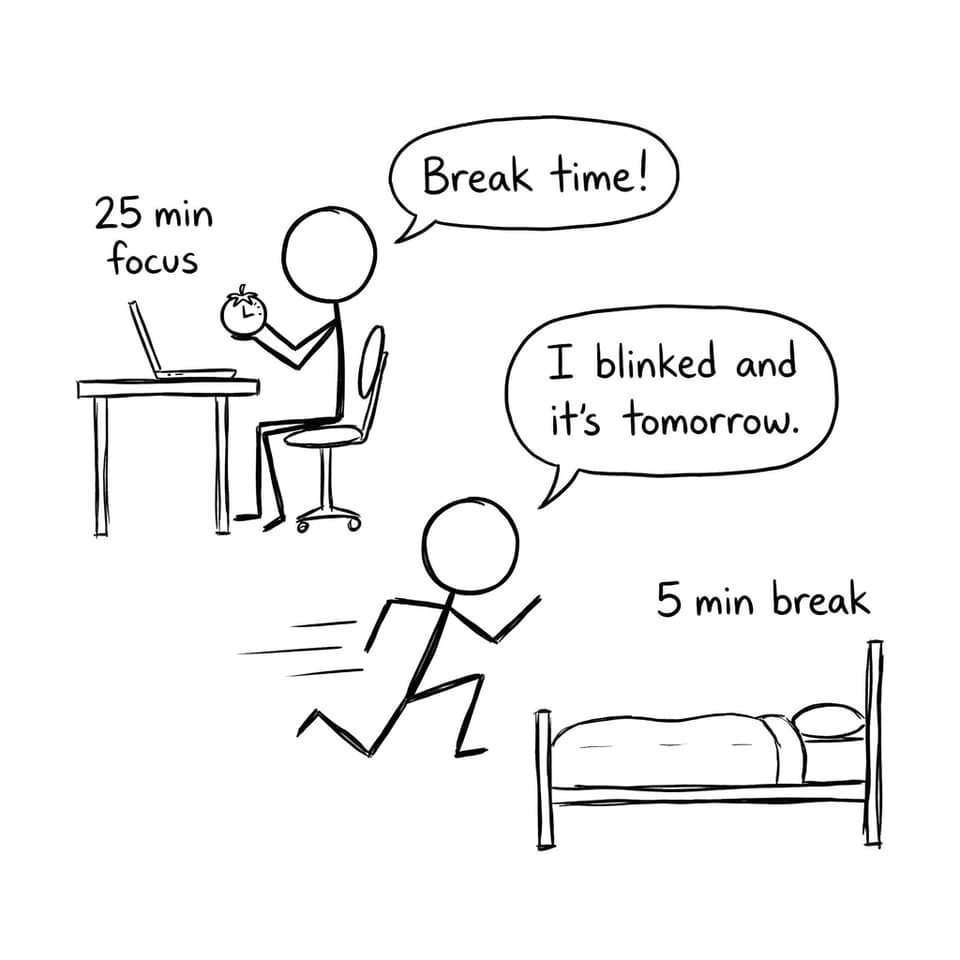
A good IB day has three modes: light recall, focused work, and wind-down.
Morning (15-30 minutes)
Do something small but real:
-
Flashcards for one subject
-
A quick skim of a single concept you missed yesterday
RevisionDojo makes this easy with Flashcards plus quick Study Notes you can review without turning it into a two-hour detour. If you need examples of what “realistic” looks like, see The Realistic Daily Routine for a Balanced IB Life.
After school (90-120 minutes)
Split into two blocks:
-
Block 1 (45-60 min): one HL topic + exam-style questions
-
Block 2 (30-45 min): SL review or mixed practice
On RevisionDojo, this is where the Questionbank shines: you can practice by topic, get instant feedback, and tag weak areas for the next session.
Evening (30-60 minutes)
Rotate your “core” focus:
-
One evening for IA planning or drafting
-
One evening for EE research
-
One evening for TOK thinking and writing
For coursework support, use IB IA Guides and the Which IA Is Worth the Most Marks? guide to prioritize what actually moves your grade.
Weekly planning: hours that stay true in real life
Here’s a stable baseline many IB students can sustain:
-
HL: 6-8 hours/week per subject
-
SL: 4-6 hours/week per subject
-
TOK/EE: 1-2 hours/week (more during deadlines)
-
Add 1 timed practice block weekly
If you’re unsure what’s normal, compare with How Many Hours Should IB Students Study?.
A simple weekly pattern
-
Mon/Tue: HL depth + question practice
-
Wed: lighter SL + coursework touchpoint
-
Thu: mixed questions + mistake review
-
Fri: short recall + plan weekend
-
Weekend: 2 deeper blocks + one timed session
For a broader weekly breakdown, see What Is a Standard IB Schedule?.
The exam countdown: when to ramp up your IB schedule
Most students do best when serious revision starts 4-6 months before exams, then ramps gradually. That gives you time to shift from “learning content” to “earning marks.”
Use How Long in Advance Should I Study for My IB Exams? to map your own timeline, especially if mocks or school deadlines are clustered.
When you enter the heavier phase, RevisionDojo becomes an all-in-one loop: Study Notes for fast clarity, Flashcards for daily recall, Questionbank for practice, AI Chat when you’re stuck, and timed realism via Mock Exams and Predicted Papers.
A final note: make your IB schedule believable
The best IB study schedule is the one you can repeat on a normal Wednesday. Start smaller than you think you should, then let the routine earn the right to grow.
If you want a system that supports that routine end-to-end, RevisionDojo is built for it: Questionbank, Study Notes, Flashcards, AI Chat, Grading tools, Predicted Papers, Mock Exams, Coursework Library, and Tutors when you want a human to help you diagnose what’s really holding you back. For a quick overview of how the tools fit together, visit RevisionDojo App: The Smarter Way to Prep for IB Exams.