
Rest feels suspicious when you are an IB student.
Not because you do not want it, but because your brain has been trained to equate effort with virtue. You sit down for "just ten minutes," open your notes, and somehow it is midnight. You tell yourself you are being responsible. Then the next day, you read the same paragraph three times and still cannot explain it.
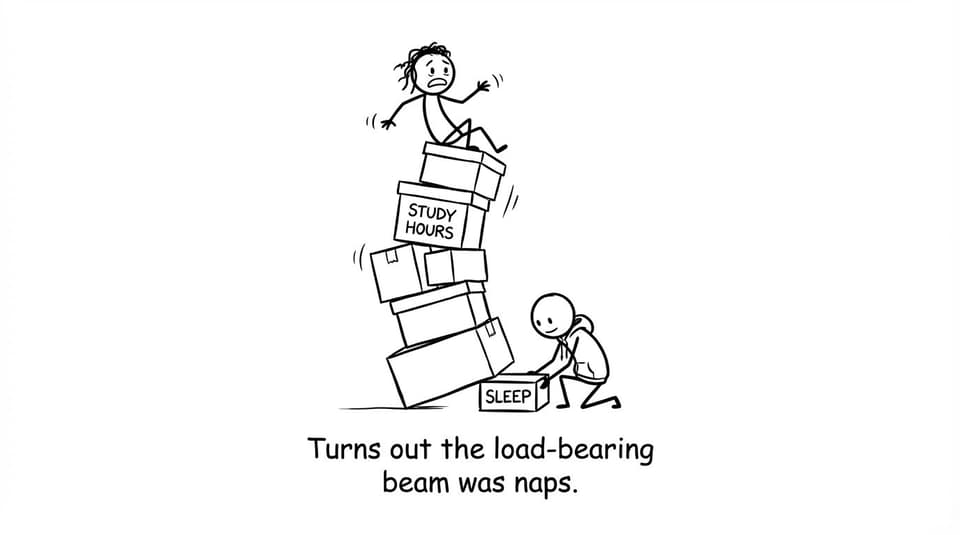
That is the quiet paradox of IB exam season: the more you squeeze, the less you retain.
This post is a case for a different kind of discipline. The kind where rest is planned, protected, and treated like a study technique. Because in the IB, your grade is not only about what you know. It is also about whether your mind can use what you know under time pressure.
The quick checklist: rest that actually improves IB results
If you want the short version, here is what "productive rest" looks like for IB students preparing for exams:
- Sleep 7-9 hours most nights (consistency matters more than hero nights).
- Take short breaks during study blocks (real breaks, not "scrolling while panicking").
- Use one longer recovery block per week (half-day or full day, depending on your timeline).
- Alternate high-intensity practice with lighter consolidation.
- Keep your revision loop tight: Study Notes -> active recall -> exam-style questions -> review.
RevisionDojo is built around that loop: Study Notes, Flashcards, Questionbank, AI Chat, Grading tools, Predicted Papers, Mock Exams, a Coursework Library, and Tutors when you need a human to steady the plan.
To anchor your overall workflow, keep this open as your backbone: How to Study for IB Exams: Step-by-Step Guide.
Why rest is productive in IB (and why it feels unproductive)
The IB workload is heavy, but the heavier part is psychological: you rarely feel "done." There is always another topic, another paper, another internal deadline. So rest can feel like falling behind.
But the IB does not reward how many hours you sat at a desk. It rewards output under constraints: clarity, accuracy, structure, timing, and decision-making. Those are cognitive skills. And cognitive skills degrade when you are tired.
When you rest, three things happen that "extra studying" cannot replicate:
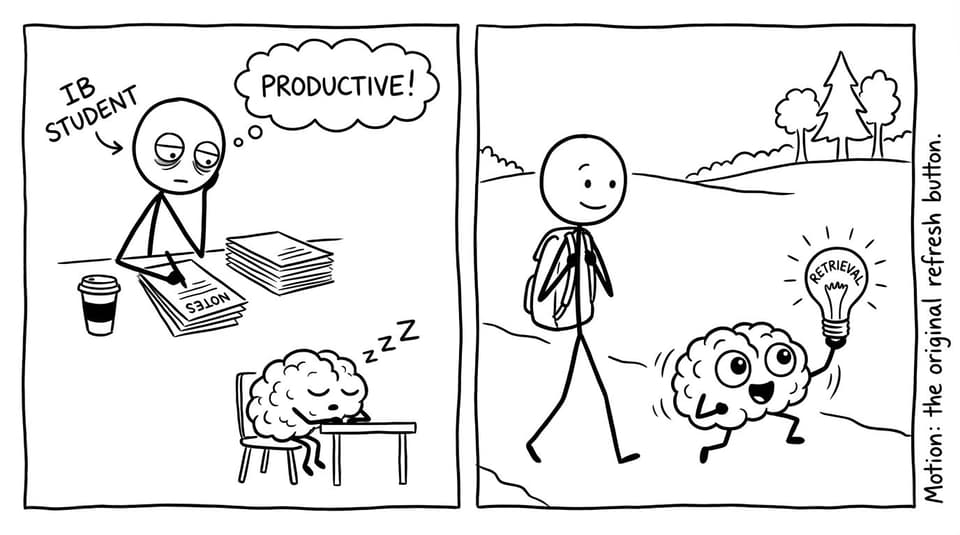
- Memory consolidates. Your brain stabilizes what you learned so it becomes easier to retrieve later.
- Attention resets. You stop reading pages while absorbing nothing.
- Mistake detection improves. A rested brain spots silly errors and command-term misreads faster.
This is why top scorers often look calm. Not because they care less, but because they have systems that protect energy.
If you want to see how high performers structure their days (without burning out), pair this with: Morning Routines of High-Scoring Students.
The IB trap: "rest" that isn't rest
A lot of IB students technically take breaks, but their breaks keep the stress running.
Examples:
- You stop studying and open social media, but your mind keeps rehearsing guilt.
- You "watch one video," but you are not recovering; you are escaping.
- You lie in bed with your laptop, switching between tabs, never fully working or fully resting.
Real rest is not the absence of work. It is the presence of recovery.
A useful question is: Does this break make it easier to do the next hard thing? If yes, it is productive in IB terms.
Productive rest for IB students: three types that actually work
Sleep: the unfair advantage in IB
Sleep is the closest thing to a legal performance enhancer the IB has.
If you only change one habit, make it this: protect your sleep window during revision season. Not perfectly. Consistently.
A practical rule for IB exam weeks:
- Choose a "hard stop" time.
- Do a short shutdown routine (pack bag, list tomorrow's tasks, set timers).
- Sleep.
If you need a structured plan that explicitly treats sleep as part of the strategy, this guide reinforces the mindset: How to Create a Balanced IB Study Schedule.
Breaks between blocks: the reset that saves hours
Your brain does not run on motivation. It runs on cycles.
For IB studying, a simple pattern works well:
- 40-50 minutes focused work
- 10 minutes break
During the break, do something that changes state:
- stand up
- drink water
- look far away (your eyes need a break too)
- short walk
Then return to something measurable, like a Questionbank set.
If you want your study time to feel "real," make it question-first. Start here: Questionbank.
One weekly recovery block: the anti-burnout lever
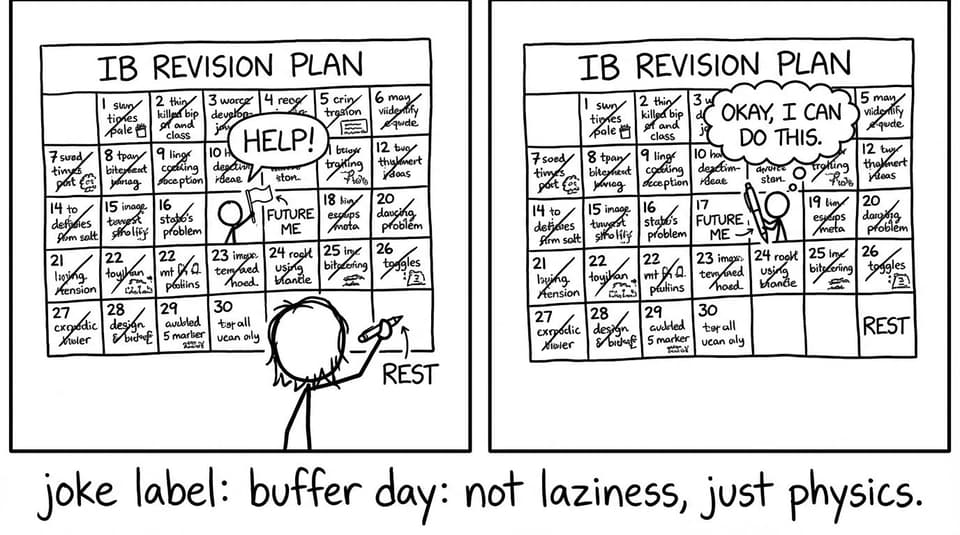
A weekly recovery block is not a reward. It is a safeguard.
Most IB burnout is not caused by one terrible day. It is caused by six weeks with no release valve.
Try scheduling one of these:
- a half-day off (best during the middle of exam prep)
- a full day off (best earlier in the cycle)
And define it clearly. Rest feels cleaner when it has boundaries.
How to use RevisionDojo to study hard and rest well (the calm loop)
The best IB revision systems reduce decision fatigue. That is what makes rest easier: you are not constantly negotiating with yourself.
Here is a simple weekly rhythm using RevisionDojo.
Build understanding without endless rewriting
Use Study Notes as a map, not a place to live.
- Read one section.
- Ask: "What would the IB want me to do with this?"
- Turn it into a testable prompt.
Then move.
For notes that are designed to be quick and exam-relevant, see: Digital IB Study Notes: Access Anywhere, Anytime.
Lock memory with small daily sessions
Daily recall is where the IB compounds.
Use short Flashcards sessions (7-12 minutes) to keep topics alive across six subjects. It is boring in the way that lifting weights is boring. And it works.
To build that habit inside one platform, use: Flashcards for IB topics.
Prove readiness with exam-style practice (and stop guessing)
Rest becomes easier when your studying produces evidence.
Instead of "I revised for three hours," you get:
- "I did 25 questions on Topic X."
- "I missed 6, and 4 were the same mistake."
- "I fixed the mistake and retested."
That loop reduces panic because it turns IB prep into feedback, not vibes.
To get that loop working, start with: All your IB revision needs, in one place.
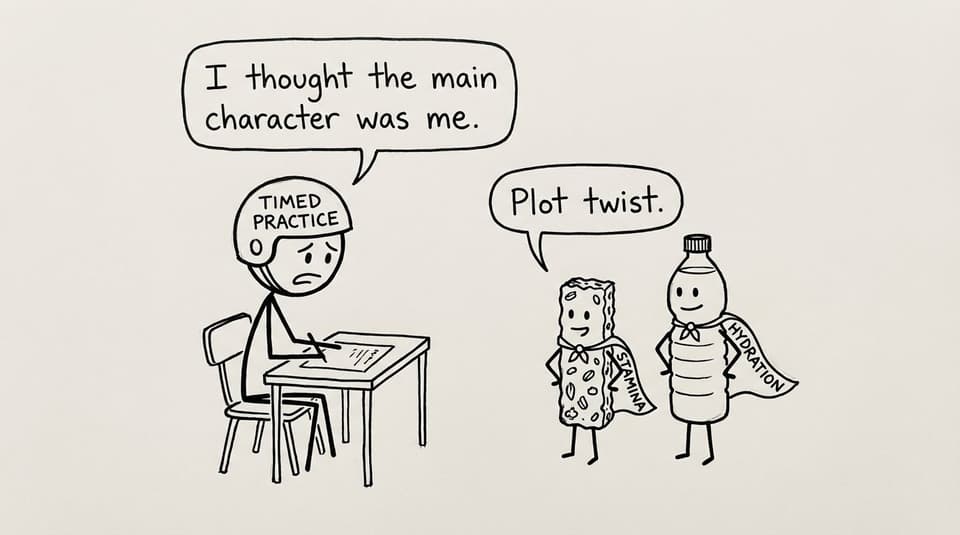
Use timed practice to train stamina (then rest on purpose)
Timed practice is stressful. That is the point.
But it only helps if you recover afterward. Do not finish a timed session and immediately punish yourself with more work. Review, extract lessons, then rest.
RevisionDojo supports realistic simulation with Mock Exams and Predicted Papers. If you want a clean method, use: IB Test Templates: Pre-Made Exams for Quick Practice and explore: IB Predicted Papers by IB Examiners.
When you get stuck, shorten the stuck-time
One underrated way rest becomes productive in IB prep is this: it reduces the time you spend spiraling.
If you are stuck, ask one precise question and keep moving. RevisionDojo's AI Chat is built for quick clarification without derailing your session. When coursework is the stress source, the Grading tools and Coursework Library reduce uncertainty by showing you what "good" looks like and how to get there.
If you want the full ecosystem explained, see: RevisionDojo App: The Smarter Way to Prep for IB Exams.
A simple "rest-based" IB day plan (realistic, not perfect)
Use this as a template and adjust to your schedule.
A focused weekday
- 10 min: Flashcards (one subject)
- 50 min: Study Notes + short self-quiz (one topic)
- 10 min: break
- 45 min: Questionbank set + review mistakes
- Evening: light walk, food, shutdown routine, sleep
A weekend day with recovery built in
- One timed session (short section or full paper)
- Longer review than you want to do
- Stop
- Recovery block (social time, sport, long walk, hobby, nap)
The goal is not to do less. It is to do the right work, then recover so you can repeat it.
Closing: treat rest like a study technique (because in IB, it is)
The students who do well in the IB are not the ones who never rest. They are the ones who rest on purpose, so they can return and do work that actually changes their scores.
If you want revision that feels calmer and more measurable, build a loop you can repeat: Study Notes for clarity, Flashcards for daily recall, Questionbank for proof, AI Chat and Grading tools for fast feedback, and timed practice with Mock Exams and Predicted Papers. That is what RevisionDojo is designed to be: the place where your IB effort turns into evidence.
Start your loop here: All your IB revision needs, in one place.