
Your official IB timetable can feel like a weather report for a storm you cannot cancel.
Most students download it, scan the dates, and then do the least helpful thing possible: revise whatever feels urgent in the moment.
But used properly, the timetable becomes one of the most effective IB Resources you already have. It tells you where stress will peak, where recovery time exists, and how to plan revision so you arrive at each exam steady rather than scrambled.
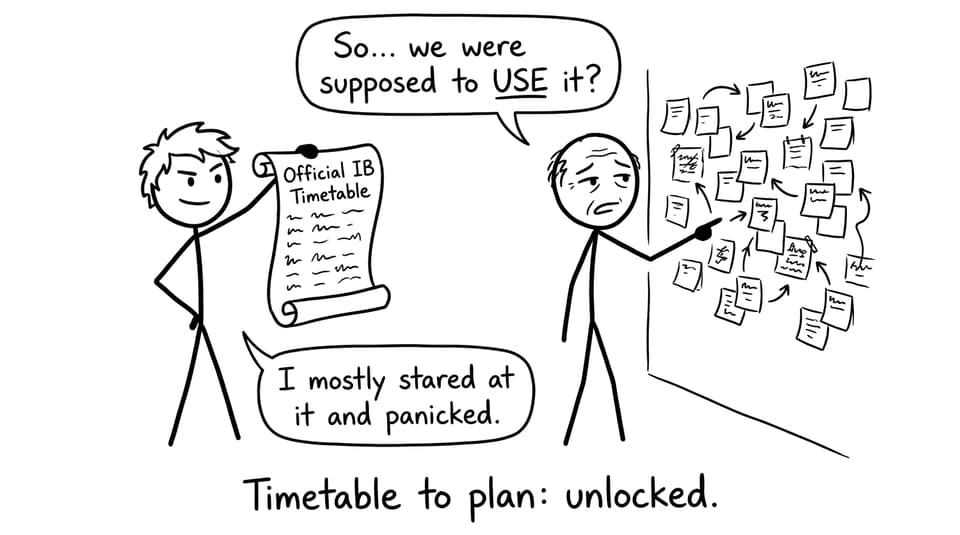
A quick checklist before you build your plan
Keep this simple. Open the official timetable and:
-
Highlight your exam days and start times
-
Mark “pressure blocks” (back-to-back or high-effort papers)
-
Label each paper by demand (writing-heavy, calculation-heavy, memory-heavy)
-
Work backwards to assign phases: mastery, practice, polish
-
Decide which IB Resources you will use in each phase (notes, questions, mocks, feedback)
If you want one place to turn the timetable into a usable schedule, start with the RevisionDojo Study Planner.
Use the timetable to find pressure blocks (not just dates)
The timetable is less about what day you sit an exam and more about what kind of week you are walking into.
Pressure blocks usually look like:
-
Consecutive exam days
-
Two writing-heavy papers close together
-
A long paper followed quickly by another subject
These blocks are where students lose marks from fatigue rather than knowledge. So plan to do your hardest work before the pressure block begins.
A practical way to execute this is to build stamina early with timed work: add one weekly rehearsal using RevisionDojo Mock Exams, then increase frequency as you approach the exams.
Group revision by demand, not by subject
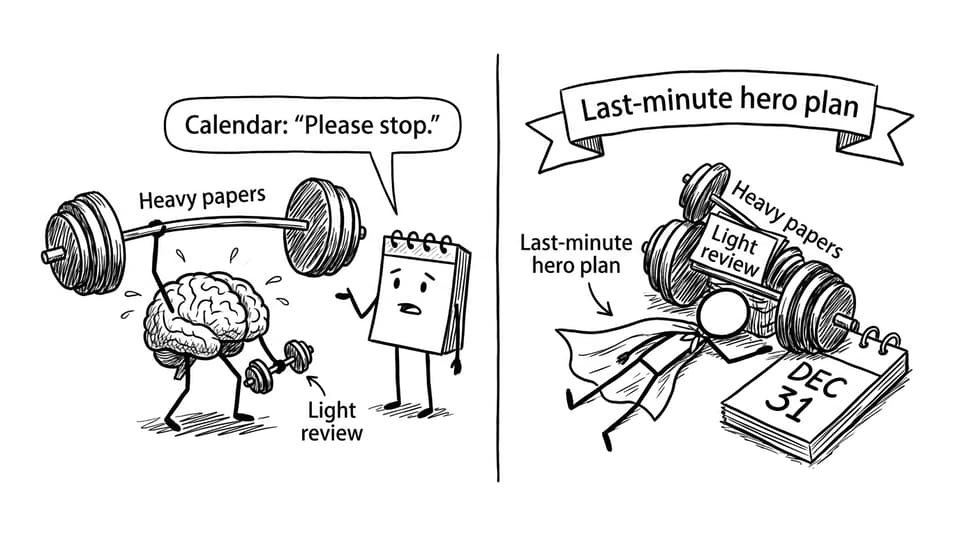
Students often schedule revision like this: “Monday is Biology, Tuesday is Math.” It looks organized, but it ignores how the brain actually tires.
Instead, group by demand:
-
Pair a writing-heavy session with a lighter recall session
-
Alternate problem-solving with definition-based review
-
Avoid stacking two “heavy output” days back-to-back
This is where good IB Resources matter. For light-but-powerful sessions, use spaced repetition through RevisionDojo Flashcards. For high-effort sessions, use exam-style practice via the RevisionDojo Questionbank so you are training the exact skills the papers reward.
Plan backwards: mastery, practice, then polish
Final revision works best in three phases, moving backwards from each exam date.
Mastery phase (furthest from the exam)
This is where you close content gaps. Use RevisionDojo Study Notes to rebuild weak topics quickly, then confirm understanding with short, targeted sets.
Practice phase (middle)
Shift toward exam-style questions and technique. Build mixed-topic sets in the Questionbank and review mistakes the next day. If you get stuck, use RevisionDojo’s AI Chat to clarify the one step you are missing, not to re-teach the whole topic.
Polish phase (closest)
Keep intensity lower. Focus on accuracy, timing, and calm repetition. A strong option here is a timed paper simulation using RevisionDojo Predicted Papers to rehearse decision-making under pressure.
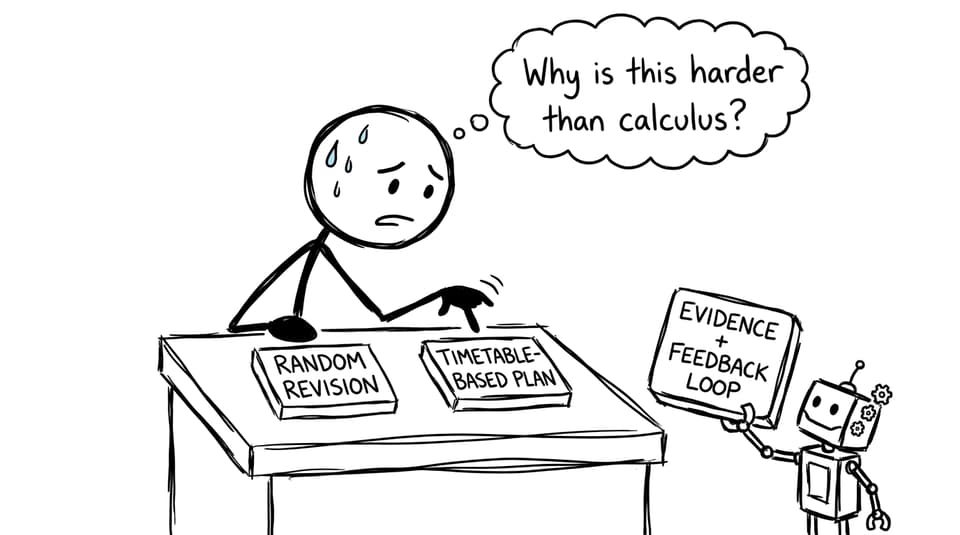
A final note: let the timetable calm you down
The official timetable is not a countdown clock. It is a map.
When you use it to spot pressure blocks, balance demand, and plan backwards, you stop chasing motivation and start building rhythm. Pair that rhythm with the right IB Resources inside RevisionDojo: Questionbank, Study Notes, Flashcards, AI Chat, Grading tools, Predicted Papers, Mock Exams, the Coursework Library, and Tutors, and your final weeks become predictable in the best way.
Open your timetable, then open the RevisionDojo Study Planner, and turn those dates into a plan you can actually follow.