

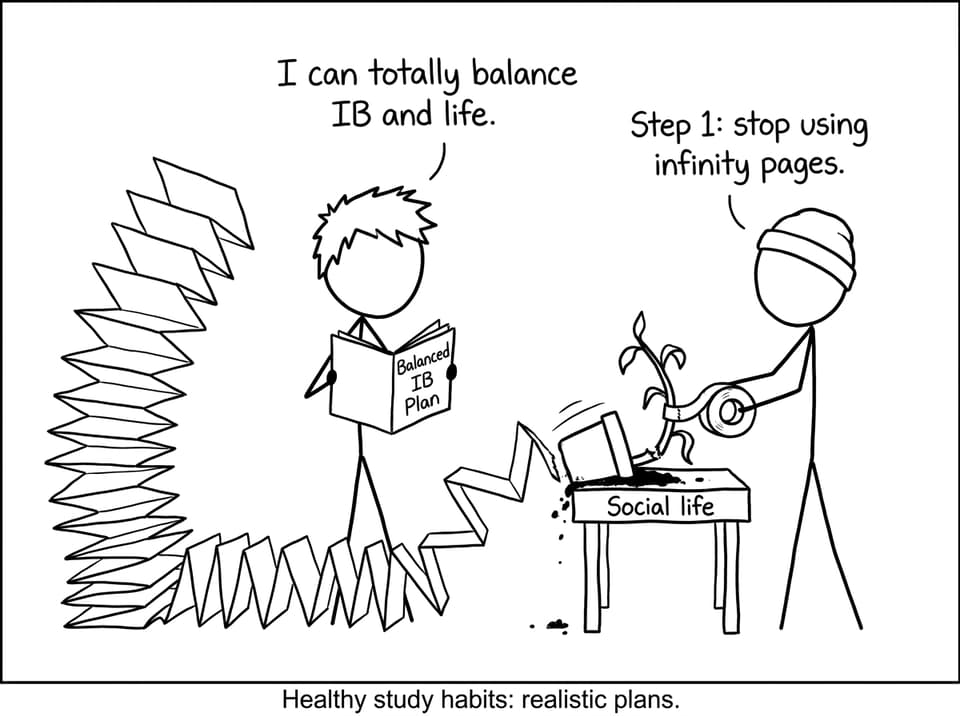
Balancing IB and life usually breaks down in a predictable way.
It starts with good intentions: “I’ll just study a little extra tonight.” Then “extra” becomes normal. Sleep gets traded for one more set of questions. Social plans become “after exams.” And somewhere in that blur, you stop feeling like a person and start feeling like a timetable.
Healthy study habits for IB aren’t about doing less. They’re about building a system you can repeat on an average Tuesday, not just on a heroic Sunday.
A quick checklist for healthy IB study habits
If you want a simple baseline for IB exam prep, aim to tick off most of these each week:
-
5-6 focused study blocks (not endless marathons)
-
Daily active recall (flashcards or self-quizzing)
-
1 timed practice session to train calm under pressure
-
A written error log (so mistakes become data)
-
7-9 hours of sleep most nights
-
Movement most days (walk counts)
-
One protected social or rest block (yes, protected)
When this list holds, your IB plan stops feeling like a cliff edge.
Build a weekly rhythm you can actually live with
The biggest misconception in IB is that success comes from intensity. In real life, success comes from repeatability.
Start by designing a week that fits around school, commute, chores, and the fact that your brain isn’t a machine. If you need structure, borrow the framework from How to Create a Balanced IB Study Schedule. The key idea is simple: plan for your real energy, not your fantasy energy.
A helpful rule: if you can’t repeat your schedule for four weeks, it’s too intense.
If you’re already feeling stretched thin, it’s worth reading Avoid Burnout in Year 2 of IB. Burnout doesn’t announce itself loudly. It arrives quietly, disguised as “discipline.”
Use timed study blocks to protect your attention
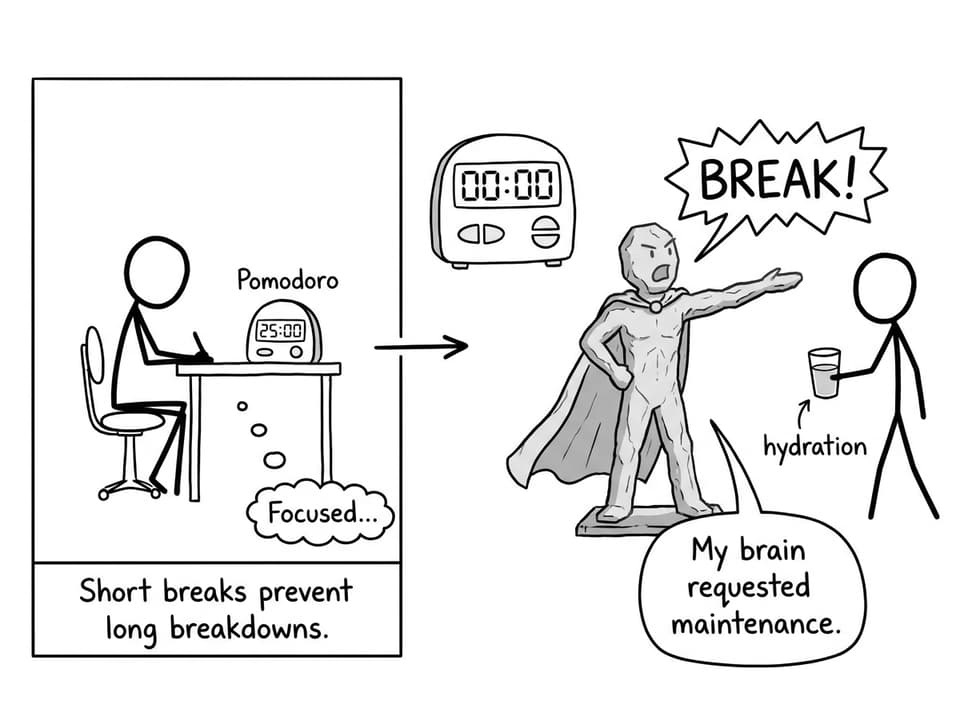
Healthy study habits for IB often look boring from the outside: a timer, a single task, a short break, then repeat. But boring is powerful. It lowers the emotional cost of starting.
Try 25-45 minutes of focused work, then 5-10 minutes off-screen. During the break, stand up, drink water, and let your brain reset. This is not laziness. This is training.
If you want more tactics for efficiency, 5 Proven IB Revision Hacks Backed by Science is a strong companion.
Study like your memory works: active recall + spaced repetition
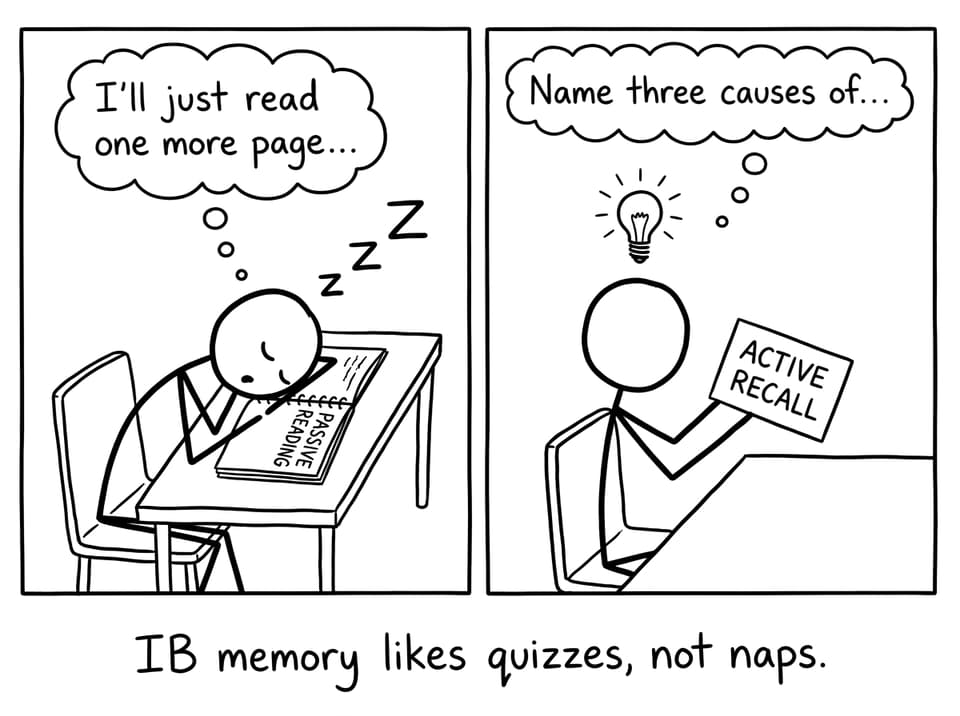
Most students lose hours in IB by confusing familiarity with mastery. Rereading notes feels productive because it’s smooth. But exams reward retrieval, not recognition.
So build your sessions around active recall:
-
Start with Flashcards (spaced repetition)
-
Move to exam-style questions
-
Review mistakes and write one fix rule per error
RevisionDojo makes this loop easier because everything connects: Study Notes to patch gaps, Flashcards to lock memory, and the Questionbank to convert knowledge into marks.
For a full set of methods, keep 10 Proven Study Techniques for IB Students bookmarked.
Make RevisionDojo your “less stress” study hub
A hidden drain in IB is resource-hunting. Ten tabs. Three group chats. Half a PDF. A random video that sort of helps.
When your tools are scattered, your attention is scattered too.
RevisionDojo works best when you treat it as the home base:
-
Questionbank for targeted practice by topic and skill
-
Mock Exams and Predicted Papers for timed pressure training
-
AI Chat for quick clarification when you’re stuck
-
Grading tools to learn what top-band work looks like
-
Coursework Library for structure and examples when IAs feel vague
-
Tutors when you need a human to spot the pattern you keep missing
If you want the bigger picture of how the platform fits the Diploma, see RevisionDojo: The Ultimate IB Study and Grading Tool.
Protect sleep, movement, and one real life anchor
In IB, sleep often becomes the first sacrifice because it feels negotiable. But sleep is where learning consolidates. If you’re practicing questions daily but sleeping poorly, you’re training your brain and then refusing to save the file.
Movement matters for the same reason: it resets stress chemistry. A 15-minute walk can do more for your next 45-minute study block than another energy drink.
And keep one “life anchor” each week: a sport session, a family dinner, a long call with a friend. Not as a reward for finishing work, but as a non-negotiable reminder that you’re more than the IB.
If you want a wider revision structure that includes balance, The Ultimate Guide to Revision for IB Students ties strategy to wellbeing clearly.
Conclusion: make IB a season, not a sacrifice
The students who do well in IB aren’t the ones who never rest. They’re the ones who build habits that survive real life: timed blocks, active recall, honest recovery, and a weekly rhythm that doesn’t require perfection.
If you want that system in one place, build your routine inside RevisionDojo: use Study Notes to patch gaps, Flashcards to keep content fresh, the Questionbank to gain marks, and Mock Exams plus Predicted Papers to practice calm under time pressure. Your life doesn’t have to shrink for your grades to grow.