
When people say the EE is “mysterious,” they usually mean one of two things.
First, the essay feels like it lives in a different universe from your timed exams. No markschemes. No neat right answers. Just you, a research question, and a blinking cursor.
Second, the grading feels like it happens somewhere far away, in a room you never enter, with boundaries you never see until results day.
So let’s answer the question clearly, right away:
Yes. In 2027, the Extended Essay is still graded A through E.
And the grading logic is still the same at its core: qualitative descriptors guide examiners, your work earns raw marks, and then those raw marks are converted into a letter grade using grade boundaries set by senior examiners after each examination session. Also important: an E grade is a failing condition for the diploma.
This article breaks down what that means in practice, how you should think about your EE while you’re revising for exams, and how to build confidence without guessing.
The 2027 EE grading answer (quick checklist)
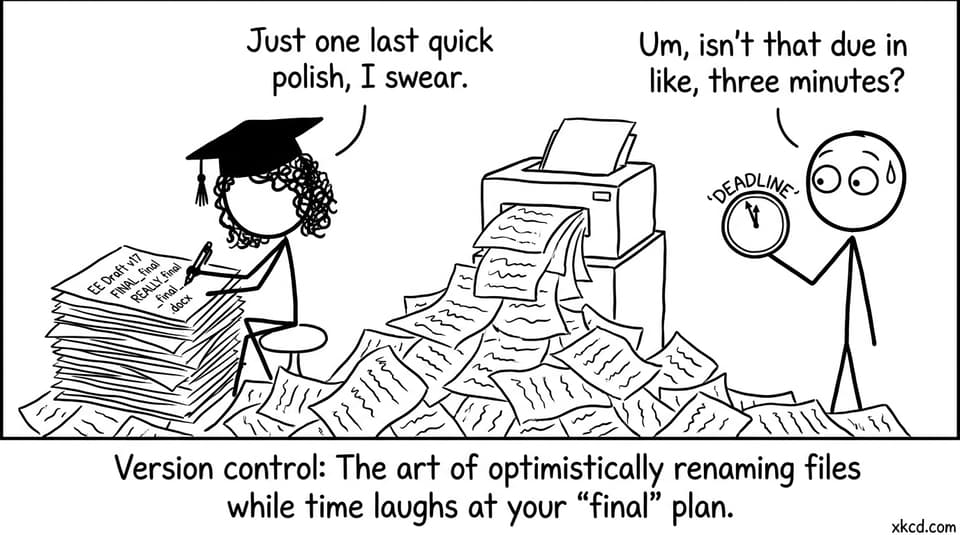
If you only read one section, read this one. Here’s the EE grading structure you should hold in your head:
- The EE is graded on A, B, C, D, E (A highest).
- Examiners award raw marks using qualitative grade descriptors and criterion levels.
- Your total is out of 34 marks.
- Grade boundaries (mark ranges for A/B/C/D/E) are set after each session by senior examiners.
- An E in the EE is a failing condition for the diploma (even if your subject total is strong).
- Your EE grade combines with TOK to produce 0-3 core points.
If you want to see how the marks translate into a typical boundary pattern, RevisionDojo’s breakdown of boundaries is a useful reference point: IB Extended Essay 2025 Grade Boundaries Guide.
How the EE is graded in 2027 (and why it still feels unpredictable)
The reason the EE feels unpredictable is that students often mix up three different layers:
Qualitative descriptors (how examiners judge quality)
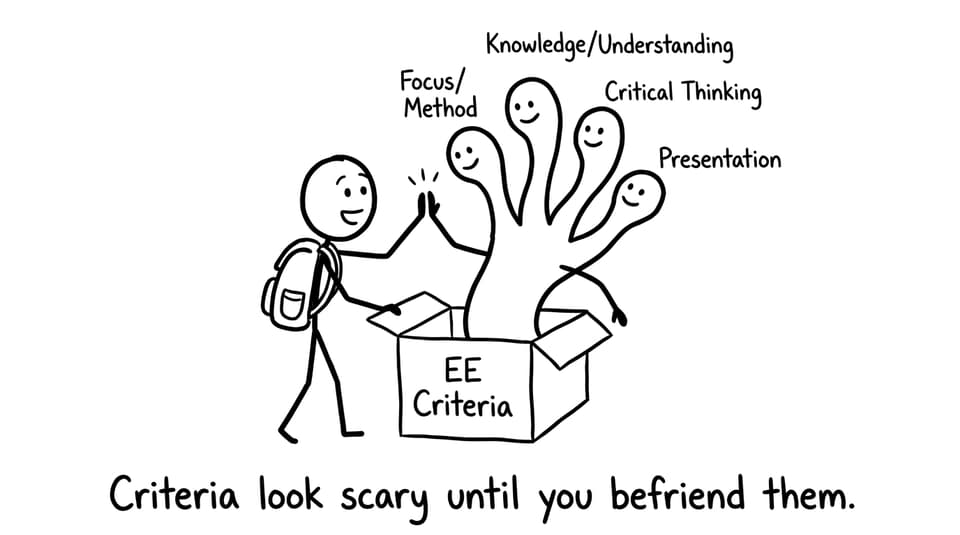
Your EE is assessed with descriptors that describe performance: clarity of focus, appropriateness of method, strength of analysis, and so on. These are not “tricks.” They’re the examiner’s job description.
A strong EE is not the one with the fanciest topic. It’s the one where the thinking is visible.
Raw marks (what you actually earn)
Those descriptors map onto criteria, and the examiner awards marks. Your final total is out of 34.
If you want a criteria-by-criteria explanation in plain language, keep this open while you draft: Assessment Criteria for the IB Extended Essay (Full Breakdown) and What Is the Extended Essay (EE) Marking Criteria?.
Grade boundaries (how marks become A to E)
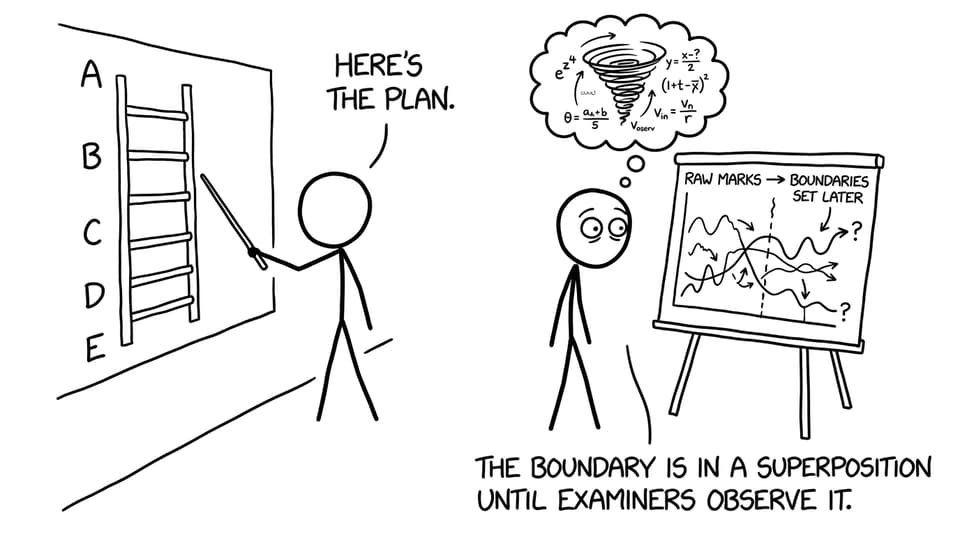
Here’s the part that causes anxiety: the boundaries are not fixed forever. They’re set by senior examiners after each examination session.
That doesn’t mean the process is random. It means the IB is calibrating standards across real student work from that session. Your job is not to predict the boundary. Your job is to write an EE that’s clearly in the band you want.
Is the EE still A to E in 2027? Yes, and you should use that to your advantage
Keeping the A-to-E system matters because it changes how you should prepare.
A 7 in a subject can feel like a precise target. An EE letter band is more like a weather forecast: it’s about overall conditions.
That’s not a weakness. It’s actually a gift.
When your EE is graded qualitatively, you can improve it qualitatively:
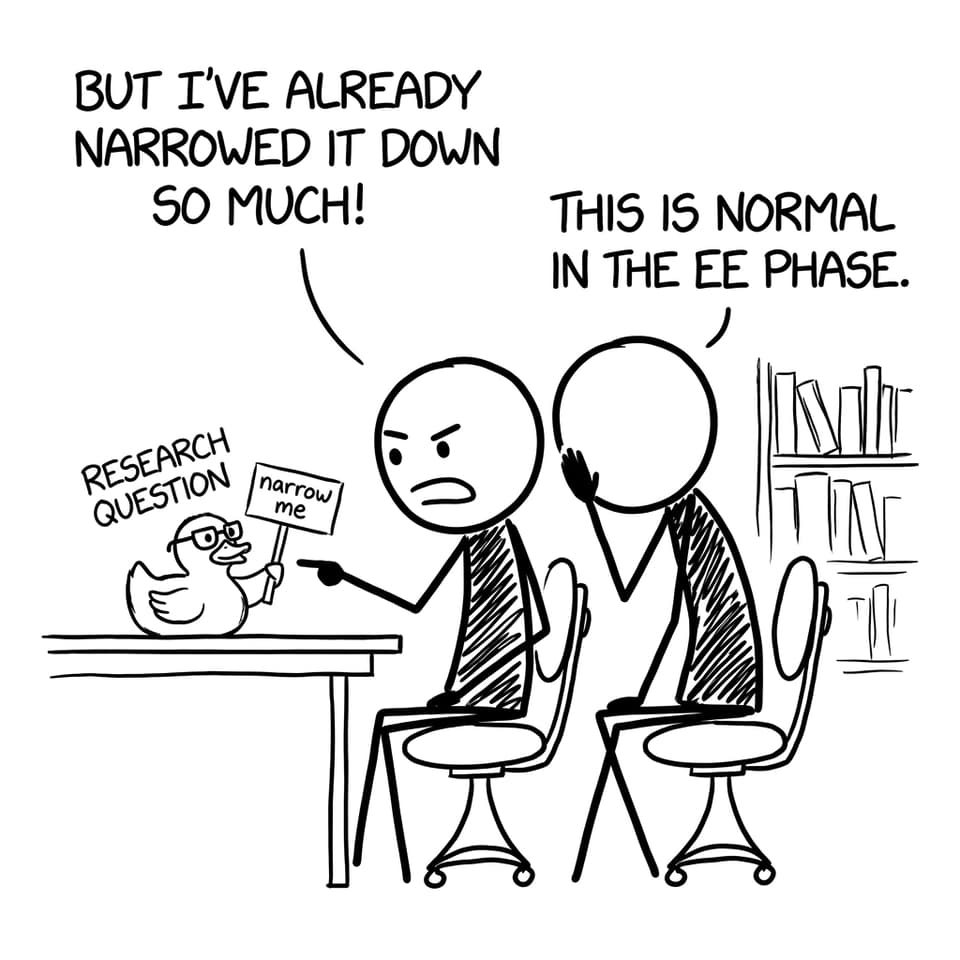
- Make the research question narrower, not broader.
- Show your method clearly, not vaguely.
- Choose evidence you can analyze deeply, not lots of evidence.
- Write fewer claims, but defend them better.
If you’re still choosing a topic or trying to rescue an early draft, RevisionDojo’s longer roadmap is worth a read: Mastering IB Extended Essays: How to Research, Write, and Revise.
What do 34 raw marks actually represent?
Think of the 34 marks as a compressed summary of how “academic” your EE feels to an external examiner.
Not how passionate you were. Not how long you suffered. Not how many tabs you opened.
Academic means:
- The research question is sharply defined.
- The method fits the subject.
- The knowledge is accurate and relevant.
- The analysis is sustained and critical.
- The structure makes the argument easy to follow.
If you want a second opinion on whether those elements are showing up on the page, RevisionDojo’s rubric-aligned tool can help you self-check without guessing: IB Coursework Grader. It’s especially useful when you’re revising because it forces you to look at your EE the way an examiner does: criterion by criterion.
What happens if you get an E in EE?
This is the part students tend to half-remember and then avoid thinking about.
An E in the EE is a failing condition for the diploma.
That’s not meant to scare you. It’s meant to clarify priorities.
If you are currently treating your EE as something you’ll “clean up later,” it’s worth reframing it: you don’t need perfection, but you do need a safe margin above the E band.
Your EE also interacts with TOK to produce your core points. If you want to understand the bigger picture of why the core still matters, this is a solid explainer: How IB Core Points Worked in 2025 (And Why EE and TOK Still Matter) and What Are Bonus Points in IB and How Are They Earned?.
How to aim for a higher EE band without obsessing over boundaries
Here’s a calm truth about the EE: most students don’t lose marks because they can’t write.
They lose marks because the essay drifts.
They start with a research question, then slowly turn it into a topic. The essay becomes “about” something instead of “answering” something.
The “two-sentence test”
Try this now:
- In one sentence: What is your exact research question?
- In one sentence: What is your exact answer (your claim)?
If you can’t do this, your examiner will feel that uncertainty too. And uncertainty is expensive in the EE.
The “one paragraph per purpose” structure
A high-scoring EE often has paragraphs that do just one job at a time:
- set up a point
- bring in evidence
- interpret it
- connect back to the research question
If you’re unsure about overall structure, use a reliable template and then customize it. This guide makes the moving parts clearer: How to Structure an Extended Essay (EE).
The word count trap (and why it affects grades)
Examiners are not impressed by length. But the word limit shapes what depth is possible.
If you’re far under the limit, you may not have enough space to develop critical thinking. If you’re over, the extra words aren’t read and you risk messy organization.
For a practical breakdown, use: Mastering the IB Extended Essay Word Count.
A RevisionDojo approach to improving your EE (without rewriting from scratch)
Most EE improvements are not dramatic rewrites. They’re strategic edits.
Here’s a workflow you can repeat in short sessions:
Run a criterion scan
Use the criteria breakdown as a checklist and mark your draft:
- Where is the research question stated clearly?
- Where is the method explained?
- Where is analysis happening (not just description)?
- Where do you evaluate limitations?
RevisionDojo’s IB Coursework Grader can accelerate this because it highlights gaps by criterion rather than giving generic advice.
Study models, then steal the shape (not the content)
Good exemplars teach you pacing: how quickly they get to the point, how often they return to the research question, how they handle counterarguments.
RevisionDojo’s IB Extended Essay Guides are built for this kind of learning: seeing what examiners reward and translating that into your own draft.
Use “micro tools” when your brain is tired
This is where RevisionDojo is quietly powerful during exam season:
- Study Notes for the subject content you need to explain correctly in your EE
- Flashcards to keep key terminology and theories sharp
- AI Chat to test whether your argument makes sense to a skeptical reader
- Grading tools to check alignment with criteria
- Coursework Library to compare your structure against high-performing work
- Tutors when you need human guidance on refining focus or method
And if your exam prep is competing for time, using one platform for both coursework and exam revision reduces the switching cost. That matters more than most students realize.
Closing: Treat the EE like a system you can understand
The most stressful version of the EE is the one where you imagine a hidden rubric and a secret grading scale.
The real version is simpler.
In 2027, the EE is still graded A to E. The descriptors are still qualitative. The marks still total 34. The boundaries are still set after each session. And an E still risks your diploma.
Once you accept that, your next step becomes practical: stop trying to predict the boundary, and start building an essay that makes its quality easy to see.
If you want to do that with less guesswork, RevisionDojo is built for this exact moment in the IB journey: use the Coursework Grader for criterion clarity, the Coursework Library for models, AI Chat to pressure-test your argument, and the rest of the platform, including Questionbank, Study Notes, Flashcards, Predicted Papers, Mock Exams, and Tutors, to keep exam prep moving at the same time.
Your EE isn’t a mystery. It’s a project with rules. And rules, once understood, can be used.