

Born a Crime is Trevor Noah's memoir of growing up as a mixed-race child in apartheid and post-apartheid South Africa. It follows his search for identity, his resourceful mother Patricia's influence, and the inequalities surrounding their family. For IB English, the essential move is to connect these experiences to Noah's humor, structure, language, and retrospective narration.
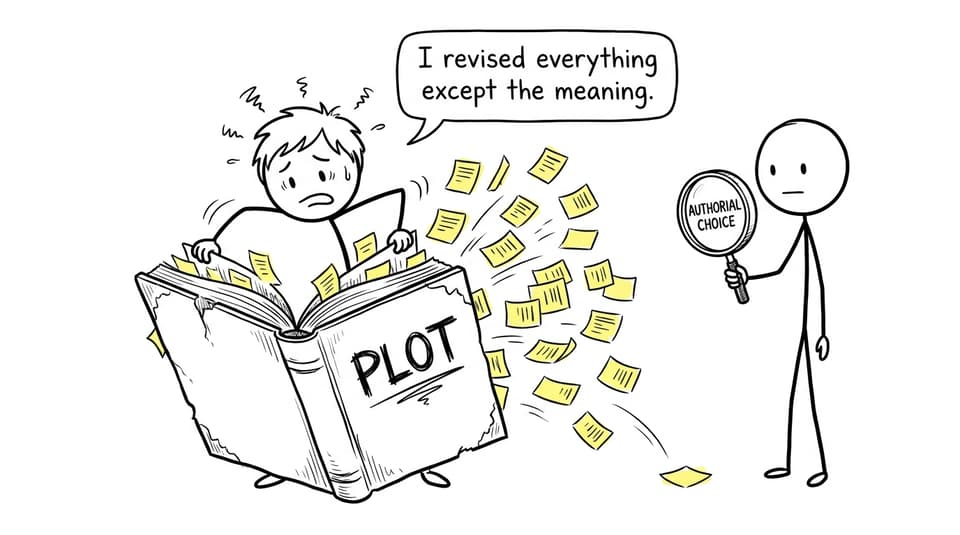
A plot summary helps you remember what happens. It does not, by itself, produce a strong IB response. The marks begin to accumulate when you explain why Noah tells a particular story in a particular way, and how that choice shapes the reader's understanding of power, identity, language, poverty, or violence.
Born a Crime Summary at a Glance
Published in 2016, Born a Crime: Stories from a South African Childhood is an autobiographical work composed of connected episodes rather than one uninterrupted chronological narrative. Noah was born in 1984 to a Black Xhosa mother and a white Swiss father. At the time, apartheid laws criminalized interracial relationships, making the memoir's title both personal and political.
The narrative moves across Noah's childhood and adolescence as apartheid weakens and formally ends, but legal change does not instantly erase racial classification, economic inequality, or social division. Patricia raises Trevor with religious faith, intellectual independence, discipline, and an insistence that he imagine possibilities beyond those prescribed for him. Trevor learns to cross social boundaries through language, observation, humor, and entrepreneurial skill.
Later episodes explore adolescence, relationships, poverty, informal business, encounters with policing, and Patricia's abusive marriage to Abel. The memoir ultimately presents survival as more than individual toughness. It emerges from education, adaptability, maternal love, and the capacity to recognize how private experiences are shaped by public systems.
Quick revision checklist
- Form: episodic autobiographical memoir
- Setting: apartheid and post-apartheid South Africa
- Central relationship: Trevor and Patricia
- Major concerns: race, identity, language, belonging, poverty, gendered violence, faith, and resilience
- Recurring methods: humor, irony, code-switching, anecdote, contrast, retrospective narration, and historical exposition
- IB priority: move from event to authorial choice, effect, and wider significance
Use RevisionDojo's IB English A Language and Literature resources to turn this overview into retrieval practice rather than repeatedly rereading it.
Plot Knowledge That Supports Analysis
A useful born a crime summary should organize the memoir around developing ideas, not merely list incidents.
Identity is legally constructed
Trevor's birth exposes the absurdity and cruelty of apartheid classification. His mixed heritage means that ordinary family interactions can become dangerous or require concealment. Noah uses his own body as evidence that the system's supposedly fixed racial boundaries are artificial.
This matters analytically because the title converts a legal category into a provocative metaphor. A child cannot morally be a crime, so the phrase immediately redirects judgment from Trevor to the state that criminalized his existence.
Language creates mobility and belonging
Trevor discovers that speaking another person's language can change how that person categorizes him. His multilingualism allows him to move among communities even when his appearance leaves him socially uncertain.
Do not reduce this to “language is powerful.” Ask what kind of power it offers. Language becomes a means of affiliation, self-presentation, and temporary access, but it cannot remove the material inequalities surrounding Trevor. That tension creates a stronger argument than a simple celebration of communication.
Patricia embodies resistance
Patricia repeatedly refuses the limits imposed on her by race, gender, poverty, and convention. Yet Noah does not present her as an abstract symbol. Her religious commitment, strict parenting, humor, planning, and contradictions make her a complex individual.
An effective essay can argue that Patricia's personal choices challenge oppressive systems while also revealing how much effort survival demands from those whom those systems disadvantage.
Humor carries serious knowledge
Humor does not make apartheid or abuse less serious. It controls tone, draws readers into unfamiliar contexts, and exposes irrational systems without allowing those systems to dominate the narrative voice.
Watch for juxtaposition: Noah may move between comic anecdote and historical explanation, or let a light tone sharpen into danger. The shift matters because it unsettles the reader. Laughter becomes an entry point into recognition rather than an escape from responsibility.
How Born a Crime Appears in IB Assessment
If your class has studied Born a Crime as a literary work, it may support Paper 2, the Individual Oral, or an HL essay, subject to your teacher's assessment choices and IB rules about reusing works. It is not a text you would prepare specifically for Paper 1, which tests guided analysis of unseen non-literary material in Language and Literature.
For current assessment structure, Paper 2 asks SL and HL students to write a comparative essay about two literary works. The Individual Oral examines a common global issue through one literary work and one non-literary body of work. RevisionDojo's Paper 1 and Paper 2 study comparison can help you keep these tasks distinct.
Worked Paper 2 example
Practice question: How do two works you have studied present individuals attempting to resist social control?
A weak response might recount how Patricia ignores restrictive expectations and protects Trevor. A stronger argument identifies how Noah constructs that resistance:
Through episodic anecdotes, retrospective commentary, and contrasts between apartheid's rigid categories and Patricia's independent decisions, Noah presents resistance as an everyday practice rather than a single heroic act. Her agency challenges the state, but the danger surrounding ordinary choices shows that oppression remains structurally powerful.
Build a paragraph through this chain:
- Claim: Patricia's mobility challenges the roles assigned to her.
- Evidence: Select a precise episode involving where she lives, works, travels, or raises Trevor.
- Method: Analyze contrast, narrative perspective, characterization, or tonal movement.
- Effect: Explain how the reader's view of resistance changes.
- Comparison: Connect the idea directly to the second work.
- Question: Return to “social control” rather than ending with the episode.
The comparison should run through the argument, not appear as an afterthought. Practise forming these links with the IB English Language and Literature Questionbank and use the guide to writing a high-scoring English commentary to strengthen your authorial-choice vocabulary.
Individual Oral possibilities
A focused global issue could examine how institutional racial classification shapes personal belonging or how social structures enable gendered violence within families. Your wording must be transnational, significant, and visible in both your literary extract and non-literary body of work.
Use the extract for close analysis, then connect it to recurring choices elsewhere in the memoir. RevisionDojo's step-by-step Individual Oral guide explains this close-to-wide movement, while the IB English IO practice tool helps you test timing and clarity.
Common Exam Pitfalls
| Pitfall | Better approach |
|---|---|
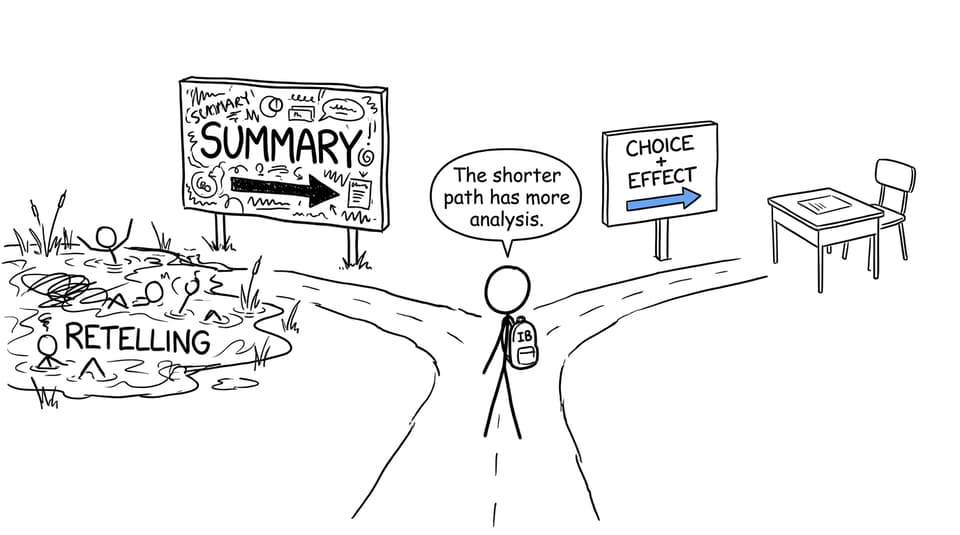
| Retelling the plot | Use one sentence of context, then analyze a deliberate choice |
| Treating memoir as neutral fact | Examine selection, ordering, voice, hindsight, and framing |
| Listing techniques | Explain how several choices work together to create meaning |
| Calling humor “comic relief” | Identify its target, tonal effect, and political function |
| Writing broadly about apartheid | Connect relevant context to exact textual details |
| Treating Patricia only as heroic | Analyze her complexity, contradictions, and narrative function |
| Forgetting the second work in Paper 2 | Compare throughout each paragraph |
| Choosing an enormous global issue | Narrow it to a precise problem expressed in both texts |
The deepest misconception is that remembering more events automatically creates better analysis. Memory supplies evidence; judgment organizes it. RevisionDojo's guide to analyzing language and style can help you practise that judgment across memoir and unseen texts.
A Fast Revision Method
Turn every major episode into a five-part card: event, concern, authorial choice, effect, and wider-work connection. Review those cards using Flashcards, then explain one aloud without notes. Next, write a comparative thesis or a timed paragraph and submit it to RevisionDojo's Grading tools for focused feedback.
RevisionDojo works best as a complete loop: Study Notes and the Coursework Library build understanding; Flashcards secure recall; the Questionbank, Predicted Papers, and Mock Exams develop application; AI Chat clarifies weak points; and Tutors help when feedback reveals a persistent problem. The calm preparation plan for IB English oral assessments offers a practical next step if Born a Crime is one of your IO works.
From Remembering the Memoir to Reading It
The best born a crime summary is not the one with the most incidents. It is the one that gives you a map of Noah's central concerns and then leads you back to the writing itself. Know the narrative, but revise the craft: the episodic structure, tonal turns, multilingual identity, historical framing, irony, and retrospective voice.
That shift from “what happened?” to “how is meaning made?” is the heart of IB English. Build it deliberately with RevisionDojo, then carry the same analytical habit into every extract, comparison, oral practice, and exam response.