

Orals have a special way of making smart students forget their own names.
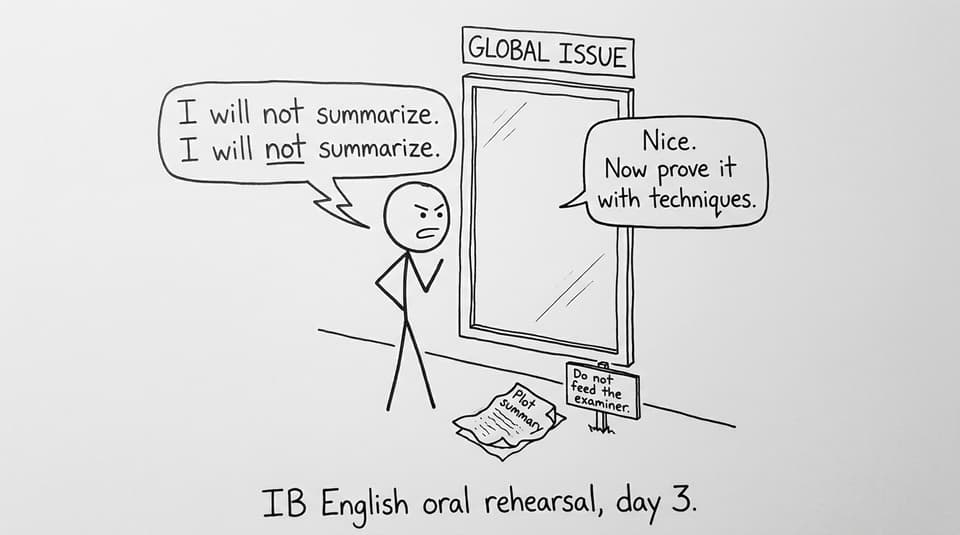
You sit down with a clean outline, a text you genuinely understand, and a global issue you can explain perfectly in your head. Then the timer starts, and suddenly you’re narrating the plot like you’re pitching a Netflix series.
Preparing for IB English oral assessments is less about becoming fearless and more about becoming predictable -- in a good way. When your choices are deliberate (extracts, global issue, techniques, structure), your voice stops sounding like guesswork and starts sounding like analysis.
A quick IB English oral prep checklist
Use this as your “don’t panic” page the night before.
-
Define a sharp global issue (clear, relevant, not generic).
-
Choose extracts rich in technique (not just events).
-
Annotate for 3--5 high-value authorial choices per extract.
-
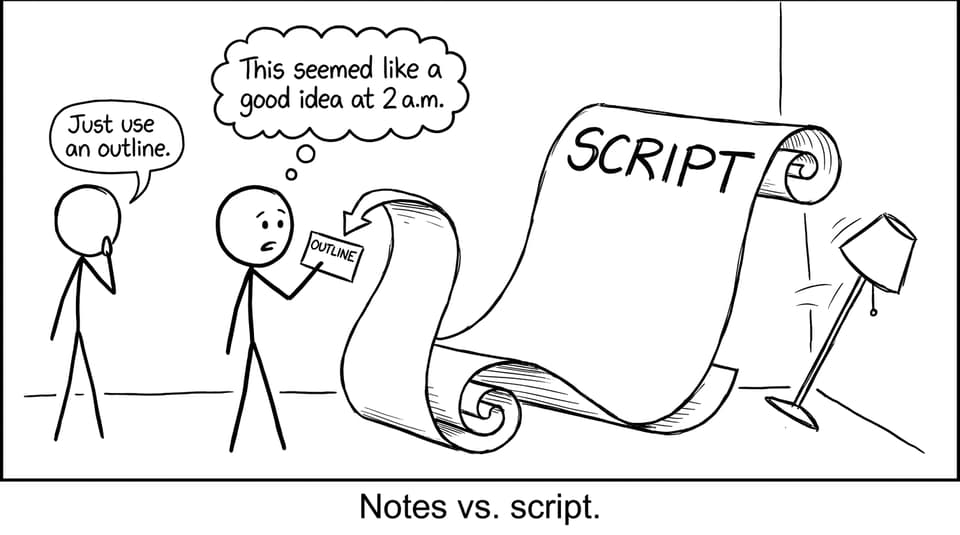
Build a flexible outline (not a memorised script).
-
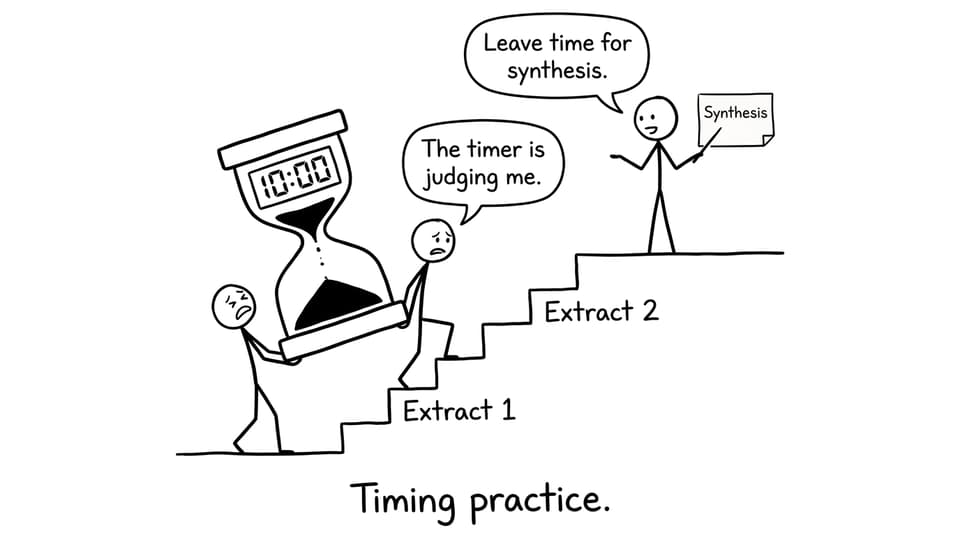
Practise to the real timing: 10 minutes + follow-up discussion.
-
Record yourself and improve one thing per run.
If you want a full walkthrough of what the IO expects, start with IB Oral (IO) Guide: Language & Lit and Literature.
Understand what the examiner is actually rewarding
In IB English, oral assessments reward clarity under pressure. Not “more content.” Not “more quotes.” Clarity.
Your job is to show that:
-
you understand the text(s) beyond surface meaning,
-
you can analyse how authorial choices create meaning,
-
you can keep a tight focus on the global issue,
-
you can organise speech so it builds, not wanders.
RevisionDojo’s tools reflect this examiner perspective particularly well. The IB Language A: Individual Oral Grader makes the criteria feel concrete, and the Professional IB Oral Feedback guide explains what “examiner-level” feedback really sounds like.
Pick extracts that force you into analysis (not summary)
Most oral panic begins with one quiet mistake: choosing an extract that doesn’t do enough.
In IB English, a strong extract is packed with decisions the writer made on purpose. Look for:
-
a clear shift in tone or perspective
-
concentrated imagery or symbolism
-
meaningful structure (juxtaposition, pacing, breaks, repetition)
-
language that reveals power, identity, conflict, or uncertainty
Avoid extracts that are mainly plot movement or straightforward dialogue without subtext. If you can only talk about “what happens,” the oral becomes a summary trap.
To see what high-performing extract choices look like, browse IB Language A: Individual Oral Examples and compare how each example earns analysis opportunities.
Make the global issue specific enough to steer your whole oral
A global issue should feel like a lens, not a topic.
“Power” is a topic. “How institutions normalise violence through language” is a lens.
In IB English, specificity helps you do three things:
-
select evidence faster,
-
explain techniques with purpose,
-
sound coherent even when nervous.
A good test: can you finish this sentence without drifting?
“In both texts, the global issue is shown through…”
If your ending becomes vague (“…society,” “…people,” “…human nature”), tighten the wording until it forces precision.
For more structure help, Master the IB Individual Oral: Expert Strategies, Practice Tools is a strong companion guide.
Build an outline that sounds natural out loud
A polished IB English oral usually comes from an outline that is simple, repeatable, and impossible to get lost in.
Try this structure:
A practical structure for your IB English oral
-
Opening (about 1 minute): define the global issue + introduce texts + your line of inquiry.
-
Extract 1 (about 4 minutes): 2--3 claims, each tied to technique and effect.
-
Extract 2 (about 4 minutes): parallel structure, but add contrast or development.
-
Synthesis (about 45--60 seconds): widen out to the whole works and why the issue matters.
-
Closing (about 20--30 seconds): restate your insight, not your content.
This is exactly why “outline, not script” is repeated so often. A script breaks the moment you forget one sentence.
If you struggle to convert notes into bullets, see Tips for Practicing (IB English notes).
Practise like it’s a skill, not a performance
The best IB English oral practice is boring on purpose.
Do 3--4 short rehearsal cycles over a week:
-
Run 1: focus only on structure and timing.
-
Run 2: improve analysis depth (fewer devices, better explanation).
-
Run 3: improve language and transitions.
-
Run 4: simulate the real conditions (standing up, one take, timed).
Recording yourself is the fastest feedback loop. RevisionDojo’s IB IO Practice Tool and IB Oral Recording Platform are built for exactly this: repeatable, low-stakes reps with actionable feedback. It’s also where RevisionDojo’s AI Chat and Grading tools feel like a calm teacher who has time for your tenth attempt.
If you need a rhythm for your week, use IB Oral Practice Schedule.
Prepare for the follow-up discussion (without overpreparing)
After the 10 minutes, the discussion can feel like stepping into fog. But in IB English, the follow-up questions usually test depth, not trivia.
Prepare by:
-
identifying 2--3 alternative interpretations for each extract,
-
mapping where else in each work the global issue appears,
-
practising “think-aloud” answers with a friend or tutor.
RevisionDojo Tutors can help you simulate this part realistically, but you can also rehearse with AI Chat: ask it to challenge your claim, then practise responding with evidence.
For common pitfalls and fixes, keep Top Mistakes in IB Language Oral Exams and How to Avoid Them open as a final check.
Closing: turn IB English oral prep into a repeatable system
When IB English oral assessments go well, it rarely looks like talent. It looks like a student who chose rich extracts, framed a focused global issue, and practised the same structure until their voice stopped shaking.
If you want that kind of calm, build your workflow inside RevisionDojo: refine concepts with Study Notes and Flashcards, stress-test thinking with AI Chat, practise examiner expectations using the IO Grader and Grading tools, and rehearse with the IO practice and recording features. Add Questionbank work for your wider IB English exam prep, then finish with Mock Exams and Predicted Papers to keep everything aligned.
Your oral doesn’t need to feel like a performance. With the right preparation, it becomes proof that you can think clearly out loud.