


If you have ever opened an IB German Ab Initio workbook and thought, “These words are made of other, smaller words,” you are not alone. The beginning always feels louder than it is: unfamiliar sounds, long nouns, and grammar rules that seem to arrive before you have even learned how to say your name.
But here’s the quiet advantage of IB Languages: Ab Initio is built for beginners, and it rewards the student who studies with rhythm rather than force. Learn the right vocabulary, practice speaking earlier than feels comfortable, and train with exam-style tasks from week one, and German starts to feel less like a wall and more like a path.
This guide shares beginner strategies to learn German quickly in Ab Initio, without relying on luck or last-minute panic.
Quick-start checklist for IB German Ab Initio
Use this as your weekly loop in IB Languages:
-
Learn high-frequency, theme-based vocabulary (not random word lists).
-
Build grammar in layers: present tense first, then questions, then connectors.
-
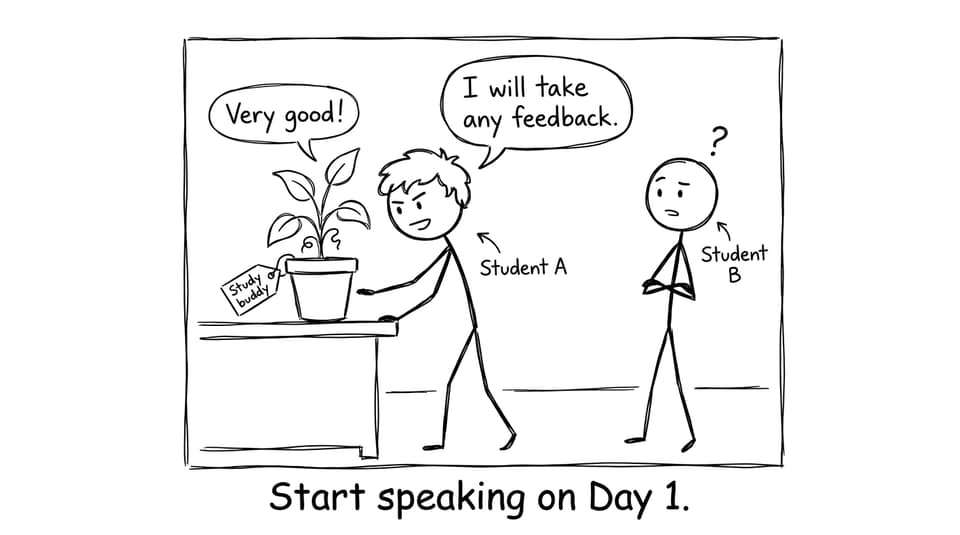
Speak from day one (even if it’s messy).
-
Do something in German daily (10-20 minutes counts).
-
Tie practice to the five themes (so everything is exam-relevant).
-
Start Paper 1 and Paper 2 style practice early so the format becomes normal.
-
Track mistakes and recycle them into Flashcards.
For the big-picture course overview, keep this open while you plan: What Is IB German Ab Initio? Complete 2025 Guide.
Why beginners can improve quickly in IB Languages German Ab Initio
German looks intimidating mainly because it is honest about its structure. Endings matter. Word order matters. Articles show up everywhere.
That sounds like bad news until you notice what beginners often miss: German is consistent.
-
Pronunciation is predictable once you learn the sound rules.
-
Grammar patterns repeat, so your effort compounds.
-
English and German share a surprising amount of vocabulary, which reduces the “newness” load.
-
The Ab Initio syllabus is practical: school, routine, technology, travel, food, environment. You learn language you can actually use.
In other words, Ab Initio is not asking you to become fluent. IB Languages is asking you to become functional, clear, and exam-ready.
Strategy 1: Learn German quickly by targeting high-frequency vocabulary
Beginners often try to collect vocabulary like souvenirs. It feels productive, but it’s not always useful.
Instead, build a “small strong” vocabulary set you can reuse across tasks:
-
Verbs you can attach to many topics (machen, gehen, spielen, lernen)
-
Opinion stems (I think, I prefer, in my view)
-
Time and sequence words (today, usually, then, finally)
-
Survival nouns for the five themes (school, family, food, transport, health, media)
A simple rule: if a word won’t show up in your writing or oral practice this week, it can wait.
RevisionDojo makes this easier because you can combine themed learning with tools that reinforce memory: use Flashcards for spaced repetition and the IB Flashcards with Spaced Repetition (SRS) library to keep reviews short but consistent.
Strategy 2: Build grammar in layers (not all at once)
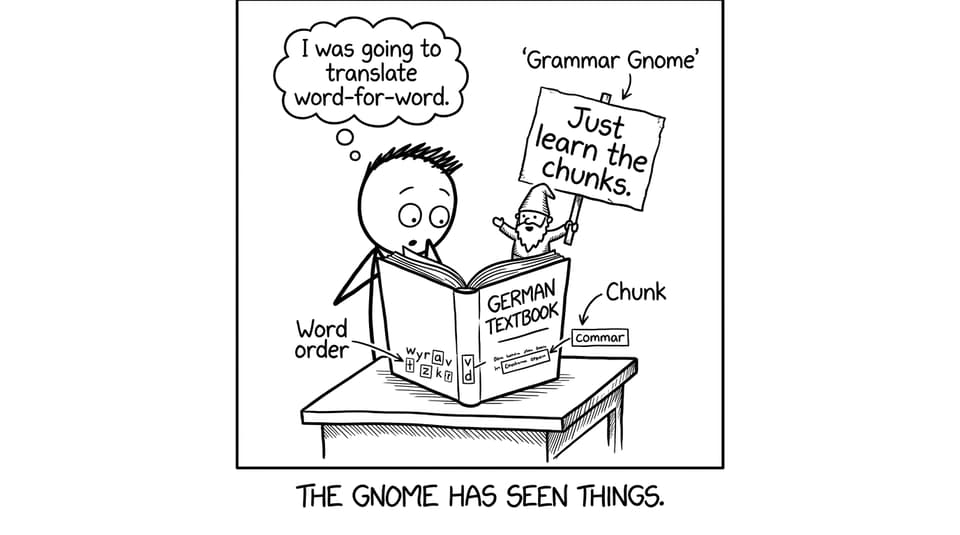
To learn German quickly, your grammar plan should look like stacking bricks, not juggling knives.
Start with the structures that pay off everywhere in IB Languages:
Master the “core engine” first
-
Present tense verb patterns
-
Simple main clause word order
-
Questions (W-Fragen and yes/no)
Add “expansion tools” second
-
Modal verbs (can, must, want)
-
Separable verbs (only after you’re stable)
-
Past/future for storytelling and plans
Add “mark-boosters” last
-
Connectors that create complexity: because, although, therefore
-
Comparative structures (more than, less than)
If you want a clear breakdown of what matters most (so you don’t over-study the wrong topics), use: What Grammar Topics Are Most Important in IB German Ab Initio? (2025 Guide).
Strategy 3: Speak from day one (awkward is a feature)
Most beginners delay speaking because they want to be correct first. But in language learning, speaking is not the reward for correctness. Speaking is the method that creates it.
Here’s a beginner-friendly speaking routine that fits Ab Initio:
-
Pick one theme (Identities, Experiences, etc.).
-
Choose 8-12 words you will use today.
-
Record a 45-second voice note describing something simple.
-
Replay it once and note two fixes (one grammar, one vocabulary).
-
Repeat tomorrow with the same theme, but a new angle.
This is how your oral becomes automatic. It also prepares you for the assessment expectations and timing. For that, keep this nearby: How to Succeed in the IB German Ab Initio Oral Exam (2025 Edition).
Strategy 4: Use the five themes as your syllabus-shaped map
In IB Languages, speed comes from relevance. If your vocabulary and speaking prompts match the themes, your brain stops treating German as “extra” and starts treating it as “useful for marks.”
Build mini phrase banks per theme:
-
Identities: family, daily routine, personality, food, health
-
Experiences: holidays, transport, memories, plans
-
Human Ingenuity: social media, technology, communication
-
Social Organization: school rules, work, community, services
-
Sharing the Planet: environment, climate, recycling, solutions
A strong theme bank turns Paper 1 prompts into familiar territory instead of a surprise.
For broader Ab Initio strategy across languages, this pairs well with: Top Strategies for Learning an Ab Initio Language in IB.
Strategy 5: Practice the exam formats early (so they stop feeling scary)
“Learn German quickly” in Ab Initio often means “learn German the way the exam asks you to use it.”
That means training the three components early:
Paper 1 (writing)
Write short, correct texts before you try to write impressive ones.
-
Practice the format of common text types.
-
Use safe sentence starters you can reuse.
-
Save 10-15 minutes to check verbs and word order.
Use this guide to make Paper 1 predictable: How Can I Prepare for IB German Ab Initio Paper 1? (2025 Guide).
Paper 2 (reading and listening)
Train gist first, detail second.
-
Skim questions before reading or listening.
-
Circle signal words (times, places, numbers, opinions).
-
Don’t translate everything: hunt meaning.
For the full structure, see: IB German Ab Initio Exam Format (2025 Guide) and How Is IB German Ab Initio Assessed? (2025 Exam Guide).
Weekly stamina
Once a week, do one timed task under exam conditions. The goal is not perfection. It is familiarity.
If pacing is an issue, this is practical: How Can I Manage Time Effectively in IB German Ab Initio Exams? (2025 Guide).
Strategy 6: Turn RevisionDojo into your “feedback loop”
In most subjects, feedback is occasional. In IB Languages, feedback is oxygen. The faster you find mistakes, the faster you stop repeating them.
A strong loop looks like this:
-
Use Study Notes to learn a structure.
-
Drill it with targeted practice (Questionbank).
-
Convert errors into Flashcards.
-
Ask AI Chat for a clearer explanation or extra examples.
-
Re-test the same skill under time.
RevisionDojo is built for that loop: the German ab initio hub connects practice, vocabulary, and exam building in one place. When you want an overall workflow, use: RevisionDojo App: The Smarter Way to Prep for IB Exams.
And when you want broader language-specific advice and updates, browse: IB Languages Posts.
Common beginner mistakes (and the calm fixes)
-
Word-for-word translation: Fix by memorizing chunks and sentence frames.
-
Avoiding speaking: Fix by recording short daily answers, not “perfect” speeches.
-
Grammar overload: Fix by learning only what you can use this week.
-
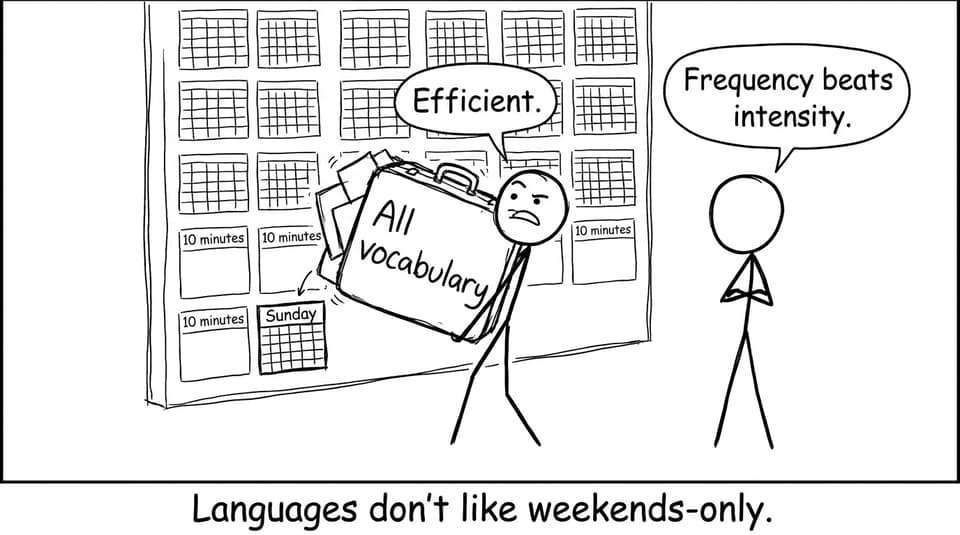
Cramming: Fix by daily 10-20 minute sessions.
-
Not reviewing errors: Fix by turning mistakes into Flashcards and re-testing.
These mistakes are normal. In IB Languages, the difference between a student who improves fast and one who stays stuck is whether they recycle mistakes into practice.
Closing: learn German quickly by studying like IB Languages rewards
Learning German quickly in Ab Initio is rarely about a secret hack. It is about doing a few high-yield things, repeatedly: theme-based vocabulary, layered grammar, daily speaking, and early exam-style practice. When you align your habits with what IB Languages actually assesses, progress stops being a mystery and becomes a pattern.
If you want that pattern to feel simple, build your loop inside RevisionDojo: start with the German ab initio hub, reinforce with Flashcards, and practice with the Questionbank and grading tools so every mistake turns into a clear next step. The goal is not to feel ready. It is to become ready, one small session at a time.


