
Introduction: the quiet panic of starting from zero
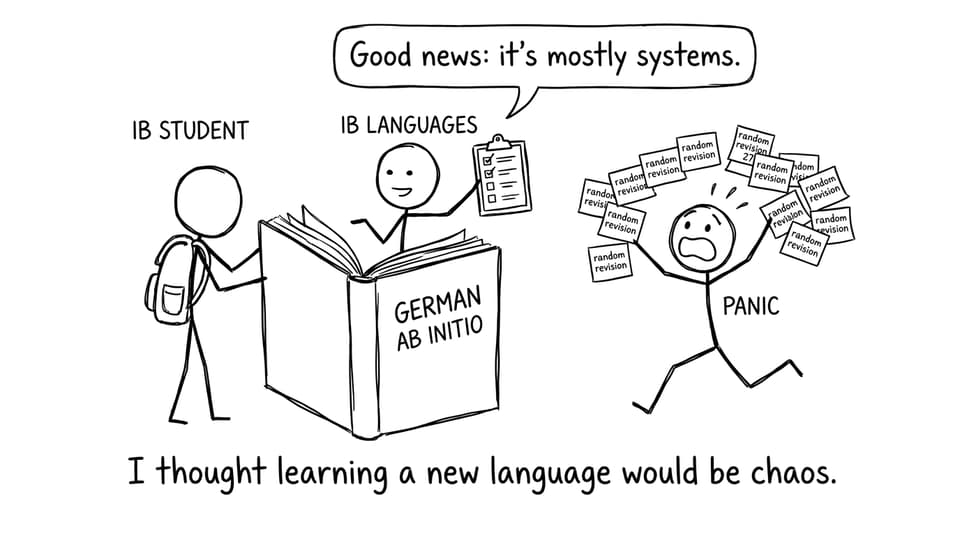
The first week of IB can feel like being handed a map written in code. You’re told to pick subjects, build a schedule, and start thinking like an examiner. Then someone says, “Also, you need a second language.”
For many students, that’s the moment IB Languages stops being a category on a subject list and starts feeling personal. Not everyone comes into the Diploma Programme with years of language classes behind them. Some students have switched schools. Others have moved countries. Many simply never studied German.
That gap is exactly why IB German Ab Initio exists. Ab initio means “from the beginning,” and the course truly assumes you’re starting at the beginning. Across two years, you build the four core skills: listening, reading, speaking, and writing, through practical contexts rather than literary analysis.
With the revised curriculum’s first assessment happening in 2025, it’s worth understanding how this course works, who it’s designed for, and what a smart revision routine looks like.
Quick checklist: what to know about IB German Ab Initio (2025)
Use this as a fast orientation before the deeper details.
-
Level: Standard Level (SL)
-
Starting point: designed for beginners with little or no prior German
-
Skill focus: balanced development of listening, reading, writing, and speaking
-
Structure: taught through five IB themes
-
Assessment: Writing (Paper 1), Reading + Listening (Paper 2), and an Individual Oral
-
Typical outcome: around A2 CEFR (upper beginner)
-
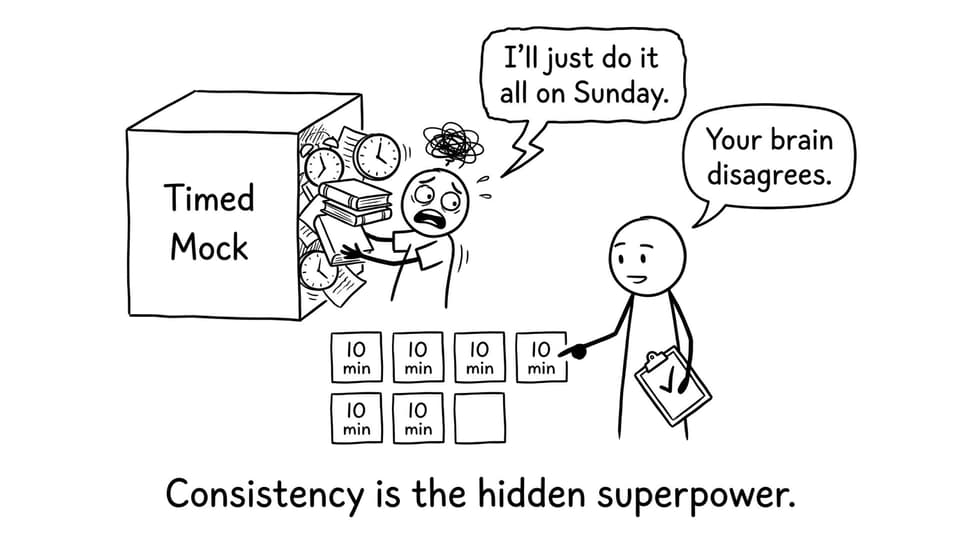
Revision principle: consistent short practice beats occasional long sessions
If you want the dedicated RevisionDojo hub for the course tools and materials, start here: German ab initio - IB Resources.
What is IB German Ab Initio within IB Languages?
Within IB Languages (Group 2: Language Acquisition), Ab Initio is the entry path. It’s built for students who need a language course that is realistic for beginners, while still being academically structured.
IB German Ab Initio differs from German B in one crucial way: German B assumes previous study and a stronger baseline of grammar and vocabulary. Ab Initio starts with introductions, daily routines, basic opinions, and the grammar you need to survive common situations.
The heart of the course is communication. You’re not training to write literature essays. You’re training to:
-
understand the main idea in short, authentic texts
-
respond to prompts with clear structure
-
speak in a way that is understandable and relevant to the stimulus
-
show cultural awareness in simple, accurate ways
That’s why Ab Initio can be challenging, but rarely “unfair.” It’s a course where effort compounds quickly, especially if you build a system early.
For a broader view of language revision methods across IB Languages, you can pair this guide with Top Strategies for Learning an Ab Initio Language in IB.
The five themes (and why they quietly run your entire course)
One of the smartest design choices in IB Languages is the theme framework. Instead of memorizing isolated word lists, you learn language through recurring contexts. German Ab Initio is framed around five themes:
-
Identities
-
Experiences
-
Human Ingenuity
-
Social Organization
-
Sharing the Planet
These themes aren’t decoration. They shape:
-
the vocabulary you’ll need
-
the text types you’ll write
-
the listening and reading passages you’ll see
-
the topics that appear in your speaking exam
If you want a theme-by-theme breakdown for German specifically, see: What themes and topics are covered in IB German Ab Initio?.
How to use the themes like a study map
Here’s the practical trick: organize your notes and flashcards by theme, not by “random unit name” from your class.
When you do that, your brain stops asking “What do I revise?” and starts asking “Which theme am I weak in?” That shift matters in IB Languages, because the exam rewards flexible communication across familiar contexts.
RevisionDojo supports this approach directly through the German course content and the themed practice resources, including: Core Themes - IB German ab initio.
Who should take IB German Ab Initio?
IB German Ab Initio is designed for students who:
-
have little or no prior German
-
need to satisfy the IB language acquisition requirement
-
want a structured beginner course with exam-aligned expectations
-
are curious about German-speaking cultures but don’t need advanced fluency yet
It also works well for students who are already juggling heavy HLs and want an IB Languages course that is doable with consistent practice.
That said, Ab Initio is not a “free subject.” The difference is that success is more about routine than raw talent. Ten focused minutes a day is often enough to keep the language warm.
Is IB German Ab Initio hard?
It’s hard in the way learning anything new is hard: progress feels invisible until it suddenly isn’t.
German brings a few famous hurdles:
-
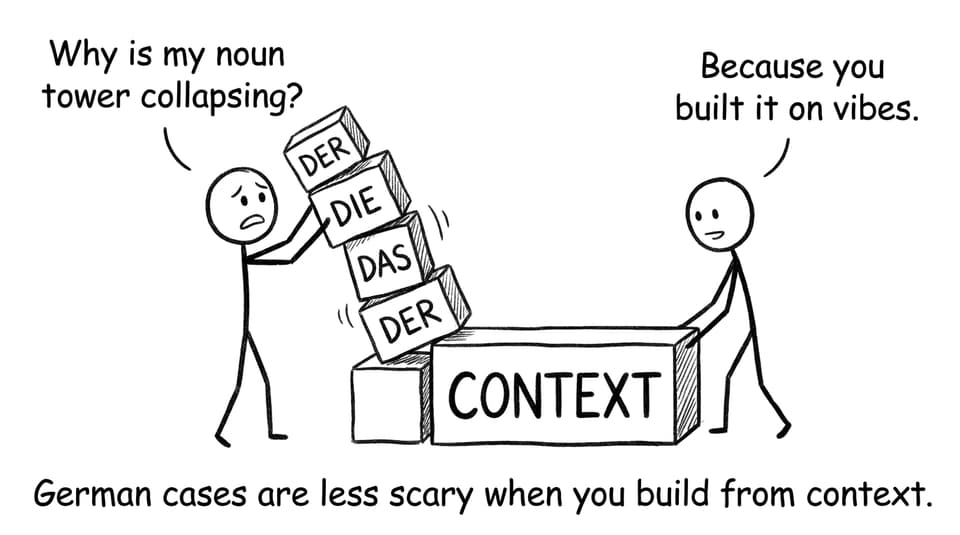
gendered nouns (der, die, das)
-
cases (nominative, accusative, dative, genitive)
-
verb placement and word order patterns
-
building confidence to speak when you know you’ll make mistakes
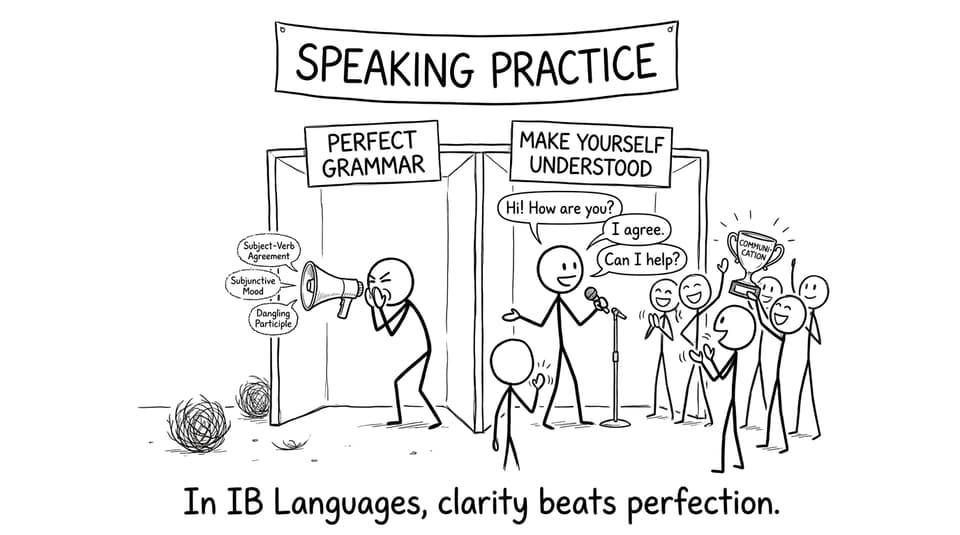
But within IB Languages, Ab Initio assessment is designed to reward clarity and relevance. You do not need perfect grammar to score well. You need meaning that is understandable, vocabulary that fits the theme, and structure that matches the task.
The most common reason students struggle is not “German is impossible.” It’s that they practise only one skill (usually writing) and ignore the others until it’s late.
How is IB German Ab Initio assessed in 2025?
Assessment in IB Languages aims for balance: productive skills (writing and speaking) plus receptive skills (reading and listening).
Paper 1: Writing (25%)
You write short texts in German, aligned to IB text types. Expect tasks such as emails, blog posts, diary entries, or short articles. The focus is on:
-
completing the task and addressing the prompt
-
using appropriate register (formal vs informal)
-
organization and coherence
-
range of vocabulary and basic grammatical control
Paper 2: Reading and Listening (50%)
This paper tests comprehension. You’ll read short texts and listen to audio extracts, then respond to questions that check understanding of:
-
main ideas
-
specific details
-
context and purpose
-
implied meaning at a beginner level
Individual Oral (25%)
You prepare a short response to a visual stimulus and then discuss themes with your teacher/examiner. In IB Languages, oral performance is less about sounding like a native speaker and more about:
-
communicating clearly
-
extending answers with reasons and examples
-
using simple connectors and opinion phrases
-
showing cultural awareness where relevant
If your oral is the part you fear most, this guide is worth bookmarking: How to succeed in the IB German Ab Initio Oral Exam.
How much German will you learn (realistically)?
Most students finish IB German Ab Initio around A2 CEFR.
That means you can typically:
-
handle basic conversations about familiar topics (school, family, hobbies, travel)
-
write short texts with clear meaning, even if grammar isn’t flawless
-
understand the main idea of straightforward spoken German
-
read short, authentic materials (ads, schedules, messages, simple articles)
This is not fluency, and it’s not meant to be. But within IB Languages, A2 is a meaningful achievement because it represents functional communication from a standing start.
For a detailed breakdown of what A2 looks like in practice, see: What level of German will I achieve in IB German Ab Initio?.
A RevisionDojo-style study routine for IB German Ab Initio
The best students don’t “study German.” They run a loop.
On RevisionDojo, that loop is supported by interconnected tools: Study Notes, Flashcards, Questionbank, AI Chat, Grading tools, Predicted Papers, Mock Exams, Coursework Library, and Tutors.
Here’s a routine that fits real IB life while staying aligned to IB Languages assessments.
Daily (15-25 minutes): keep the language warm
-
8 minutes: Flashcards (theme-based vocabulary + core verbs + connectors)
-
7-12 minutes: one focused skill drill
-
a short listening clip and quick summary
-
a mini writing task (80-120 words)
-
a speaking recording: describe a photo for 60 seconds
-
3x per week (25-45 minutes): practice that creates marks
-
Do targeted sets in a Questionbank style routine: one theme, one skill focus, quick feedback.
-
Then fix the same error pattern immediately (word order, verb endings, case mistakes).
If you want the general RevisionDojo workflow behind this, see: RevisionDojo App: The smarter way to prep for IB exams and the free practice hub: Questionbank | RevisionDojo.
Weekly (45-90 minutes): simulate pressure without spiraling
Do one timed session. Not as punishment. As proof.
-
timed writing task + self-check using rubric language
-
reading + listening set under exam pacing
-
mini oral simulation: stimulus response + follow-up questions
To build exam realism across IB subjects (including IB Languages), this guide helps: IB Predicted vs Specimen Papers: What They Mean.
Common traps (and the smarter alternative)
Trap: rewriting vocab lists
Smarter alternative: turn vocabulary into usable sentences tied to themes. Your goal in IB Languages is retrieval under pressure, not pretty notes.
Trap: avoiding speaking until you “feel ready”
Smarter alternative: speak early, speak simply, and record yourself. Confidence in IB Languages is mostly familiarity.
Trap: studying only what feels fun
Smarter alternative: rotate skills. Writing improves reading. Listening improves speaking. The course is designed as a system.
For more language-specific revision strategy, pair this with: How to effectively revise for Language B exams. Many of the same IB Languages routines apply.
Conclusion: make IB Languages feel predictable
IB German Ab Initio is not a test of whether you’re “a language person.” It’s a course built to take beginners to functional communication through structure, repetition, and exam-aligned practice.
If you want German to feel less like chaos and more like a plan, build your routine around IB Languages skills and themes, then use tools that make practice measurable. RevisionDojo brings that system together in one place: German-specific resources, Study Notes, Flashcards, a Questionbank, AI Chat for quick explanations, Grading tools for rubric-aware feedback, plus Predicted Papers, Mock Exams, a Coursework Library, and Tutors when you want extra support.
Start with the course hub here: German ab initio - IB Resources, then commit to a small daily loop. In IB Languages, consistency is rarely dramatic, but it is almost always decisive.