
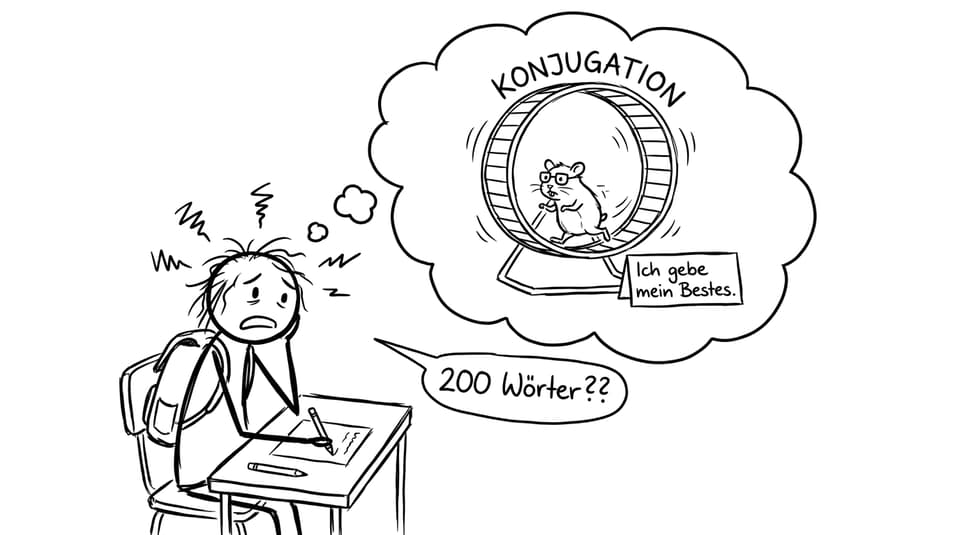
If you have ever stared at a blank page and realized you have exactly 60 minutes to produce 200-250 words in German, you already know the real challenge of Paper 1: staying calm long enough to be clear.
Paper 1 in IB German ab initio is the writing paper, worth 25% of your final grade. But it is also one of the most trainable parts of IB Languages because the task is predictable: practical text types, familiar themes, and a mark scheme that rewards structure and accuracy more than flashy grammar.
IB Languages Paper 1 snapshot (what you are actually preparing for)
Here is the quick format you should memorize for IB Languages Paper 1 in German ab initio:
-
Time: 1 hour
-
Choice: pick 1 of 2 prompts
-
Length: 200-250 words
-
Text types: blog, diary entry, email/letter, article (and similar)
-
Themes: the five IB themes (Identities, Experiences, Human Ingenuity, Social Organization, Sharing the Planet)
The criteria stay consistent:
-
Language: accuracy of grammar and vocabulary
-
Message: relevance, clarity, development
-
Conceptual understanding: text type conventions, register, audience
If you want to see exactly how those criteria are described, keep the official wording open while you practice: Paper 1 writing criteria (Schreiben).
A 6-point checklist for IB Languages German Paper 1
Use this as your weekly loop:
-
Choose 4 core text types and learn their “shape”
-
Build a flexible phrase bank (opinions, linking, endings)
-
Practice writing within 200-230 words
-
Lock down core grammar you can control under stress
-
Add simple cultural references naturally
-
Do timed writing + correction cycles
RevisionDojo supports this loop end-to-end: Study Notes to learn patterns, Flashcards for phrases, Questionbank for targeted drills, AI Chat for quick explanations, and Grading tools to check your writing against the criteria.
Master text types (two marks are hiding in the format)
Paper 1 is not an essay contest. It is a “did you write the right kind of thing for the right reader” contest.
Focus on 4-5 text types and make them automatic:
Diary entry
-
Informal, first person
-
Date or time marker
-
Reflection and feelings
Anchor line to memorize:
- Liebes Tagebuch, heute war...
Email or letter
-
Decide register early: formal or informal
-
Greeting + closing matter
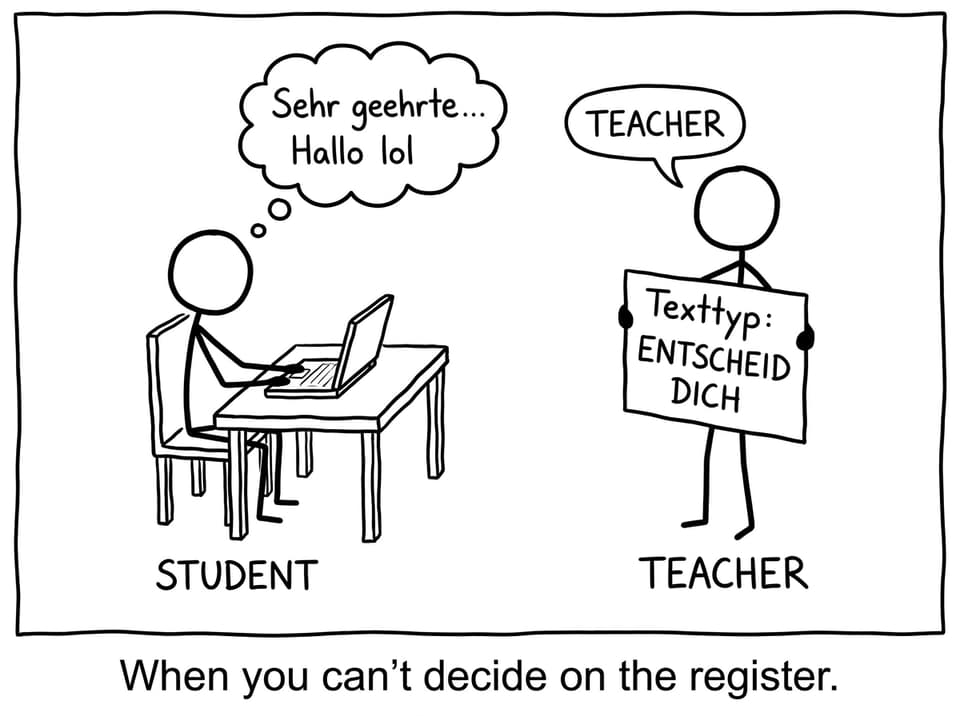
A practical way to drill this is to practice register-switching intentionally, then stop doing it: Formal vs Informal Register (Sie vs. du) Questionbank.
Blog
-
Warm, conversational tone
-
Title + mini sections
-
A question to the reader works well
Article
-
Semi-formal
-
Clear introduction, body, and closing
-
Neutral tone, but still simple
If you want more structured German ab initio support across themes and skills, start here: German ab initio resource hub.
Build a phrase bank that sounds natural (and saves time)
In IB Languages, fluency often comes from reusable parts. You are not memorizing an entire response. You are memorizing Lego bricks.
Create a phrase bank for:
-
Opinions: Meiner Meinung nach... / Ich denke, dass...
-
Sequencing: zuerst, dann, danach, schließlich
-
Cause/effect: weil, deshalb, obwohl
-
Contrast: im Gegensatz zu...
-
Soft conclusions: Zusammenfassend kann man sagen, dass...
Turn these into spaced repetition with RevisionDojo Flashcards, then pressure-test them with targeted practice from the Questionbank.
For a broader strategy on turning practice into progress, this guide helps: IB Questionbank: how to use it effectively.
Keep your word count in the safe zone
Most students do not lose marks because they “cannot write German.” They lose marks because they rush, overwrite, or underwrite.
-
Aim for 200-230 words
-
Write 3-5 short paragraphs
-
Add depth with “reason + example,” not repetition
A simple trick: after each paragraph, ask “did I answer the prompt, or did I just add words?” That question alone improves IB Languages writing fast.
Core grammar to revise (high return, low drama)
You do not need complex grammar to score well. You need reliable grammar.
Prioritize:
-
Present tense
-
Perfekt (past)
-
Modal verbs (können, müssen, sollen)
-
Word order (verb-second; subordinate clauses)
-
Accusative/dative basics
When you get stuck, use AI Chat to ask one focused question, like: “Can you fix my word order after weil and explain the rule in one sentence?” That is how IB Languages revision stays efficient.
Add culture without forcing it
One cultural reference can lift your response because it shows real-world awareness.
Keep it simple and true:
-
In Deutschland gibt es viele Weihnachtsmärkte.
-
Viele Menschen fahren mit dem Fahrrad zur Schule.
You can also ground your examples in IB themes. For instance, “Experiences” can become travel, exchange programs, or school traditions.
Need a theme-based starting point? Try: Identities (Identitäten) topic hub.
The 60-minute routine (train it until it feels boring)
Paper 1 rewards students who follow a routine even when nervous.
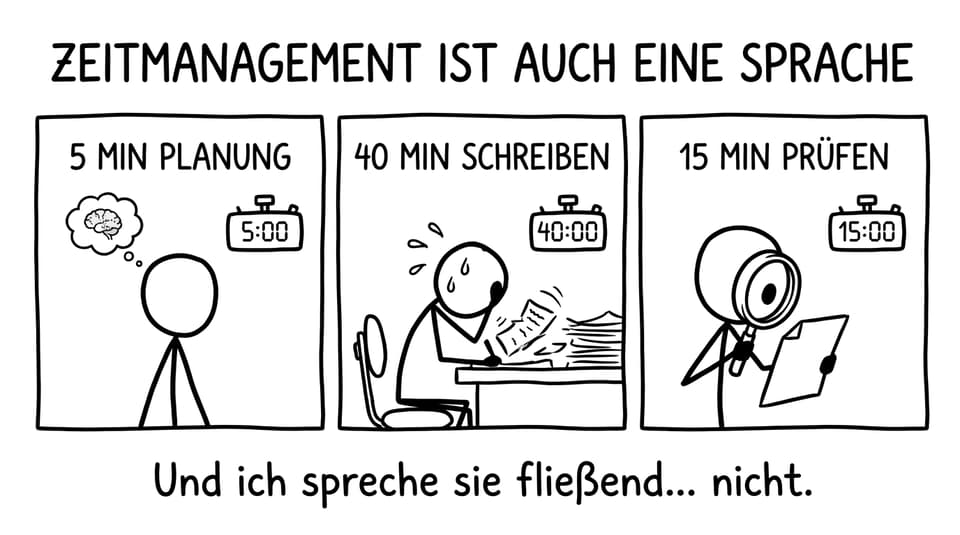
-
5 minutes: plan (text type, register, 3 points)
-
40 minutes: write
-
15 minutes: check (verbs, endings, word order, word count)
If you want a structured way to practice exam stamina across subjects, this is useful context: RevisionDojo app for IB exam prep.
Conclusion: prepare like it is predictable (because it is)
Preparing for IB German ab initio Paper 1 is less about inspiration and more about rehearsal. When you master text types, build a phrase bank, keep the word count tight, and practice the 60-minute routine, IB Languages writing becomes something you can control.
If you want the all-in-one workflow, use RevisionDojo to study smarter: learn with Study Notes, lock phrases with Flashcards, drill weak spots in the Questionbank, ask AI Chat when you are stuck, then simulate exam pressure with Mock Exams and Predicted Papers. Your future self will thank you for making Paper 1 feel familiar before exam day.